
A complete primer for first-time readers
The Complete Guide to Reading the Odyssey
A structured primer for approaching Homer's second epic on its own terms
The Odyssey from translation to context: a comprehensive guide to the characters, gods, episodes and ancient world of Homer's work.
Recommended Translation
As an Amazon Associate, we earn from qualifying purchases.
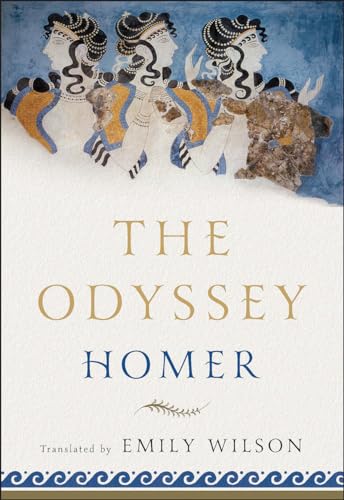
Emily Wilson (2017)
Emily Wilson's 2017 verse translation, in plain contemporary English, suited to first-time readers.
Buy on Amazon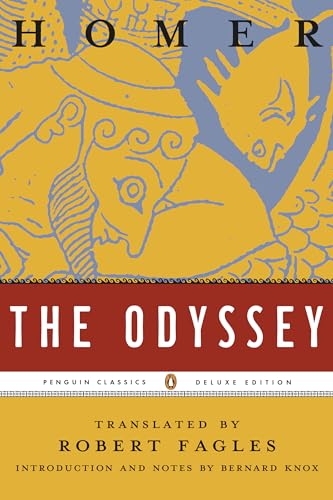
Robert Fagles's translation, read by Ian McKellen
The Homeric poems were composed for oral performance. This recording of the Fagles translation is read by Ian McKellen.
Try Audible free"Cyclops, if any mortal man ever asks you who it was that inflicted upon your eye this shameful blinding, tell him that you were blinded by Odysseus, sacker of cities. Laertes is his father, and he makes his home in Ithaca."
Quick Reference
Reference pages for the questions that arise most often in reading the poem: who Eumaeus is, or which island Odysseus reaches in Book 10.
Prime for Young Adults
Amazon's Prime for Young Adults, for ages 18 to 24, is free for six months.
Three Things to Know Before Page One
Twenty years away
Ten years at Troy and ten more on the way home, prolonged by Poseidon after Odysseus blinds his son, the Cyclops Polyphemus.
A house under siege
Suitors consume his estate and press Penelope to remarry; she has put them off for years, weaving a shroud by day and unravelling it by night.
The gods intervene
Athena protects Odysseus, Poseidon opposes him, and Zeus arbitrates between them.
Understanding Homer's Odyssey: Translation Matters
The choice of translation depends on what a reader values: poetic form, closeness to the Greek, or readability. Emily Wilson's 2017 version, the first English translation of the work by a woman, is fast-paced and modern. Robert Fagles's is the most widely read by general readers, Richmond Lattimore's stays closest to the Greek, and Peter Green's falls between them.
The Odyssey translation comparison sets Wilson, Fagles, Lattimore and Green side by side, with sample passages from each.