Once you finish reading the Odyssey, you might think Odysseus's story ends when he reclaims his throne. But in the ancient literary tradition, Odysseus never stopped traveling. Writers from Rome to the Renaissance kept his journey alive, reimagining, extending, and even arguing with Homer's ending.
These are the most essential works to read after the Odyssey — the ancient responses that picked up where Homer left off, the Roman reimaginings that cast Odysseus as villain rather than hero, and the lost sequel that refused to let him stay home.
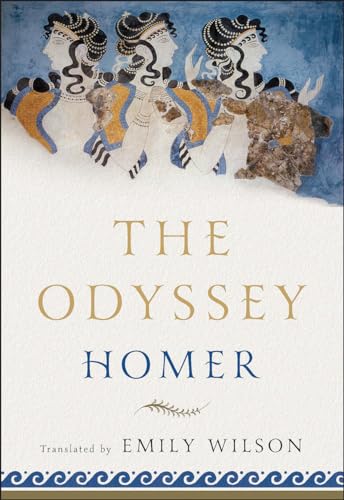
The Iliad
Homer
If you have not already, read Homer's companion epic. The Odyssey is in constant dialogue with the Iliad — not just as a sequel but as a deliberate argument against it. Where the Iliad glorifies battlefield heroism, the Odyssey asks what happens when the war ends and the hero tries to go home.
Achilles chose death and eternal glory; Odysseus chose survival and got twenty years of suffering. Every time the Odyssey mentions Troy or invokes the heroic code, it is measuring Odysseus against that world and finding both him and it complicated. You will notice how Odysseus's encounter with Achilles's ghost in Book 11 directly challenges the Iliad's values: the greatest warrior of the Trojan War now regrets his choice and would rather be a living peasant than a dead king.
The two poems together form a complete argument about what heroism costs and whether glory is worth the price.
Buy on Amazon → 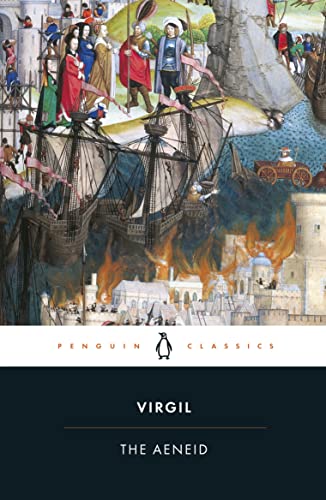
The Aeneid
Virgil
Virgil's Aeneid is the Roman response to both Homeric epics — and a deliberate recasting of Odysseus as villain. Written six centuries after Homer, Virgil tells the story of Aeneas, a Trojan survivor who escapes the burning city and eventually founds Rome. But throughout Books 2 and 3, Aeneas encounters reminders of Odysseus's cruelty: the wooden horse that destroyed Troy, the blinded Cyclops still mourning his eye, the abandoned Greeks left behind on Circe's island.
Reading the Aeneid after the Odyssey gives you the Roman counter-reading of Odysseus: not the admirable survivor but the clever, ruthless destroyer. Where Homer celebrates Odysseus's cunning, Virgil sees it as treachery. Ask yourself: is Odysseus a hero or a war criminal? The answer depends on which side of Troy you stand.
The Fagles translation is recommended for its power and accessibility.
Buy on Amazon → Metamorphoses (Books 13–14)
Ovid
Ovid retells the aftermath of the Trojan War and the wanderings of several heroes — including Odysseus — in Books 13 and 14 of his Metamorphoses. His version of the Circe episode in Book 14 is the fullest ancient retelling outside Homer, and it adds psychological depth Homer only hinted at: Circe falls in love with Odysseus, and her magic becomes an expression of desire and rejection.
Ovid is consciously rewriting and commenting on Homer with characteristic wit and compression, and he wants you to notice. He speeds through episodes Homer lingered on and expands moments Homer skipped. Reading Ovid after Homer shows you how later writers felt free to argue with, correct, and reimagine the Odyssey.
The Charles Martin translation is excellent for capturing Ovid's playful tone.
Buy on Amazon → Telegony
Eugammon of Cyrene (fragments)
The Telegony is the lost ancient sequel to the Odyssey, known only through a summary by the scholar Proclus. It picks up immediately after Homer's ending: Odysseus eventually leaves Ithaca again, travels to the land of Thesprotia, remarries, and is ultimately killed by Telegonus — his son by Circe, who does not recognize his own father.
Only a few lines survive, but the outline changes how you read the Odyssey's ending. Homer's poem closes on homecoming and reunion; the ancient tradition refused to let Odysseus stay. The Telegony insists that a man who spent twenty years wandering cannot simply settle down — the sea will call him back, and his past will catch up with him.
This is the darker, more realistic sequel Homer chose not to write. It suggests that some journeys never truly end.
As an Amazon Associate, I earn from qualifying purchases.