If you want to understand the Odyssey at a deeper level, modern scholarship is your best guide. The scholarly tradition on Homer's epic is rich, contentious, and surprisingly accessible. These works don't just tell you about the poem — they change what you notice inside it, how you interpret Odysseus's choices, and why certain scenes linger in your memory.
Whether you're looking for Odyssey literary criticism, scholarly analysis of Homer's narrative techniques, or books that connect the ancient epic to modern life, the following recommendations will deepen your reading experience.
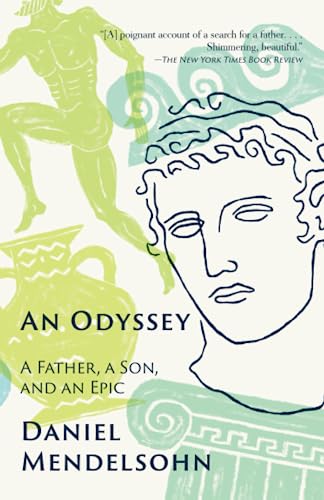
An Odyssey: A Father, a Son, and an Epic
Daniel Mendelsohn
The best modern book about reading the Odyssey. Mendelsohn, a classical scholar and memoirist, invited his elderly father to sit in on his college seminar on Homer's epic. What unfolds is both a close reading of the poem and a meditation on fathers and sons, homecoming, and mortality. The Odyssey's themes — the long journey home, the passage of time, the recognition scenes between parent and child — play out in real time between them. Deeply learned and deeply personal, this is the rarest kind of criticism: it changes how you feel about the poem, not just how you understand it. If you read only one book of Odyssey scholarship, make it this one.
Buy on Amazon → 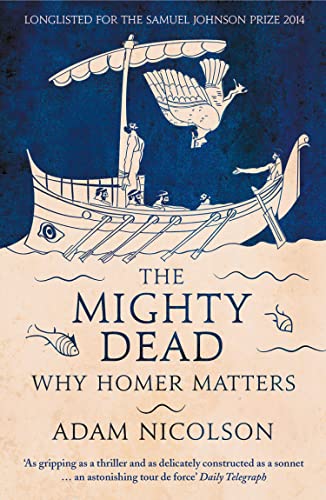
The Mighty Dead: Why Homer Matters
Adam Nicolson
A passionate, wide-ranging argument for why Homer's poems still speak to us today. Nicolson makes the case that the Odyssey is fundamentally a poem about survival, endurance, and what it costs to hold a self together across long years of suffering. He draws on oral tradition, Bronze Age archaeology, and the texture of the poems themselves to show how the Odyssey captures something essential about human experience. Beautifully written and genuinely persuasive, this book answers the question every first-time reader asks: why does this ancient story still matter?
Buy on Amazon → 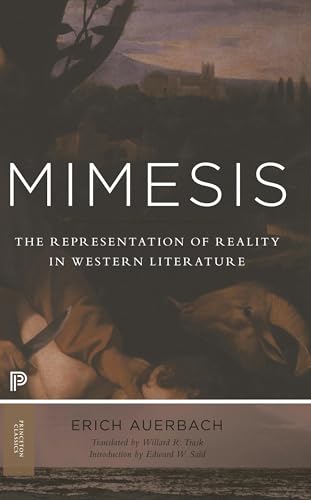
Mimesis: The Representation of Reality in Western Literature
Erich Auerbach
Contains the famous opening chapter "Odysseus' Scar" — one of the most influential pieces of literary criticism ever written. Auerbach contrasts Homer's narrative style with biblical narrative, arguing that Homer externalizes everything: no hidden depths, no psychological shadows, everything fully illuminated in the foreground. When Odysseus is recognized by his old nurse Eurycleia, Homer pauses the action for forty lines to tell you the backstory of that scar. Auerbach asks: why does Homer do this? His answer — that Homeric narrative refuses interiority and ambiguity — is debatable, but it will change how you read every scene. Essential for anyone approaching the Odyssey seriously.
Buy on Amazon → 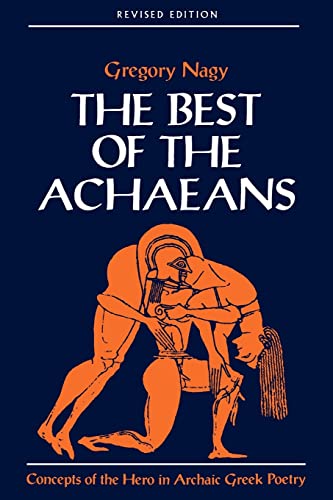
The Best of the Achaeans
Gregory Nagy
Nagy's foundational work on heroic ideology and oral tradition. His analysis of how the Homeric poems functioned as cultural memory — how kleos (fame, glory) operates differently in the Odyssey than in the Iliad — is essential for understanding why Odysseus's choices carry the weight they do. In the Iliad, Achilles chooses glory over a long life. In the Odyssey, Odysseus chooses life, survival, and homecoming over immortal fame with Calypso. Nagy explains what that choice cost in the ancient heroic value system, and why the Odyssey represents a profound shift in Greek thought about what makes a life worth living.
Buy on Amazon → As an Amazon Associate, I earn from qualifying purchases.