As an Amazon Associate, we earn from qualifying purchases.
The Odyssey depends on female figures it barely allows to speak. Penelope is the poem's moral centre — her strategic intelligence essential to the plot — yet her inner life is rendered in glimpses, and whether she is an agent in the poem's resolution or a passive recipient has been argued over for decades. Beyond Penelope, Circe, Calypso, Nausicaa, and Athena each attract a kind of critical attention the poem itself withholds from them.
Feminist classical studies emerged in the 1970s partly in direct response to the androcentrism of classical scholarship, and the Odyssey has been at its centre. The works below span the field from its founding text through recent scholarship.
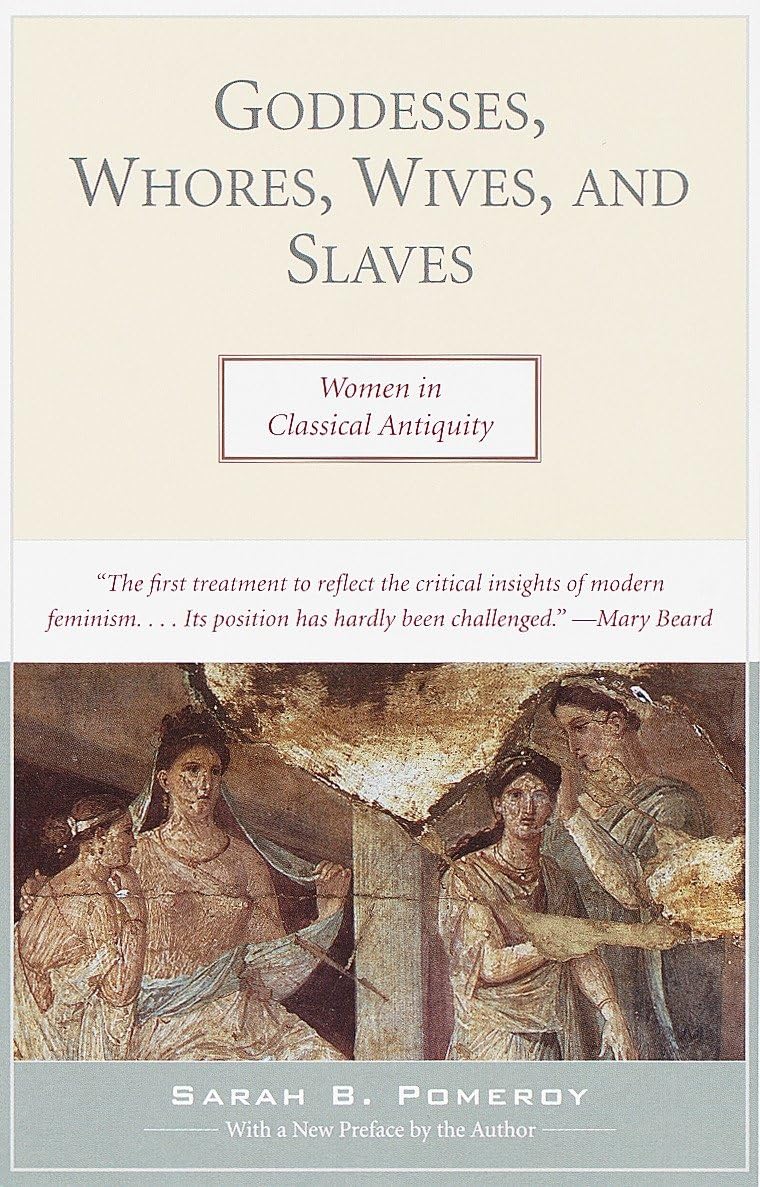
Goddesses, Whores, Wives, and Slaves: Women in Classical Antiquity — Sarah B. Pomeroy (Schocken Books, 1975)
The founding text of feminist classical studies — the book that established women in antiquity as a legitimate field of scholarly inquiry
When Sarah Pomeroy published this in 1975, she was doing something barely attempted before: treating women in the ancient world as a subject worthy of sustained scholarly attention. The book opens with Homer — its early chapters analyze Penelope, Circe, Calypso, Nausicaa, and Helen, arguing that the remarkable gallery of female figures in the epics reflects a culture where women's real social position was far more constrained than the poetry acknowledges, and that the gap between literary representation and social reality is itself the critical problem. From Homer the book moves through archaic lyric, classical Athens, Hellenistic culture, and Rome, making it the essential map of the field. Still in print fifty years after publication, it remains the place to start for anyone approaching the study of women in the ancient world.
Buy on Amazon → 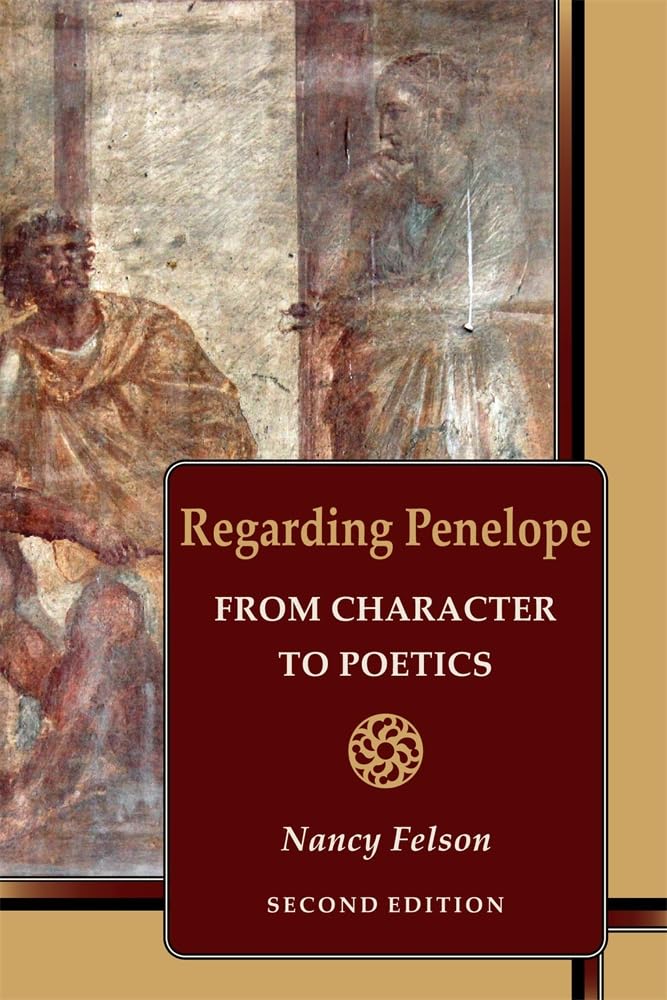
Regarding Penelope: From Character to Poetics — Nancy Felson (Princeton University Press, 1994)
The definitive feminist monograph on Penelope — a reframing of the poem's central female figure as an agent with her own narrative logic
Felson begins from a radical proposition: Penelope is not a passive figure waiting to be retrieved, but an active participant whose strategies of deferral and concealment are as sophisticated as Odysseus's own. The book's central argument turns on what Felson calls Penelope's "double consciousness" — her awareness that she is being watched and judged, and her mastery of sending signals that cannot be definitively decoded. The famous recognition scene — whether Penelope knows who the beggar is before she proposes the contest of the bow — becomes not an unresolved puzzle but a deliberate ambiguity that Penelope herself maintains. Drawing on classical philology and narratological theory, the book transformed how scholars read Penelope's role in the poem, and it remains the essential feminist work on the subject.
Buy on Amazon → 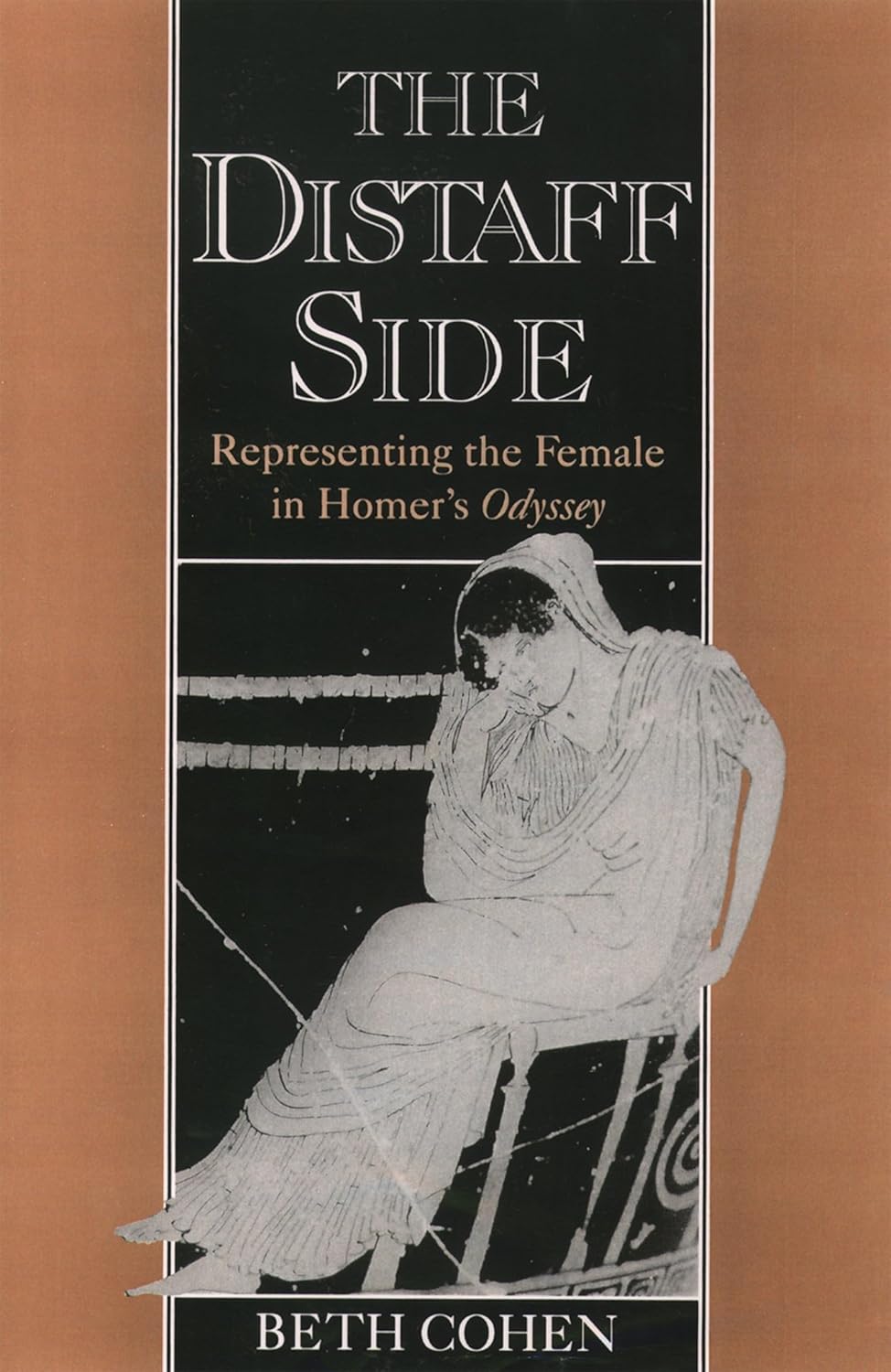
The Distaff Side: Representing the Female in Homer's Odyssey — ed. Beth Cohen (Oxford University Press, 1995)
The essential feminist essay collection on the Odyssey — covering every major female figure in the poem, from Penelope and Circe to Athena and Eurycleia
The title refers to the distaff — the spinning tool that stands throughout the Odyssey as the sign of female domestic labour and, in Penelope's case, of strategic intelligence. The essays here, by leading feminist classicists including Helene P. Foley, Froma Zeitlin, and Sheila Murnaghan, cover every major female figure in the poem: Penelope, Circe, Nausicaa, Eurycleia, Calypso, the Sirens, and Scylla. What unites them is a conviction that these women are not ornaments in Odysseus's story but participants in the poem's argument about power, identity, and return. The "distaff side" — the side the poem officially subordinates to its hero's adventures — turns out to be the side that holds the poem together. An ideal entry point for readers who want to move beyond Penelope.
Buy on Amazon → 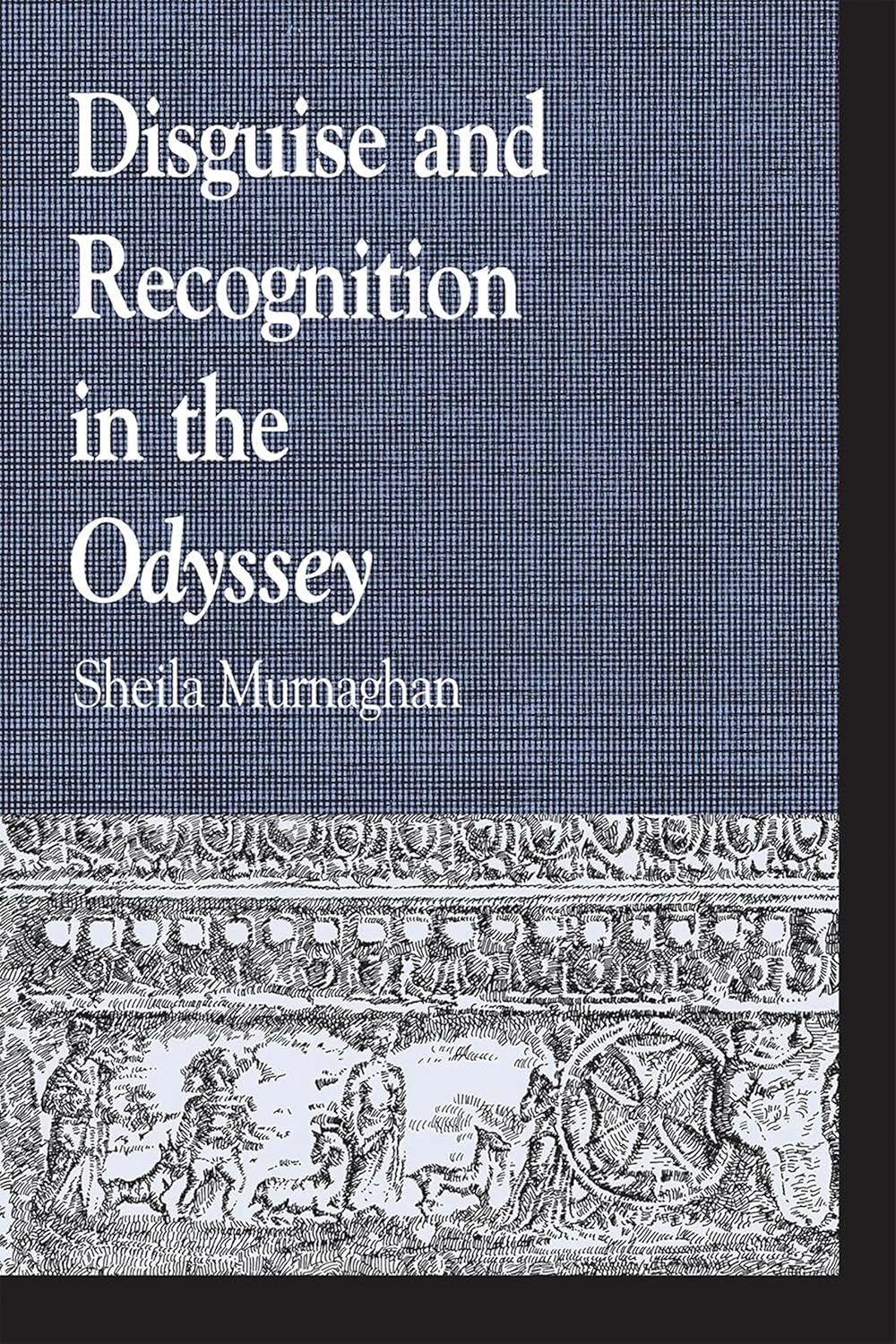
Disguise and Recognition in the Odyssey — Sheila Murnaghan (Princeton University Press, 1987; 2nd ed. Lexington Books, 2011)
A feminist classicist's landmark study of the recognition scenes — with Penelope's strategy of deferral at its centre
Not narrowly a feminist text — it is a study of the poem's architecture of concealment and revelation — but written by a feminist classicist with Penelope's management of recognition at its centre. Murnaghan argues that the Odyssey's recognition scenes express a deeper concern with identity and authority: Penelope is the figure whose recognition must be withheld longest, because the poem's social world cannot accommodate an acknowledgment of her intelligence until Odysseus's authority has been restored. Scholarly and precise, written for readers with some background in classical literature, but it rewards careful reading with a fundamentally altered understanding of what the recognition scenes are doing. The 2011 second edition is the text in print.
Buy on Amazon → 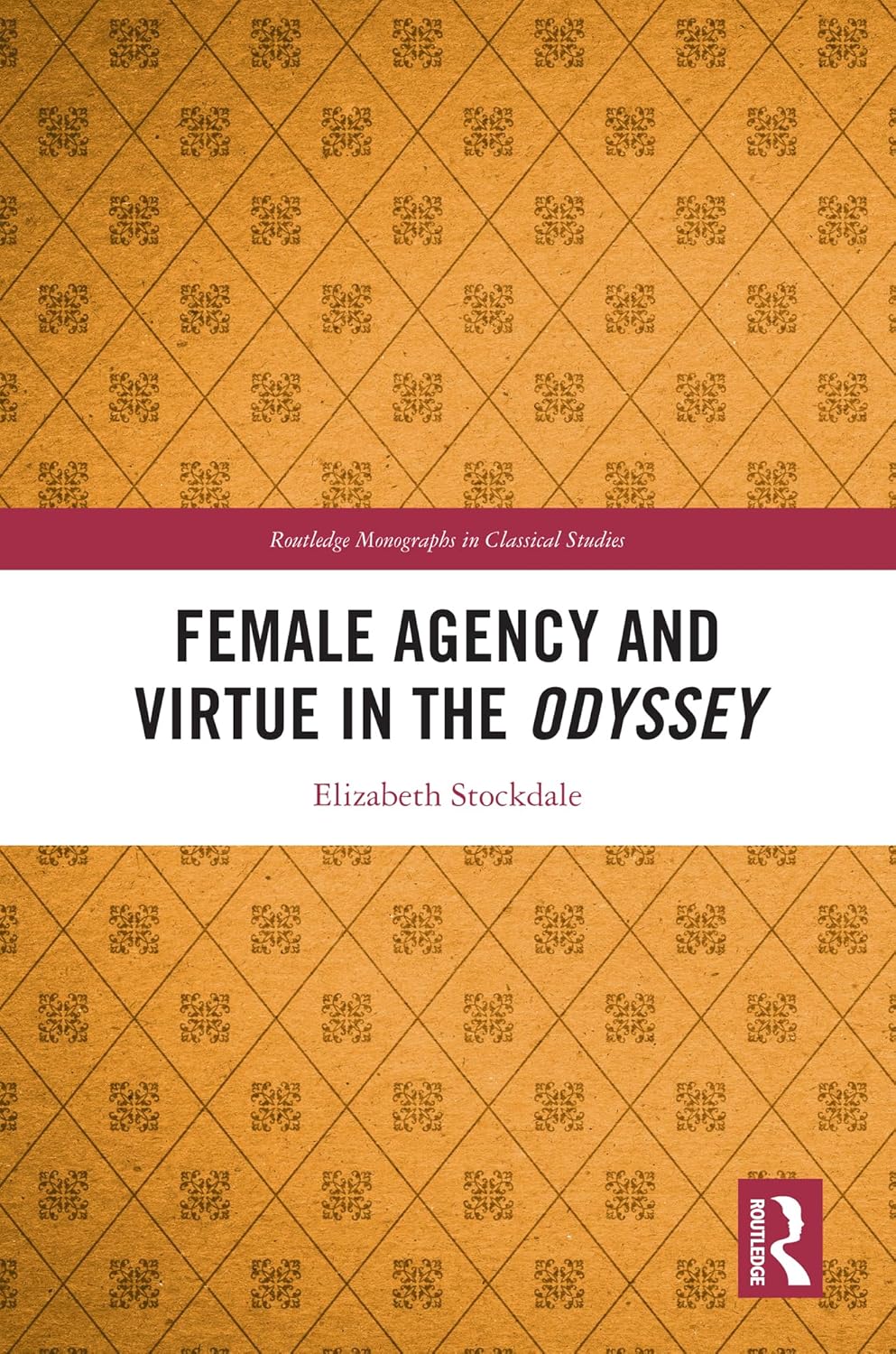
Female Agency and Virtue in the Odyssey — Elizabeth Stockdale (Routledge, 2025)
The most recent dedicated feminist study of the Odyssey — applying feminist virtue ethics to the full range of female characters, mortal and divine
The most recent book-length feminist study of the poem, applying feminist virtue ethics to both the mortal women of the Odyssey — Penelope, Nausicaa, Eurycleia, the maids — and the immortal ones: Athena, Circe, Calypso, the Sirens. The central question is agency: in what sense do female characters act and exercise virtues the poem itself recognises, and in what sense are they constrained by its assumptions about what women can do? Stockdale's readings attend to individual characters rather than reducing the poem's women to a single thesis, advancing the conversation begun by Pomeroy, Felson, and Cohen. Published in the Routledge Monographs in Classical Studies series; addressed primarily to scholars and advanced students.
Buy on Amazon → As an Amazon Associate, I earn from qualifying purchases.