Eruption of Krakatoa: Best Books & Historical Overview
What Was the Eruption of Krakatoa?
The eruption of Krakatoa (Krakatau) on August 27, 1883, was one of the most catastrophic volcanic events in recorded history. Located in the Sunda Strait between Java and Sumatra, the volcano unleashed a series of massive explosions, generating tsunamis with waves up to 40 meters (130 feet) high in places and ejecting an estimated 25 cubic kilometers of rock, ash, and pumice into the atmosphere. The explosions were heard as far as 3,000 miles away, and the resulting atmospheric shockwaves circled the globe multiple times. Over 36,000 people died, primarily from the tsunamis, making it one of the deadliest volcanic disasters ever.
The eruption’s significance extends beyond its immediate devastation. It was one of the first global media events, with telegraph reports spreading news worldwide within hours. Scientifically, it provided critical insights into volcanology, plate tectonics, and the impact of volcanic ash on climate. The massive injection of sulfur dioxide into the stratosphere caused global temperatures to drop by up to 1°C for several years, leading to unusual weather patterns, including vivid sunsets immortalized in paintings like Edvard Munch’s The Scream.
---
Book Comparison at a Glance
| Book | Readability | Depth | Best For |
|---|---|---|---|
| *Krakatoa: The Day the World Exploded* | High | Comprehensive | General readers & history buffs |
| *The Twenty-One Balloons* | High | Light | Young readers & fiction lovers |
| *Krakatau 1883* | Moderate | Rigorous | Academics & science enthusiasts |
Best Books About the Eruption of Krakatoa
For those seeking to understand Krakatoa’s eruption, these books offer distinct perspectives, from rigorous scientific analysis to imaginative fiction.
Top Nonfiction Books
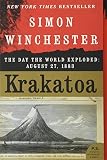
Krakatoa: The Day the World Exploded: August 27, 1883
Best Historical Fiction & Novels
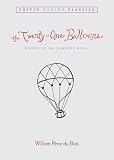
The Twenty-One Balloons
Impact & Consequences of the Eruption of Krakatoa
The 1883 eruption’s aftermath reshaped global climate, geography, and scientific understanding. The collapse of Krakatoa’s caldera triggered tsunamis that obliterated coastal communities, while volcanic ash darkened skies worldwide for years. The sulfur dioxide released caused a "volcanic winter," dropping temperatures and disrupting agriculture as far as Europe and North America. Modern studies, including analyses of ice cores and climate models, still reference Krakatoa’s effects to predict the impacts of future super-eruptions.
The disaster also accelerated advancements in volcanology. Scientists like Rogier Verbeek documented the eruption’s phases, laying groundwork for plate tectonic theory. Today, Anak Krakatau ("Child of Krakatoa"), which emerged from the caldera in 1927, is closely monitored as a living laboratory for volcanic activity. The eruption’s media coverage also marked a turning point in disaster reporting, with firsthand accounts and illustrations distributed globally via telegraph and newspapers.
---
Krakatoa vs. Other Volcanic Eruptions
Krakatoa’s eruption is often compared to other cataclysmic events like the 1815 Tambora eruption, which was more powerful and caused the "Year Without a Summer." However, Krakatoa’s notoriety stems from its audibility, tsunamis, and the fact it occurred during the industrial age, allowing detailed documentation. Unlike Yellowstone’s supervolcano, which erupts every 600,000–700,000 years, Krakatoa’s explosions are more frequent but smaller in scale. Recent interest in "waking" volcanoes like Italy’s Campi Flegrei highlights how Krakatoa remains a benchmark for evaluating regional and global risks.
---
Survivor Stories & Eyewitness Accounts
Despite the devastation, survivors’ accounts offer harrowing glimpses of the disaster. Dutch ship Loudon’s captain recorded waves "mountain high" and skies "black as night," while Javanese villagers described fleeing inland as tsunamis swallowed homes. The Batavia (now Jakarta) gasworks manager’s journal, cited in Winchester’s books, details the eruption’s audible "booms" and ash-covered streets. These narratives humanize the tragedy, though few on the volcano itself survived—its 3,000-foot peak vanished entirely.
---
Krakatoa's Global Climate Impact
Krakatoa’s eruption injected tens of millions of tons of sulfur dioxide into the stratosphere, forming sulfate aerosols that scattered sunlight. This caused up to a 1°C global temperature drop and spectacular sunsets for years, inspiring artists worldwide. The event also spurred early climate science; researchers linked it to erratic weather, including failed monsoons and colder winters. Today, scientists reference Krakatoa when modeling geoengineering scenarios or studying smaller-scale eruptions like 2022’s Hunga Tonga.
---
Frequently Asked Questions
Does the Krakatoa book have good reviews?
Yes, many books about the Krakatoa eruption, such as "Krakatoa: The Day the World Exploded" by Simon Winchester, have received positive reviews for their thorough research and engaging storytelling.
Why was Krakatoa so bad?
The 1883 Krakatoa eruption was one of the most catastrophic volcanic events in history, causing massive tsunamis, global climate effects, and the deaths of over 36,000 people due to its sheer explosive power.
What other books by the author of Krakatoa the day the world exploded?
Simon Winchester, the author of "Krakatoa: The Day the World Exploded," has written several other popular books, including "The Professor and the Madman" and "The Map That Changed the World."
Did anyone witness Krakatoa?
Yes, there were survivors and witnesses to the Krakatoa eruption, including sailors, local residents, and scientists, whose accounts were documented in letters, reports, and later books.
How long is the Krakatoa book?
"Krakatoa: The Day the World Exploded" by Simon Winchester is approximately 432 pages long, depending on the edition.
What is the children's book about Krakatoa?
"The Exploding Mountain: Krakatoa" by Anita Ganeri is a children's book that explains the 1883 eruption in an accessible way, with illustrations and simplified scientific explanations.
As an Amazon Associate, we earn from qualifying purchases.