Fall of Constantinople: Best Books & Historical Overview
What Was Fall of Constantinople?
The Fall of Constantinople occurred on May 29, 1453, when the Ottoman Empire, led by Sultan Mehmed II, successfully captured the city of Constantinople (modern-day Istanbul). This marked the end of the Byzantine Empire, which had stood for over a thousand years as a bastion of Christianity and classical knowledge. The siege lasted 53 days and involved advanced military tactics, including the use of massive cannons and naval blockades, which overwhelmed the city’s defenses.
Constantinople’s fall was a pivotal moment in history, signaling the rise of the Ottoman Empire as a dominant power and the end of the medieval era. The event had profound cultural, religious, and geopolitical consequences, reshaping Europe and Asia. It also spurred the Renaissance by prompting scholars fleeing the city to bring ancient Greek and Roman texts to Western Europe.
---
Book Comparison at a Glance
| Book | Readability | Depth | Best For |
|---|---|---|---|
| 1453 | High | Comprehensive | General readers |
| The Fall of Constantinople 1453 | Moderate | Detailed | Academics |
| Constantinople: Capital of Byzantium | Moderate | Thorough | History buffs |
| Byzantium: The Surprising Life | High | Broad | Beginners |
Best Books About Fall of Constantinople
The Fall of Constantinople is one of history’s most dramatic events, and these four books offer unique perspectives on its causes, unfolding, and aftermath. Whether you’re seeking a gripping narrative, scholarly analysis, or a broader historical context, these titles provide invaluable insights.
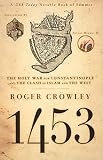
1453: The Holy War for Constantinople and the Clash of Islam and the West
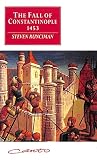
The Fall of Constantinople 1453
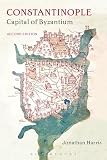
Constantinople: Capital of Byzantium
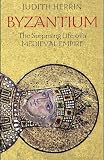
Byzantium: The Surprising Life of a Medieval Empire
Impact & Consequences of Fall of Constantinople
The Fall of Constantinople had far-reaching consequences for Europe, Asia, and the world. It marked the end of the Byzantine Empire, a Christian stronghold that had preserved classical knowledge for centuries. The event also solidified the Ottoman Empire’s dominance, reshaping the political and religious landscape of the region.
In Europe, the fall triggered a sense of crisis, prompting calls for a renewed defense of Christianity and contributing to the Age of Exploration as European powers sought new trade routes bypassing Ottoman-controlled territories. The influx of Byzantine scholars into Western Europe also helped fuel the Renaissance by reintroducing ancient Greek and Roman texts.
Culturally, the fall symbolized the end of the medieval era and the beginning of a new geopolitical order. The Ottoman Empire’s control of Constantinople facilitated the spread of Islamic culture and architecture, leaving a lasting legacy in the region.
---
Military Strategies & Tactics of the Siege
The siege of Constantinople showcased groundbreaking military strategies and innovations. Sultan Mehmed II employed massive cannons, including the famous "Basilica," which could fire enormous stone projectiles to breach the city’s walls. These weapons marked a turning point in siege warfare, rendering traditional fortifications obsolete.
The Ottomans also utilized naval tactics, constructing a fleet to blockade the city and prevent reinforcements. One of the most ingenious maneuvers was the transport of ships overland using greased logs, bypassing the Byzantine defenses in the Golden Horn.
The defenders, led by Emperor Constantine XI, relied on the city’s formidable walls and strategic positioning. However, their limited manpower and resources ultimately proved insufficient against the Ottomans’ overwhelming force and technological superiority.
---
Primary Sources & Eyewitness Accounts
The Fall of Constantinople is exceptionally well-documented through primary sources and eyewitness accounts. Notable works include the writings of George Sphrantzes, a Byzantine official who chronicled the siege, and Nicolò Barbaro, a Venetian surgeon who provided a detailed diary of the events.
Ottoman perspectives are preserved in accounts like Kritovoulos’s history of Mehmed II, which offers insight into the conqueror’s strategies and motivations. These firsthand narratives provide invaluable perspectives, capturing the human drama and historical significance of the event.
Modern historians rely on these sources to reconstruct the siege’s timeline and understand the experiences of those who lived through it. Their availability makes the Fall of Constantinople one of the most thoroughly documented events of the medieval period.
---
Ottoman vs. Byzantine Perspectives
The Fall of Constantinople is viewed differently through Ottoman and Byzantine lenses. For the Ottomans, it was a triumph of Islamic expansion and a testament to Mehmed II’s military genius. The conquest symbolized the empire’s rise as a global power and fulfilled prophecies of Islamic dominance.
For the Byzantines, it was a catastrophic loss, marking the end of their empire and the destruction of a Christian legacy. The event was mourned as a spiritual and cultural tragedy, with many seeing it as divine punishment for the empire’s sins.
Modern historians often contrast these perspectives to provide a balanced understanding of the siege. By examining both sides, they uncover the complexities of this pivotal moment in history.
---
What is the Netflix series about the fall of Constantinople?
As of October 2023, there is no Netflix series specifically about the fall of Constantinople.
What is the best book about the fall of Constantinople?
Roger Crowley’s "1453: The Holy War for Constantinople and the Clash of Islam and the West" is widely regarded as the best overall book on the topic.
What happened to Christians after the fall of Constantinople?
Many Christians were enslaved or killed, while others were allowed to remain under Ottoman rule, often as second-class citizens paying special taxes.
What is the best book about the siege of Constantinople?
Steven Runciman’s "The Fall of Constantinople 1453" is a definitive scholarly account of the siege.
What is the best book about the fall of the Ottoman Empire?
This page focuses on the Fall of Constantinople, not the Ottoman Empire’s decline.
Why is 1453 so historically important?
1453 marked the end of the Byzantine Empire, the rise of the Ottoman Empire, and a turning point in European and Islamic history.
As an Amazon Associate, we earn from qualifying purchases.