Maya Civilization Collapse: Best Books & Historical Overview
What Was Maya Civilization Collapse?
The Maya civilization collapse refers to the dramatic decline of the Classic Maya cities between the 8th and 9th centuries CE, primarily in the southern lowlands of modern-day Guatemala, Belize, Honduras, and Mexico. This period saw the abandonment of major urban centers like Tikal, Palenque, and Copán, along with the disintegration of political systems, trade networks, and monumental construction. While the Maya people persisted—and even thrived in northern regions like Chichen Itza—the collapse marked the end of their Classic-era dominance.
The event matters because it represents one of history’s most enigmatic societal collapses, sparking debates about environmental stress, warfare, and political instability. Unlike total extinction, the Maya collapse offers a case study in resilience, as descendants maintained cultural practices and adapted to new realities. Modern research into the collapse also highlights parallels to contemporary climate crises, making it a topic of both historical and urgent relevance.
Book Comparison at a Glance
| Book | Readability | Depth | Best For |
|---|---|---|---|
| Breaking the Maya Code | High | Detailed but focused | Readers fascinated by decipherment |
| The Maya | Moderate | Broad yet rigorous | Balanced introduction seekers |
| The Maya: A Very Short Introduction | High | Concise overview | Beginners or time-pressed readers |
| The Ancient Maya | Low | Encyclopedic depth | Academics and serious researchers |
Best Books About Maya Civilization Collapse
The collapse of the Maya civilization has inspired rigorous scholarship, from gripping narratives to dense academic works. Here are the definitive books on the subject, each offering a unique lens on this pivotal historical event.
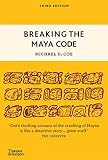
Breaking the Maya Code
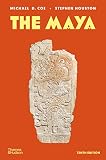
The Maya
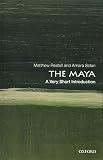
The Maya: A Very Short Introduction
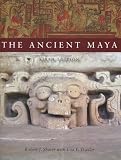
The Ancient Maya
Impact & Consequences of Maya Civilization Collapse
The collapse reshaped Mesoamerica, triggering migrations, cultural shifts, and the rise of new power centers like the Postclassic northern cities. Environmental degradation—particularly deforestation and soil exhaustion—left regions uninhabitable for centuries, a stark lesson in ecological mismanagement. Modern studies, including "Maya collapse environmental impact pdf" analyses, link these changes to prolonged droughts, exacerbating societal strain.
The collapse also fragmented Maya identity, as survivors adapted to smaller, decentralized communities. Yet their descendants preserved languages, agricultural practices, and cosmology, proving cultural continuity despite political disintegration. Recent research, such as "Impacts of climate change on the collapse of lowland Maya civilization," underscores how climate volatility interacted with human decisions to precipitate decline.
Key Theories & Debates About the Maya Collapse
Scholars debate multiple collapse triggers, with drought leading recent discussions. Paleoclimate data (e.g., sediment cores) reveal severe dry spells coinciding with the Classic Maya collapse, fueling theories like "What caused the Mayan drought." However, critics note drought alone doesn’t explain why some cities fell while others endured, pointing to compounding factors.
Warfare and political fragmentation also feature prominently. Epigraphic records describe escalating conflicts between city-states, while "Maya collapse political fragmentation" studies highlight how rival dynasties undermined collective resilience. Environmental overreach—such as terrace agriculture failures—rounds out the major theories, showing how ecological and social pressures intertwined.
Jared Diamond's Perspective on the Maya Collapse
In Collapse: How Societies Choose to Fail or Succeed, Diamond frames the Maya collapse as a cautionary tale of environmental overexploitation, grouping it with Easter Island and the Norse Greenlanders. He emphasizes deforestation’s role in exacerbating drought impacts, a narrative aligned with "Jared Diamond Maya collapse book" queries.
Historians critique Diamond’s deterministic approach, arguing he oversimplifies Maya agency and regional variability. Yet his work popularized collapse studies, bridging academia and public discourse. Searches like "What do historians think of Jared Diamond?" reflect this tension between accessibility and scholarly nuance.
Recent Discoveries & New Research
Advances in lidar technology have revolutionized Maya archaeology, uncovering hidden infrastructure (e.g., causeways, reservoirs) that redefine collapse timelines. Recent studies, noted in "Maya collapse recent discoveries," suggest some cities may have declined gradually rather than abruptly, challenging older catastrophe models.
Genetic and isotopic analyses also reveal new insights. For example, "What was the Mayan discovery recently?" often references 2023 findings about trade disruptions in the Terminal Classic period. Such work underscores the collapse’s complexity, blending climate science, epigraphy, and archaeology.
Frequently Asked Questions
What is the best book on the Mayans?
The Maya by Michael D. Coe is widely regarded as one of the best comprehensive books on the Maya civilization, covering their history, culture, and collapse.
What is the best evidence for the decline of Maya civilization?
Archaeological evidence, such as abandoned cities, reduced monument construction, and environmental data like drought records, provides strong proof of the Maya decline.
Why do historians think the Maya declined?
Historians believe a combination of factors, including prolonged droughts, warfare, overpopulation, and political instability, contributed to the Maya collapse.
Why is the idea that the Maya civilization collapsed wrong?
The idea is misleading because the Maya people and culture persisted; only the Classic period political and urban systems collapsed, while Maya communities continued to thrive in other regions.
As an Amazon Associate, we earn from qualifying purchases.