Mount St. Helens Eruption: Best Books & Historical Overview
What Was Mount St. Helens Eruption?
On May 18, 1980, Mount St. Helens in Washington State erupted catastrophically, marking the deadliest volcanic event in U.S. history. The eruption began with a massive landslide triggered by a 5.1-magnitude earthquake, which uncorked the volcano’s north flank and released a lateral blast of superheated gas, ash, and rock. The explosion devastated 230 square miles, killed 57 people, and ejected 540 million tons of ash across the U.S., disrupting air travel and altering ecosystems for decades.
The eruption’s significance lies in its scientific and cultural impact. It provided unprecedented data for volcanology, reshaping understanding of volcanic hazards and monitoring techniques. Culturally, it became a symbol of nature’s destructive power, immortalized in photographs, survivor stories, and ongoing research. The event also spurred debates about land use and disaster preparedness, influencing policies for volcanic zones worldwide.
Book Comparison at a Glance
| Book | Readability | Depth | Best For |
|---|---|---|---|
| Eruption | High | Comprehensive analysis | Adults seeking science & history |
| In the Path of Destruction | Moderate | Detailed eyewitness accounts | Researchers & history buffs |
| I Survived | High | Basic introduction | Kids & young readers |
Best Books About Mount St. Helens Eruption
The Mount St. Helens eruption has inspired a range of books, from rigorous scientific accounts to gripping narratives for younger readers. Below are the definitive titles to explore, each offering a unique perspective on the disaster.
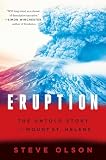
Eruption: The Untold Story of Mount St. Helens
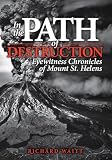
In the Path of Destruction: Eyewitness Chronicles of Mount St. Helens
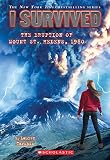
I Survived the Eruption of Mount St. Helens, 1980
Impact & Consequences of Mount St. Helens Eruption
The eruption’s immediate aftermath included economic losses exceeding $1 billion, with timber, agriculture, and tourism industries hit hardest. Over 200 homes were destroyed, and thousands of acres of forest were flattened, creating a "blast zone" that remains a living laboratory for ecological recovery. Books documenting this phase, such as those exploring the eruption’s economic impact or environmental effects, remain in demand, with titles available for purchase or free access through libraries and archives.
Long-term consequences included advances in volcanic monitoring, such as the establishment of the Cascades Volcano Observatory. Ecologically, the area saw surprising resilience, with plants and wildlife gradually recolonizing the barren landscape. Studies of these processes, often detailed in scientific publications or environmental impact reports, continue to inform disaster recovery strategies worldwide.
Eyewitness Accounts & Survivor Stories
Eyewitness narratives form a cornerstone of Mount St. Helens literature, as the eruption’s survivors recount moments of terror and resilience. Books like In the Path of Destruction compile harrowing tales, such as loggers outrunning pyroclastic flows or scientists like David Johnston (who famously radioed "Vancouver! Vancouver! This is it!") documenting the blast until their final moments. These stories humanize the disaster, offering visceral insights no scientific report can match.
The demand for survivor stories reflects a broader fascination with human endurance. Search trends show consistent interest in personal accounts, from amateur photographers caught in the ash cloud to families rebuilding their lives. Such narratives not only preserve history but also serve as cautionary tales about heeding evacuation warnings—a lesson underscored by the 57 lives lost.
Photography & Visual Documentation
The eruption’s visual drama—from its 80,000-foot ash plume to the flattened forests—has made it a magnet for photographers and artists. Iconic images, like the "before and after" shots of Spirit Lake or the volcano’s gaping crater, dominate photo books and documentaries. Titles like Mount St. Helens: The Eruption and Recovery of a Volcano cater to this interest, blending stunning imagery with explanatory captions.
Visual documentation also plays a key role in education and science. Time-lapse photography of the blast, aerial surveys of the damage, and satellite imagery tracking ash dispersion are frequently referenced in geology textbooks. For casual readers, photo books offer a visceral way to grasp the eruption’s scale without delving into technical jargon.
Children's Books & Educational Resources
Parents and educators often seek age-appropriate materials to explain the eruption, fueling demand for children’s books like I Survived the Eruption of Mount St. Helens. These titles simplify complex concepts—such as plate tectonics or pyroclastic flows—using engaging storytelling and illustrations. Schools also use the event to teach broader lessons about natural disasters and preparedness.
Free educational resources, like USGS pamphlets or online exhibits, complement these books by providing diagrams, activity sheets, and lesson plans. The eruption’s dramatic visuals and clear cause-and-effect narrative make it a staple of science curricula, ensuring its place in classrooms for generations.
Frequently Asked Questions
Was David Johnston's body ever found?
No, David Johnston's body was never found after he was swept away by the eruption while monitoring the volcano from his observation post.
What is the best book about the eruption of Mount St Helens?
"Eruption: The Untold Story of Mount St. Helens" by Steve Olson is widely regarded as one of the best books detailing the 1980 eruption and its aftermath.
What famous person died in the Mount St. Helens eruption?
Volcanologist David Johnston, who famously radioed "Vancouver! Vancouver! This is it!" before the eruption, was among the most notable fatalities.
What is the best book about the eruption of Mount St. Helens?
"Mount St. Helens: The Eruption and Recovery of a Volcano" by Rob Carson provides a comprehensive account of the eruption and the ecological recovery that followed.
Were the bodies recovered from Mount St. Helens?
Many bodies were never recovered due to the extreme conditions and scale of the devastation, though some victims were found months or years later.
What is the best book about Mount St. Helens eruption?
"Surviving the Mount St. Helens Disaster" by Lauren Tarshis is a highly recommended read, especially for younger audiences or those seeking a gripping narrative.
As an Amazon Associate, we earn from qualifying purchases.