The Aeneid has a translation problem most readers don't anticipate: Virgil's Latin is almost impossibly musical. Every line is a carefully constructed hexameter, dense with alliteration, assonance, and sound effects that do real narrative work — the famous line describing oars churning the sea sounds like oars churning the sea. English has no equivalent meter, and no translation fully solves this. What the best translators offer instead is a choice: prioritise the poem's emotional directness, its poetic beauty as English verse, or its fidelity to the Latin text.
It will also determine how the poem's central tension lands. The Aeneid is not a simple celebration of Rome's founding — it is a poem shot through with grief, loss, and moral ambiguity. Aeneas repeatedly sacrifices personal happiness to his destiny, and Virgil makes it painful rather than triumphant. Translators who soften that tension produce a more comfortable epic. Translators who preserve it produce a more honest one.
The Sarah Ruden translation is this guide's primary recommendation. Written by a classicist who is also a working poet, it is the most energetic and immediate modern version available — and more than any other English Aeneid, it lets you feel why Virgil was considered the supreme poet of antiquity. If you're reading the Aeneid for the first time, start here.
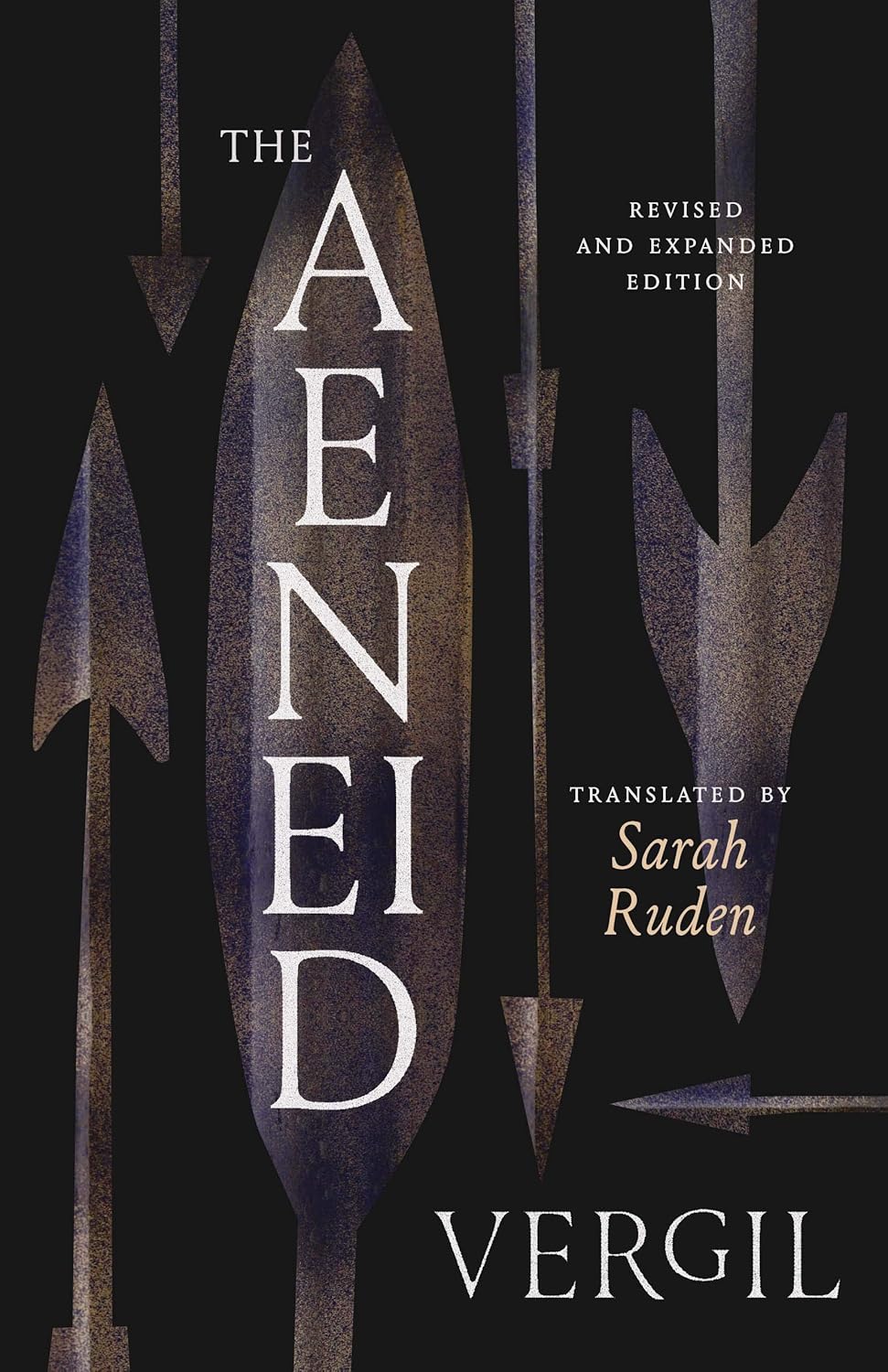
The Aeneid — trans. Sarah Ruden (2008)
First translation, recommended for most readers
Ruden's translation is the most alive English Aeneid currently available. She is a classicist who has spent her career translating ancient texts — the Homeric Hymns, Apuleius, the Gospels — and her Aeneid has the authority of deep Latin scholarship combined with a poet's ear for English rhythm and sound. Her version is spare and forceful where older translations are ornate, and it recovers something most English versions lose entirely: the strangeness and violence of Virgil's imagery. The famous lines describing Dido's despair, Turnus's death, the descent to the underworld — Ruden renders them with an immediacy that makes the poem feel newly written. The Yale University Press edition includes a substantial introduction and notes. If you read one Aeneid, read this one.
Buy on Amazon → 
The Aeneid — trans. David Ferry (2017)
Most lyrical, best for readers who want the poem as poem
David Ferry is one of the finest American poets of the past half-century, and his Aeneid is what happens when a master of English verse turns his full attention to Virgil. His translation is in blank verse — unrhymed iambic pentameter — and it reads with a naturalness and forward momentum that is unusual in epic translation. Where Ruden is stark and angular, Ferry is warm and flowing; where Ruden reaches for Virgil's strangeness, Ferry reaches for his beauty. This is not a criticism. The grief of the poem — Dido's abandonment, Pallas's death, Lausus and Mezentius — comes through in Ferry's version with extraordinary feeling. He had also previously translated Virgil's Eclogues and Georgics, and his sense of Virgil's world and voice is deep. The University of Chicago Press edition is well-produced. If you already know the story and want to read the Aeneid as a poem, Ferry is the answer.
Buy on Amazon → 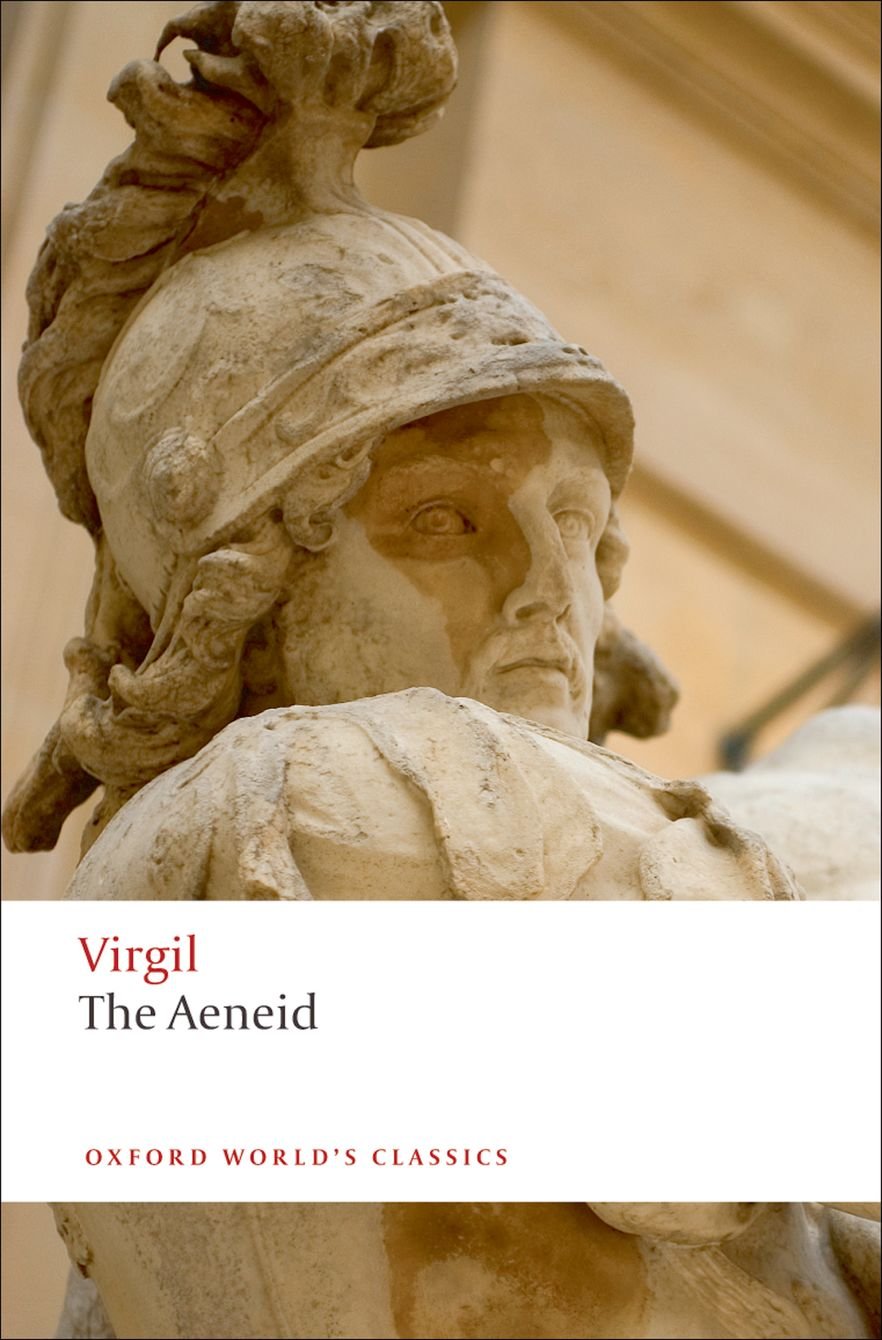
The Aeneid — trans. Frederick Ahl (2007)
Most literal, best for readers tracking the Latin
Ahl's translation, published in the Oxford World's Classics series, is the most faithful to the Latin of the three options here. Ahl is a Cornell classicist who has written extensively on Virgil, and his version is oriented toward readers who want to stay as close to the original as possible — whether they are working alongside the Latin, studying the poem academically, or simply want to know what Virgil actually says rather than what a poet decided to make of it. The cost is some of the verse energy: Ahl's lines are less immediately pleasurable as English poetry than Ruden or Ferry, and the translation can feel labored in places where the others flow. But his attention to Virgil's wordplay, ambiguity, and structural patterns is unmatched in any modern English version, and the Oxford edition's introduction and notes are excellent. Read Ahl if you want maximum fidelity or are approaching the Aeneid as a student of the Latin tradition.
Buy on Amazon → As an Amazon Associate, I earn from qualifying purchases.