All Quiet on the Western Front (Im Westen nichts Neues, 1929) was an immediate sensation: it sold 2.5 million copies in Germany in its first eighteen months and was burned by the Nazis in 1933. Erich Maria Remarque had served in World War I as a young man and drew directly on that experience to create Paul Bäumer, a nineteen-year-old soldier who enlists full of patriotic idealism and loses everything — his friends, his youth, his future — to the machinery of industrial warfare. The novel's power lies not in its battle scenes but in its unflinching attention to what is taken from young men: their ability to imagine a peacetime life, their capacity for ordinary feeling, their futures.
Remarque wrote in a clear, direct German prose — deliberately plain, deliberately unglamorous — and both English translations below face the challenge of rendering that plainness without making it feel thin. The 1929 Wheen translation shaped how generations of English readers encountered the book. A new translation by Maria Tatar, published by Penguin Classics in 2023 with a foreword by Samantha Power, reopens every sentence and asks what is actually on the page.
A.W. Wheen's translation is this guide's primary recommendation for first-time readers — it has the weight of decades of readership behind it and captures the novel's momentum and emotional force. Tatar's translation is the more precise version and the right choice for anyone who wants the closest possible rendering of Remarque's German.
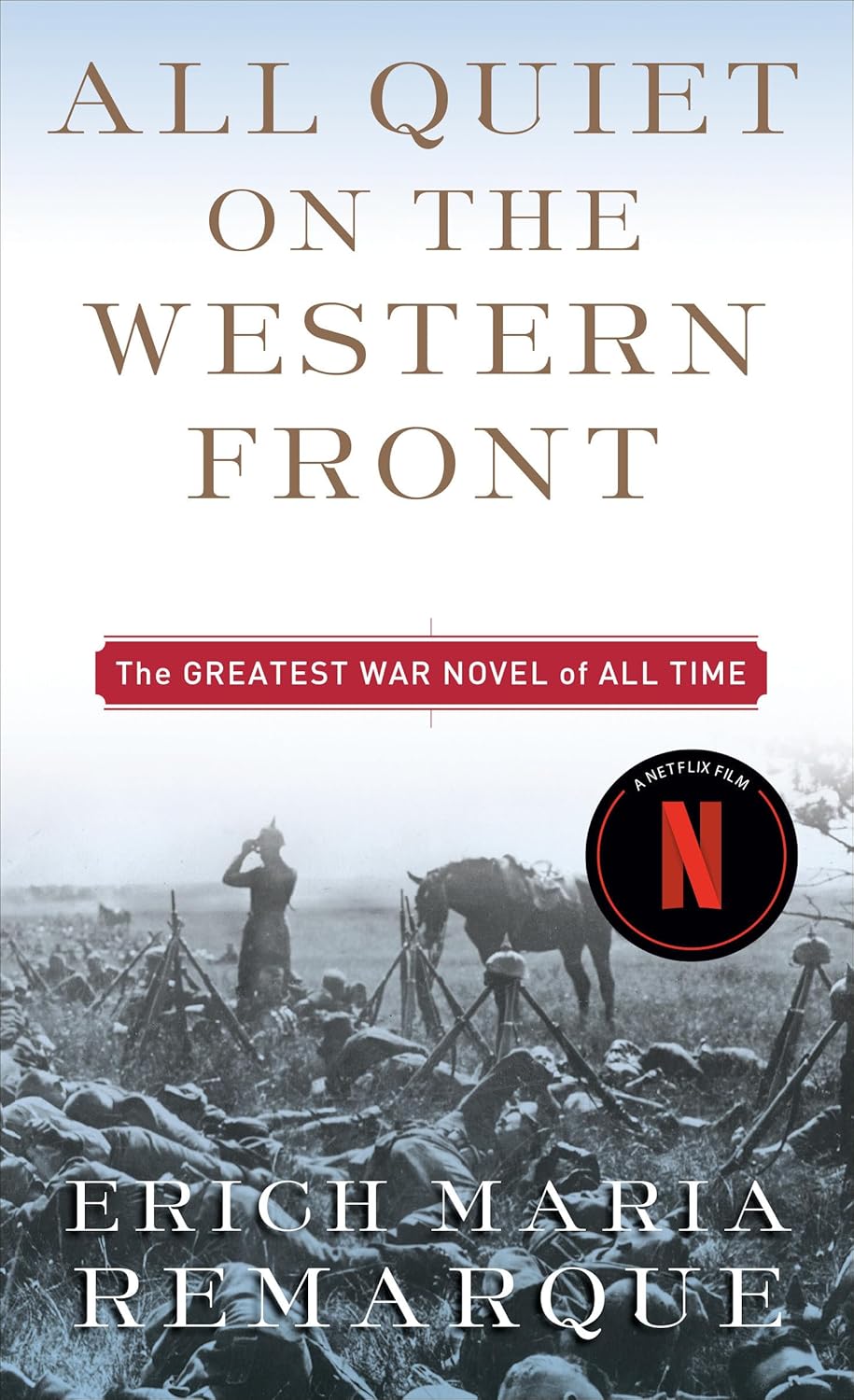
All Quiet on the Western Front — trans. A.W. Wheen (1929)
First translation, recommended for most readers — the classic version that defined the novel in English
Arthur Wesley Wheen's 1929 translation was made with Remarque's involvement and is in many ways inseparable from the novel's English-language identity. Wheen worked fast — the translation appeared the same year as the German original — and the speed shows in the best sense: the prose has an urgency and directness that matches Remarque's own, and the rhythms feel natural rather than translated. For more than ninety years it was the only English version widely available, which means it is the version quoted in criticism, taught in schools, and remembered by readers who encountered the book in the twentieth century. Some scholars have noted places where Wheen smoothed over German idioms or domesticated the prose; the famous opening lines, for instance, lose some of their abruptness in English. But for a first reading, these are minor concerns against the cumulative power of Wheen's version, which delivers the novel's emotional argument with full force. The Netflix film tie-in edition shown here makes it easy to find and affordable to own.
Buy on Amazon → 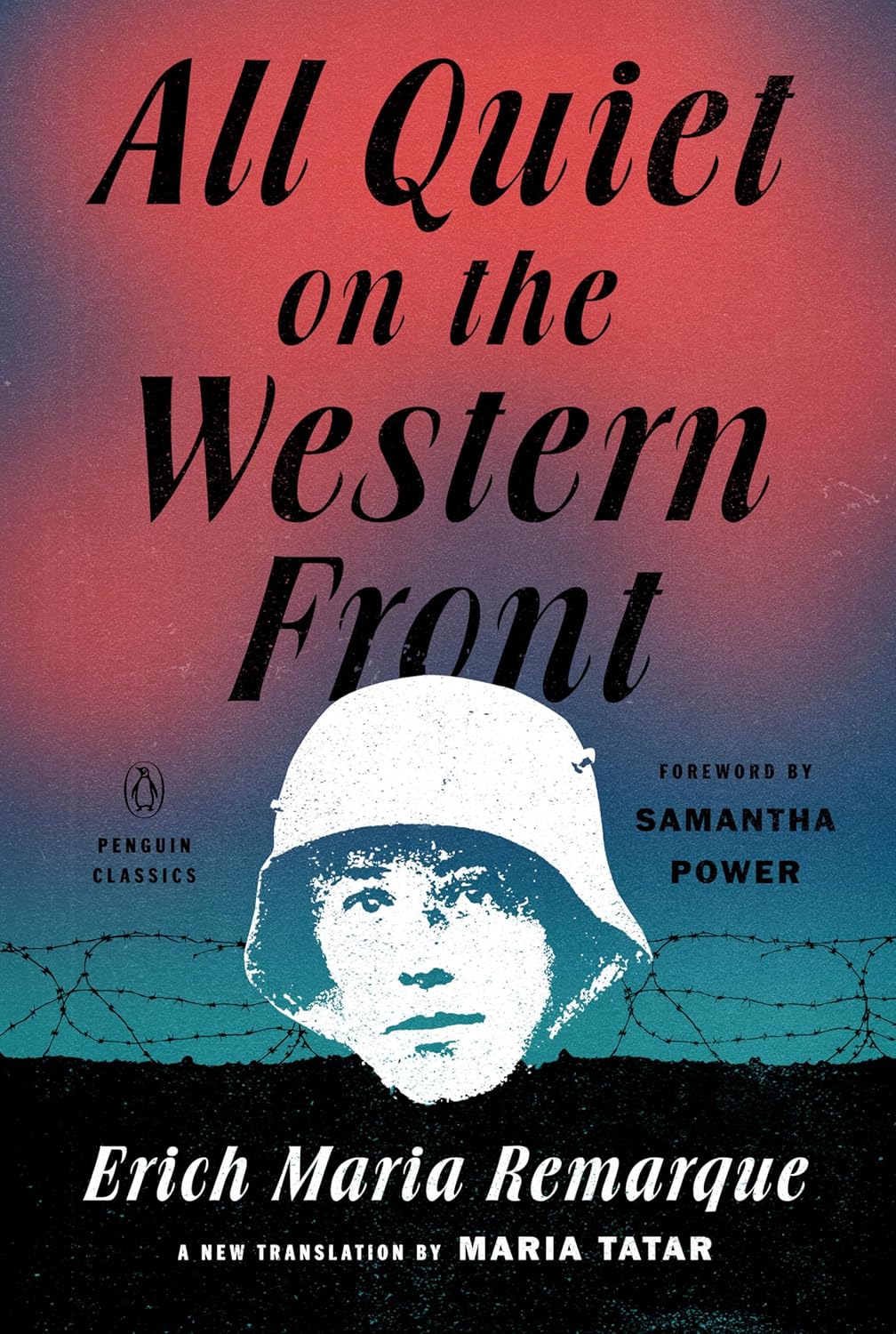
All Quiet on the Western Front — trans. Maria Tatar (2023)
Penguin Classics — a new scholarly translation with foreword by Samantha Power; the most precise English version
Maria Tatar's 2023 Penguin Classics translation is the first major new English version of All Quiet in nearly a century, and it is a genuine re-encounter with the German text. Tatar, a Harvard professor specialising in German literature and folklore, brings deep scholarly knowledge to the translation and is attentive to places where Wheen's version simplified, smoothed, or simply missed what Remarque wrote. Her Paul Bäumer is more abrasive, the prose more jagged where Remarque intended jaggedness. Critics have noted in particular her handling of the novel's distinctive tonal shifts — the moments when Remarque moves from deadpan report to sudden lyrical grief — which Tatar captures with greater precision than Wheen. The foreword by Samantha Power, former U.S. Ambassador to the UN, situates the novel in the context of contemporary war and gives the edition a political urgency appropriate to the book. The Penguin Classics hardcover is a handsome object and a worthy permanent edition. For anyone returning to the novel or reading it for the first time with the intention of reading closely, Tatar's translation is the right choice.
Buy on Amazon → As an Amazon Associate, I earn from qualifying purchases.