Anna Karenina opens with one of the most famous sentences in all of literature. How your translator renders it tells you almost everything you need to know about the version you're holding. Tolstoy's Russian is deceptively simple on the surface — direct, declarative, almost journalistic — and then suddenly, without warning, achingly beautiful. The translator's job is to hold both registers at once without letting either collapse into the other.
Most fail at least some of the time. The question is where and how.
The Pevear and Volokhonsky translation is the most widely read modern version and this guide's primary recommendation for most readers. It won the PEN/Book-of-the-Month Club Translation Prize and is the version most likely to be taught in university courses or found in bookshops. But Anna Karenina has a stronger field of alternatives than almost any other Russian novel — Bartlett and Maude are both serious contenders, and the choice between them is genuinely a matter of preference rather than quality. If you're reading Anna Karenina for the first time, start with Pevear and Volokhonsky.
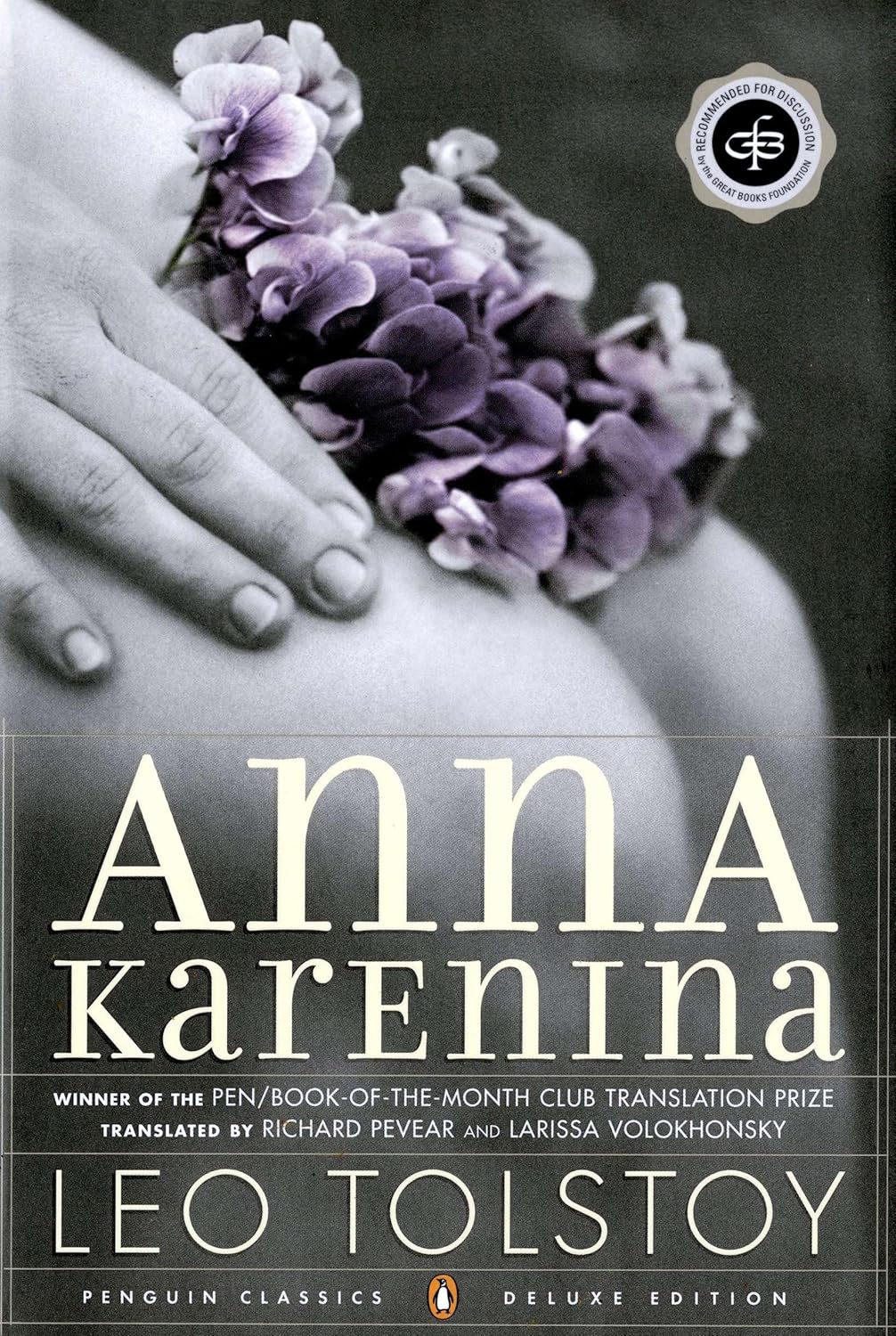
Anna Karenina — trans. Richard Pevear & Larissa Volokhonsky (2000)
First translation, recommended for most readers
The PEN Prize-winning translation and the dominant modern version. Pevear and Volokhonsky preserve Tolstoy's syntax more faithfully than any previous translation — the long sentences, the repetitions, the structural rhythms that earlier translators smoothed away. Their Tolstoy is closer to the Russian original and further from conventional literary English, which produces a reading experience that feels authentically strange in all the right ways. Chosen by Oprah for her book club in 2004, which makes it the version most likely to be discussed in reading groups. The Penguin Classics edition is the standard; the Viking hardcover is handsome and worth owning.
Buy on Amazon → 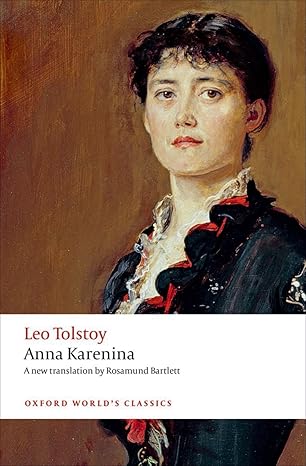
Anna Karenina — trans. Rosamund Bartlett (2014)
Most elegant English, best for pure reading pleasure
Many serious readers consider Bartlett's Oxford translation the finest version of the novel available in English. Where Pevear and Volokhonsky prioritize fidelity to Tolstoy's Russian syntax, Bartlett prioritizes the flow and beauty of the English prose — and the result is a translation that reads with an ease and grace that P&V occasionally sacrifices for literalism. Her version is particularly strong on the novel's social scenes and dialogue, where Tolstoy's wit and irony come through with unusual sharpness. The Oxford World's Classics edition includes an excellent introduction and notes. If you find P&V slightly labored, Bartlett is the answer.
Buy on Amazon → 
Anna Karenina — trans. Louise & Aylmer Maude (1918)
Tolstoy-approved, most authoritative classic translation
The Maudes occupy a unique position in the history of Tolstoy translation: they were personal friends of Tolstoy, they wrote his biography, and he approved their translations during his lifetime. No other Anna Karenina translation carries that authority. Their version reads with a stateliness and directness that suits Tolstoy's moral seriousness particularly well — many readers who have tried P&V find themselves returning to Maude for its clarity and lack of self-consciousness. It lacks the contemporary energy of Bartlett but has a settled authority that newer translations are still working toward. The Oxford World's Classics edition is the best available.
Buy on Amazon → 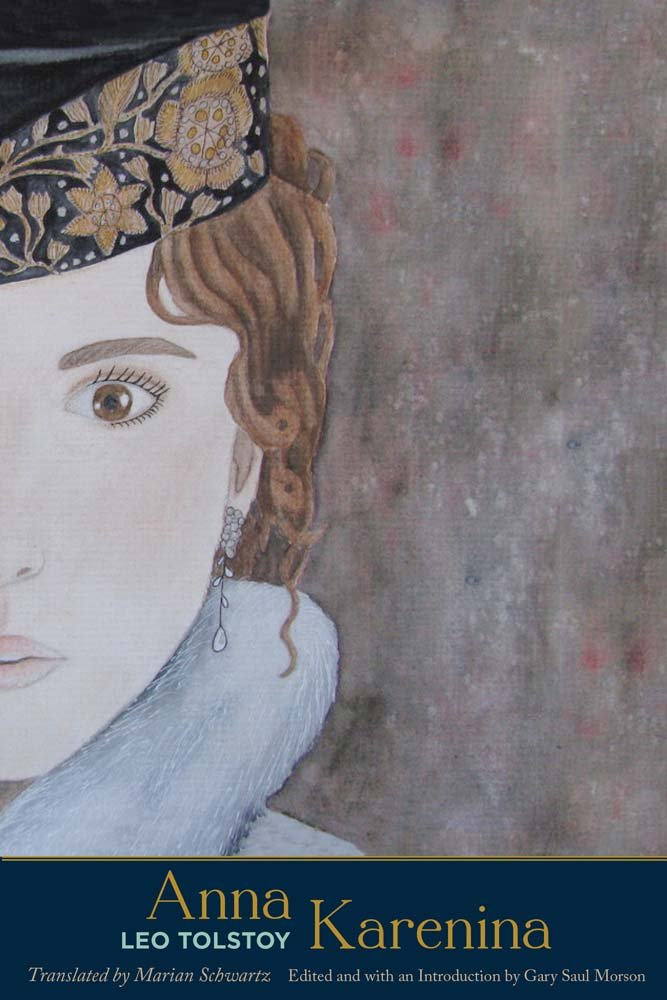
Anna Karenina — trans. Marian Schwartz (2014)
Most literal, best for scholarly reading
Schwartz's Yale University Press translation is the most literal modern version available — she embraces Tolstoy's clunkiness rather than smoothing it, on the principled grounds that the awkwardness is intentional and meaningful. The result is a translation of considerable scholarly value that rewards close reading and comparison with other versions. It is less immediately readable than Bartlett or Maude, and has been described as "less readable than Bartlett" even by sympathetic critics — but for readers who want to get as close to Tolstoy's actual choices as possible without reading Russian, Schwartz is the most honest guide. Best approached as a second translation rather than a first.
Buy on Amazon → As an Amazon Associate, I earn from qualifying purchases.