Crime and Punishment has a translation problem that most readers don't expect: the novel is funny. Not obviously, not broadly — but Dostoevsky laces Raskolnikov's torment with a dark, almost farcical absurdity that most English translations either miss entirely or bury under Victorian stateliness. Which translation you choose will determine whether you experience that humor or not.
It will also determine how the novel sounds in your head. Dostoevsky's Russian is jagged, nervous, and repetitive in ways that are completely intentional — the prose enacts Raskolnikov's fractured psychology. Translators who smooth that roughness out produce a more comfortable read. Translators who preserve it produce a more honest one.
The Pevear and Volokhonsky translation is this guide's primary recommendation. It is the most rigorous, most celebrated, and most widely read modern translation available — and more than any other version, it lets Dostoevsky's strangeness come through intact. If you're reading Crime and Punishment for the first time, start here.
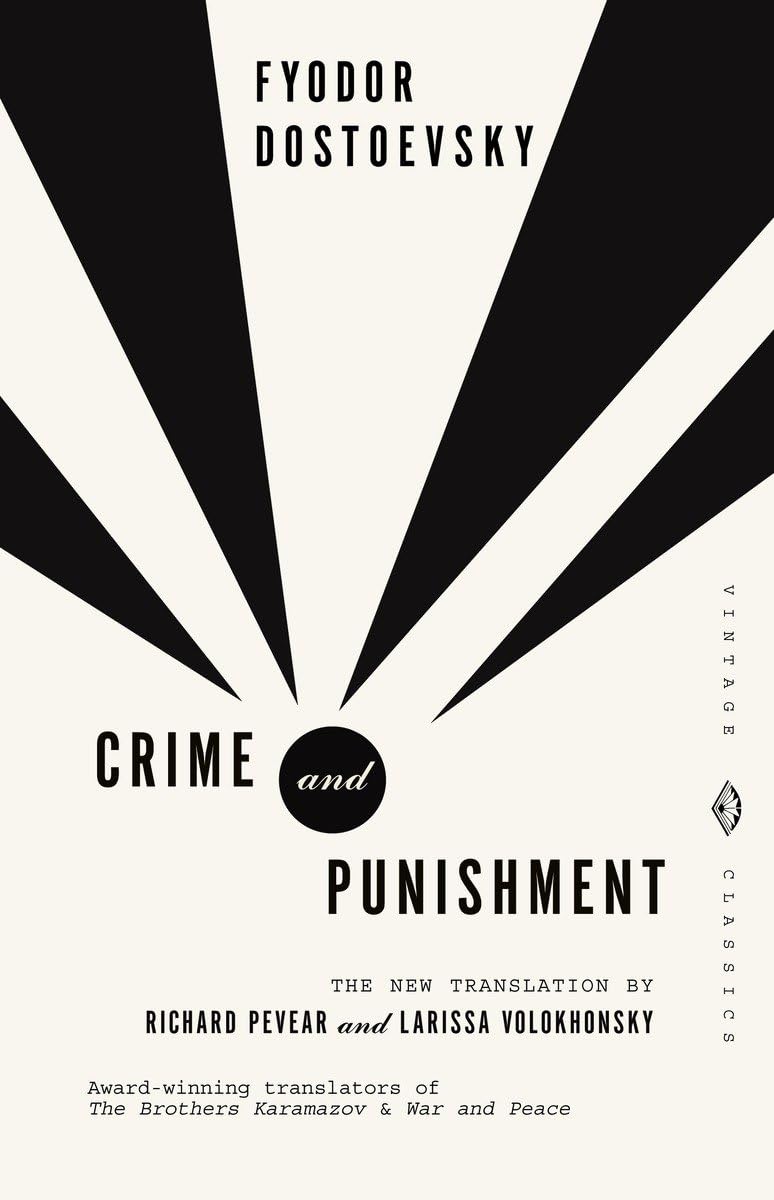
Crime and Punishment — trans. Richard Pevear & Larissa Volokhonsky (1992)
First translation, recommended for most readers
The gold standard of modern Dostoevsky translation. Pevear and Volokhonsky work as a team — Volokhonsky, a native Russian speaker, provides a literal rendering, and Pevear shapes it into English prose — and the result is a translation of unusual fidelity and force. Their version preserves Dostoevsky's sentence rhythms, his vivid dialogue, and the philosophical weight of Raskolnikov's internal monologue in ways that smoother translations flatten. The Washington Post called it the best translation currently available when it was first published. That assessment still holds. The Vintage Classics paperback is the standard edition; the Everyman's Library hardcover is the one to own.
Buy on Amazon → 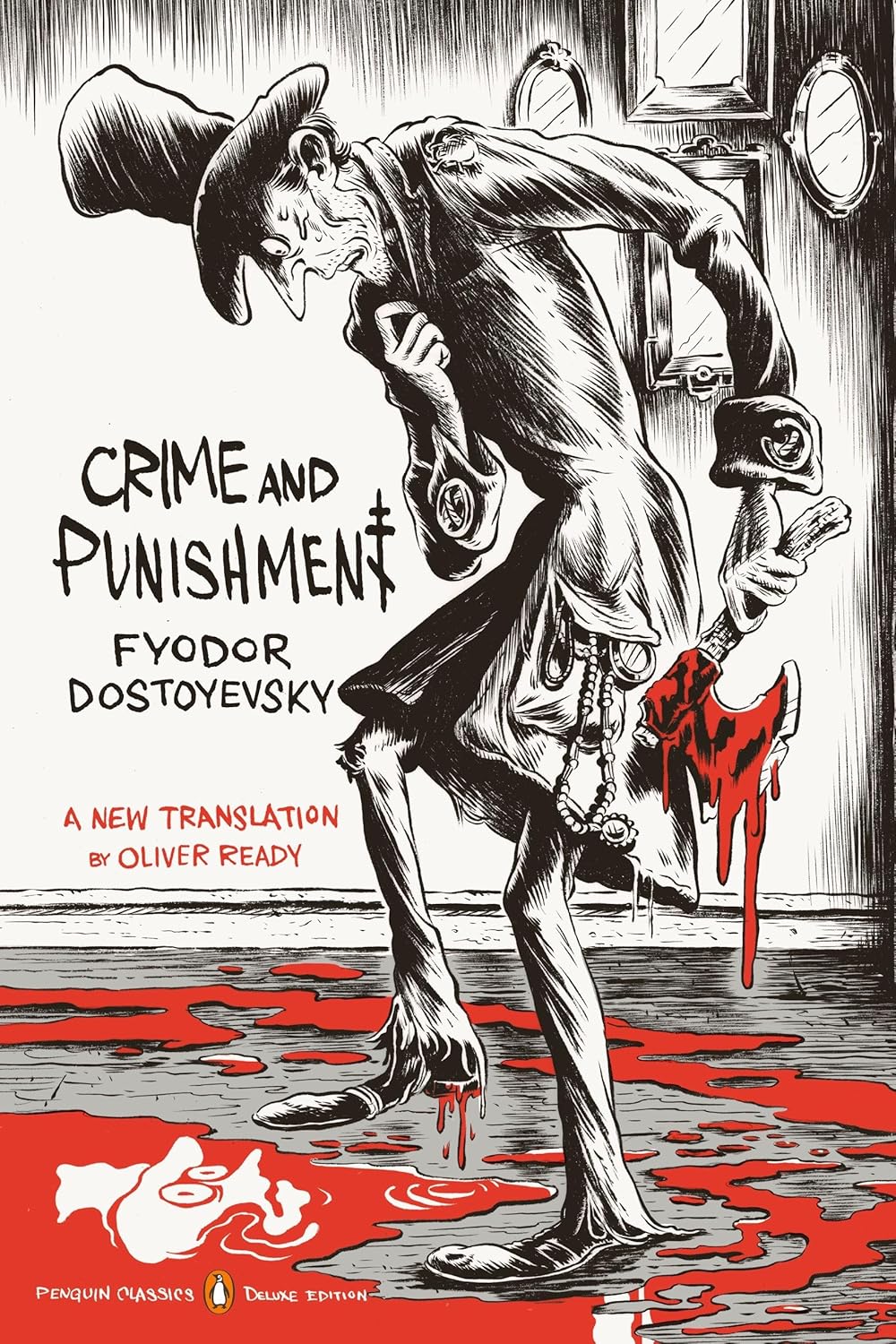
Crime and Punishment — trans. Oliver Ready (2014)
Most contemporary, best for natural dialogue
The most recent major translation and the strongest challenger to Pevear and Volokhonsky. Ready's version is more idiomatic than P&V — it reads more naturally as English prose and catches something that older translations often miss: Dostoevsky's dark humor. Raskolnikov's absurdity, the black comedy of the police scenes, the grotesque energy of the supporting characters — Ready renders all of it with a crackle that feels genuinely modern. If you find P&V slightly stilted, Ready is the answer. The Penguin Classics Deluxe edition is well-produced and the introduction is excellent.
Buy on Amazon → 
Crime and Punishment — trans. David McDuff (1991)
Lean and fast, best for first-time readers who want pace
McDuff's translation is leaner and faster than either Pevear or Ready — it sacrifices some of the literalness for pace and clarity, and the result is a Crime and Punishment that moves. If you are approaching the novel with some apprehension about its length and density, McDuff is the most forgiving entry point. You will lose some of the philosophical texture but gain a reading experience that feels closer to a thriller than a philosophical treatise. A good choice for readers who want to discover the story before wrestling with the ideas.
Buy on Amazon → 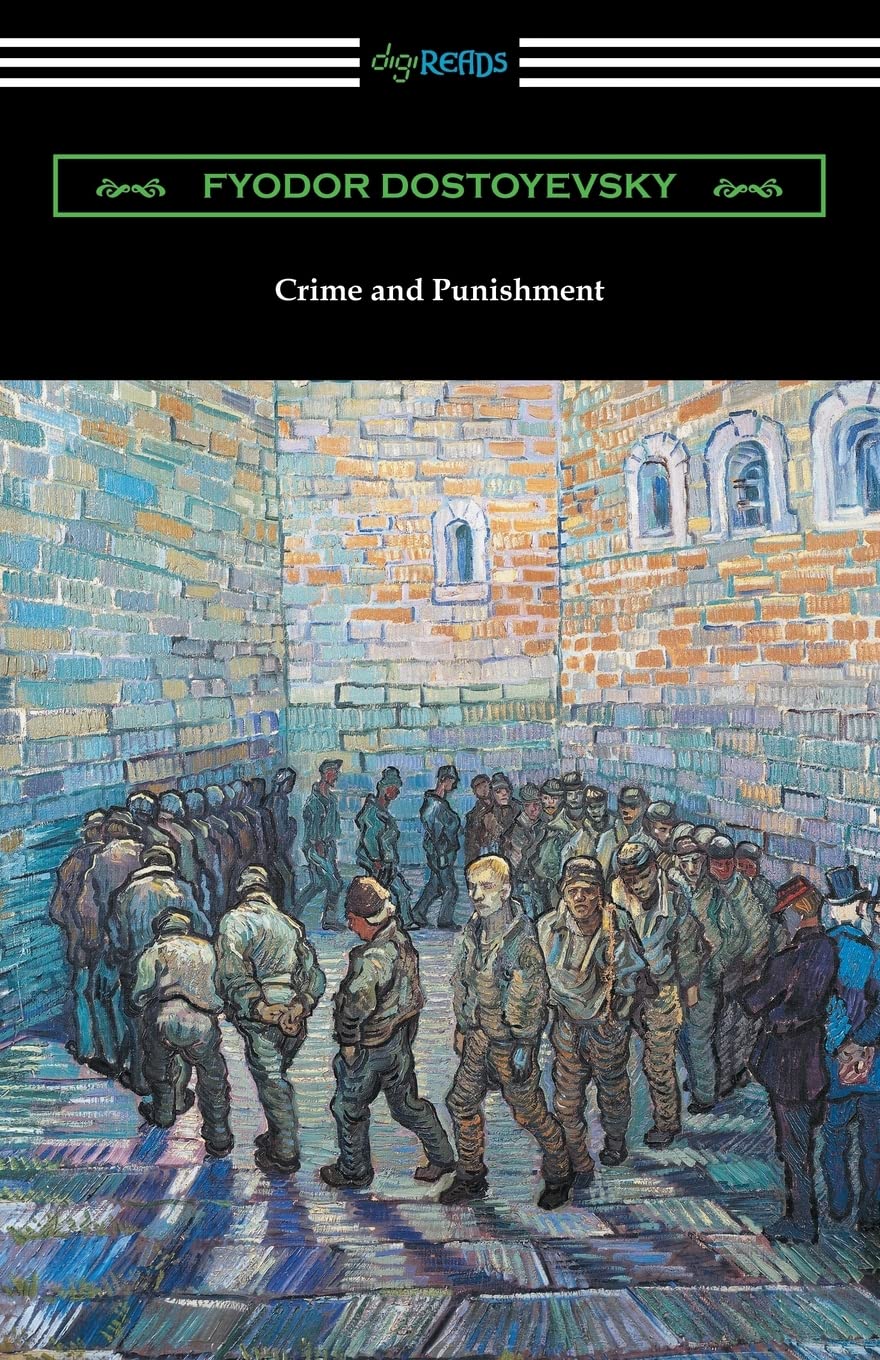
Crime and Punishment — trans. Constance Garnett (1914)
The classic translation, best for historical context
Garnett's 1914 translation was the dominant English version for more than eighty years and introduced generations of readers to Dostoevsky. It reads with a Victorian stateliness that has its own dignity, and many readers still defend it passionately against newer alternatives. That said, scholars have noted that Garnett sometimes smoothed over Dostoevsky's rougher edges, and her version has none of the dark comedy that Ready and Pevear capture. Read Garnett if you want to understand why Dostoevsky's reputation in the English-speaking world was built the way it was — or if you simply prefer the cadences of early twentieth-century English prose. Available free in many digital editions.
Buy on Amazon → As an Amazon Associate, I earn from qualifying purchases.