Dead Souls (Мёртвые души, 1842) is Gogol's masterpiece and one of the strangest novels in any language. The plot is a brilliant piece of satirical machinery: Chichikov, a smooth-talking con man, travels across provincial Russia buying the legal records of dead serfs — "dead souls" — from local landowners who still pay taxes on them. The scam, never fully revealed in the completed text, involves pledging the purchased souls as collateral for a loan. What the scheme produces is an encyclopaedia of Russian provincial life — each landowner is a study in a different variety of human emptiness, stagnation, or venality — and a portrait of Russia's bureaucratic and social world in the pre-emancipation era.
Gogol subtitled the book "A Poem" (Поэма), and he meant it: Dead Souls is not a novel in the conventional sense but a picaresque whose narrator constantly steps forward to address the reader, digress into lyric prose, and declaim over Russia's fate and future. The challenge for translators is catching Gogol's comedy — which is wild, anarchic, and deeply strange — without flattening it into something sensible. His prose resists paraphrase: his similes go on too long and become parodies of similes, his characters are described with a precision that tips into surrealism, and his narrator's voice is full of false solemnity and hidden irony.
The Pevear and Volokhonsky translation is this guide's primary recommendation. It is the most widely available modern version and the one that best preserves the texture of Gogol's prose.
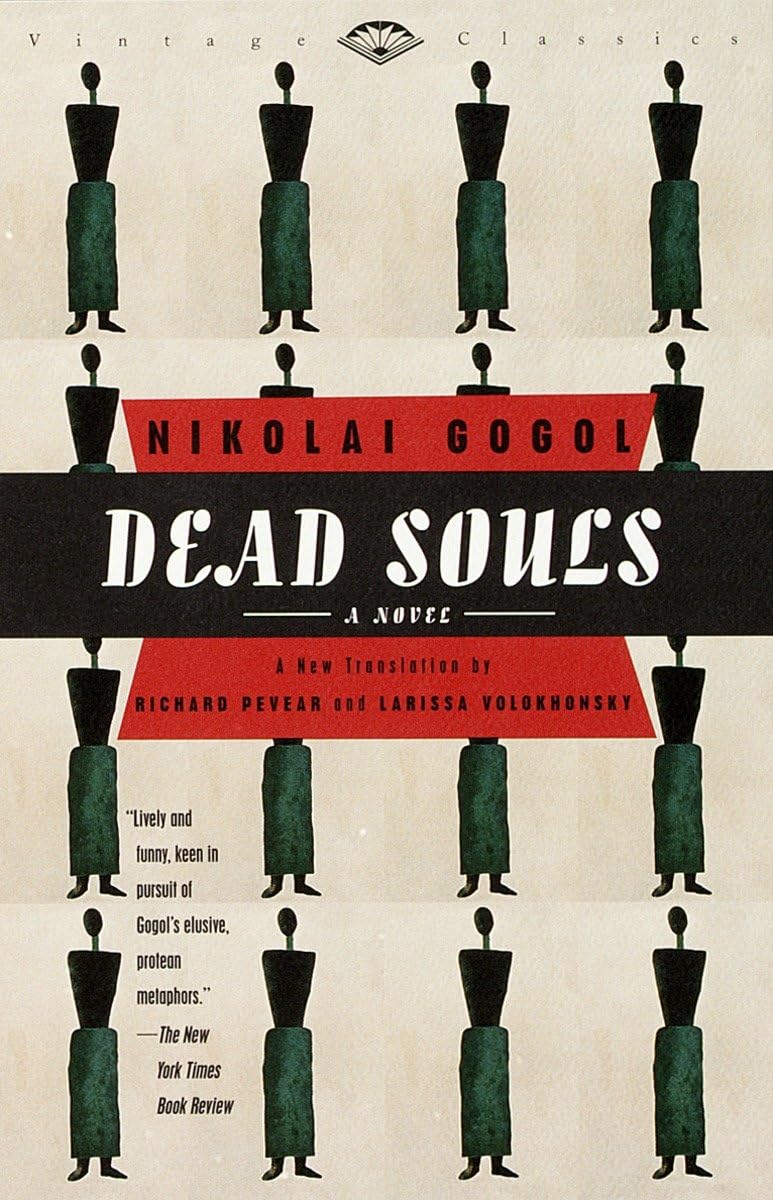
Dead Souls — trans. Richard Pevear & Larissa Volokhonsky (1996)
First translation, recommended for most readers
Pevear and Volokhonsky's Vintage Classics edition is the standard modern English Dead Souls and the version most widely taught in courses on Russian literature. P&V approach Gogol as they approach Dostoevsky — preserving the idiom, the syntactic peculiarities, and the tonal strangeness of the original rather than normalising them into standard English literary prose. This matters especially for Gogol, whose prose is so deliberately odd that early translators sometimes assumed they were correcting errors rather than translating intentional effects. The P&V Dead Souls keeps the run-on similes, the narrator's rhetorical excesses, and the moments where the comedy tips into something unsettling. Their translation of the famous troika passage at the end of Part One, in which Gogol addresses Russia as a speeding bird-troika heading into an unknown future, is among their finest work. For any reader coming to the novel for the first time, this is the version to choose.
Buy on Amazon → 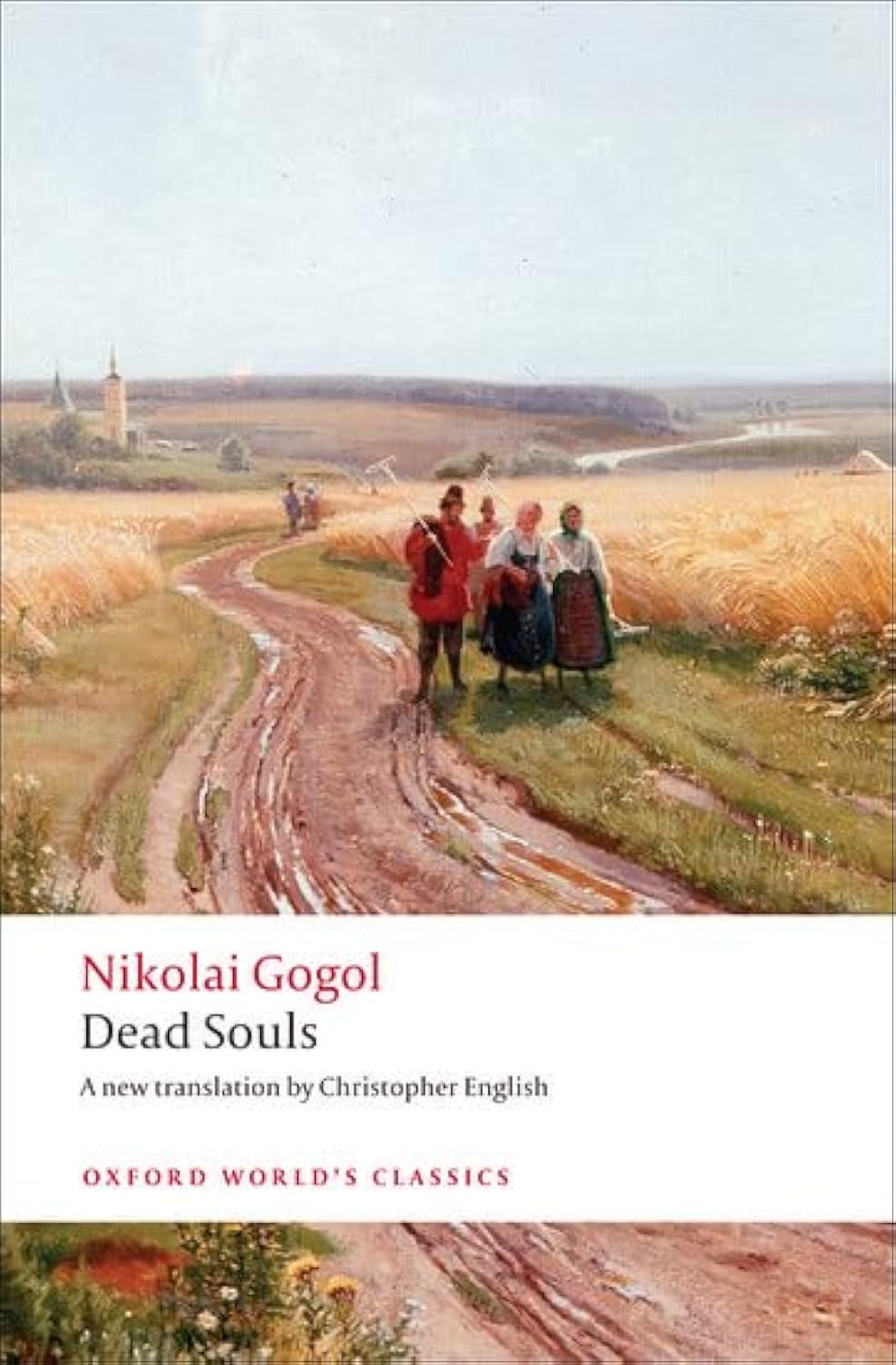
Dead Souls: A Poem — trans. Christopher English (2008)
Most scholarly — Oxford edition with extensive notes and critical introduction
Christopher English's Oxford World's Classics translation preserves Gogol's "A Poem" subtitle and foregrounds the book's generic strangeness from the outset. English is a careful and accurate translator — his version is less stylistically adventurous than P&V but more consistently readable in the conventional sense, and it is well suited to a reader who wants a fluent text alongside scholarly apparatus. The Oxford edition includes a substantial introduction, notes on the historical context (serfdom, the census system, the provincial bureaucracy), and annotation on Gogol's literary and cultural references. It is the most useful edition for a reader approaching the novel academically or for the first time with reference support. English's translation of Gogol's digressions and lyric passages is particularly clear. A strong alternative to P&V for readers who value editorial support over stylistic edge.
Buy on Amazon → 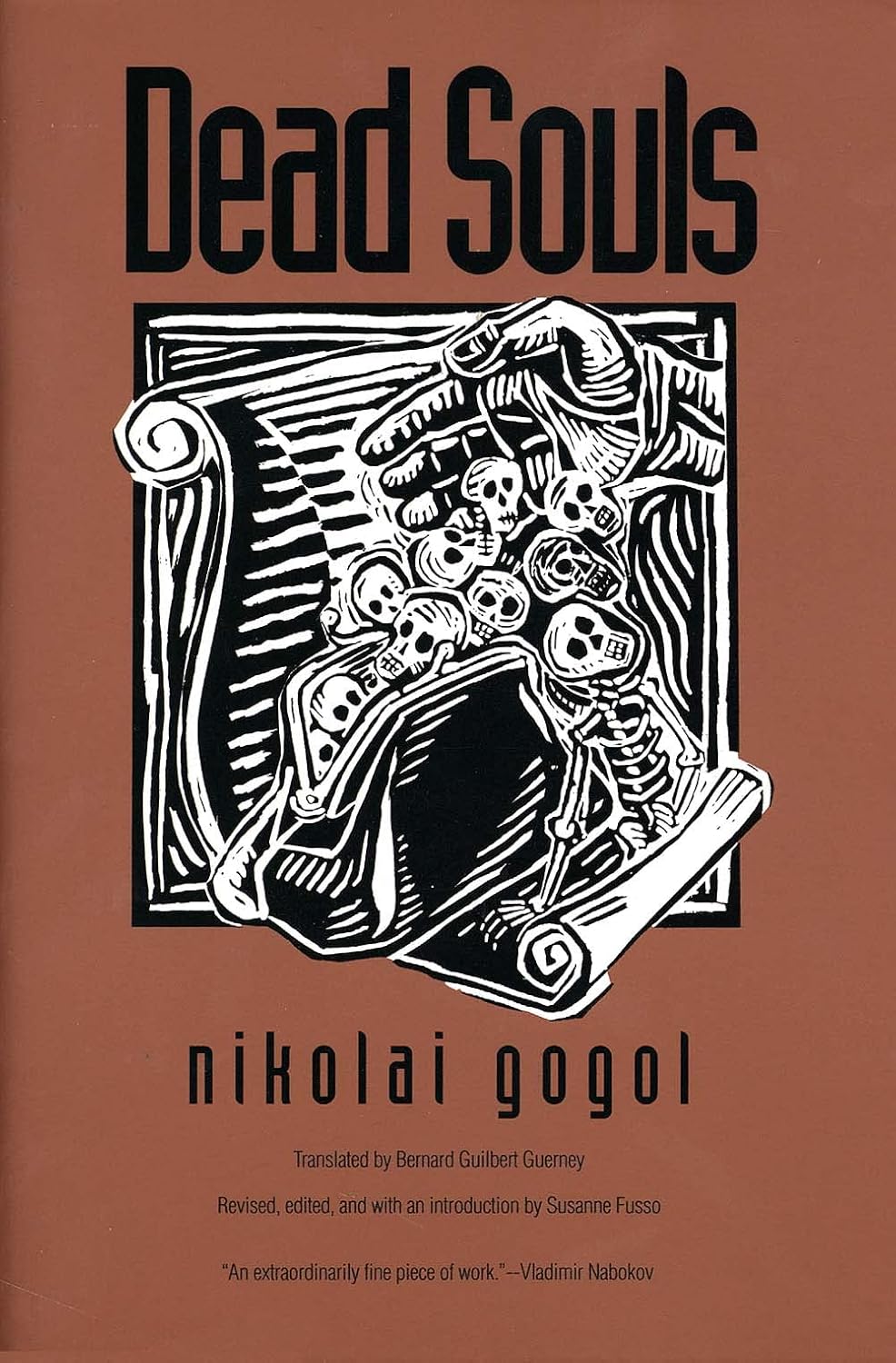
Dead Souls — trans. Bernard Guilbert Guerney, rev. Susanne Fusso (1996)
The classic translation — praised by Nabokov, revised for accuracy
Bernard Guilbert Guerney's translation, first published in 1942 and revised and edited by the Gogol scholar Susanne Fusso for the Yale University Press edition, was for decades the most celebrated English Dead Souls. Nabokov — who lectured on Gogol for years at Cornell and was notoriously difficult to satisfy on questions of translation — called it "an extraordinarily fine piece of work." Guerney had an exceptional feel for Gogol's comedy: his translation is vivid, inventive, and catches the anarchic energy of the original in a way that some later translations have struggled to match. Fusso's revision corrects errors and updates the text while preserving Guerney's spirit. For a reader who wants to experience Gogol as a comic genius rather than a social satirist, and who values idiomatic English vigour over strict fidelity to the Russian, the Guerney/Fusso Yale edition is a compelling alternative to P&V.
Buy on Amazon → As an Amazon Associate, I earn from qualifying purchases.