The Decameron (1348–1353) is one of the foundational works of European literature, written in the shadow of the Black Death that devastated Florence in 1348. Boccaccio's frame narrative is precise and elegant: seven young women and three young men flee the plague-ridden city to a series of country villas, where they pass ten days by telling stories — ten stories each day, one hundred novelle in total. Each day has a theme, and each tale a teller; the stories range from bawdy bedroom comedies to tragic love affairs, from ingenious swindles to philosophical parables, from brutal social satire to moments of genuine pathos. The frame sequences — the daily rituals of the group, the songs and dances at day's end, the narrator's interludes — have their own lyric quality distinct from the tales themselves.
The Decameron's influence on European literature is difficult to overstate. Chaucer's Canterbury Tales borrows its frame and several of its stories directly. Shakespeare used Decameron plots. Generations of story writers and novelists absorbed its lessons about pacing, irony, the gap between what characters say and what they mean, and the mechanics of surprise and delay that make a narrative satisfying. Reading Boccaccio is to encounter the origins of a great deal of what we recognise as modern fiction.
The challenges for translators are considerable. Boccaccio's Italian prose is elaborate and Latinate — long periods, nested subordinate clauses, formal rhetorical structures — and it exists in productive tension with the earthiness and speed of the tales themselves. The comic stories require timing; the erotic ones need to be frank without being crude; the frame sequences call for a different, more elevated register. No single translation captures all of this equally well, but the three below represent the best available options.
Wayne Rebhorn's Norton translation is this guide's primary recommendation. It is the most recent, the most consistently praised, and the version that best balances fidelity to Boccaccio's complexity with genuine readability.
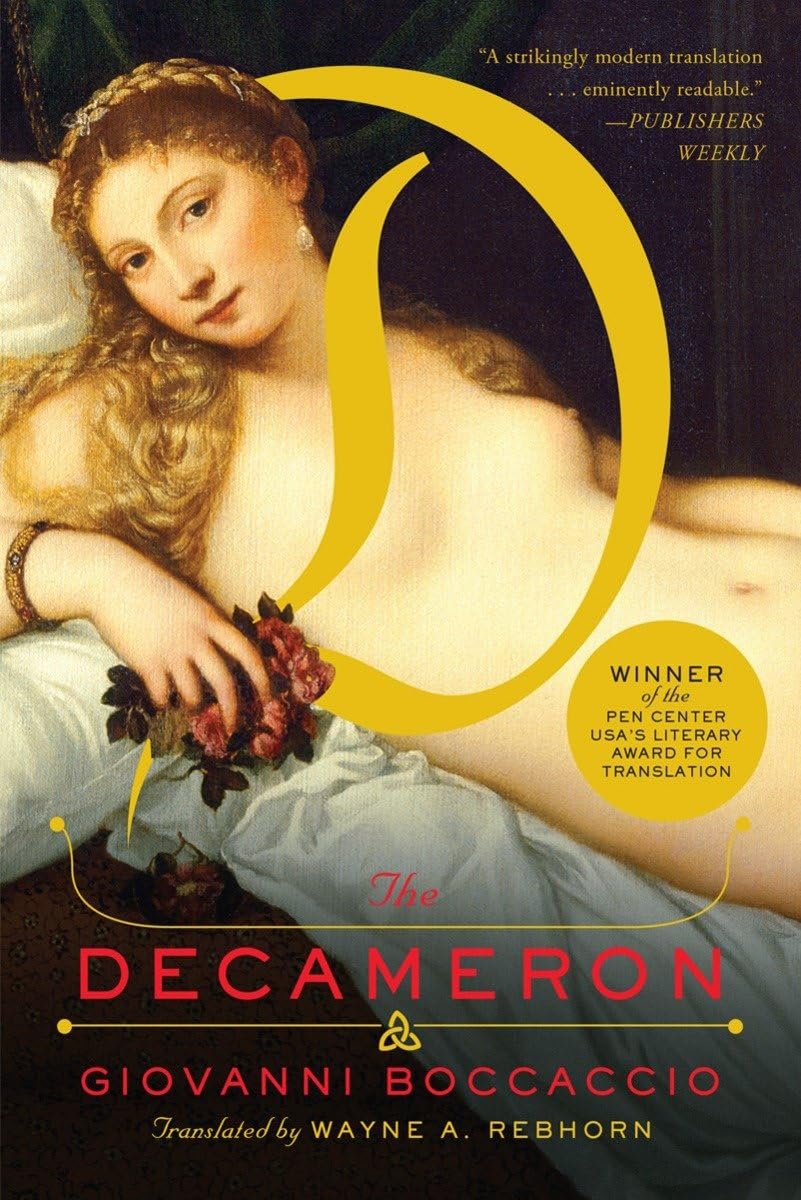
The Decameron — trans. Wayne A. Rebhorn (2013)
First translation, recommended for most readers — winner of the PEN Center USA Literary Award for Translation
Wayne Rebhorn's Norton translation won the PEN Center USA Award for Literary Translation and was widely praised by reviewers and scholars as the best modern English Decameron. Rebhorn, a professor of English and Italian at the University of Texas, brings genuine literary intelligence to the task: his prose is fluent and modern without sacrificing the formal quality of Boccaccio's periods, and his ear for comic timing is excellent. The bawdy tales land with the right lightness; the tragic ones carry their weight; the frame sequences have the elevated, slightly ceremonious tone that Boccaccio intended. Publishers Weekly called it "a strikingly modern translation... eminently readable," and it is. Rebhorn also provides an excellent introduction covering the plague context, the literary tradition, and the structure of the work, as well as useful notes. For any reader coming to the Decameron for the first time, this is the translation to start with.
Buy on Amazon → 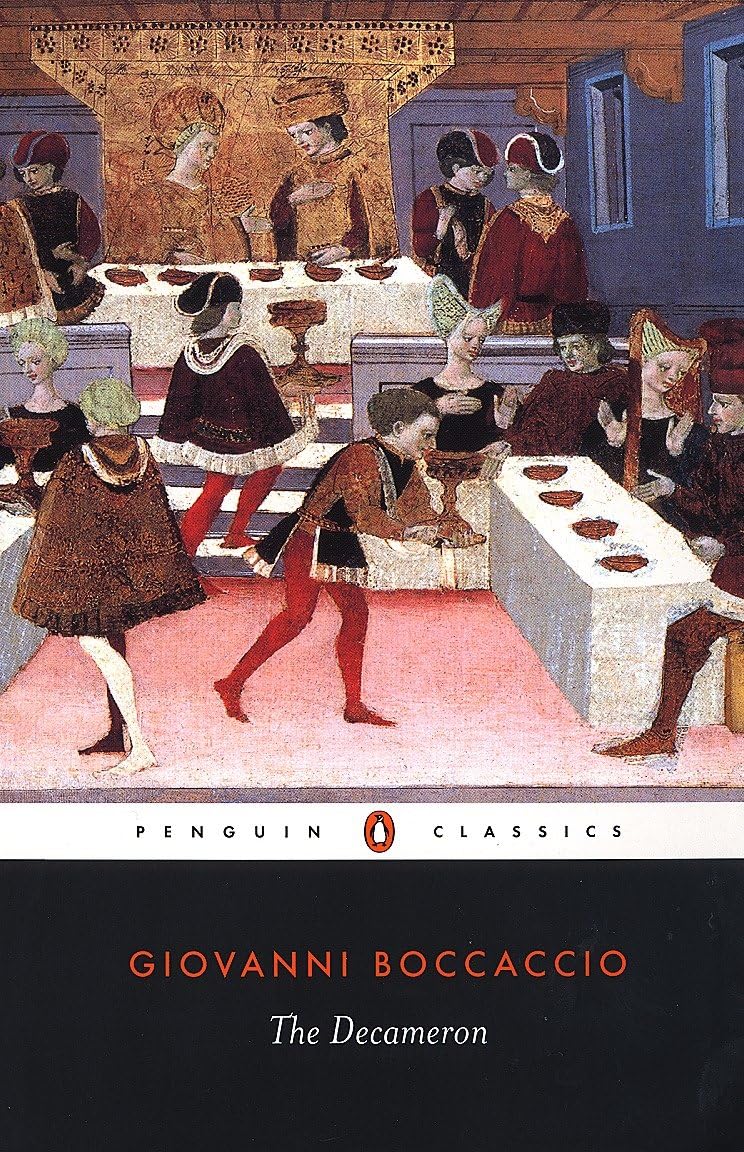
The Decameron — trans. G. H. McWilliam (1972; rev. 1995)
The long-standard Penguin edition — authoritative, scholarly, with full notes and introduction
G.H. McWilliam's Penguin Classics translation was for three decades the default English Decameron, and it remains a distinguished and reliable version. McWilliam's approach is more formal than Rebhorn's — he keeps closer to the Latinate architecture of Boccaccio's sentences, producing a prose that is somewhat stiffer but arguably truer to the texture of the original. His Penguin edition includes a long and learned introduction covering Boccaccio's life and literary context, a substantial set of notes identifying sources and allusions, and bibliographic guidance for further reading. The 1995 revision updated McWilliam's translation in light of subsequent scholarship on the Italian text. For a reader who wants the most scholarly apparatus alongside the translation, or who is approaching the Decameron academically, McWilliam's Penguin is a well-established and thoroughly supported choice. Those who find Rebhorn's modernity slightly breezy may also prefer McWilliam's more deliberate register.
Buy on Amazon → 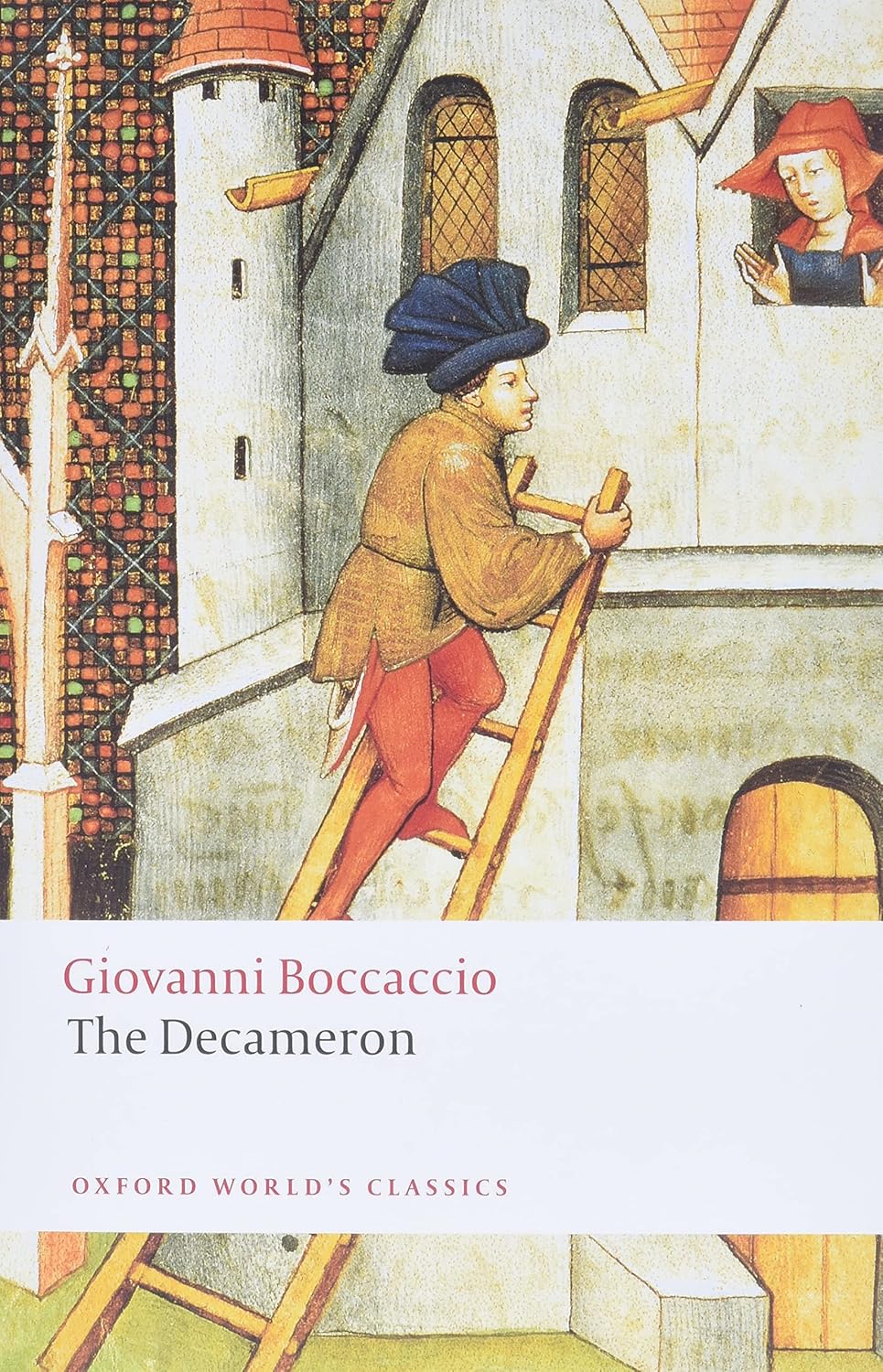
The Decameron — trans. Guido Waldman (1993)
Oxford World's Classics — readable, compact, with editorial introduction by Jonathan Usher
Guido Waldman's Oxford World's Classics translation offers a third option for readers who want neither the freshness of Rebhorn nor the formality of McWilliam. Waldman's prose is clear and readable, pitched somewhat between the two — more idiomatic than McWilliam but with a slightly more restrained comic register than Rebhorn. The Oxford edition comes with an introduction by the Italian scholar Jonathan Usher that is particularly strong on the textual tradition and on the literary influences shaping individual tales. As a compact and well-edited single volume, it is a practical choice for readers who want a reliable translation with good scholarly framing at a lower price point. Waldman is perhaps less celebrated than his competition but underrated — his version handles the tragic tales especially well, and his Boccaccio has genuine literary presence. A solid choice for readers who want something between the dominant options.
Buy on Amazon → As an Amazon Associate, I earn from qualifying purchases.