Most readers come to Dante through the Inferno and stop there. This is understandable — the Inferno is the most dramatic and immediately accessible of the three canticles — but it is a mistake. The Divine Comedy is a single poem, and its architecture only becomes visible when you follow Dante through Hell, Purgatory, and Paradise. The translation you choose needs to sustain you across all three.
The translation you choose will determine the poem you read. Choose carefully.
The challenge of translating the full Comedy is considerably greater than translating the Inferno alone. Purgatorio demands a subtler emotional register, and Paradiso — all light, music, and abstract theology — is widely regarded as the hardest long poem in any language to render into English. Many translations that work brilliantly in the Inferno lose their footing in Paradise. The best translators have found a voice capacious enough to carry all three.
Robin Kirkpatrick's three-volume Penguin Classics edition is this guide's primary recommendation. The same poet-scholar combination that makes his Inferno outstanding sustains itself across Purgatory and Paradise, and the result is the most complete and consistent modern translation of the Comedy available. If you are reading Dante in full for the first time, start here.
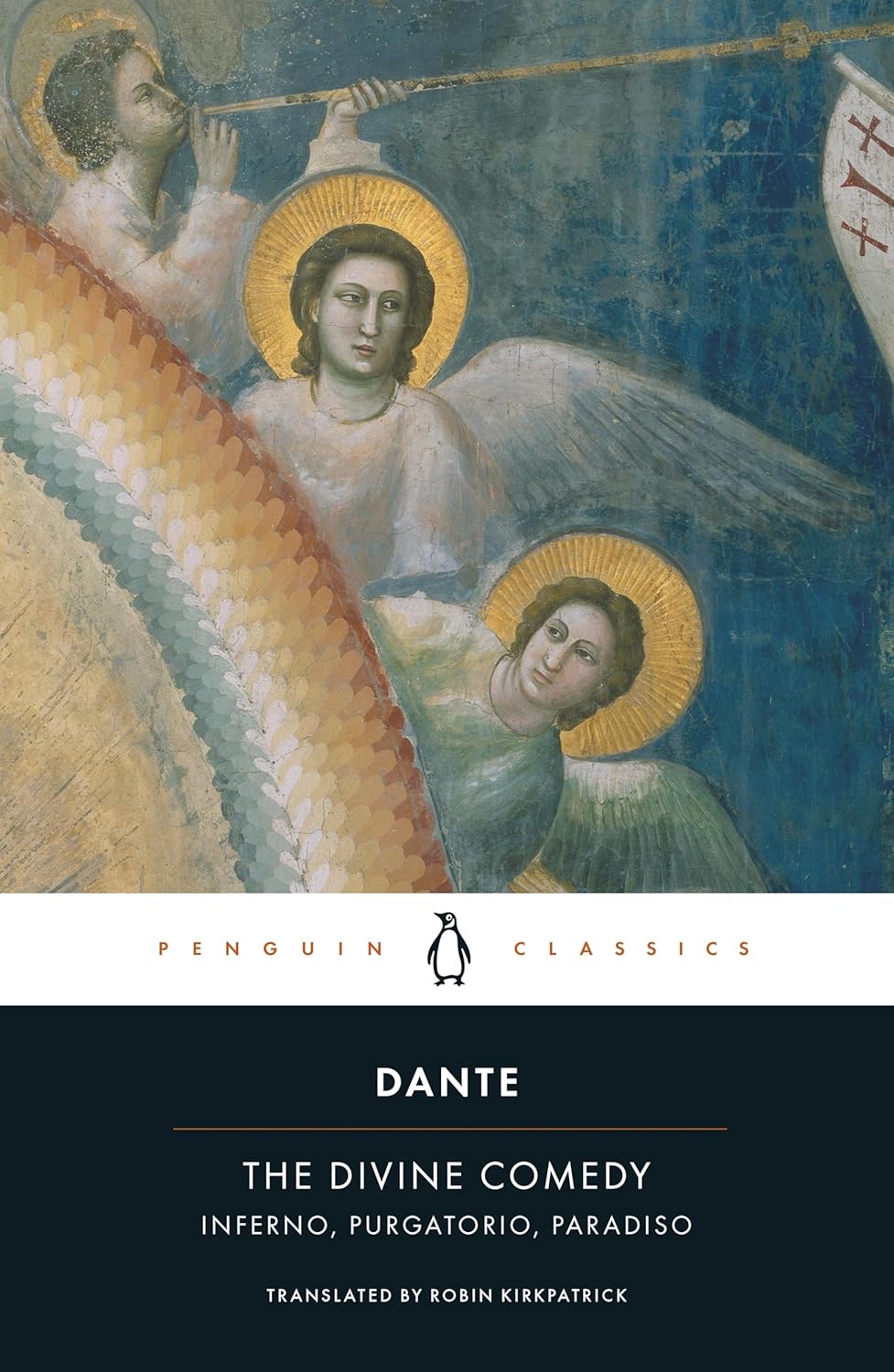
The Divine Comedy — trans. Robin Kirkpatrick (2006–2007)
First translation, recommended for most readers
Kirkpatrick's three-volume Penguin edition — Inferno (2006), Purgatory (2007), Paradise (2007) — is the gold standard of modern complete Comedy translation. His blank verse holds its nerve through all three canticles, and the notes are particularly outstanding in Paradiso, where readers most need guidance through Dante's astronomical and theological machinery. The bilingual layout, with Italian on facing pages, rewards readers willing to slow down and compare. No modern translation better serves the first-time reader who wants to read Dante whole.
Buy on Amazon → 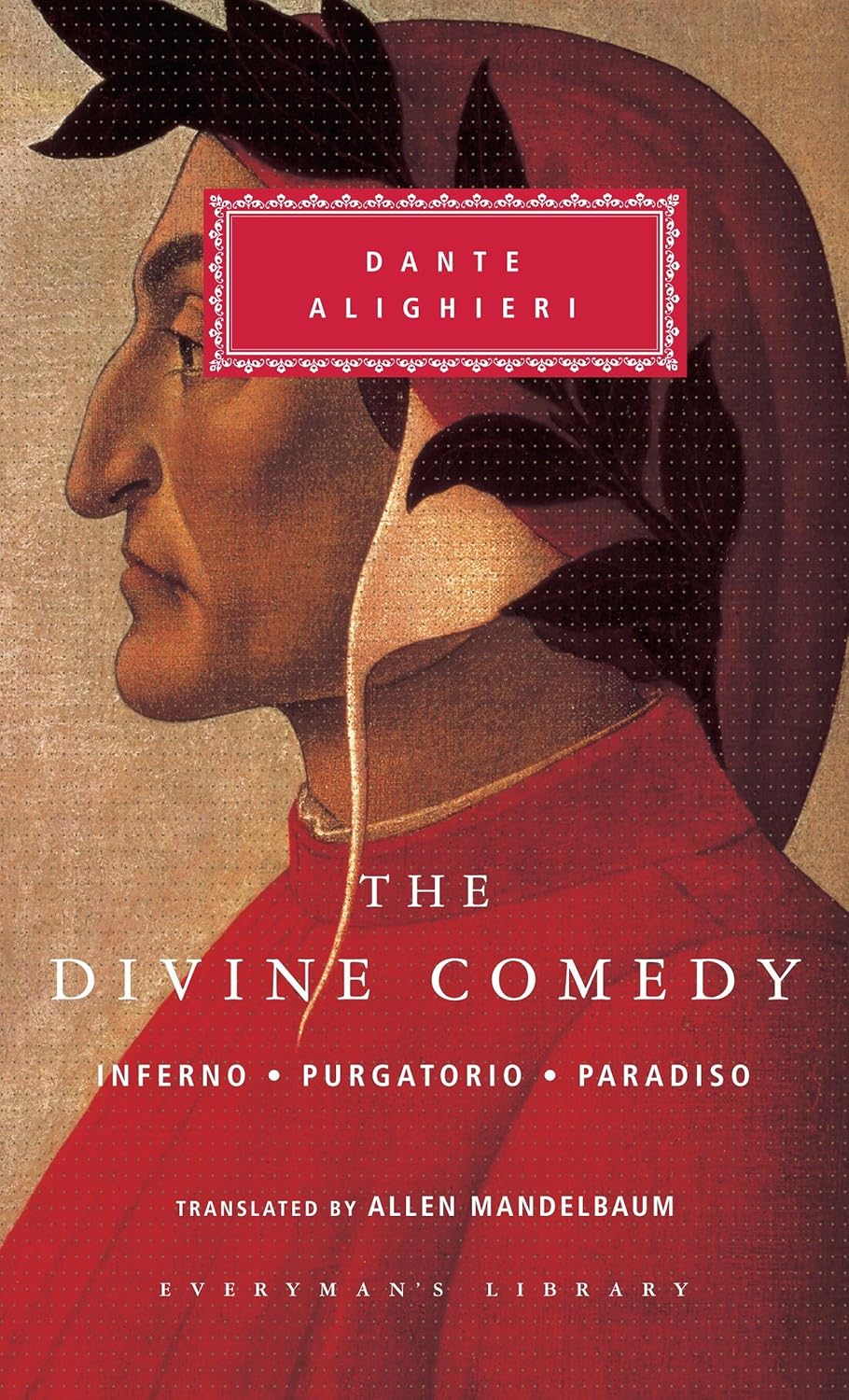
The Divine Comedy — trans. Allen Mandelbaum (1980–1984)
Closest to the Italian, most enduring
For four decades Mandelbaum's translation was the standard in American universities, and the single-volume Everyman's Library edition — illustrated with Botticelli drawings — remains one of the finest ways to own the complete Comedy. Mandelbaum preserves the tercet structure without attempting rhyme, and the effect is a dignified, precise fidelity that rewards close reading. His Paradiso is particularly strong: measured and clear where many translators become either opaque or overwrought. The best choice for a second reading or for anyone approaching the poem as serious study.
Buy on Amazon → 
The Divine Comedy — trans. Dorothy L. Sayers & Barbara Reynolds (1949–1962)
Classic English version, best introductions
Dorothy Sayers — better known for her detective fiction — produced one of the most distinctive and beloved Dante translations in English before her death in 1957; Barbara Reynolds completed Paradise. Sayers attempted terza rima in English, which is controversial and occasionally strained, but the verse has an energy and drama that freer translations sometimes lack. Her introductions and notes are exceptional — among the finest ever written for a general reader — and her enthusiasm for Dante is infectious. This is the translation that converts reluctant readers into devotees. Reynolds's Paradiso maintains the same spirit and is equally readable.
Buy on Amazon → 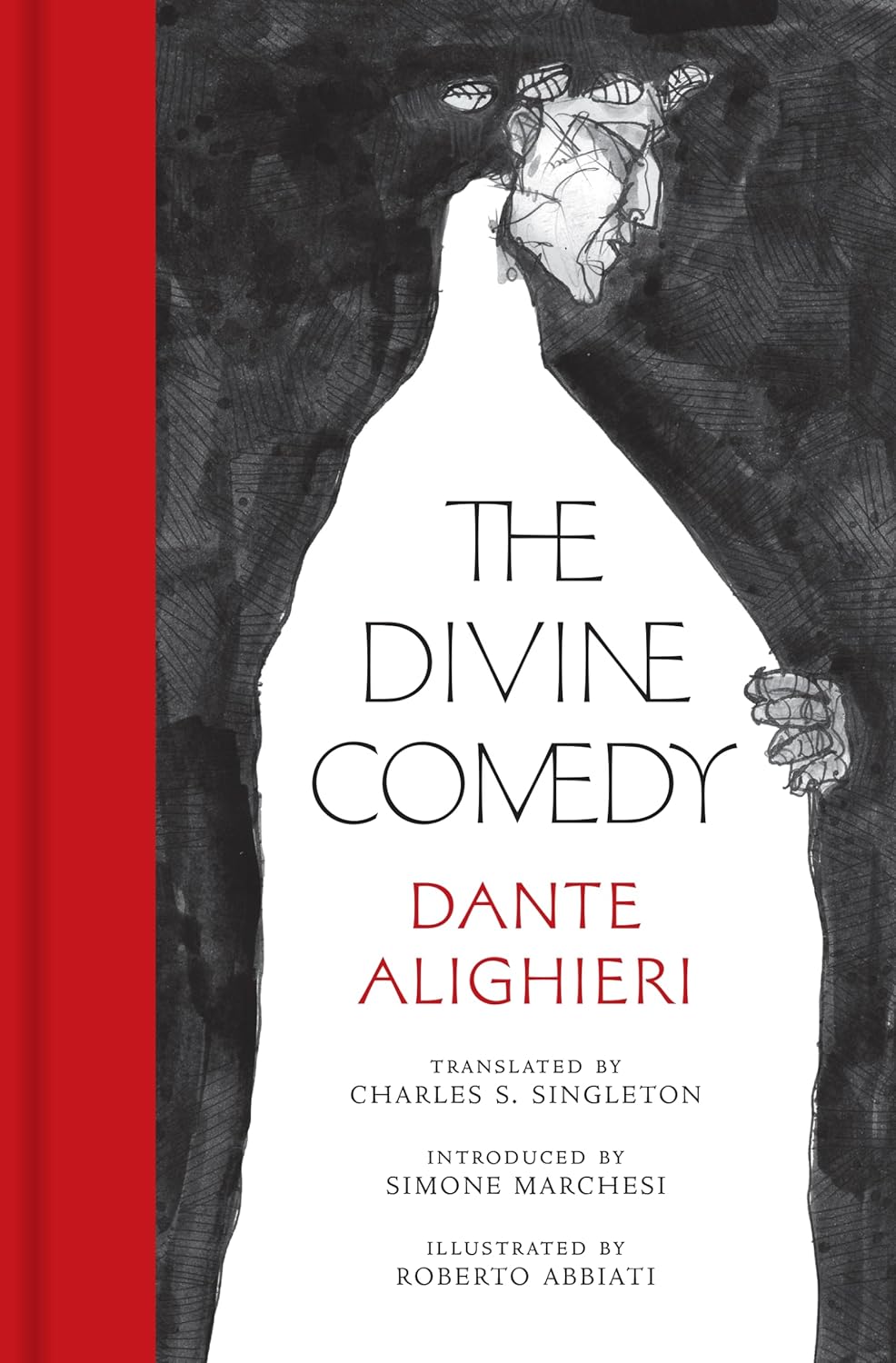
The Divine Comedy — trans. Charles S. Singleton (1970–1975)
Most scholarly, definitive commentary
Singleton's Princeton edition is not a translation you read for pleasure — it is a scholarly instrument. The six-volume set pairs literal prose translations with matching volumes of line-by-line commentary that remains the most thorough in any language. Singleton's aim was transparency to the Italian, not English poetry, and the result reads like the kind of careful interlinear gloss a medieval scholar would produce. Read it alongside a more literary translation as a second voice, or work through the commentary volumes independently. For anyone who wants to understand precisely what Dante wrote, there is nothing better.
Buy on Amazon → If your interest is the Inferno alone, two further translations are worth knowing. Clive James's version (2013) uses fluently linked quatrains rather than terza rima and reads with a momentum and wit no other version matches — the one to give someone who isn't sure they'll enjoy Dante. Mary Jo Bang's translation (2012) renders Dante into a vivid, sometimes shocking contemporary American idiom; audacious and divisive, it makes the Inferno feel immediate in a way more conservative translations don't always manage. Read Kirkpatrick first, then Bang — the contrast is one of the most illuminating exercises in understanding what translation actually does.
As an Amazon Associate, I earn from qualifying purchases.