Don Quixote is the first modern novel and, in its original Spanish, one of the funniest books ever written. That is the thing most English readers don't know going in: they expect a stately classic and find instead a raucous, self-aware, endlessly inventive comedy about a man who has read too many chivalric romances and lost his grip on reality as a consequence. Whether that comedy comes through in English depends almost entirely on who translated it.
Cervantes published Don Quixote in two parts, in 1605 and 1615, and the second part is aware that the first part has been published and read — characters have opinions about it. This metafictional quality, combined with Cervantes's extraordinary range of registers (courtly, peasant, parodic, lyrical), makes Don Quixote one of the most demanding texts for a translator to navigate. The wrong choice of English word can flatten a joke that has been building for three chapters. The right one can make a four-hundred-year-old pun land.
The Edith Grossman translation is this guide's primary recommendation. It is the most celebrated modern English Don Quixote, and more than any other version it recovers the novel's essential quality: the sense that Cervantes is laughing with his characters as much as at them.
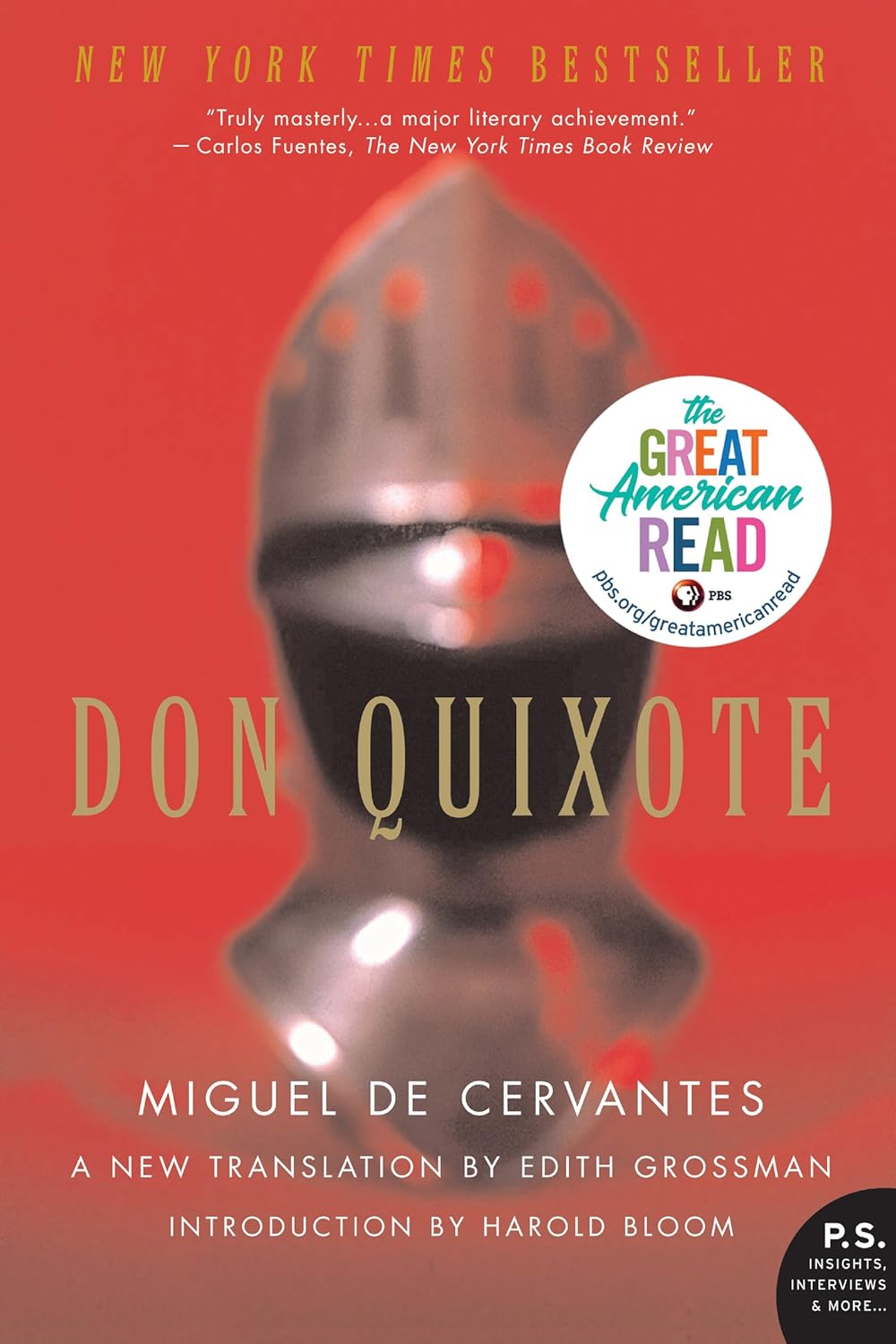
Don Quixote — trans. Edith Grossman (2003)
First translation, recommended for most readers
Grossman's translation arrived in 2003 to almost universal acclaim and has since become the standard English Don Quixote for general readers. Gabriel García Márquez, himself no stranger to Cervantes's influence, called it a revelation — a version that finally allowed him to read Quixote in English the way he had always read it in Spanish. What Grossman gets right is the comedy: her Don Quixote is genuinely funny, her Sancho Panza is earthy and specific, and the relationship between them — which is the emotional core of the novel — comes through with warmth and particularity. Her prose is clear without being simplified, and it handles Cervantes's enormous tonal range, from burlesque slapstick to genuine pathos, without straining. The Ecco hardcover is the prestige edition; the Harper Perennial paperback is the one to read.
Buy on Amazon → 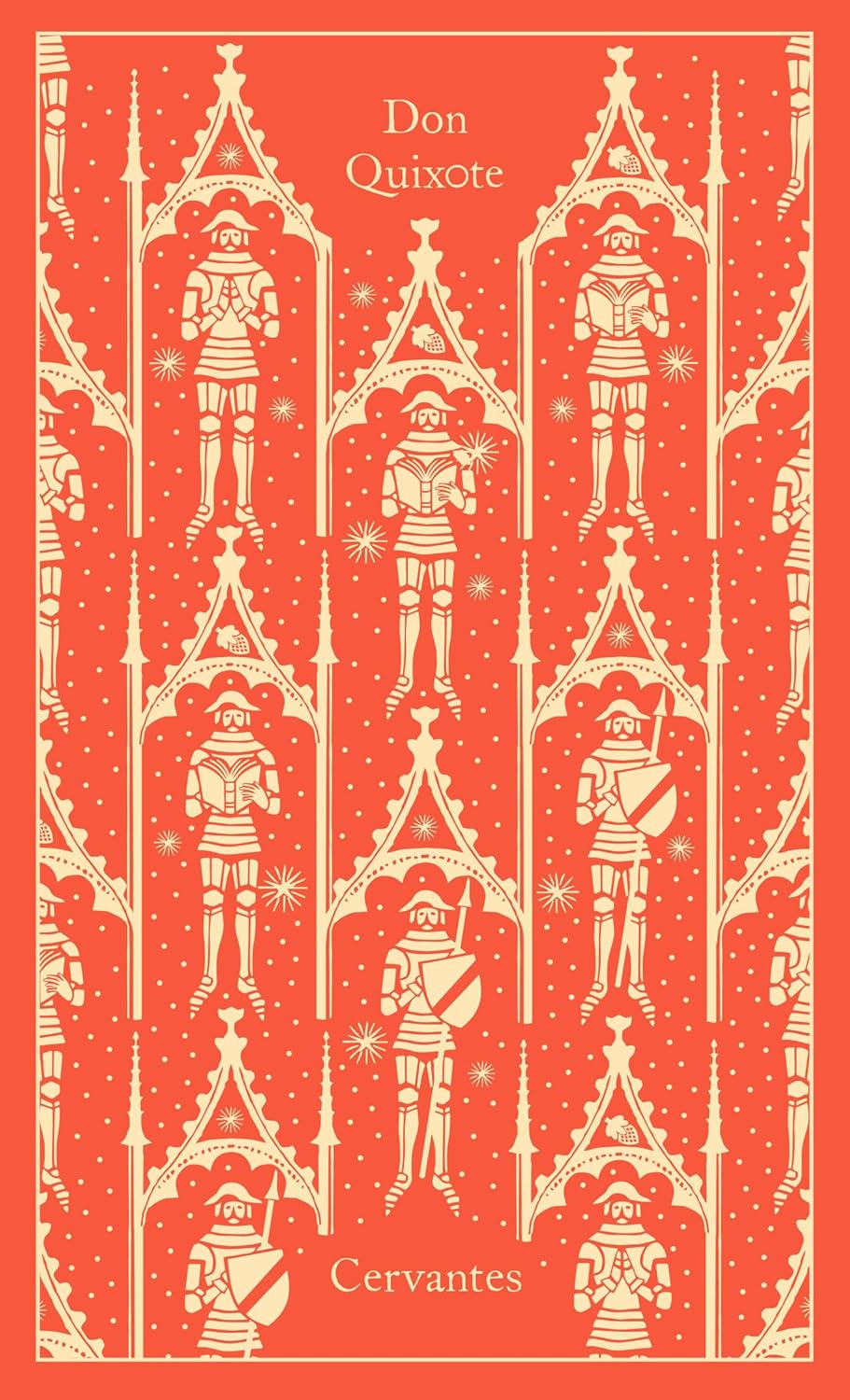
Don Quixote — trans. John Rutherford (2003)
Most scholarly, excellent notes and apparatus
Published the same year as Grossman's translation, Rutherford's Penguin Classics edition offers a rigorous alternative from a dedicated Cervantes scholar. Rutherford spent decades with the text and his version is distinguished by its attention to wordplay, puns, and the linguistic jokes that many translators sacrifice because they are too embedded in Spanish to survive the crossing intact. Where Grossman sometimes opts for readability, Rutherford opts for fidelity — a legitimate and defensible choice in a novel where so much of the comedy is linguistic. The Penguin edition also includes a substantial introduction and detailed notes that illuminate the novel's historical context and literary in-jokes. Rutherford is the choice for readers who want to study Don Quixote seriously or who have a particular interest in what Cervantes was actually doing with the Spanish language.
Buy on Amazon → 
Don Quixote — trans. Burton Raffel (1996)
Best for students — Norton Critical Edition with scholarly essays
Raffel's translation is published in the Norton Critical Edition series, which means it comes with something neither Grossman nor Rutherford offers: a substantial apparatus of scholarly essays, contextual documents, and critical perspectives on the novel gathered in one volume. The translation itself is competent and readable, if less celebrated than Grossman's — Raffel was a prolific translator who worked across many languages and periods, and his Don Quixote reflects a scholar's precision rather than a stylist's flair. For readers approaching the novel through a university course, or who want critical commentary alongside the text, the Norton Critical Edition is the practical choice. Read Grossman for pleasure; read Raffel when you need the footnotes.
Buy on Amazon → As an Amazon Associate, I earn from qualifying purchases.