The Tale of Genji (源氏物語) was written by Murasaki Shikibu, a lady-in-waiting at the Heian imperial court, around the year 1000 CE. It follows the life and loves of Hikaru Genji, the son of a Japanese emperor, through an extraordinarily detailed portrait of court society — its politics, aesthetics, amorous intrigues, and elaborate ceremonial life. It is by most reckonings the world's first novel, and it is read today not as a historical curiosity but as a work of sustained psychological and emotional power. Its influence on Japanese literature is equivalent to Shakespeare's influence on English.
Translating Genji is one of the most demanding tasks in literary translation. Murasaki's Japanese is a court language that was already archaic even for some of her readers, built around conventions of indirection — characters are rarely named, emotional states are conveyed through poetry and season rather than statement, and pronouns are almost entirely absent. Every translation is inevitably also an interpretation: decisions about how much to clarify, how much to leave oblique, and what kind of English sentence best carries the quality of Heian prose are made on nearly every page.
The Royall Tyler translation is this guide's primary recommendation. It is the most complete and most scholarly English Genji, and for most readers it is also the most rewarding.
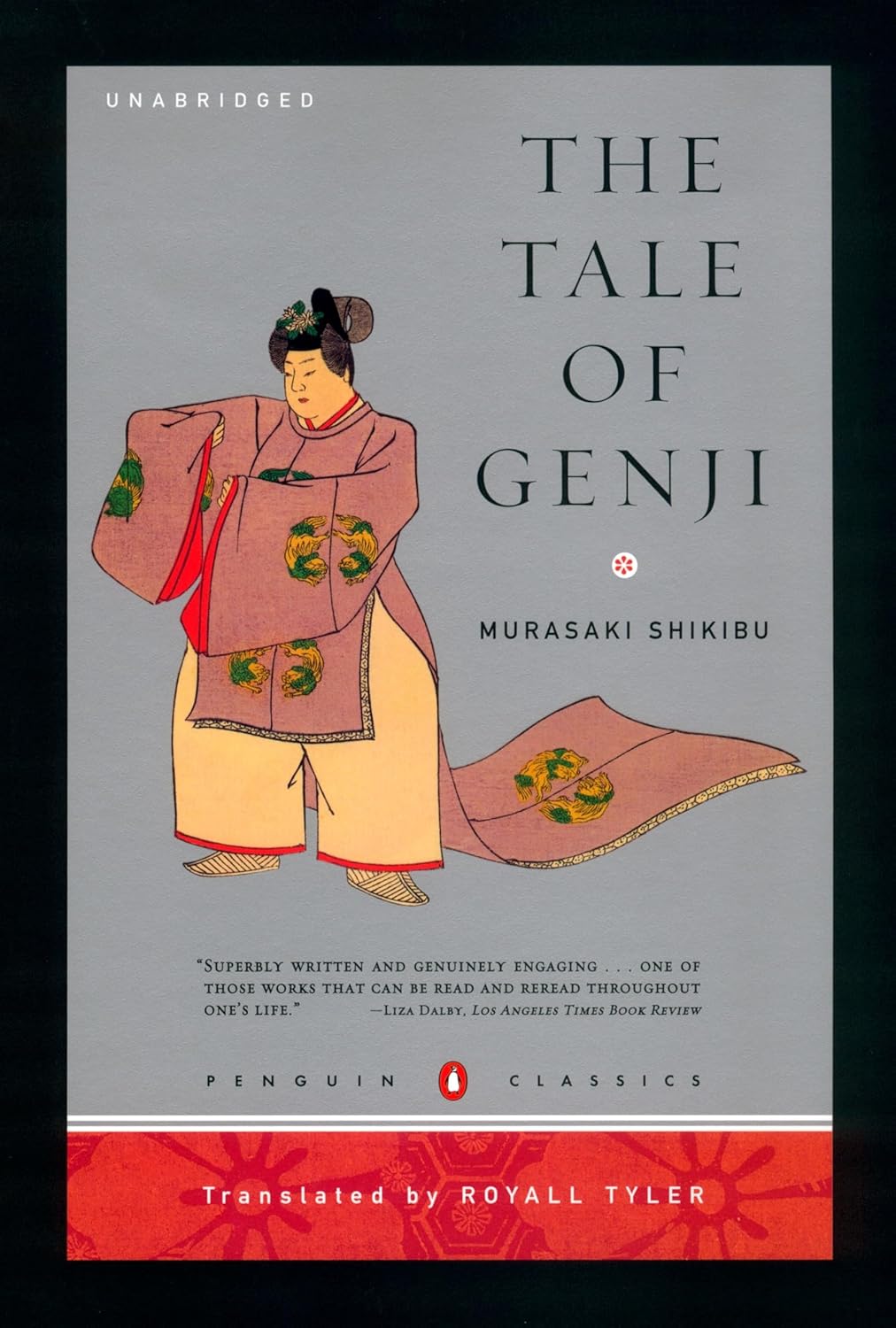
The Tale of Genji — trans. Royall Tyler (2001)
First translation, recommended for most readers
Royall Tyler's Penguin Classics Deluxe Edition is the scholarly standard and the translation most widely assigned in university courses on Japanese literature. Tyler spent a decade on the translation and brought to it both deep expertise in Heian Japanese and a deliberate stylistic strategy: he preserves the indirection, the ambiguity, and the elliptical quality of the original as much as English syntax will allow. Characters are not named more often than they are named in the Japanese; pronouns are used sparingly; the poetry embedded throughout the novel is rendered in forms that preserve its formal constraints. Tyler's Genji is not the easiest English version — the reader must work — but what you work for is something genuinely close to the experience Murasaki intended. The Penguin Deluxe Edition is beautifully produced and includes substantial notes. This is the version to choose if you read one Genji.
Buy on Amazon → 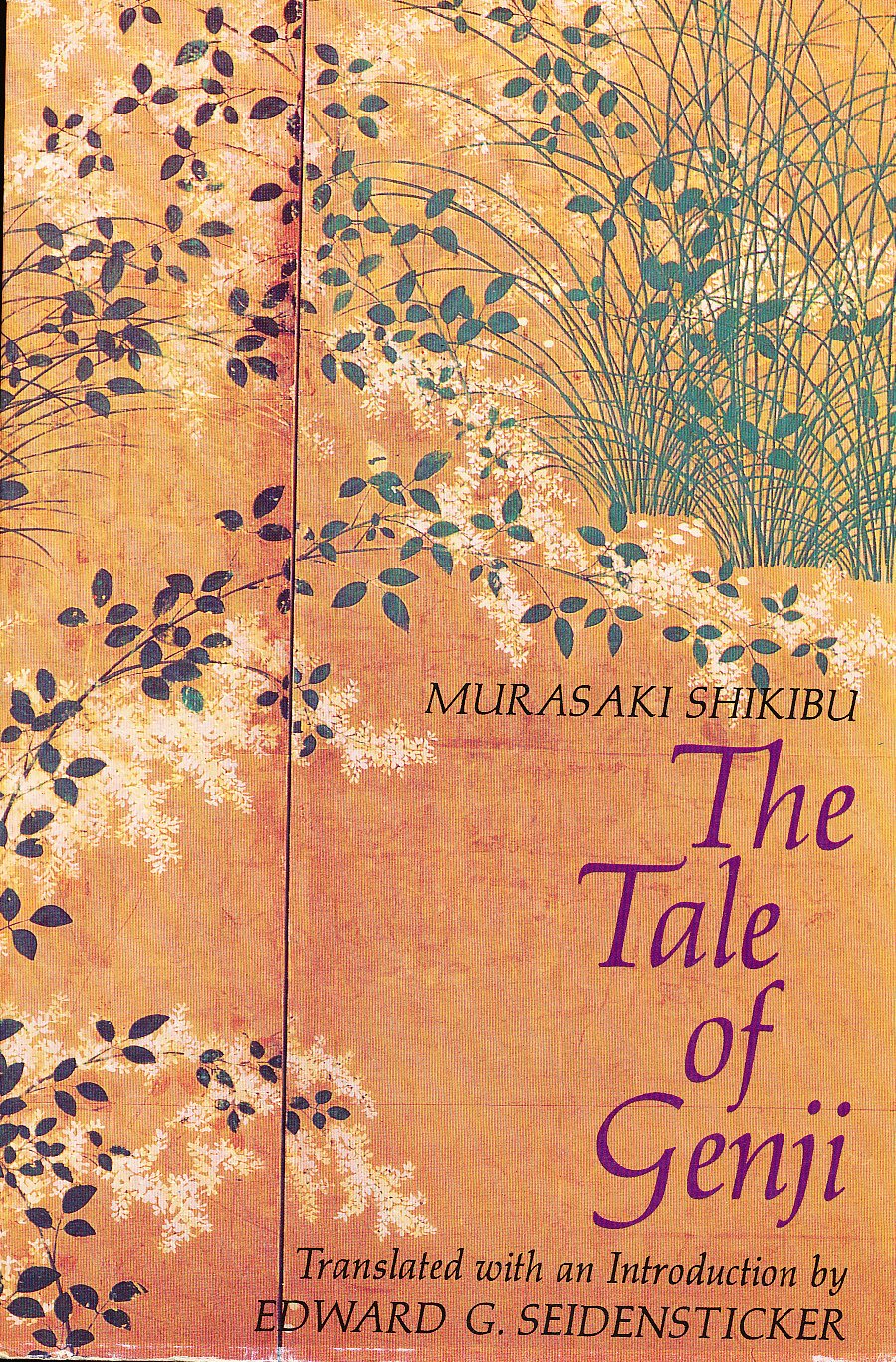
The Tale of Genji — trans. Edward G. Seidensticker (1976)
Most readable — best for a fluid, literary first encounter
Edward Seidensticker's 1976 translation was the standard English Genji for a quarter century and remains the most elegantly readable version available. Where Tyler preserves ambiguity, Seidensticker clarifies; where Tyler leaves characters unnamed, Seidensticker gives them names or titles the better to orient the reader. His prose is polished and confident, and the novel's emotional arc — the seasons of Genji's loves and losses, the Buddhist undertow of impermanence that runs beneath the court's surface beauty — comes through with great force. Seidensticker is one of the great translators of Japanese literature; his Kawabata and Mishima are classics. His Genji is the version that brought most English-speaking readers to the novel, and many who have read both prefer it for its sheer literary quality. For a reader who wants to be drawn into the novel rather than studying it, Seidensticker remains an outstanding choice.
Buy on Amazon → 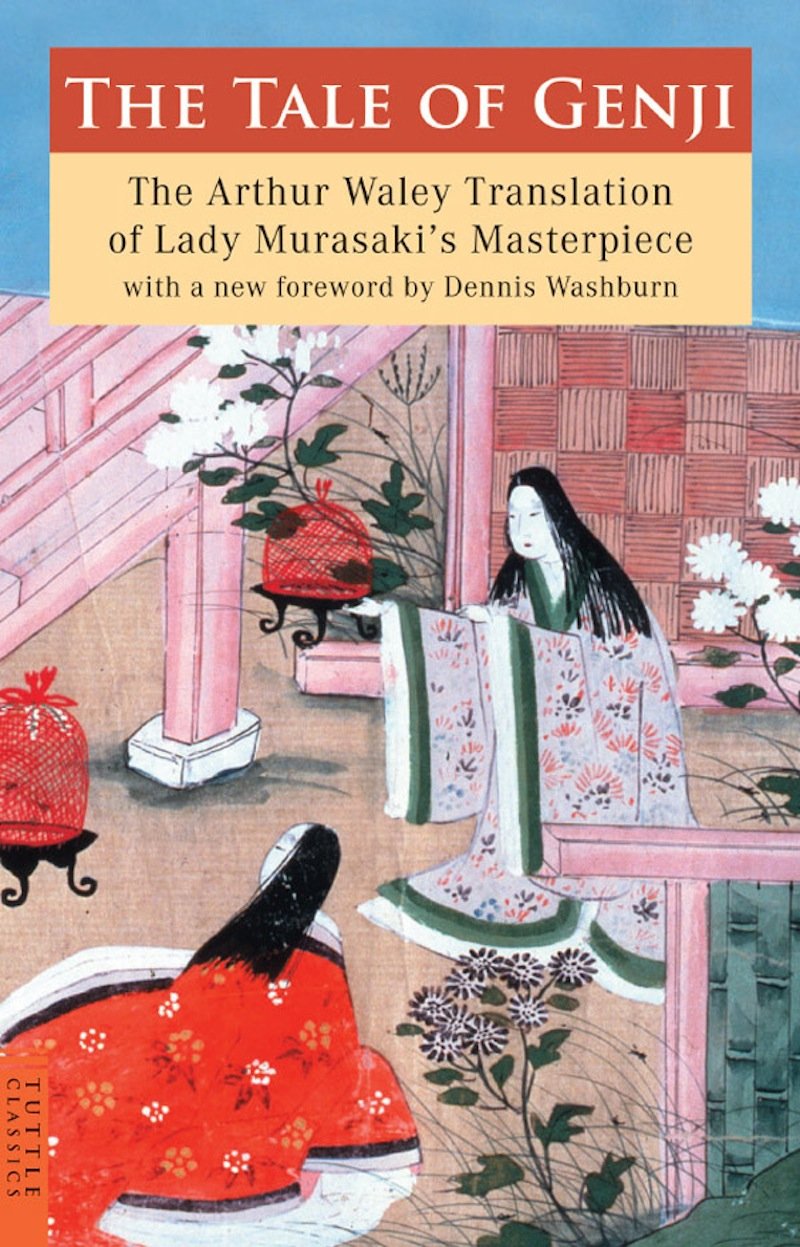
The Tale of Genji — trans. Arthur Waley (1925–1933)
The classic translation — significant for literary history, remarkable as English prose
Arthur Waley's translation, published in six parts between 1925 and 1933, introduced Genji to the English-speaking world and was itself recognised as a literary masterpiece. Waley was a self-taught scholar of Chinese and Japanese who never visited Japan; his Genji is a work of imaginative projection as much as scholarship, and it shows. His English prose is extraordinary — lucid, melancholy, and beautiful in a distinctly Bloomsbury way — and his Genji reads like a great English novel of the 1920s. What it is not is accurate: Waley cut passages, altered others, and made choices that later scholars found seriously mistaken. He also left out the final section of the novel entirely. The Tuttle Classics edition is the most accessible current print version. Read the Waley if you are curious about the history of the translation, interested in Waley as a figure, or simply want to encounter one of the great feats of English literary translation — but read Tyler or Seidensticker first if you want Murasaki Shikibu.
Buy on Amazon → As an Amazon Associate, I earn from qualifying purchases.