The Georgics (c. 29 BCE) is Virgil's second major work, written between the pastoral Eclogues and the epic Aeneid, and it is in many ways the most difficult to approach without explanation. On the surface it is a didactic poem about agriculture: Book I on crops and weather; Book II on trees and vines; Book III on cattle and horses; Book IV on beekeeping. Virgil draws on the tradition of Hesiod's Works and Days and the Hellenistic didactic poem, and he does so with a poet's resources rather than a farmer's — the instructions in the Georgics are not a practical manual but a meditation on labour, nature, loss, and the price of civilisation.
Beneath the agricultural surface runs a sustained philosophical and political argument. The poem was written in the aftermath of Rome's catastrophic civil wars, and it grapples throughout with the question of what can be rebuilt after such destruction. Virgil's farmers are not simply agricultural workers but emblems of the Roman virtue — labor omnia vincit, work conquers all — that the poem simultaneously celebrates and mourns. The Georgics also contains some of Virgil's greatest poetry: the passage on the death of Julius Caesar that opens Book I; the praise of Italy in Book II; the vast proem of Book III, in which Virgil imagines his own future fame; and the Aristaeus episode that closes Book IV, in which the myth of Orpheus and Eurydice appears as a story within the story, sung by the sea-god Proteus.
The Georgics rewards close attention and rereading. It is a poem that becomes more rather than less mysterious the more one knows it. All three translations below are verse — the right choice for a poem whose meaning is inseparable from its form.
David Ferry's bilingual edition is this guide's primary recommendation. It is the most celebrated modern American verse translation and is widely used in teaching and reading.
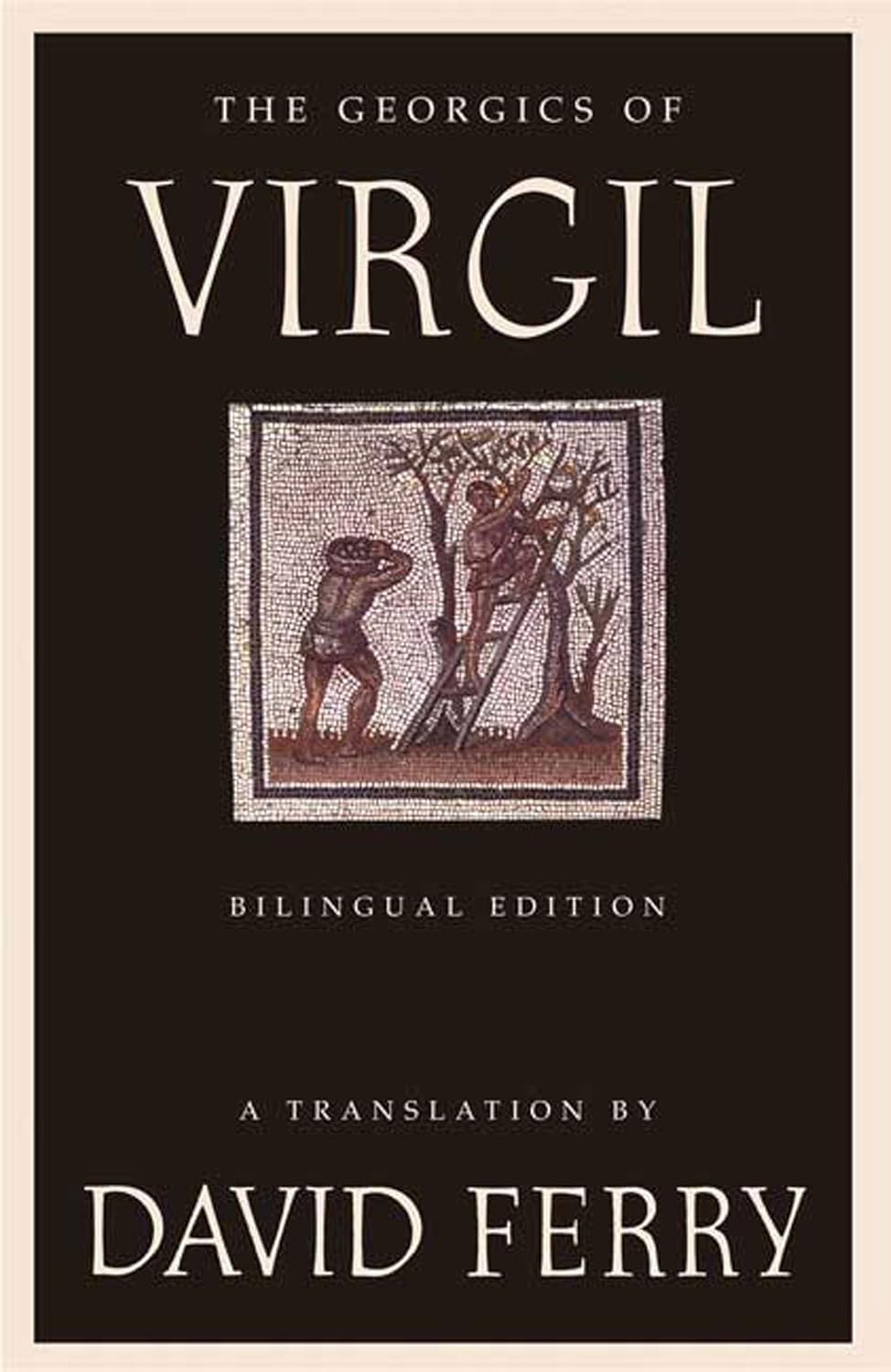
The Georgics of Virgil (Bilingual Edition) — trans. David Ferry (2005)
First translation, recommended for most readers — modern American verse with facing Latin text
David Ferry's translation of the Georgics, published by Farrar, Straus and Giroux in a bilingual edition with the Latin on facing pages, is the most widely praised modern English version. Ferry — a distinguished poet and translator who has also translated the Aeneid, the Eclogues, and Horace — works in a flexible blank verse that stays close to Virgil's syntactic structures without feeling stilted. His translation is particularly strong on the large-scale movements of the poem: the long set pieces land with proper force, and he handles the Orpheus episode at the end of Book IV with real tragic weight. The bilingual format makes this the ideal edition for readers with any Latin — you can move between the facing texts and see exactly what choices Ferry has made — but the translation stands fully on its own. Ferry's Georgics has become the standard classroom text and the version most recommended by classicists who want an English version that respects both Virgil's technical precision and his poetry.
Buy on Amazon → 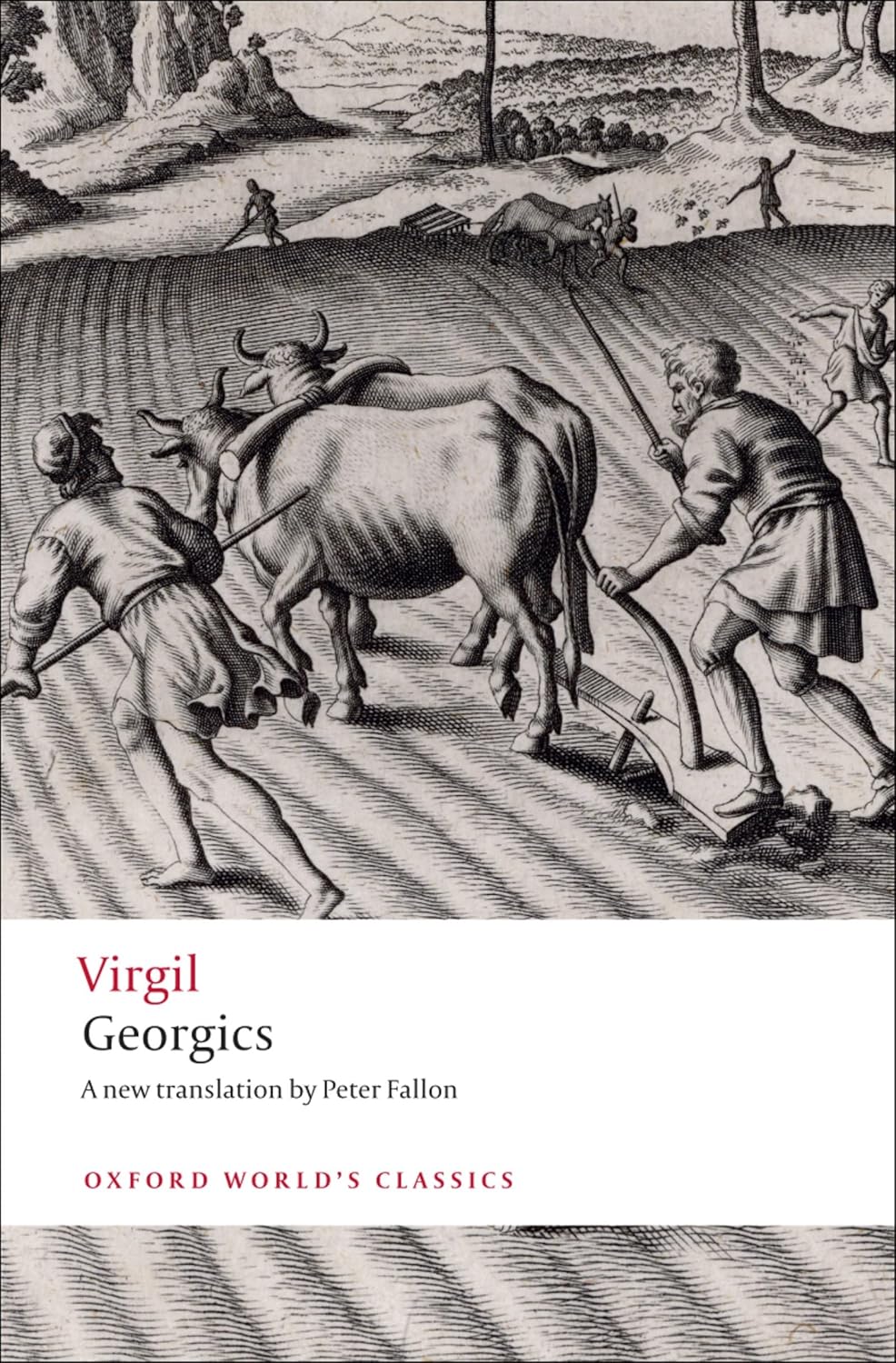
Georgics — trans. Peter Fallon (2006)
Oxford World's Classics — an Irish farmer-poet translates Virgil's farming poem
Peter Fallon's Oxford World's Classics translation brings a unique authority to the Georgics: Fallon is both a distinguished Irish poet and an actual farmer who works land in County Meath. This combination — rare in classical translation — means his version of Virgil's agricultural descriptions carries a physical knowledge that most translators cannot supply. Fallon knows what it feels like to work with livestock, to read the weather, to tend soil across seasons, and this informs every page of his translation without it becoming merely literal. His verse is flexible and idiomatic, with occasional Irish inflections that feel natural rather than exotic. The Oxford edition includes an excellent introduction and notes by the classicist Elaine Fantham. For a reader who wants to feel the Georgics as a poem about real agricultural experience rather than a literary exercise in the didactic mode, Fallon's version is extraordinary. It is the translation that best answers Virgil's own practical-lyrical ambition: to write beautifully about things that matter.
Buy on Amazon → 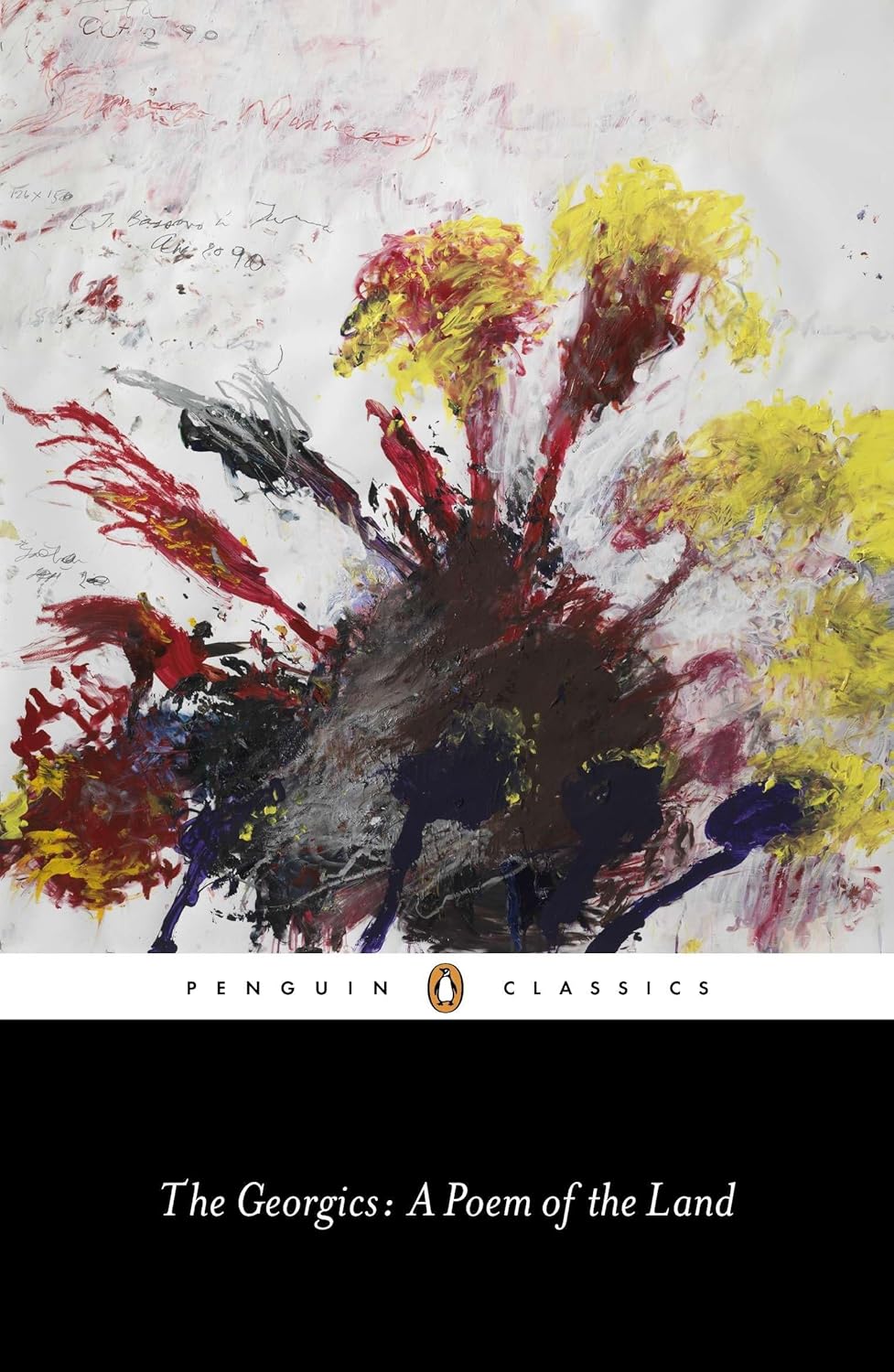
The Georgics: A Poem of the Land — trans. Kimberly Johnson (2009)
Penguin Classics — metrically ambitious verse that foregrounds the poem's literary artifice
Kimberly Johnson's Penguin Classics translation takes a deliberately more formal approach than Ferry or Fallon, working in iambic pentameter throughout and foregrounding the Georgics as a self-consciously literary poem — a poem about farming that is also a poem about poetry and about the nature of art made from difficult material. Johnson, a poet and Renaissance scholar, is particularly sensitive to the Georgics' debt to earlier literary traditions and to its internal self-referentiality. Her subtitle, "A Poem of the Land," captures her interpretive emphasis: the land is both literal subject and metaphor for everything the poem builds on. Johnson's translation is more challenging and more formally demanding than her competitors, and readers who engage with it on its own terms will find a Georgics that rewards close reading in ways the more straightforward versions do not. Her introduction, which reads the Georgics as a meditation on poetic labour and its relationship to the labour of the land, is among the finest short essays on the poem available in English. An excellent choice for readers who want the most literarily ambitious version.
Buy on Amazon → As an Amazon Associate, I earn from qualifying purchases.