Émile Zola's Germinal (1885) is one of the most viscerally powerful novels in any language — the story of Étienne Lantier, an unemployed mechanic who arrives at the coal mines of northern France and is drawn into the desperate lives of the mining families who live and die underground. Zola spent months researching the novel: he descended into working mines, interviewed miners and their wives, read socialist tracts and labour reports, and took meticulous notes on the sounds and smells and social structures of the pit communities. The result is a novel that operates simultaneously as documentary naturalism, political argument, and something approaching myth — the story of a strike that fails and yet plants the seeds of future uprising, told with a relentlessness that leaves the reader wrung out and shaken.
The novel's title — Germinal, the seventh month of the French Republican calendar, associated with spring germination — gives its central metaphor: the revolutionary energy buried in the earth, in the bodies of the workers, waiting to burst upward. Zola believed in what he called the experimental novel: fiction as a kind of laboratory, in which social conditions could be studied with scientific rigour. Germinal is the most successful of all his twenty-volume Rougon-Macquart cycle, the one in which the method and the material produce something that transcends the program.
Two current scholarly translations stand out. Peter Collier's Oxford World's Classics version is the recommended starting point for readers who want a translation with the full critical apparatus. Roger Pearson's Penguin Classics translation is the choice for readers who want something more fluid and immediate in its rhythms.
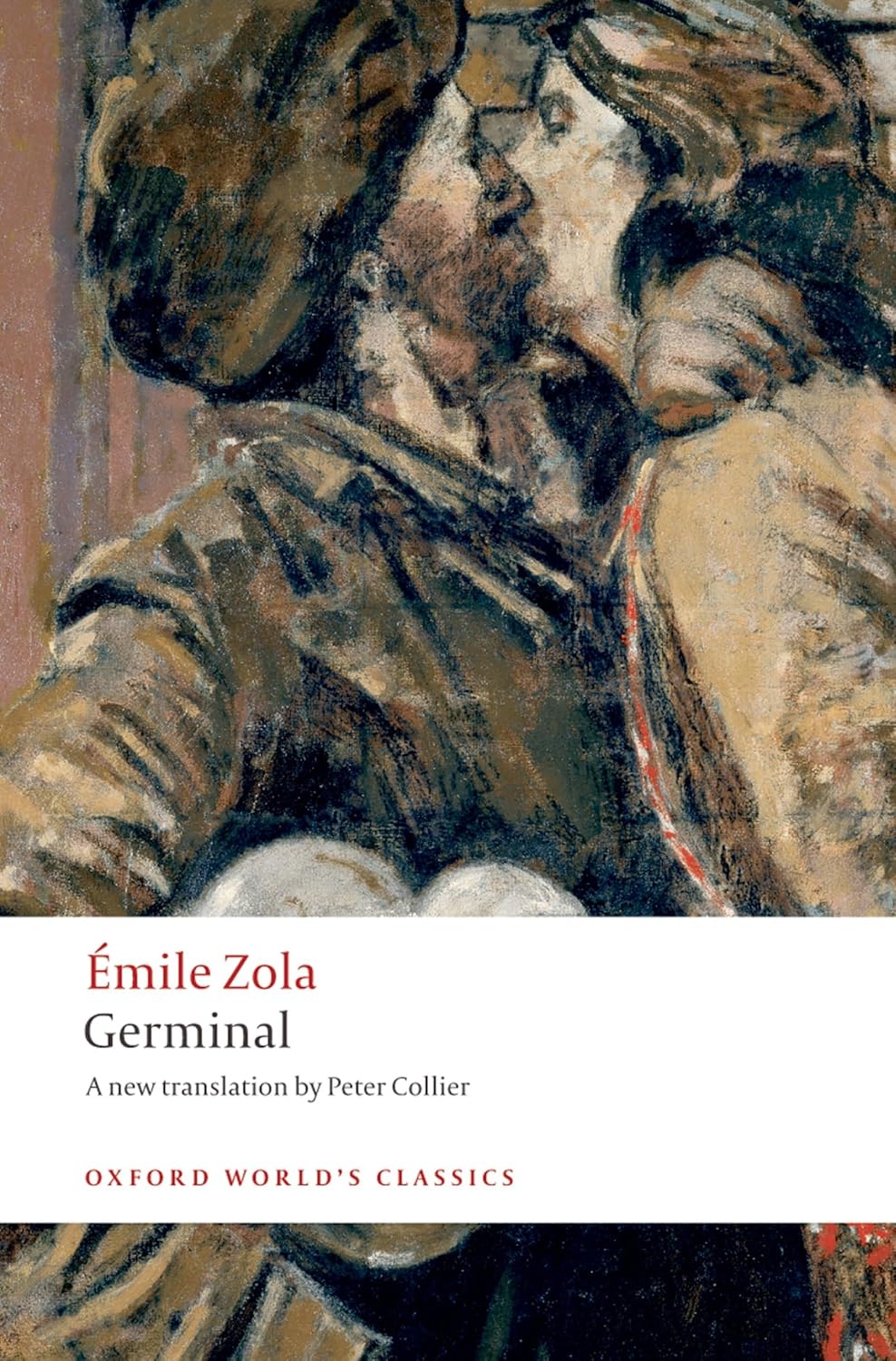
Germinal — trans. Peter Collier
Oxford World's Classics — scholarly translation with full critical introduction and notes
Peter Collier's translation for Oxford World's Classics brings the disciplined precision that has made the OWC series the standard reference edition for so many nineteenth-century European novels. Collier, a scholar of French literature who has translated widely from French (including Proust and Maupassant), captures Zola's naturalistic prose with careful attention to its documentary qualities — the specific vocabulary of mining, the regional French speech patterns of the Borinage, the way the novel's language shifts register between the mechanistic descriptions of industrial processes and the near-mythic passages in which the mine becomes a living creature that breathes and bleeds and devours. The Oxford edition includes an introduction placing the novel in the context of Zola's research method, his naturalist program, and the political history of the French labour movement in the 1880s, together with explanatory notes on the historical and technical details. The cover — a painting of huddled miners' wives in monochrome browns and greys, bent under the weight of their burdens against a bleak winter landscape — perfectly captures the novel's atmosphere. For readers coming to Zola for the first time, or for anyone who wants to understand the novel's context as well as experience its prose, Collier's edition is the place to start.
Buy on Amazon → 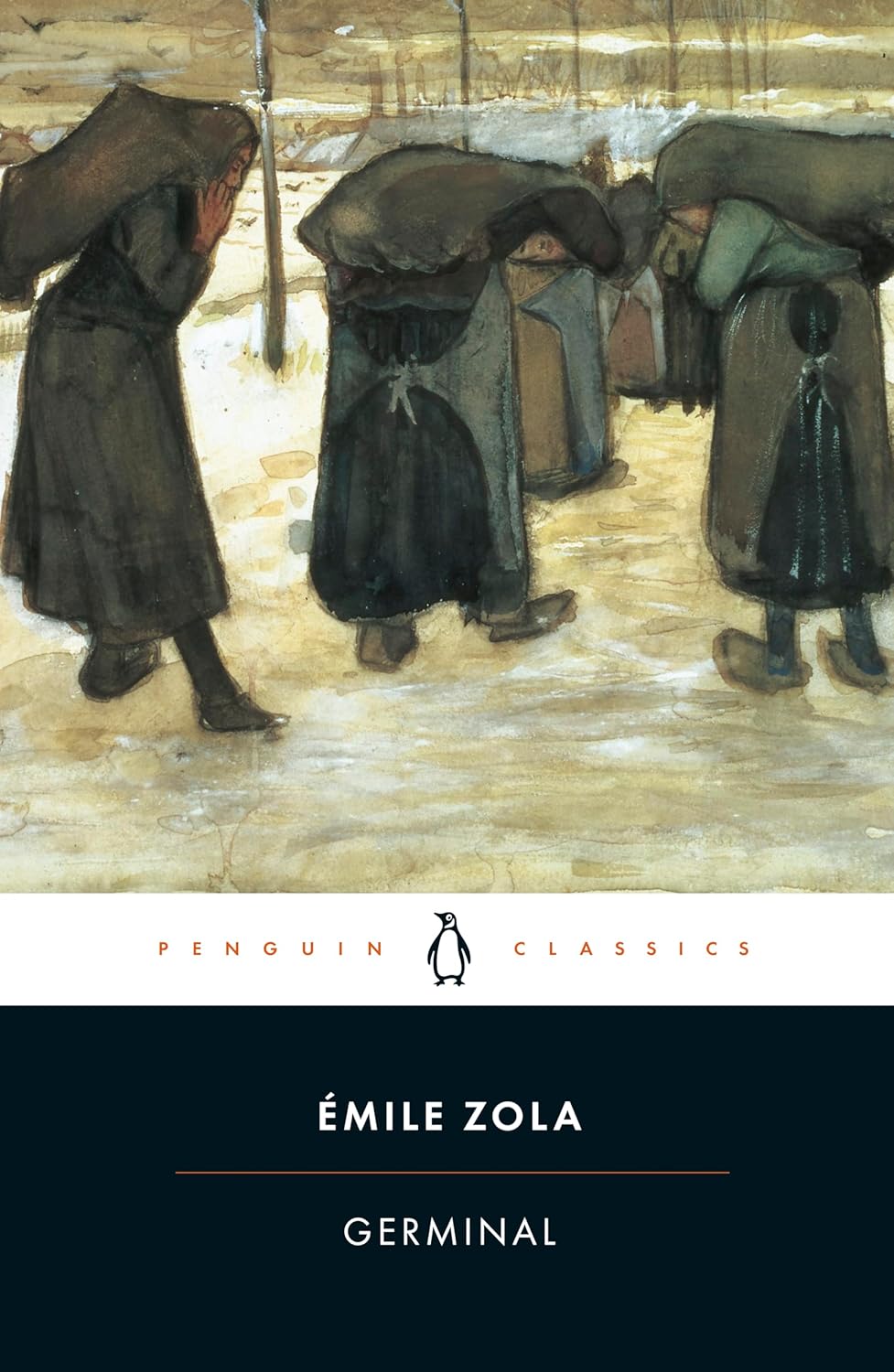
Germinal — trans. Roger Pearson
Penguin Classics — fluid modern translation for readers who want Zola's momentum above all
Roger Pearson's Penguin Classics translation is the more recent of the two major current versions and reflects a translator's instinct for pace and readability. Pearson, a professor of French at Oxford and editor of Penguin Classics editions of Stendhal and Voltaire, brings considerable literary authority to the project, but his priority is to deliver Zola's narrative drive intact — the relentless accumulation of detail, the widening spiral of events that pulls the reader down into the mine and deeper into the strike, the novel's extraordinary ability to sustain momentum across five hundred pages of catastrophe. Where Collier tends toward the precise and the scholarly, Pearson aims for transparency: a prose that gets out of the way and lets the story move. The Penguin Classics edition includes an introduction, a chronology of Zola's life, and suggestions for further reading. The cover — the same painting of miners' wives reproduced in the higher-contrast modern Penguin Classics design — makes the visual contrast between the two editions a matter of production aesthetics rather than content: the text inside is meaningfully different. For readers who want Germinal as an experience of reading rather than a scholarly encounter, Pearson's translation is the one to choose.
Buy on Amazon → As an Amazon Associate, I earn from qualifying purchases.