The Epic of Gilgamesh is the oldest surviving major work of world literature — composed in ancient Mesopotamia, written in Akkadian cuneiform on clay tablets, and lost to history for nearly two thousand years until nineteenth-century archaeologists began excavating the ruins of Nineveh and Babylon. What they found was a poem about a king who fears death, loses his closest friend, and goes to the ends of the earth in search of immortality — returning, finally, empty-handed and wiser for it. It is approximately 3,800 years old and it feels as immediate as anything written yesterday.
The problem of translating Gilgamesh is not quite the same as translating Homer or Virgil. Large sections of the tablets are physically missing, abraded, or broken, meaning every translation is also a work of reconstruction. Translators must decide how to handle lacunae — whether to skip them, mark them, or attempt to fill them from parallel fragments. They must also decide whether to treat the poem as scholarship or as literature, and how much to reach toward modern English idiom. The gap between the most literal and the most free translations here is larger than for almost any other canonical text.
The Andrew George translation is this guide's primary recommendation. It is the most complete and most rigorously researched English Gilgamesh available, and it works as a reading experience as well as a scholarly edition.
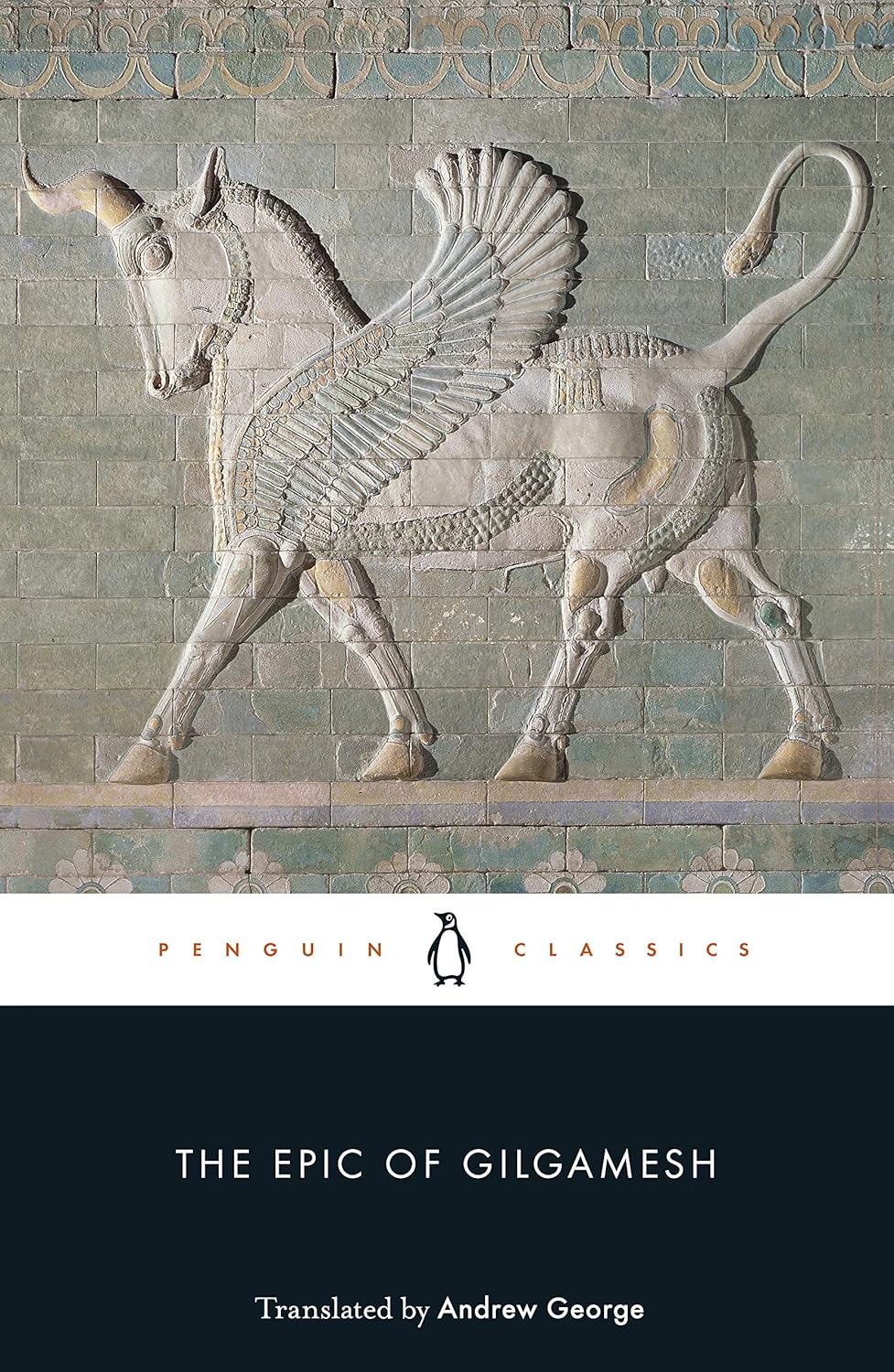
The Epic of Gilgamesh — trans. Andrew George (1999)
First translation, recommended for most readers
Andrew George is a professor of Babylonian at SOAS University of London and the world's leading authority on the Gilgamesh tablets — he has spent his career studying, excavating, and comparing every surviving fragment of the text. His 1999 Penguin Classics translation is the most complete English version ever produced, incorporating cuneiform tablets from multiple sites and clearly marking gaps in the source text with ellipses and bracketed reconstructions so that the reader always knows what is certain and what is inference. George's prose is disciplined and relatively plain — he does not try to make Gilgamesh more poetic than the evidence allows — and that restraint gives the poem's surviving passages their full power. The Penguin edition also includes the Old Babylonian version and Akkadian fragments not found in the Standard Babylonian text, making it a genuinely comprehensive scholarly edition that is still readable cover to cover. The essential Gilgamesh.
Buy on Amazon → 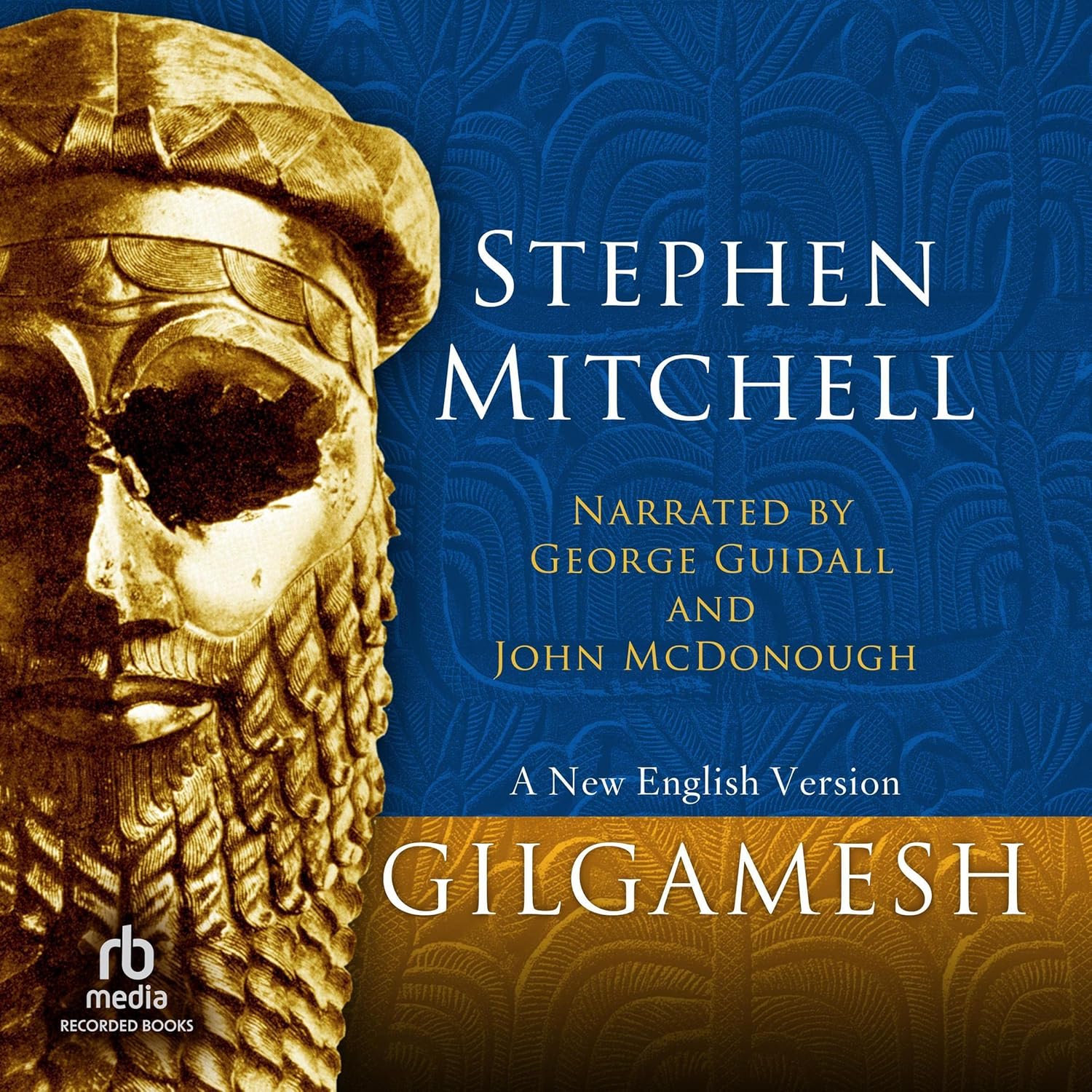
Gilgamesh: A New English Version — trans. Stephen Mitchell (2004)
Most literary — best for readers who want a fluent, contemporary telling
Stephen Mitchell is not a cuneiformist — he does not read Akkadian — and he is transparent about this in his introduction. What he did was work from all available scholarly translations and literal cribs to produce the most literary and the most fluent English Gilgamesh available: a version that reads like a great poem rather than a recovered artifact. Mitchell's prose is polished and slightly archaic without being forbidding, and he handles the poem's major set-pieces — the seduction of Enkidu by the temple woman Shamhat, the death of Enkidu, the grief of Gilgamesh, the flood narrative — with genuine literary skill. Readers who come to Gilgamesh wanting an absorbing read, rather than a scholarly edition, will find this the most satisfying entry point. Those who want to know exactly what the original tablets say should choose George; those who want to feel what the poem can do as literature should start here.
Buy on Amazon → 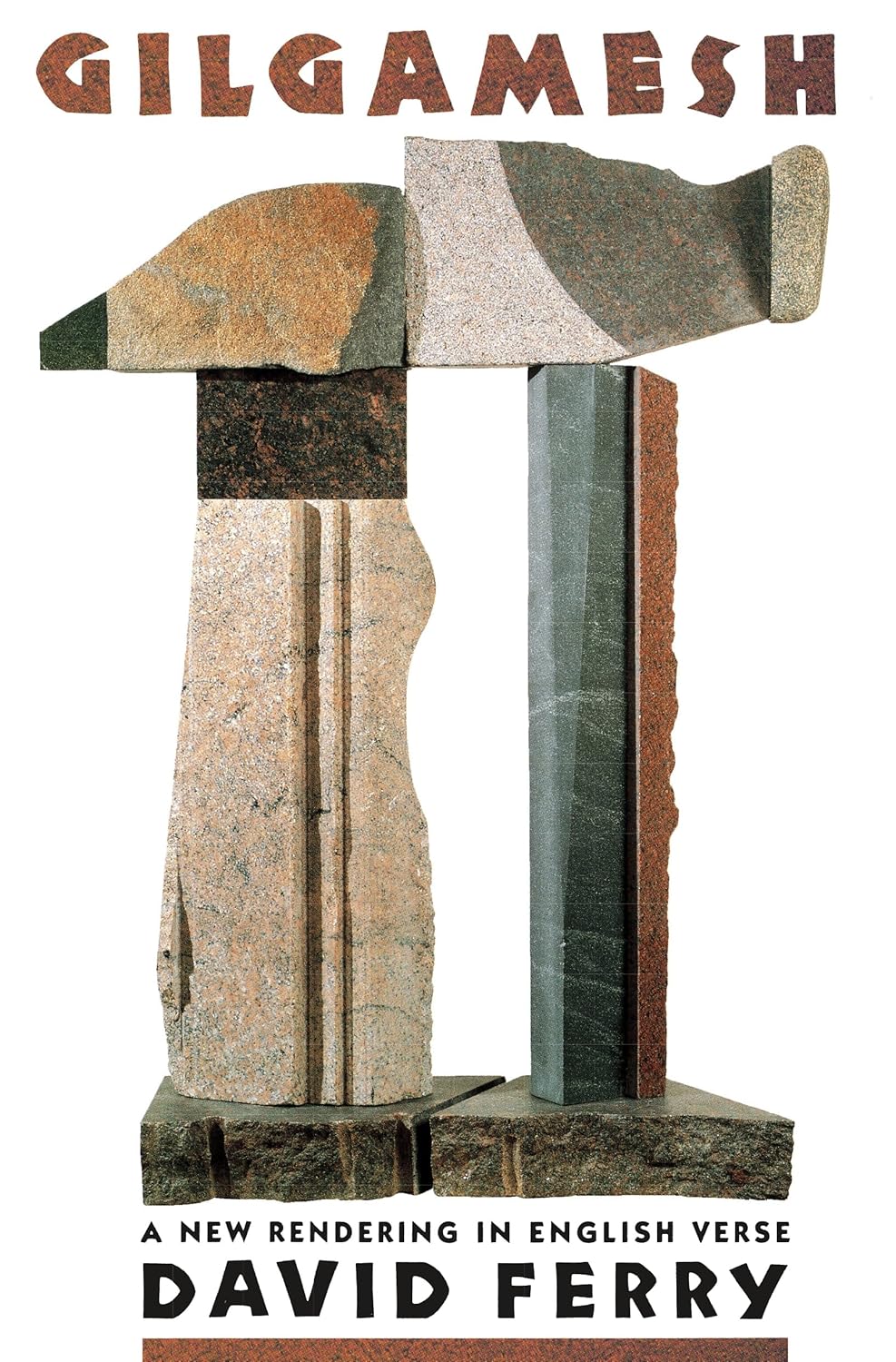
Gilgamesh: A New Rendering in English Verse — trans. David Ferry (1992)
The poet's version — compressed, powerful, and spare
David Ferry is one of the great American poets of the past century, and his 1992 Gilgamesh is a poet's translation: spare, rhythmically controlled, and startlingly compressed. Ferry is not trying to be comprehensive — his version is shorter than George's or Mitchell's, and he makes no attempt to reconstruct missing passages. What he does instead is find the poetic core of each surviving section and render it in English that has its own formal dignity, free-verse lines that carry real weight without rhyme or strict meter. The result is the most purely literary Gilgamesh in English: a translation that works as a poem first and an artifact second. Ferry's version is particularly recommended for readers who already know the story and want to encounter it as English verse — or for readers coming to Gilgamesh from Homer and Virgil who want to feel the formal kinship between these ancient epics. The FSG edition is slim and beautifully produced.
Buy on Amazon → As an Amazon Associate, I earn from qualifying purchases.