Prince Myshkin arrives in St. Petersburg from a Swiss sanatorium, naive, guileless, and prone to epileptic fits. He is the closest thing to a genuinely good person in Russian literature, and Dostoevsky's question — can a truly good man survive in the actual world? — is one that the novel answers with devastating thoroughness. The Idiot (1869) is the most emotionally overwhelming of Dostoevsky's major novels: longer than The Metamorphosis or Notes from Underground, less architecturally assured than The Brothers Karamazov, but in its great central relationships — Myshkin and Nastasya Filipovna, Myshkin and Rogozhin — it achieves something beyond the other novels: pure tragic force.
Dostoevsky wrote The Idiot at speed, serialised in a magazine, and the improvised quality is part of its character. The prose shifts registers constantly — from drawing-room comedy to psychological horror to moments of almost religious ecstasy. A translation must hold all of these tones simultaneously, and the three versions below each make different choices about which register to foreground.
The David McDuff translation is this guide's primary recommendation. It is the most complete and the most tonally flexible version currently in wide print.
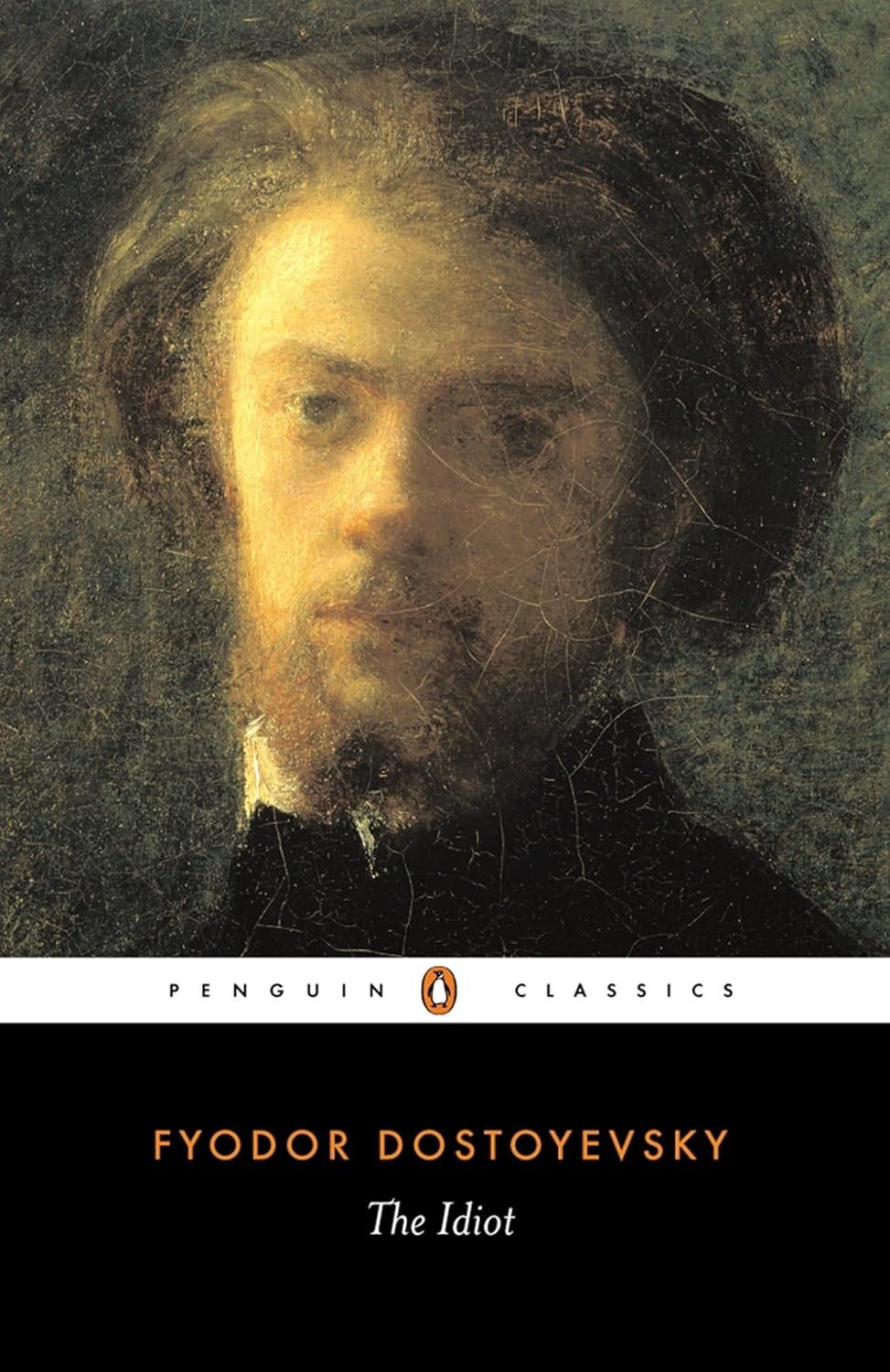
The Idiot — trans. David McDuff (1993)
First translation, recommended for most readers
David McDuff's Penguin Classics translation has been the standard English Idiot for thirty years and remains the version most widely read and assigned in anglophone universities. McDuff is a highly experienced translator of Russian literature — his Penguin editions of Dostoevsky's major works have reached enormous audiences — and his Idiot is distinguished by its readability without sacrificing complexity. The novel's pace, which is frantic in the serialised sections and ruminative in the philosophical ones, comes through clearly, and McDuff handles Myshkin's distinctive voice — earnest, digressive, unexpectedly wise — with consistent skill. The Penguin Classics edition includes a substantial introduction and notes. For a reader encountering The Idiot for the first time, this is the version to choose.
Buy on Amazon → 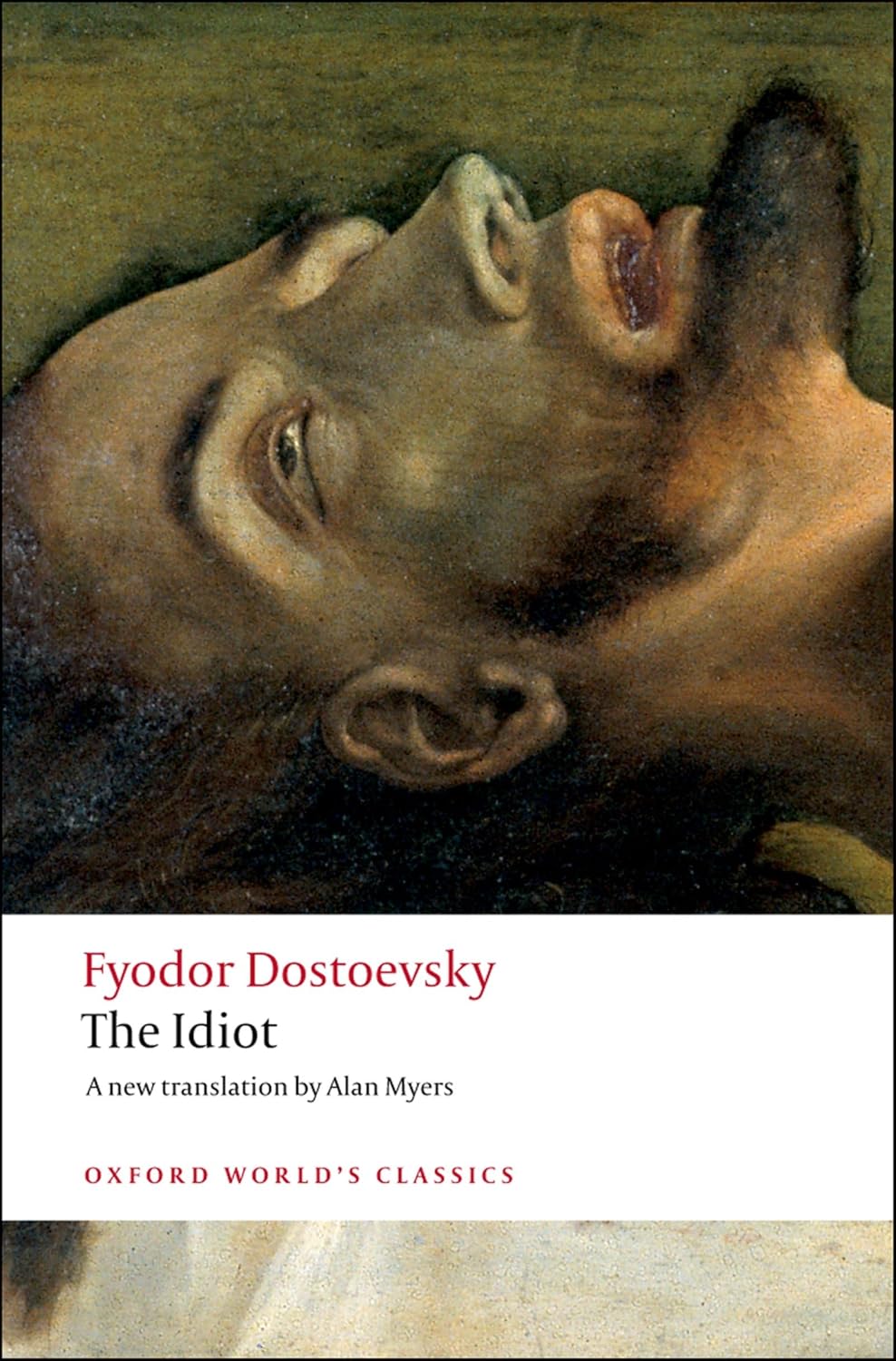
The Idiot — trans. Alan Myers (1992)
Most precise — best for readers interested in the Russian texture of the novel
Alan Myers's Oxford World's Classics translation appeared one year before McDuff's and takes a slightly more literal approach to Dostoevsky's Russian. Where McDuff aims for idiomatic English that reads fluently, Myers keeps closer to the rhythms and constructions of the original, producing a translation that preserves more of the novel's Russian character at some cost to surface readability. Myers was a scholar of Russian literature as well as a translator, and his Idiot is particularly valued by readers who want to feel the texture of the Russian without being able to read it. The Oxford World's Classics edition is well-annotated and includes a thoughtful introduction. Recommended as a second reading alongside McDuff, or as the primary version for readers approaching Dostoevsky comparatively with other Russian novelists.
Buy on Amazon → 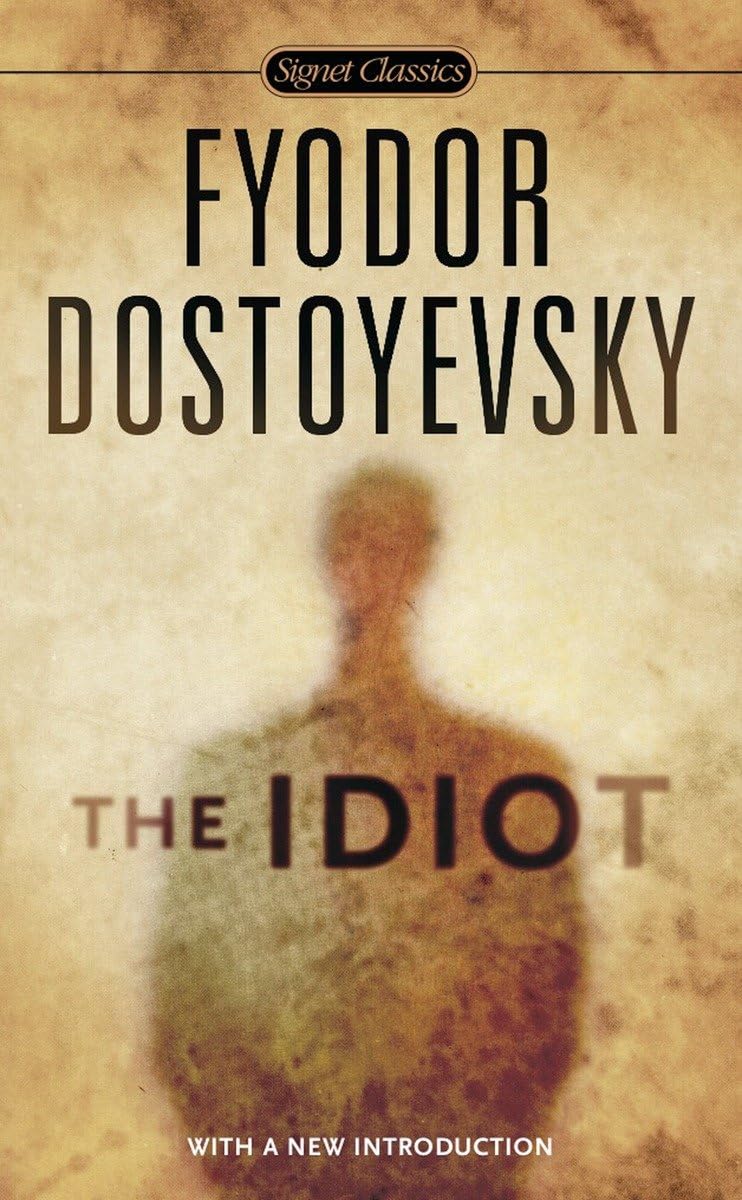
The Idiot — trans. Henry and Olga Carlisle (1969)
The classic translation — affordable and widely available
Henry and Olga Carlisle's 1969 Signet Classics translation was the dominant English Idiot for a generation of American readers, and it remains in print as the most affordable complete English version of the novel. The Carlisles brought genuine literary sensibility to their work — their Idiot reads with a certain mid-century elegance — and while more recent translations have superseded it in scholarly contexts, many readers who first encountered Myshkin in this version retain strong affection for it. Its weaknesses are the weaknesses of any translation from that era: some smoothing of Dostoevsky's rougher passages, some modernisation that now reads as dated, a prose register that sacrifices strangeness for comfort. For a reader on a budget, or for a reader who wants to compare versions of specific passages, the Carlisle Signet remains a viable and historic choice.
Buy on Amazon → As an Amazon Associate, I earn from qualifying purchases.