The Iliad is not a poem about victory. It is a poem about loss — the loss of Patroclus, the loss of Hector, the loss of Achilles's own future, which he chooses to sacrifice in the name of honour. Homer gives the Trojans as much dignity as the Greeks. He makes Hector more sympathetic than Achilles. He shows war as magnificent and catastrophic at the same time. Which of these truths comes through most clearly depends almost entirely on which translation you read.
The Iliad is also Homer's harder poem to translate. Where the Odyssey rewards a translator who can capture forward momentum and narrative drive, the Iliad rewards one who can sustain grandeur across twenty-four books of battle, grief, and divine intervention — without losing either the poem's scale or its intimacy. The funeral of Patroclus and the meeting of Achilles and Priam in Book 24 are among the greatest scenes in world literature, and a translation rises or falls on how it handles them.
The Fagles translation is this guide's primary recommendation. It is the most widely read modern English Iliad, and its dramatic energy and forward momentum make it the most accessible entry point for first-time readers. If you want to understand why the Iliad has commanded readers for three thousand years, start here.
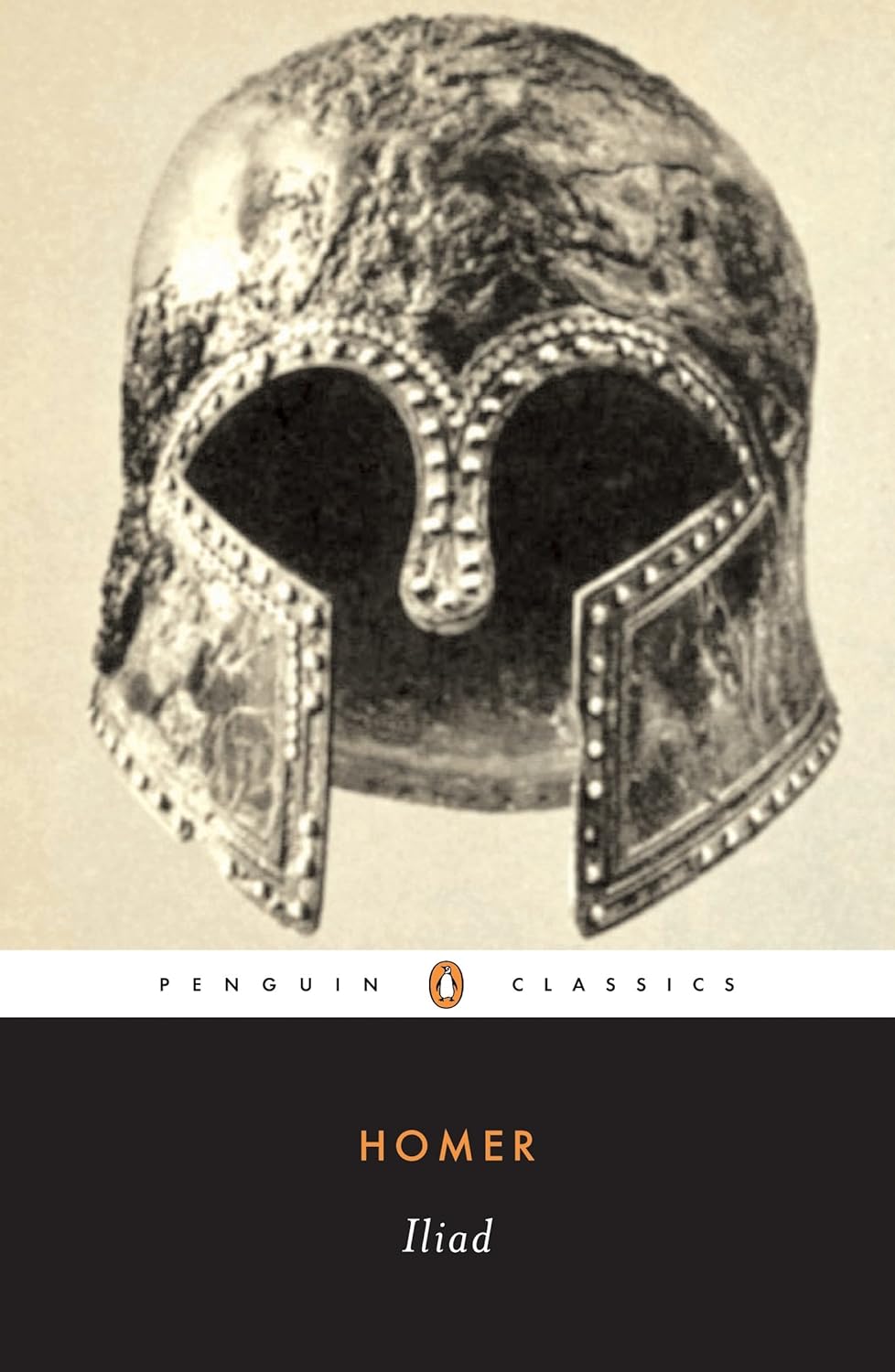
The Iliad — trans. Robert Fagles (1990)
First translation, recommended for most readers
The standard modern Iliad and the translation most likely to make you feel the poem's power on first encounter. Fagles writes with a dramatic energy that is unusual in epic translation — his battle scenes move, his speeches have force, and his rendering of the poem's most emotional moments (the death of Patroclus, the ransoming of Hector's body) is genuinely moving. He takes liberties with the Greek where a more literal translation would produce stiff English, and the result is a version that reads as a living poem rather than a monument to scholarship. Bernard Knox's introduction is one of the finest essays on Homer available anywhere — read it before Book 1, not after. The Penguin Classics paperback is the standard edition.
Buy on Amazon → 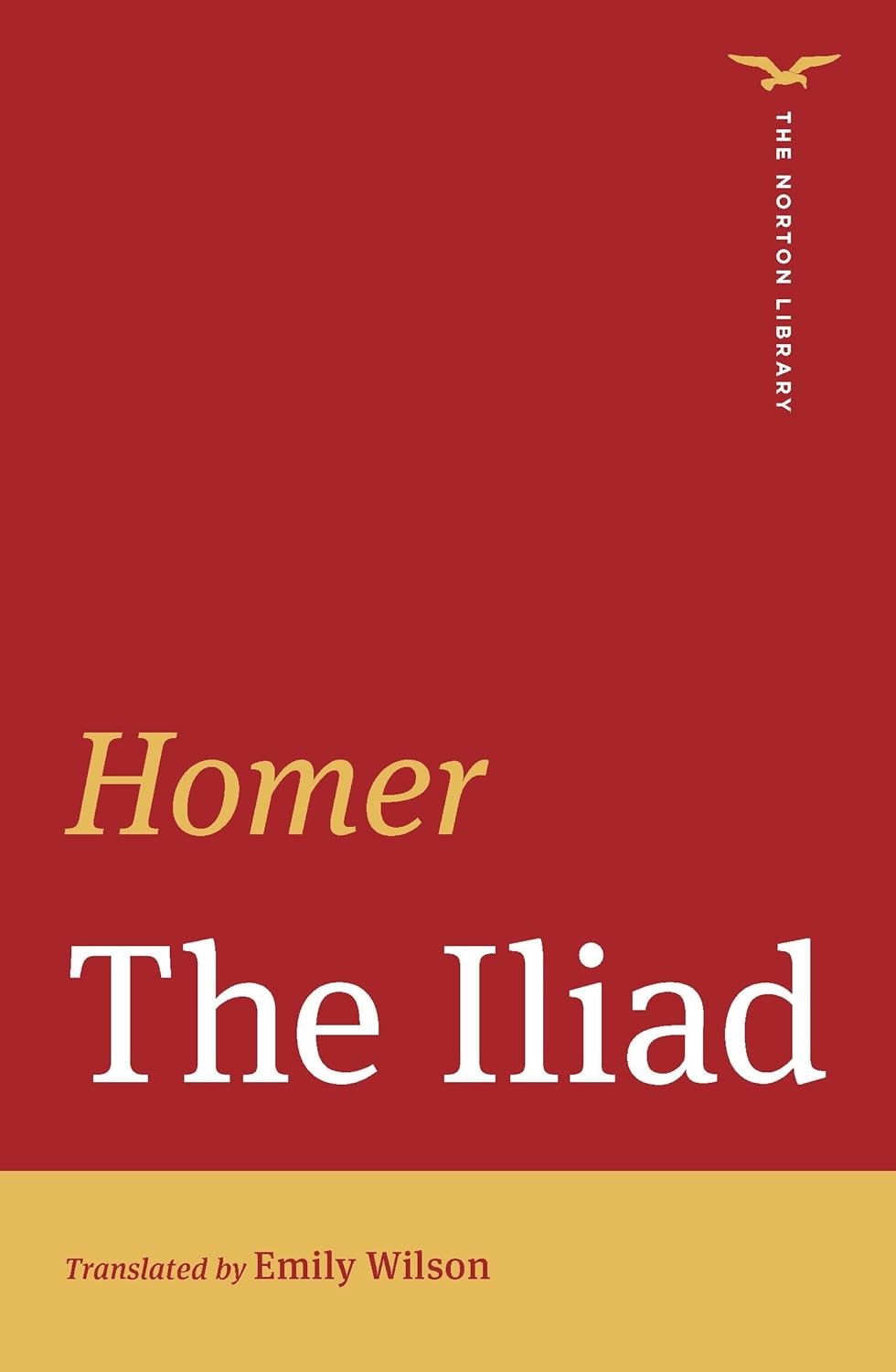
The Iliad — trans. Emily Wilson (2023)
Most contemporary, best for readers who want a fresh perspective
Wilson's Iliad arrived in 2023, six years after her Odyssey transformed how readers and scholars think about Homer in English. Where her Odyssey challenged received ideas about Odysseus's character, her Iliad challenges received ideas about heroism, glory, and the glamour of war. Her translation is direct, unornate, and deliberately stripped of the grandeur that earlier translators used to make Achilles's choices feel inevitable rather than chosen. This is an Iliad that makes you ask whether kleos — the glory that motivates Achilles to return to battle — is worth the cost Homer's poem actually shows. If you have already read the Odyssey in Wilson's translation and want to continue with the same voice, or if you want the most intellectually challenging modern Iliad, this is the one.
Buy on Amazon → 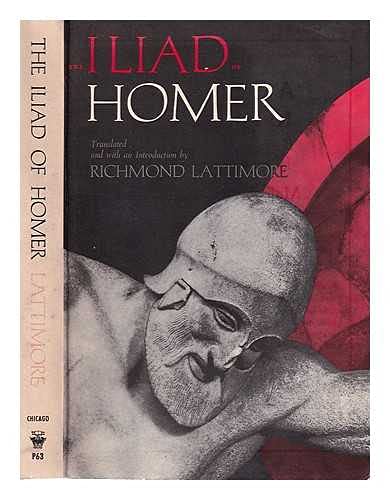
The Iliad — trans. Richmond Lattimore (1951)
Most faithful, best for readers tracking Homer's structure
Lattimore's 1951 translation remains the scholarly gold standard more than seventy years after it was published, and for good reason. Where Fagles dramatises and Wilson interrogates, Lattimore preserves — the epithets, the repetition, the long rolling lines that approximate Homer's Greek hexameter more closely than any other English version. Reading Lattimore is the closest most English readers will ever get to the texture of Homer's original. The famous repeated phrases — "rosy-fingered Dawn," "the wine-dark sea," "swift-footed Achilles" — land with the same weight they carry in the Greek because Lattimore never tries to vary them for stylistic effect. This is the translation to read if you are studying the Iliad seriously, following a course, or want to understand why Homer's formulaic style is a feature rather than a flaw. The University of Chicago Press edition is the standard.
Buy on Amazon → 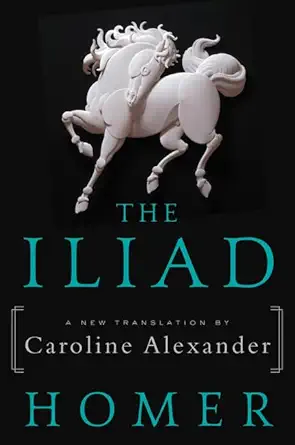
The Iliad — trans. Caroline Alexander (2015)
Most precise, best for readers who want fidelity over drama
Alexander's translation, published in 2015, was the first major Iliad by a woman and remains one of the most precise modern English versions available. Alexander is a classicist who wrote the acclaimed study The War That Killed Achilles before turning to the translation itself, and her deep knowledge of the poem's scholarship shapes every choice she makes. Her version is closer to the Greek than Fagles and more readable than Lattimore — a useful middle ground for readers who want accuracy without the austerity of a fully literal translation. Her introduction is excellent and her notes are among the most useful of any Iliad edition. If you want a reliable text that respects both the Greek and the English reader, Alexander is a strong choice.
Buy on Amazon → As an Amazon Associate, I earn from qualifying purchases.