De Rerum Natura (On the Nature of Things, c. 55 BCE) is the longest and most ambitious philosophical poem in Latin, written by Titus Lucretius Carus to expound the Epicurean system of the universe. In six books and some 7,400 hexameter lines, Lucretius argues that everything — matter, mind, sensation, the movements of the heavens, the history of civilisation — can be explained by the behaviour of invisible atoms moving through infinite void. There are no gods who intervene in human affairs; the soul is material and disperses at death; there is therefore no afterlife, no divine punishment, nothing to fear in death at all. The aim of the poem is therapeutic: to free the reader from the fear of death and the superstition that feeds it, and to open the path to ataraxia — tranquillity, the Epicurean highest good.
The poem disappeared from Western knowledge for much of the medieval period and was rediscovered in 1417 by the humanist and papal secretary Poggio Bracciolini in a German monastery — an event Stephen Greenblatt narrated in his bestselling The Swerve (2011). Its influence on Renaissance and early modern thought was immense: the atomic theory it describes anticipates, in important ways, the scientific revolution, and its argument against supernatural fear resonated deeply with Enlightenment thinkers. Montaigne, Newton, Jefferson, and Darwin all read Lucretius.
The challenge for translators is severe: Lucretius is writing a technical philosophical treatise, but he is doing it in verse of great power and beauty. The poem contains extraordinary passages — the opening invocation to Venus, the meditation on the fear of death, the description of the plague of Athens at the end of Book VI — that are among the finest in Latin poetry. A translator must handle both the argument and the poetry simultaneously. Prose translations capture the philosophy; verse translations risk losing the precision of the argument. The three translations below represent the main options across both approaches.
A.E. Stallings's Penguin Classics translation is this guide's primary recommendation. It is the most celebrated modern English Lucretius and a remarkable feat of simultaneous fidelity and poetic invention.
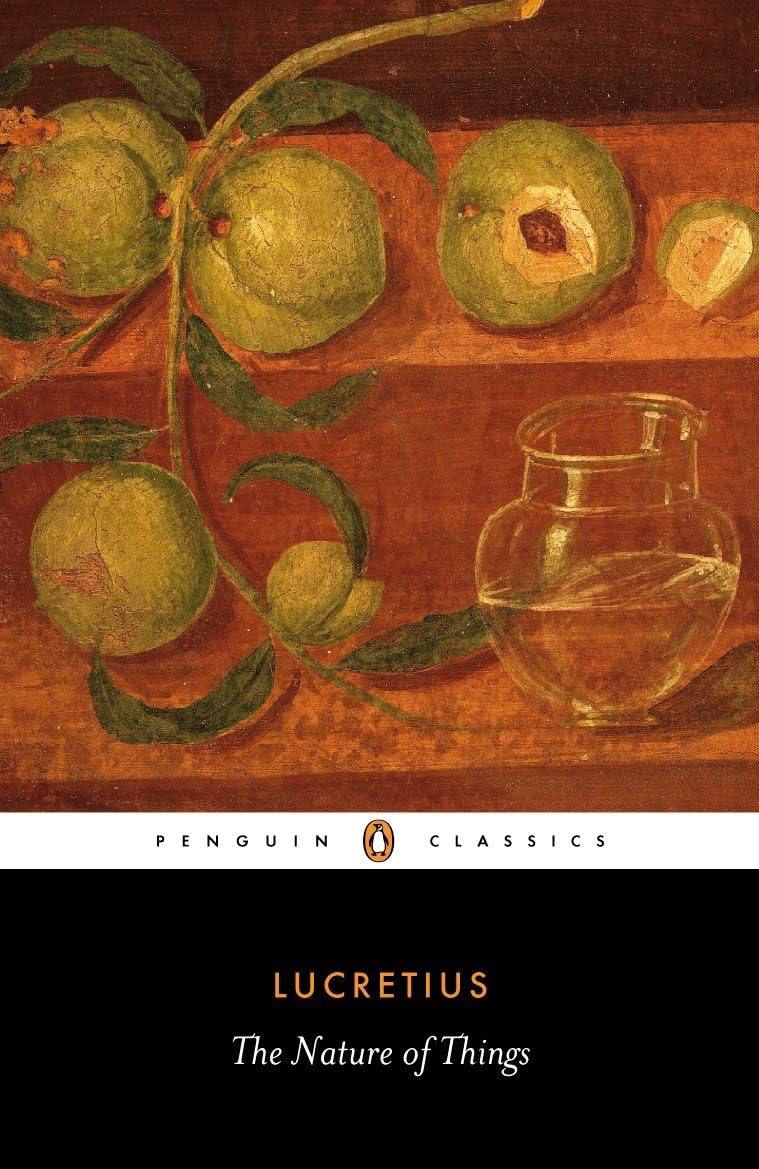
The Nature of Things — trans. A. E. Stallings (2007)
First translation, recommended for most readers — a landmark verse translation by a classicist-poet
A.E. Stallings — poet, classicist, and MacArthur Fellow — accomplished something extraordinary with her 2007 Penguin Classics Lucretius: a translation in rhyming fourteeners (seven-stress lines rhymed in couplets) that manages to be both formally inventive and remarkably faithful to Lucretius's thought. The fourteener is an unfashionable English metre, and some readers resist it at first; but Stallings chose it deliberately because it gives the poem the forward momentum and the slightly breathless energy of the original Latin hexameter better than blank verse or free verse can. The rhyme carries the argument along rather than interrupting it. Stallings renders the technical passages with precision and the lyrical passages with real beauty: her Venus invocation, her translation of the plague of Athens, and her handling of Lucretius's famous passages on death are all excellent. The Penguin edition includes an introduction by the poet and classicist Richard Jenkyns. For any reader coming to Lucretius for the first time, this is the translation to read.
Buy on Amazon → 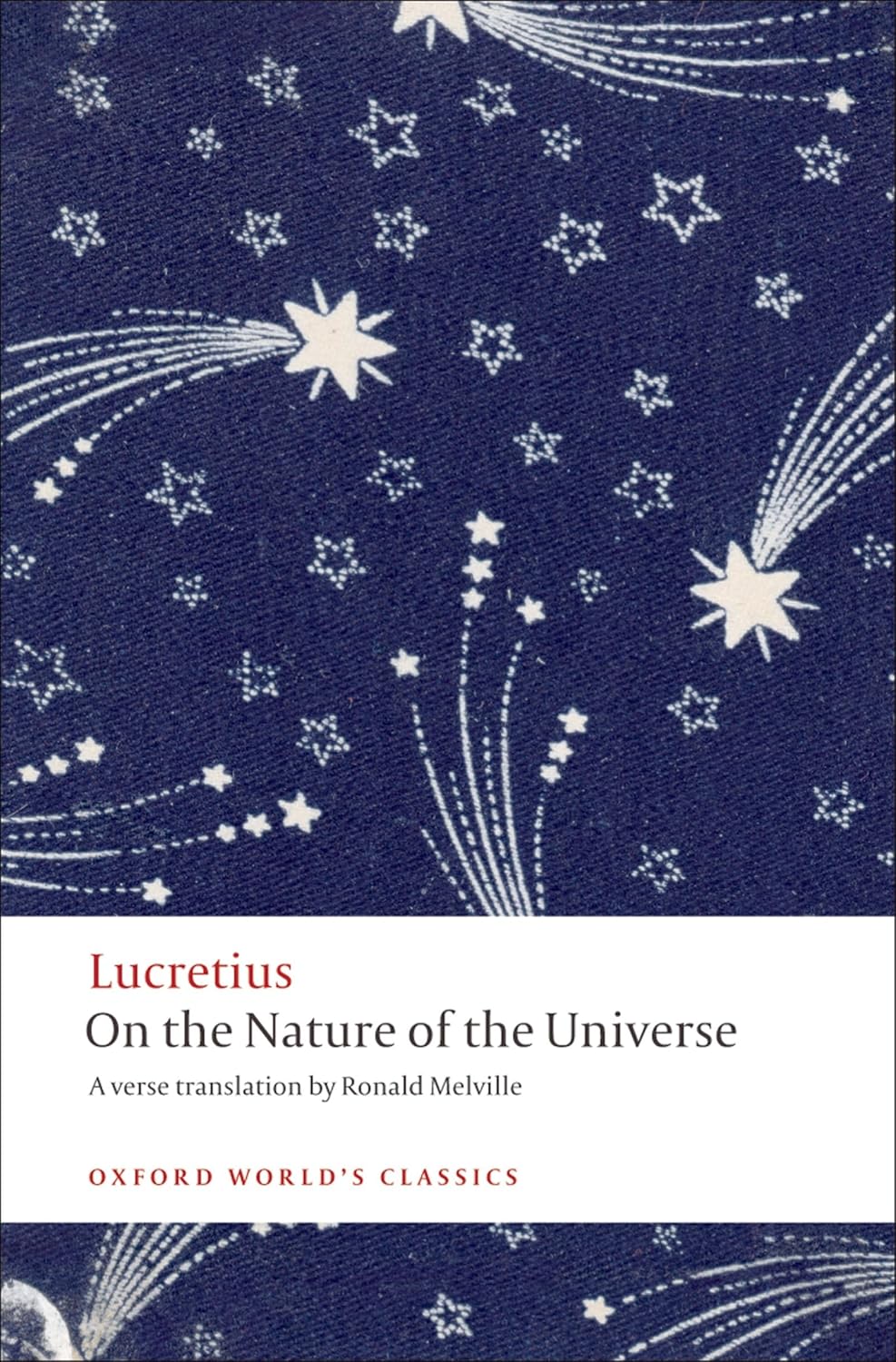
On the Nature of the Universe — trans. Ronald Melville (1997)
Oxford verse translation — precise blank verse with scholarly notes by Don and Peta Fowler
Ronald Melville's Oxford World's Classics translation works in blank verse rather than rhyme, producing a more sober and literal Lucretius than Stallings. Where Stallings's fourteeners carry momentum through their formal energy, Melville's blank verse stays closer to the structure of Lucretius's Latin sentences, making it a more transparent window onto the original for readers interested in following the argument line by line. The Oxford edition has a significant scholarly advantage: its notes and introduction are by Don Fowler and Peta Fowler, two of the most important Lucretian scholars of the late twentieth century, and they bring a depth of philological and philosophical knowledge that enriches the text throughout. Melville is also notable for his title: "On the Nature of the Universe" renders De Rerum Natura more literally than "On the Nature of Things" (the conventional translation of the title). For a reader who wants to think carefully about Lucretius's argument and values scholarly apparatus alongside a competent verse translation, this is the edition to choose.
Buy on Amazon → 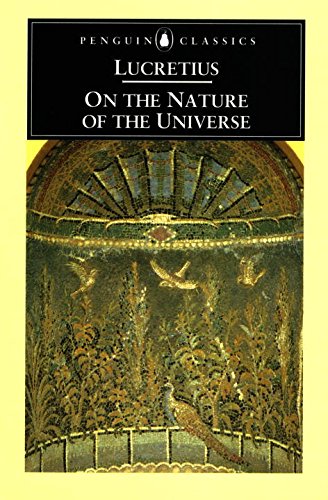
On the Nature of the Universe — trans. R. E. Latham, rev. John Godwin (1951; rev. 1994)
The prose Penguin — clear, direct, focused on the philosophy over the poetry
R.E. Latham's prose translation was the standard English Lucretius for over fifty years and remains a valuable option for readers who prefer to encounter the philosophy without the formal demands of verse. Prose allows Latham to render the technical argument with exceptional clarity: his Lucretius is lucid and direct, the atomic theory explained in plain English without the distortions that the need for metre can introduce. The 1994 revision by John Godwin corrects errors in the original and adds an introduction that covers the Epicurean philosophical background and Lucretius's place in intellectual history. The trade-off is inevitable: without the verse, the great set pieces — the invocation, the plague, the passages on death — lose much of their power. A reader who comes away from the Latham wanting to experience what they've just read as poetry will find Stallings a necessary complement. But as an entry point to Epicurean philosophy through the most important ancient text that expounds it, the Latham prose translation remains perfectly serviceable and very readable.
Buy on Amazon → As an Amazon Associate, I earn from qualifying purchases.