Gustave Flaubert spent five years writing Madame Bovary, reading every sentence aloud to test its rhythm, discarding pages that did not pass his ear. The result, published in 1857, is one of the most stylistically self-conscious novels ever written: a book in which the story of an unhappy provincial wife is also a sustained argument about how prose should work. To translate Flaubert is to take on a writer for whom no word is careless, no rhythm is accidental, and every sentence has been through a kind of torture before it is allowed to remain.
Emma Bovary is a doctor's wife in rural Normandy who has read too many romantic novels and finds her real life unbearably dull. She takes lovers. She runs up debts. The world refuses to become the story she expected it to be. Flaubert renders her self-deception with devastating precision, and the novel's prose mirrors her experience: lush and yearning in her moments of illusion, flat and clinical when reality returns. A translation that does not hold both registers cannot hold the book.
The Lydia Davis translation is this guide's primary recommendation. It is the most scrupulous and the most faithful English Bovary of the modern era, and it restores a clarity and strangeness to the prose that earlier versions had smoothed away.
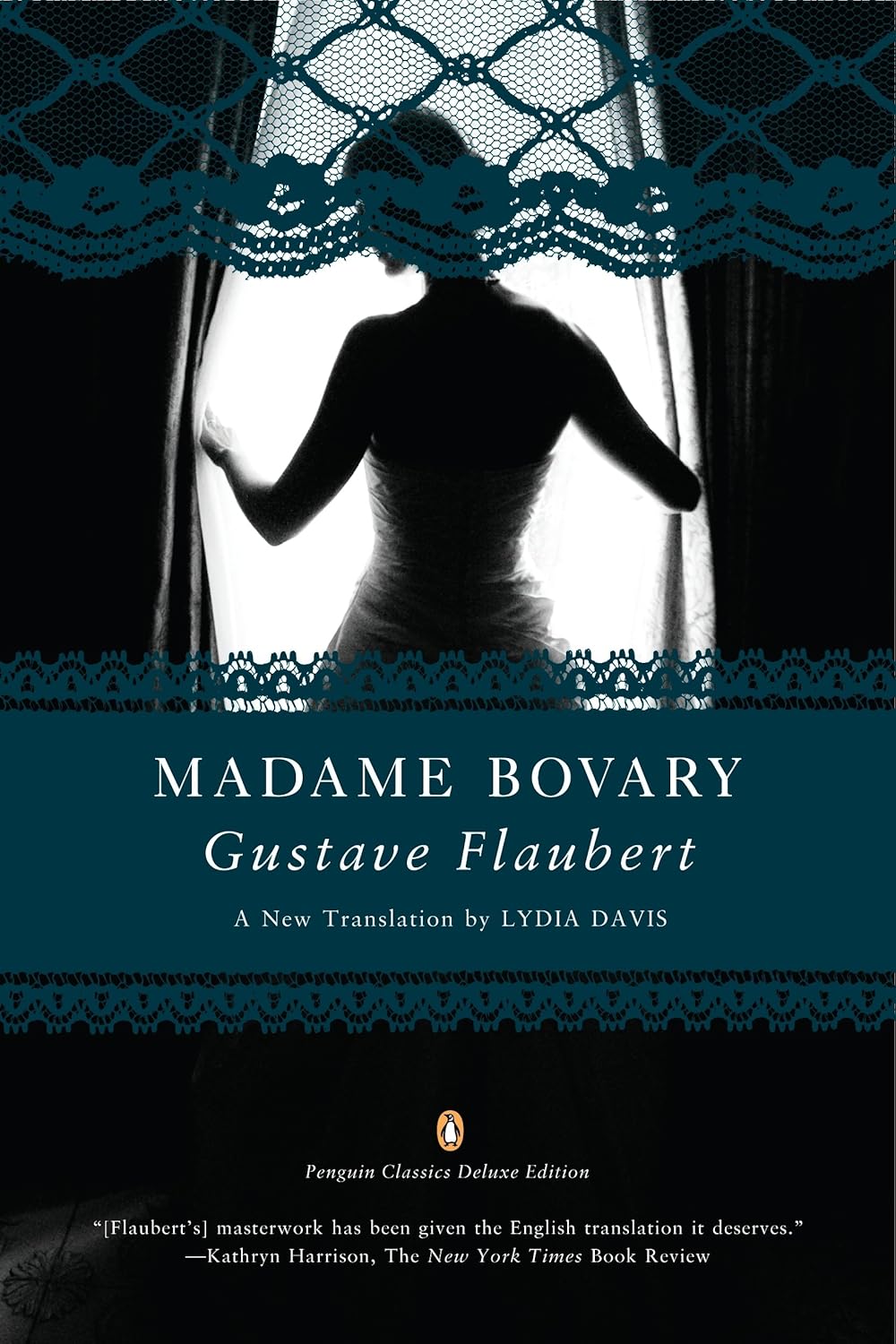
Madame Bovary — trans. Lydia Davis (2010)
First translation, recommended for most readers
Lydia Davis is one of the great American prose stylists and one of the most celebrated translators of French literature working today — her translation of Proust's Swann's Way is itself a modern standard. Her 2010 Madame Bovary is the culmination of years of immersion in Flaubert's French, and it represents a fundamental rethinking of how the novel should sound in English. Davis resists the tendency of earlier translators to make Flaubert more palatable — more conventionally novelistic — and instead preserves the awkward rhythms, the deliberate flatness, the passages of free indirect discourse where Flaubert slips into Emma's consciousness without announcing the shift. The result is a translation that asks more of the reader than its predecessors but gives more back: a Bovary that feels genuinely strange and genuinely precise, closer to what Flaubert was actually doing than any other version available. The Penguin Classics Deluxe Edition is handsomely produced and widely available.
Buy on Amazon → 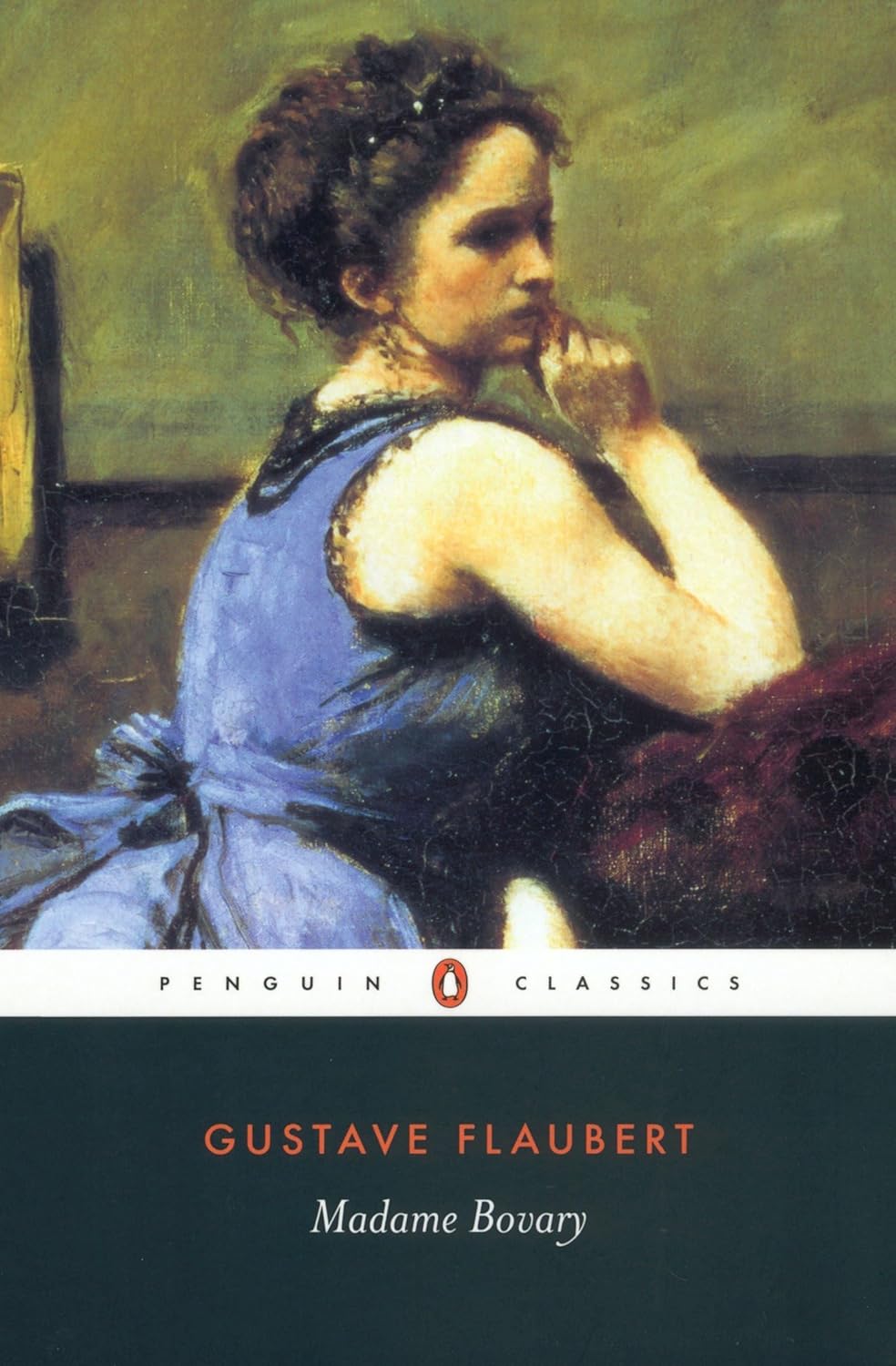
Madame Bovary — trans. Geoffrey Wall (1992)
Most readable — best for a fluid first encounter
Geoffrey Wall's 1992 Penguin Classics translation has been the default English Bovary for a generation of readers and remains the most widely purchased version of the novel in English — its 4,500-plus Amazon reviews speak to the size of its readership. Wall is a Flaubert scholar as well as a translator, and his version is more immediately accessible than Davis's: the prose flows smoothly, the narrative voice is confident, and the novel's pleasures — its irony, its social comedy, its sweeping narrative economy — are fully present on the page. What Wall gives up relative to Davis is some of the textural strangeness, the moments where Flaubert's style becomes its own subject. For a reader who wants to meet Emma Bovary for the first time without resistance, this is the version to choose. For a reader who has come to Flaubert specifically to encounter his prose, start with Davis.
Buy on Amazon → 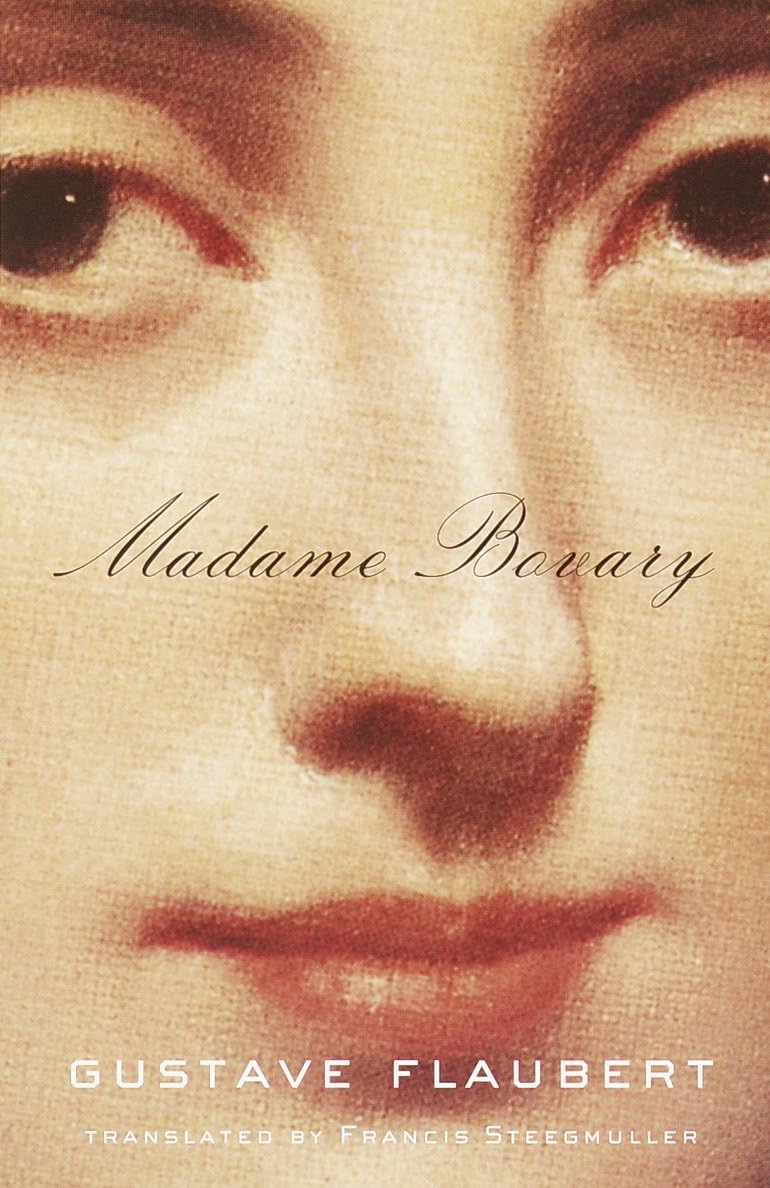
Madame Bovary — trans. Francis Steegmuller (1957)
The classic translation — elegant, literary, historically important
Francis Steegmuller's 1957 Vintage translation was the dominant English Bovary for nearly forty years and remains in print as a testament to how well it has held up. Steegmuller was a Flaubert scholar of distinction — his biography of the writer and his translations of the letters are standard references — and his Bovary reflects that deep intimacy with the material. The prose is elegant in the way that mid-century literary translation tends to be elegant: well-mannered, assured, confident in its own English dignity. What it does not attempt, and what later translators have tried to recover, is Flaubert's deliberate roughness: the moments of stylistic alienation, the anti-novelistic flat patches, the passages where beauty and banality sit in uncomfortable proximity. Read Steegmuller's version alongside Davis and Wall and you will come away understanding how much a translation's historical moment shapes its choices.
Buy on Amazon → As an Amazon Associate, I earn from qualifying purchases.