Mikhail Bulgakov began writing The Master and Margarita in 1928 and continued revising it until shortly before his death in 1940. He never saw it published. The novel was first circulated in samizdat in the Soviet Union, then partially published in a Soviet literary journal in 1966–67 — in censored form, with roughly a sixth of the text removed. The complete text did not appear until 1966–67 in Paris (in the Russian émigré press), and the first widely available complete Russian edition came out only in 1973. The English translations that appeared in the late 1960s were working from this complicated editorial situation, and their textual basis matters for how they should be read.
The novel itself is one of the twentieth century's strangest and most dazzling achievements: a three-strand structure that interweaves a satirical portrait of Moscow's literary establishment in the 1930s, a visionary retelling of Pontius Pilate's encounter with Yeshua Ha-Notzri (a reimagining of the Passion), and a supernatural carnival in which the devil and his retinue — including the giant talking cat Behemoth — descend on the city and expose every variety of Soviet hypocrisy. The novel is simultaneously a love story, a work of theological philosophy, a political satire, and a piece of pure comic invention.
The Pevear and Volokhonsky translation is this guide's primary recommendation. It is the most complete, most accurate, and most widely read modern English version.
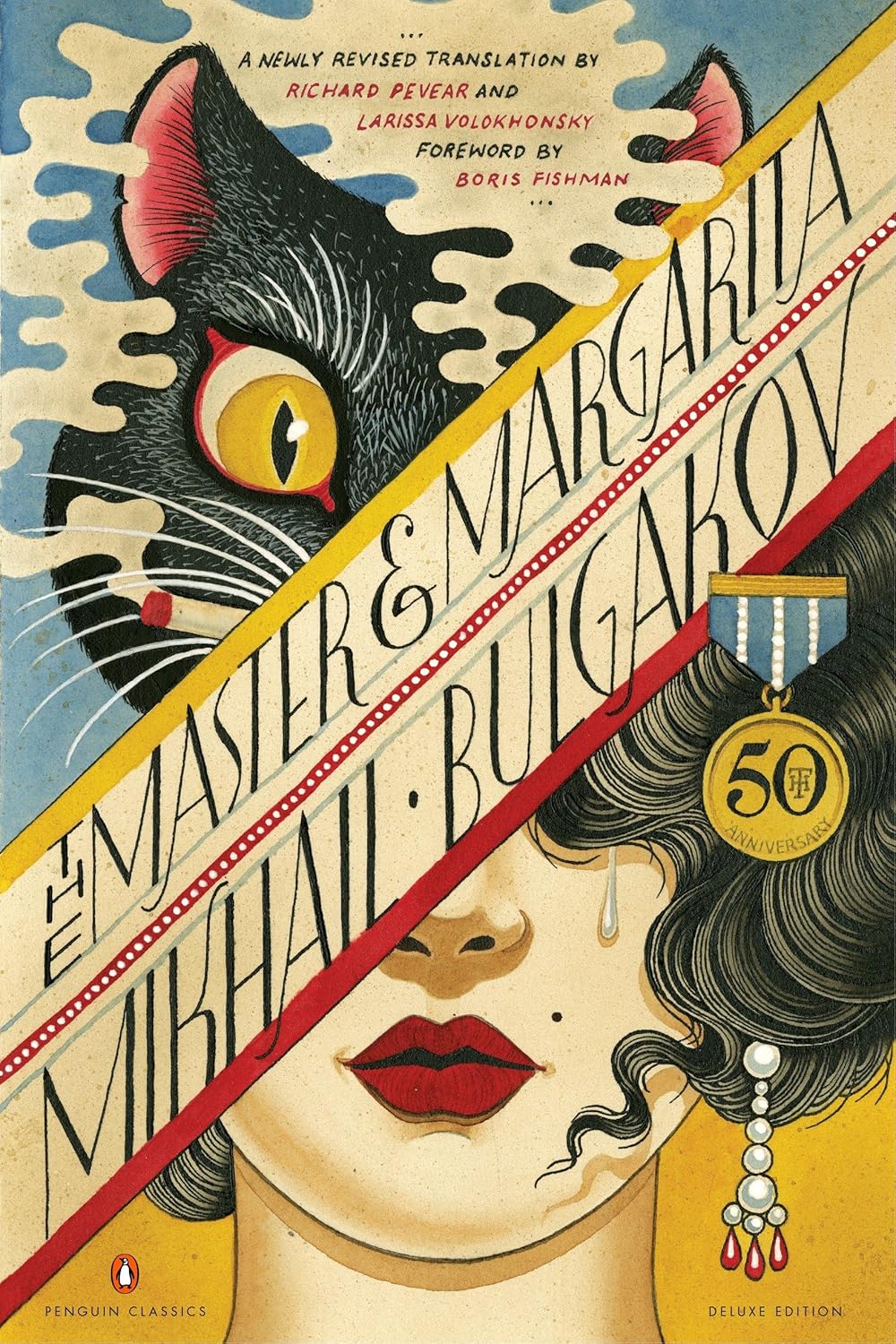
The Master and Margarita — trans. Richard Pevear & Larissa Volokhonsky (2016)
First translation, recommended for most readers
Pevear and Volokhonsky's Penguin Classics Deluxe Edition is the definitive modern English Master and Margarita — the translation that has introduced most readers of the past decade to the novel, and the one most English-language critics and scholars now use as their reference text. P&V worked from the authoritative complete Russian text, and their translation captures both the novel's tonal range — the sardonic comedy of the Moscow chapters, the biblical gravity of the Pilate chapters, the lyric intensity of the love story — and its stylistic variety. The Penguin Deluxe Edition is beautifully designed and includes a useful foreword by Boris Fishman. For any reader coming to the novel for the first time, this is the version to choose.
Buy on Amazon → 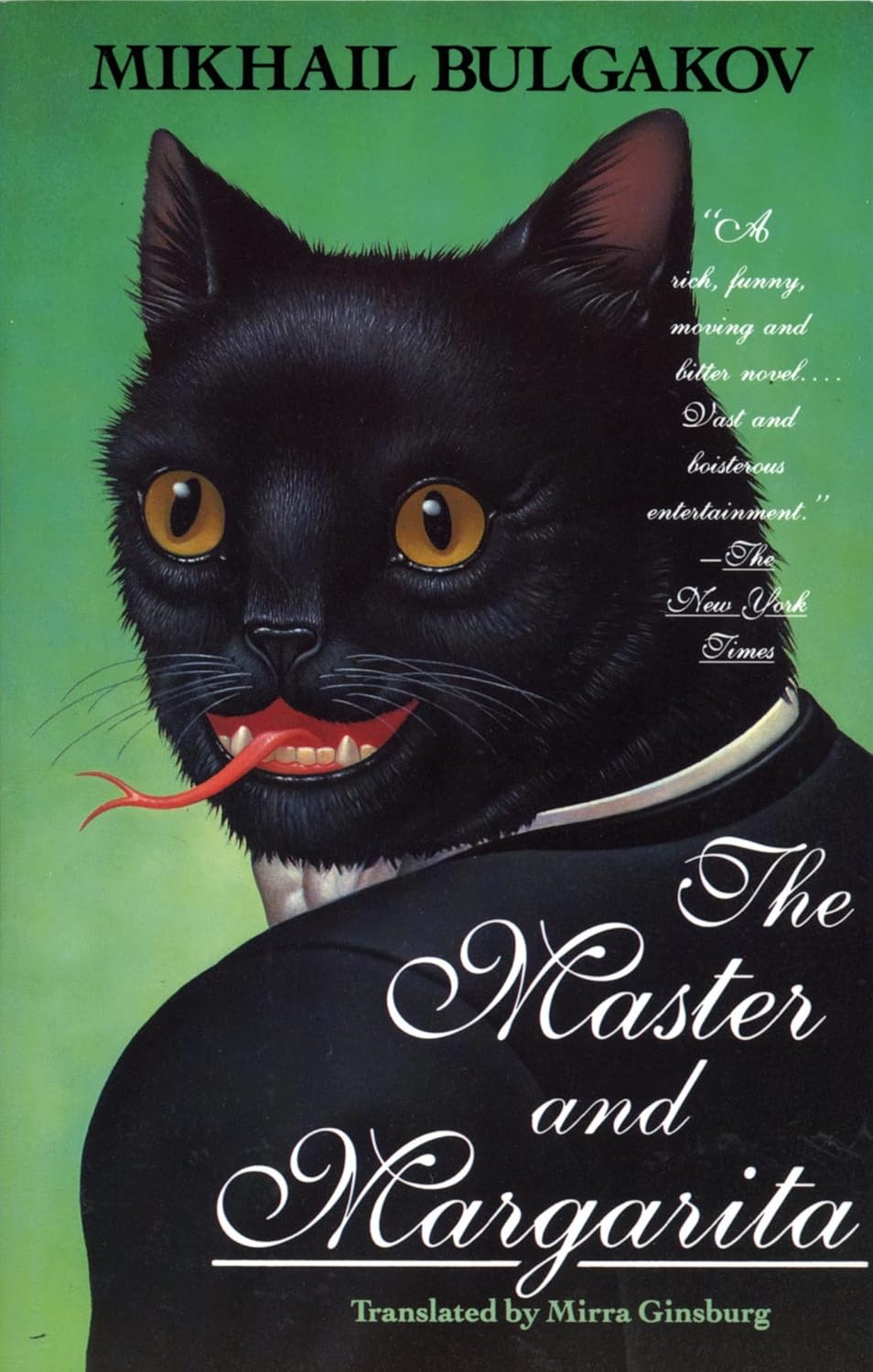
The Master and Margarita — trans. Mirra Ginsburg (1967)
The classic first edition — historically important, note its textual basis
Mirra Ginsburg's 1967 Grove Press translation was the first widely available English version of the novel and introduced a generation of anglophone readers to Bulgakov. Ginsburg was a distinguished translator of Russian literature — her Zamyatin and Babel translations are classics — and her Master and Margarita has genuine energy and readability. The significant caveat is textual: Ginsburg translated from the abridged Soviet journal publication (Moskva, 1966–67), which omitted approximately a sixth of the novel, including passages from the Pilate chapters and some of the most philosophically charged material. This is not a translation of the complete text that Bulgakov wrote. The Grove edition remains widely available and is historically important; the P&V or Burgin/O'Connor translations give you the complete novel. Michael Glenny's 1967 translation (published by Collins/Harvill in the UK) was the other pioneering English version and remains beloved by many readers, though it is currently out of print in the United States.
Buy on Amazon → 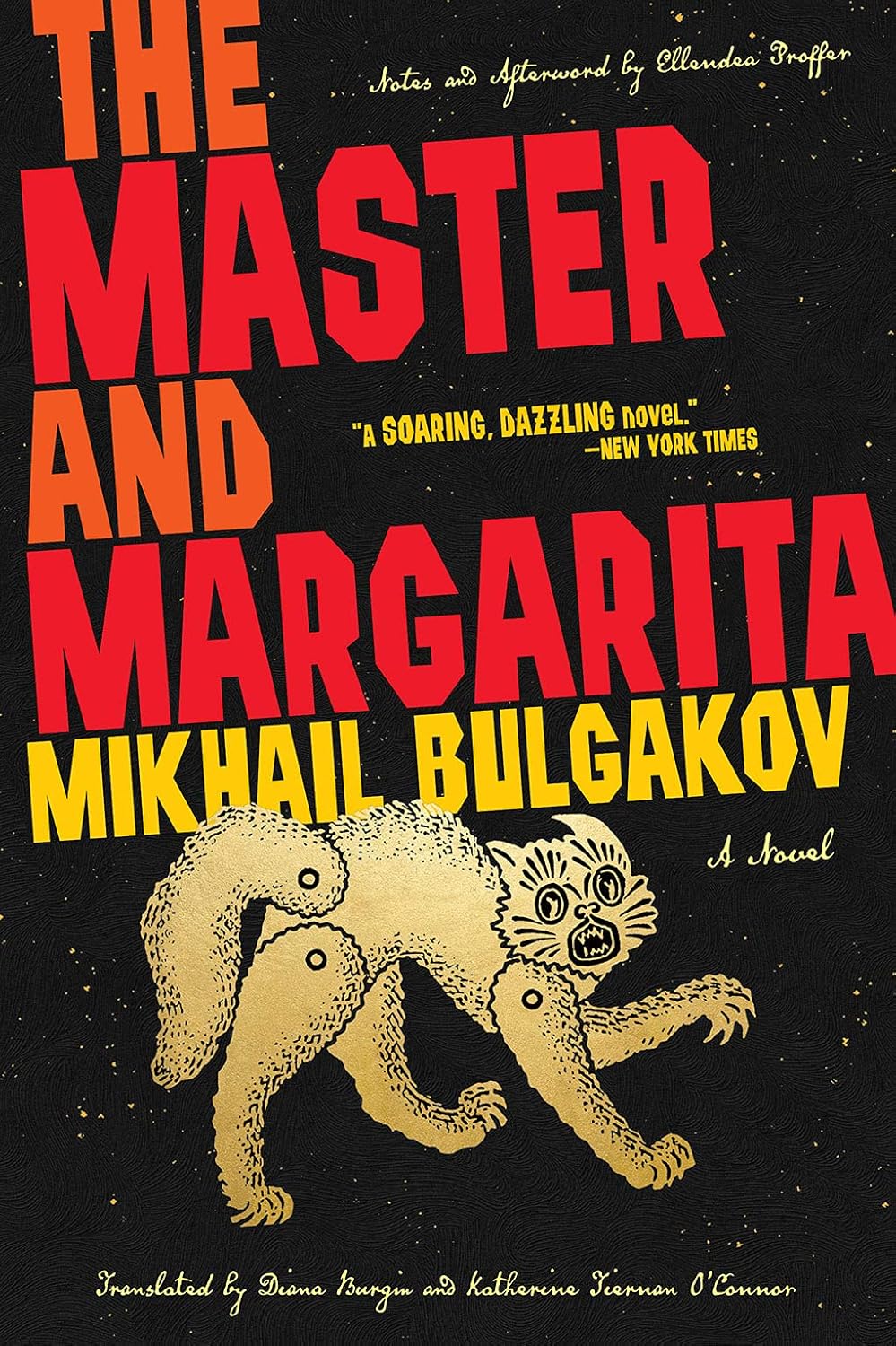
The Master and Margarita — trans. Diana Burgin & Katherine Tiernan O'Connor (1995)
Best for academic study — complete translation with scholarly notes
Diana Burgin and Katherine Tiernan O'Connor's 1995 translation, published by Ardis with notes and an afterword by the Bulgakov scholar Ellendea Proffer, is the most academically oriented English version of the novel. Ardis was the American publisher that did more than any other to make Russian literature available in English during the Soviet period, and this translation reflects that scholarly seriousness. Working from the authoritative complete Russian text, Burgin and O'Connor produced a translation that prioritises accuracy and interpretive transparency — useful for a reader who wants to understand specific textual decisions or who is reading in parallel with the Russian. The Proffer afterword provides essential context on the novel's composition, censorship, and publication history. For a student or academic reader, this edition's apparatus makes it an indispensable companion to the P&V translation.
Buy on Amazon → As an Amazon Associate, I earn from qualifying purchases.