Oedipus Rex (Oedipus the King) was written by Sophocles around 429 BCE and performed at the Festival of Dionysus in Athens. Aristotle used it as his primary example in the Poetics when defining what a tragedy should do — and his analysis has shaped how the play has been read for two and a half thousand years. The story of a king who investigates a plague on his city and discovers that he himself is the cause — that he killed his father and married his mother without knowing it — remains one of the most efficiently constructed plots ever written, and the play achieves a terrible compression: everything that needs to happen happens, nothing that doesn't need to happen does, and the ending arrives with the force of inevitability.
Sophocles wrote all three Theban plays — Oedipus Rex, Oedipus at Colonus, and Antigone — though not as a deliberate trilogy and not in that order. Antigone was written first; Oedipus Rex second; Oedipus at Colonus was completed just before Sophocles' death and performed posthumously. Most editions collect all three, which is the right way to read them: together they form one of the great arcs in literature.
The Robert Fagles translation is this guide's primary recommendation. It is the most dramatically alive English version and the one most likely to make the plays feel urgent in performance or on the page.
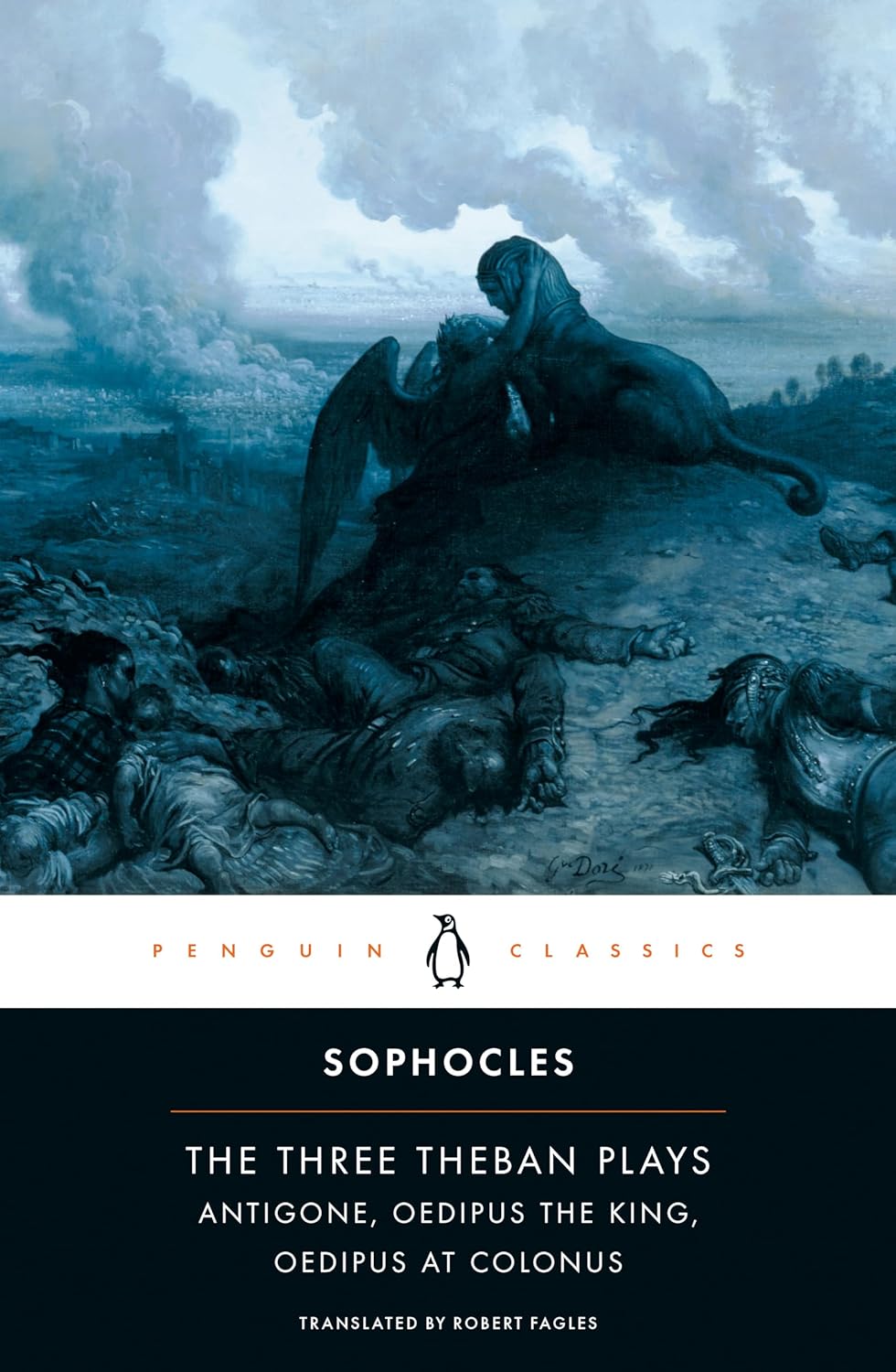
The Three Theban Plays — trans. Robert Fagles (1982)
First translation, recommended for most readers
Fagles's Penguin Classics collection of the three Theban plays — Antigone, Oedipus the King, Oedipus at Colonus — is the best-selling and most widely read English version of the plays, and for good reason. Fagles brings to Sophocles the same qualities he brought to Homer: a command of dramatic English rhythm, a feel for when to accelerate and when to slow down, and an instinct for the line that will land in performance. His Oedipus the King in particular achieves a theatrical momentum that earlier translations had muffled — the scenes between Oedipus and Teiresias, between Oedipus and Jocasta, between Oedipus and the shepherd — each arrives with escalating force. Bernard Knox's introduction and notes are among the best short introductions to Sophocles available in English. The Penguin Deluxe Edition is the format to buy. This is the translation to read first.
Buy on Amazon → 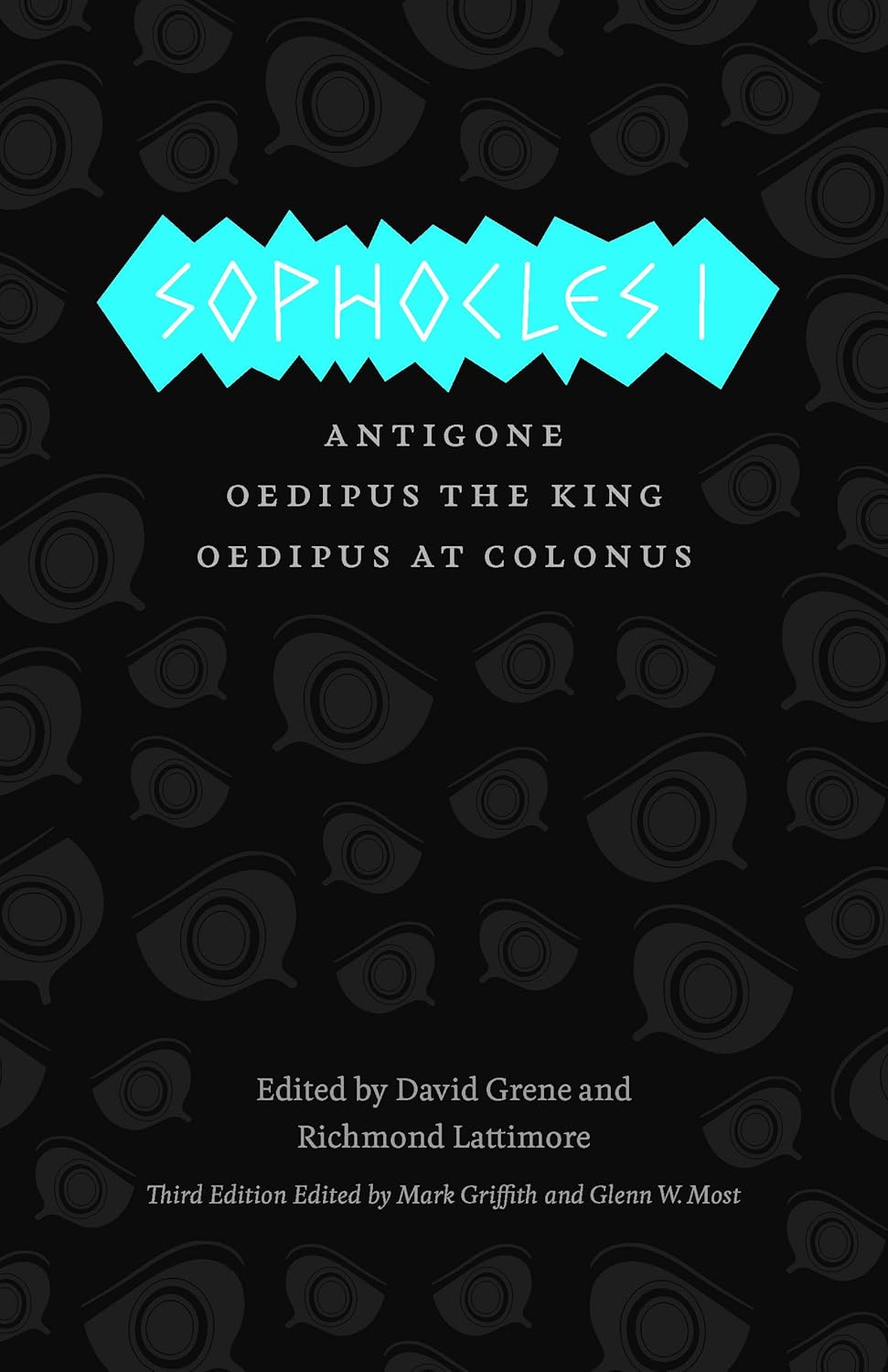
Sophocles I: The Theban Plays — trans. Mark Griffith (2013, Chicago Complete Greek Tragedies)
Most scholarly — best for academic study and close reading
The University of Chicago's Complete Greek Tragedies series has been the standard scholarly edition of ancient drama in English for seventy years. The third edition of Sophocles I, revised in 2013 and translated by Mark Griffith, updates the earlier translations by David Grene that defined the series for previous generations. Griffith is a leading classicist and his translations prioritise accuracy and textual precision — this is the edition most often assigned in classics departments and most useful for readers who want to work closely with the Greek or compare with other scholarly translations. The Chicago edition includes substantial introductions and notes. It is not the most theatrically vivid English version — Fagles has a stronger claim there — but for a reader who wants to understand what Sophocles actually wrote, line by line, the Chicago series is the indispensable reference.
Buy on Amazon → 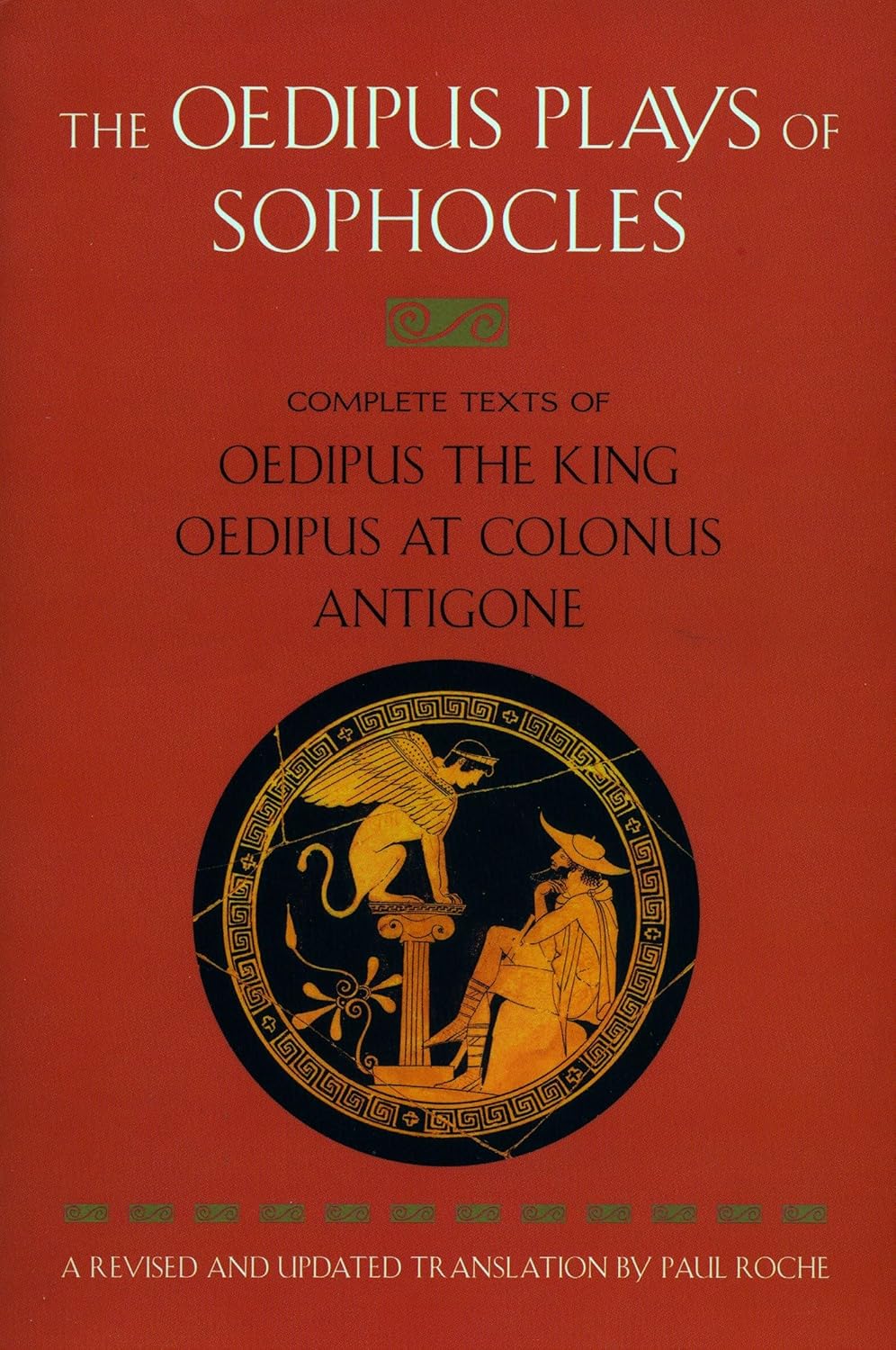
The Oedipus Plays of Sophocles — trans. Paul Roche (1958)
Most accessible — good for a first encounter with Greek tragedy
Paul Roche's Plume paperback collects all three Oedipus plays in a single affordable volume and has been a widely-used classroom edition for decades. Roche was a poet as well as a classicist, and his translations aim for clarity and accessibility over scholarly precision — they are written to be read rather than studied, and they succeed on those terms. The plays move, the speeches are intelligible, and a reader who has never encountered Sophocles before is unlikely to feel lost. What Roche gives up relative to Fagles is dramatic intensity — his lines do not always carry the weight of the original Greek — and relative to Chicago, he sacrifices textual precision. But for a reader approaching Greek tragedy for the first time who wants an inexpensive complete collection, the Roche Plume edition remains a useful entry point.
Buy on Amazon → As an Amazon Associate, I earn from qualifying purchases.