Pedro Páramo (1955) is one of the most radical and influential novels of the twentieth century, and one of the shortest — barely 130 pages that feel inexhaustible. Juan Rulfo, a Mexican writer who published only two books in his lifetime, created in it a new kind of fiction: the novel as ghost story, as fragmented memory, as landscape. The narrator, Juan Preciado, arrives in the dead village of Comala to find his father — the title character, a once-powerful landowner — and discovers that the village is populated by the dead. The novel's structure dissolves chronology entirely; voices speak from graves; the living and dead converse without distinction; scenes flash forward and back without warning. Gabriel García Márquez has said that when he first read Pedro Páramo as a young man he memorised it whole, and that it was the book that taught him what fiction could do.
The Netflix adaptation in 2024 brought the novel renewed international attention, and the two English translations currently available offer significantly different readings of Rulfo's spare, compressed Spanish. The original English translation by Lysander Kemp (1959) is no longer in print as a new book and is now mainly encountered in libraries. The translations below — Margaret Sayers Peden's Grove Press version and Douglas Weatherford's 2023 Serpent's Tail translation — are the current standard options. Peden's version, with a foreword by Susan Sontag, has been the dominant English text for over two decades. Weatherford's is a fresh attempt that benefits from more recent scholarship on Rulfo's style.
Margaret Sayers Peden's translation is this guide's primary recommendation for most readers — it has a long track record, and the Susan Sontag foreword is itself a superb introduction to the novel. The Weatherford translation is for readers who want the most current English version, or who want to read both in comparison.
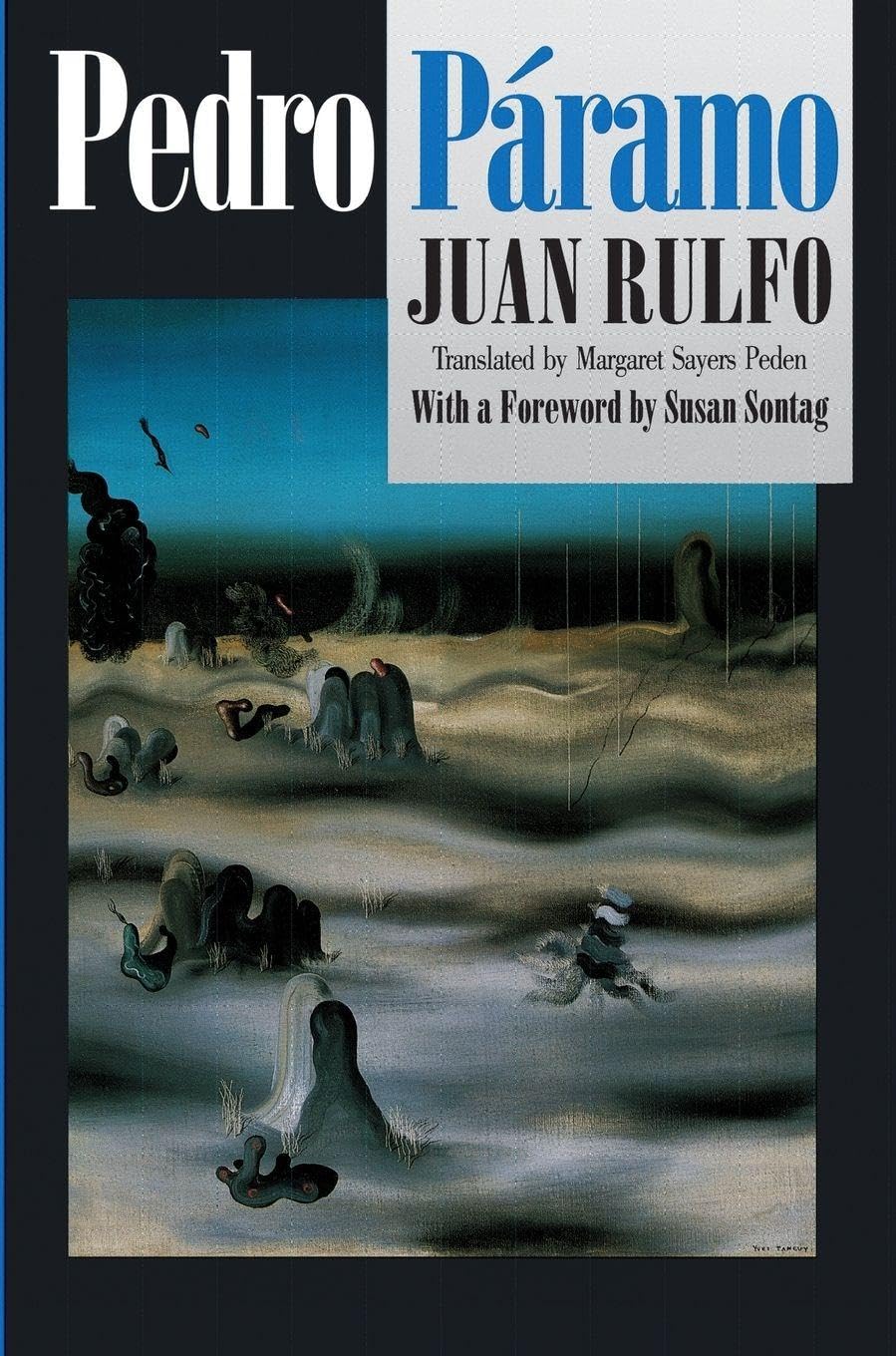
Pedro Páramo — trans. Margaret Sayers Peden (2002)
Grove Press — the standard English translation, with a foreword by Susan Sontag
Margaret Sayers Peden's translation replaced Lysander Kemp's original 1959 version as the Grove Press standard and has been the English text most English-language readers have encountered for over twenty years. Peden — one of the most prolific and respected translators of Latin American literature, responsible for English versions of Borges, Isabel Allende, and Carlos Fuentes among others — was deeply attuned to what is most singular about Rulfo's Spanish: its sparseness, its refusal of ornament, its quality of compressed silence. Her English captures the deliberate flatness of the prose without making it feel thin. The Surrealist painting on the cover (by Yves Tanguy) suits the novel's dreamlike landscapes. Susan Sontag's foreword, included in this edition, is among the finest short essays ever written about the book — it explains Rulfo's importance in the Mexican literary tradition and situates Pedro Páramo in the context of world modernism without condescending to the uninitiated reader. For anyone encountering the novel for the first time, this is where to begin.
Buy on Amazon → 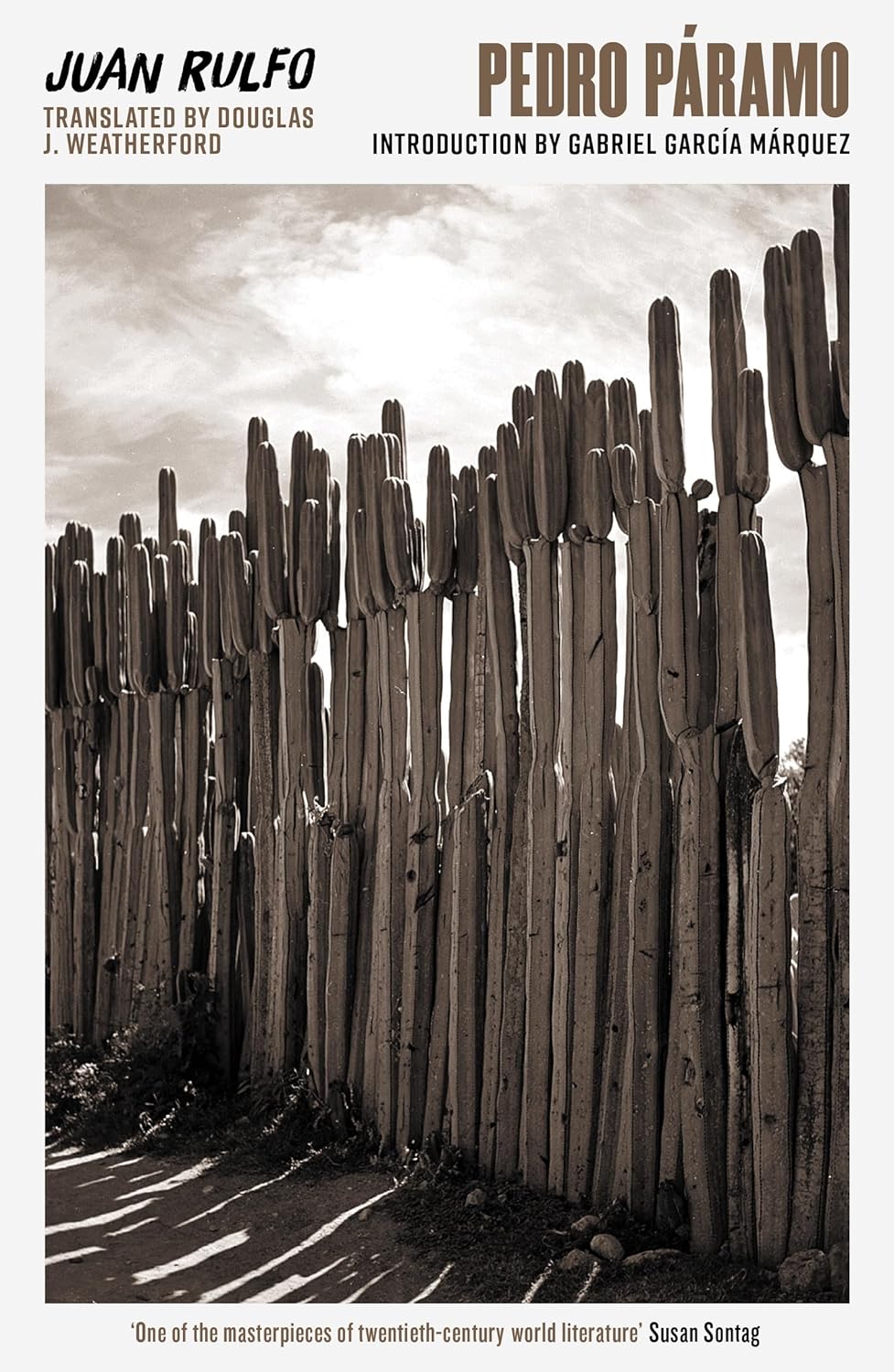
Pedro Páramo — trans. Douglas J. Weatherford (2023)
Serpent's Tail Classics — a new 2023 translation with an introduction by Gabriel García Márquez
Douglas Weatherford's 2023 translation from Serpent's Tail is the most recent English version of the novel, and it arrives with a significant credential: an introduction by Gabriel García Márquez, who considered Rulfo the single greatest influence on his own fiction. García Márquez's introduction, in which he describes his first encounter with the novel and the way it reshaped his understanding of what fiction could do, is a powerful companion to the text and worth reading in its own right. Weatherford, a Rulfo scholar who has spent decades working on the author's manuscripts and correspondence, brings a level of textual intimacy to the translation that is different in kind from Peden's approach. His English is marginally more contemporary in feel and benefits from scholarship on Rulfo's working methods that was not available to Peden. Some readers and critics have found his version cleaner in places; others prefer Peden's longer-established rhythms. The black-and-white cactus photograph on the cover captures the arid Mexican landscape that haunts the novel. For a reader who already knows the book in Peden's translation and wants a fresh perspective, or for a reader who wants the newest available scholarship embedded in the translation choices, Weatherford's version is compelling.
Buy on Amazon → As an Amazon Associate, I earn from qualifying purchases.