Carlo Collodi's The Adventures of Pinocchio (Le Avventure di Pinocchio, 1883) is one of the most adapted stories in history and one of the least read in its original form. What most people know — the Walt Disney version, the various stage adaptations, Guillermo del Toro's celebrated 2022 Netflix film — bears the bones of Collodi's plot but transforms its tone almost beyond recognition. Collodi's Pinocchio is not sentimental: it is a picaresque nightmare comedy in which a puppet repeatedly escapes punishment through luck and the patience of others, is hanged and left for dead, watches his friends die, and only after an almost interminable sequence of failures earns the reward of becoming a real boy. The novel was written in serial form for a children's newspaper and has the episodic structure of folk narrative — Pinocchio learns a lesson, immediately forgets it, suffers the consequences, learns again — but its wit, its violence, and its subversive energy are thoroughly adult in character.
Most Victorian English translations sanitised or abridged the novel significantly. The two translations below are the most reliable literary versions currently in print: Ann Lawson Lucas's Oxford World's Classics, which is the standard scholarly text in the English-speaking world, and John Hooper's Penguin Classics translation, which is the most accessible current version for general readers.
Ann Lawson Lucas's Oxford World's Classics translation is this guide's primary recommendation — it is the most complete and accurate version, with the best editorial apparatus. The Penguin Classics edition by John Hooper is a solid alternative for readers who want a lighter package.
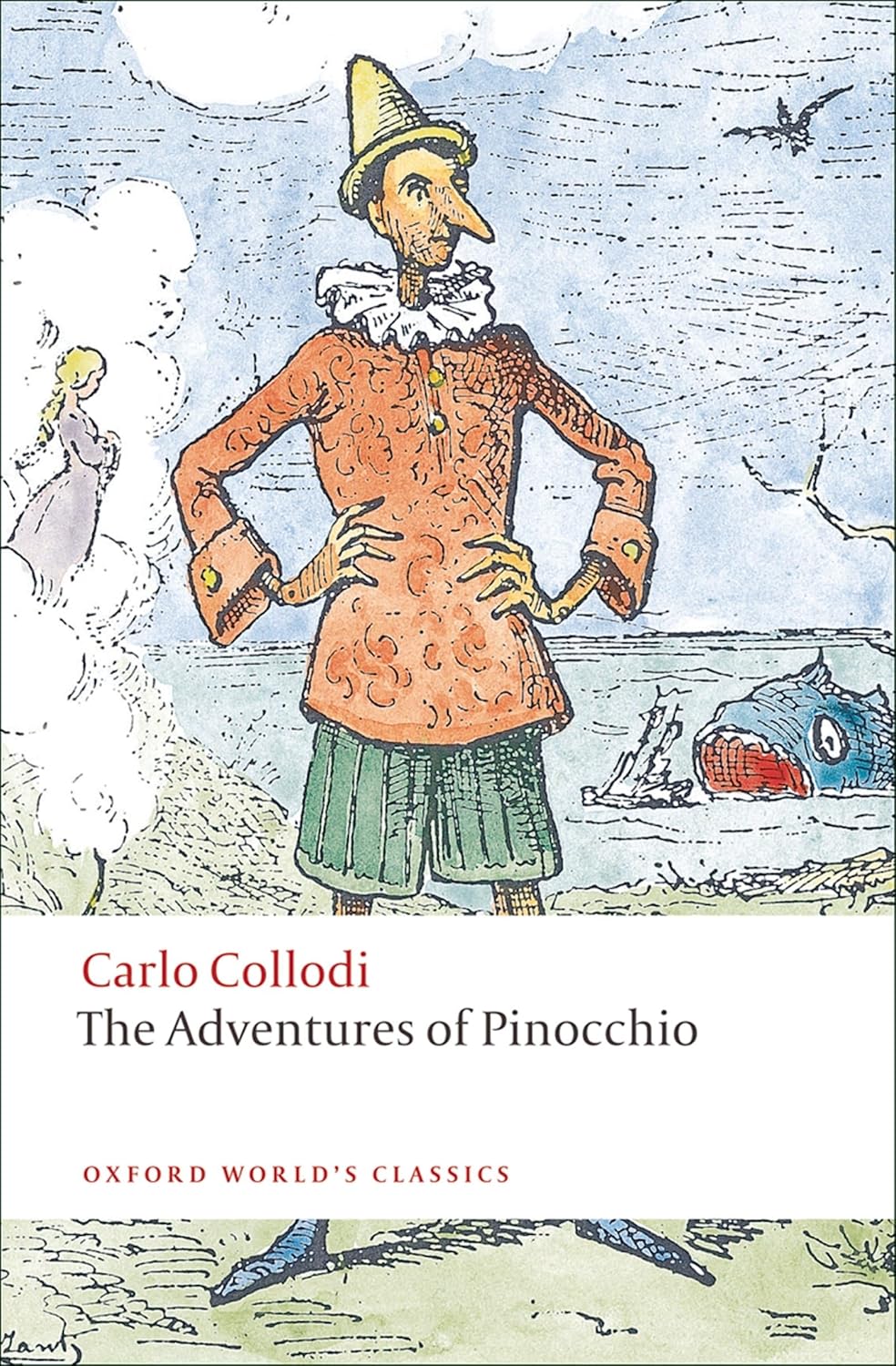
The Adventures of Pinocchio — trans. Ann Lawson Lucas (1996)
Oxford World's Classics — the standard scholarly translation with full critical apparatus
Ann Lawson Lucas's Oxford World's Classics translation is the definitive scholarly English edition of Pinocchio. Lucas, a specialist in Italian children's literature, produced a translation that is both faithful to Collodi's often-difficult Italian and readable as English prose — a balance harder to achieve here than with most texts, since Collodi's style is deliberately eccentric, mixing elevated literary register with dialect and slang in ways that defy easy rendering. Lucas's introduction and extensive notes illuminate the novel's historical context, its serial publication, and the transformations it underwent between the first newspaper version and book publication. The edition is complete and unexpurgated; Lucas does not smooth over the novel's more disturbing episodes or soften its darker humour. The cover uses one of the original Enrico Mazzanti illustrations from the first book edition (1883), which gives a sense of how alien Pinocchio looked before Disney's redesign. For a reader who wants the real novel in the most reliable form, this is the translation to choose.
Buy on Amazon → 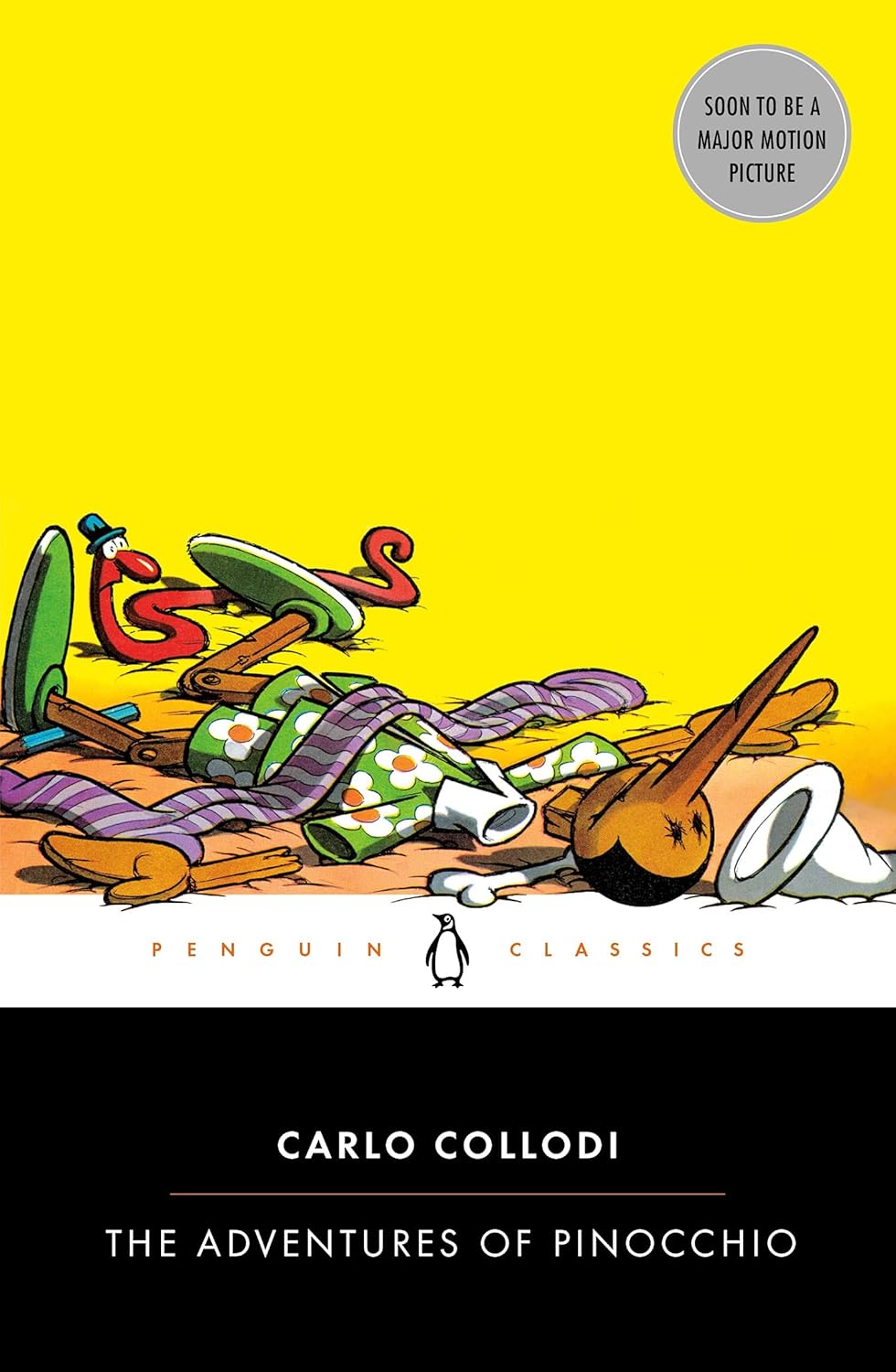
The Adventures of Pinocchio — trans. John Hooper (2009)
Penguin Classics — a readable modern translation for general readers, with Anna Kraczyna
John Hooper's Penguin Classics translation, prepared with Anna Kraczyna, is the most accessible current English version of the novel. Hooper, best known as a journalist and author of books on contemporary Italy and Spain, brings a fluent readability to the translation that makes it easy to move through quickly — which suits the pace of Collodi's serial narrative. His English is somewhat more colloquial than Lucas's, and he makes choices at the level of individual word and phrase that generally prioritise naturalness over precision. This can mean a less complete rendering of the novel's tonal range, but it also means the translation is more fun to read at speed. The Penguin Classics edition includes a useful introduction and basic notes. The illustrated cover — featuring a broken-up Pinocchio in disarray on a vivid yellow background — was produced as a tie-in to Guillermo del Toro's 2022 Netflix adaptation, which won the Academy Award for Best Animated Feature. For readers who want to read the novel casually and enjoyably without committing to a scholarly edition, Hooper's translation is a good choice.
Buy on Amazon → As an Amazon Associate, I earn from qualifying purchases.