Albert Camus's La Peste (1947) is the kind of novel that every era claims for its own, and usually for good reason. Written during and immediately after the German occupation of France, it uses an outbreak of bubonic plague in the Algerian coastal city of Oran as both literal story and allegorical vehicle. The plague arrives slowly, is denied by the authorities, overwhelms the city's institutions, separates the trapped population from everyone outside, generates solidarity among strangers and estrangement among lovers, and eventually, after inflicting enormous and seemingly arbitrary suffering, recedes. The reading public discovered the novel again during the COVID-19 pandemic of 2020, when it sold millions of copies worldwide: people wanted to understand what it felt like to live in a sealed city under a disease that had no comprehensible moral logic.
The novel's narrator, Rieux, is a doctor who treats patients without illusion and witnesses everything without losing his commitment to the work in front of him. Camus called this stance "revolt" — the refusal to accept absurdity, to acquiesce in injustice, or to retreat into consoling fictions — and The Plague is his fullest fictional account of what revolt looks like in practice.
Stuart Gilbert's 1948 translation served English readers for over seventy years and is the version quoted in generations of criticism. Laura Marris's 2022 Knopf translation is the first major new English version — written with the knowledge of everything scholars have learned about Camus in the intervening decades, and published in the full glare of pandemic-era attention. Stuart Gilbert's translation is this guide's primary recommendation for familiarity and historical weight. Marris's is the right choice for anyone who wants the freshest and most precise rendering.
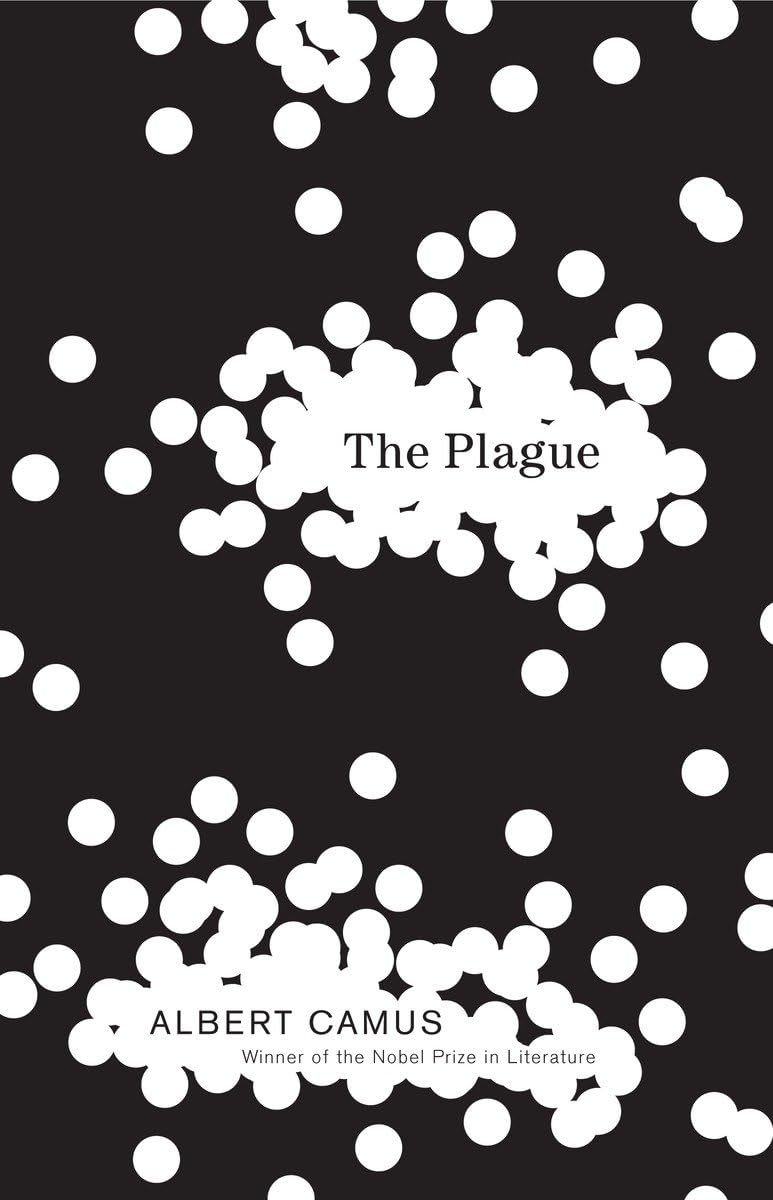
The Plague — trans. Stuart Gilbert (1948)
Vintage — the classic English translation, standard for over seventy years
Stuart Gilbert's translation was published in 1948, one year after the French original, and has remained the dominant English version ever since. Gilbert — who is better known for his work translating Joyce's Ulysses into French than for his English translations — produced a version that is readable, graceful, and has the authority of long usage. His prose is somewhat more formal and elevated in register than Camus's French, a quality that some critics have seen as a strength (lending the novel a classical grandeur appropriate to its ambitions) and others as a limitation (smoothing away the mundane, reportorial flatness that is one of Camus's deliberate effects). When the novel surged in sales during the COVID pandemic, Gilbert's translation was the version most readers encountered, which means that its rhythms and word choices have become the novel's English-language identity. The Vintage edition — with its stark black cover scattered with white dots suggesting plague spores — is a design classic. For anyone who wants to read the version that has shaped three generations of English-language engagement with the novel, Gilbert's translation is the place to start.
Buy on Amazon → 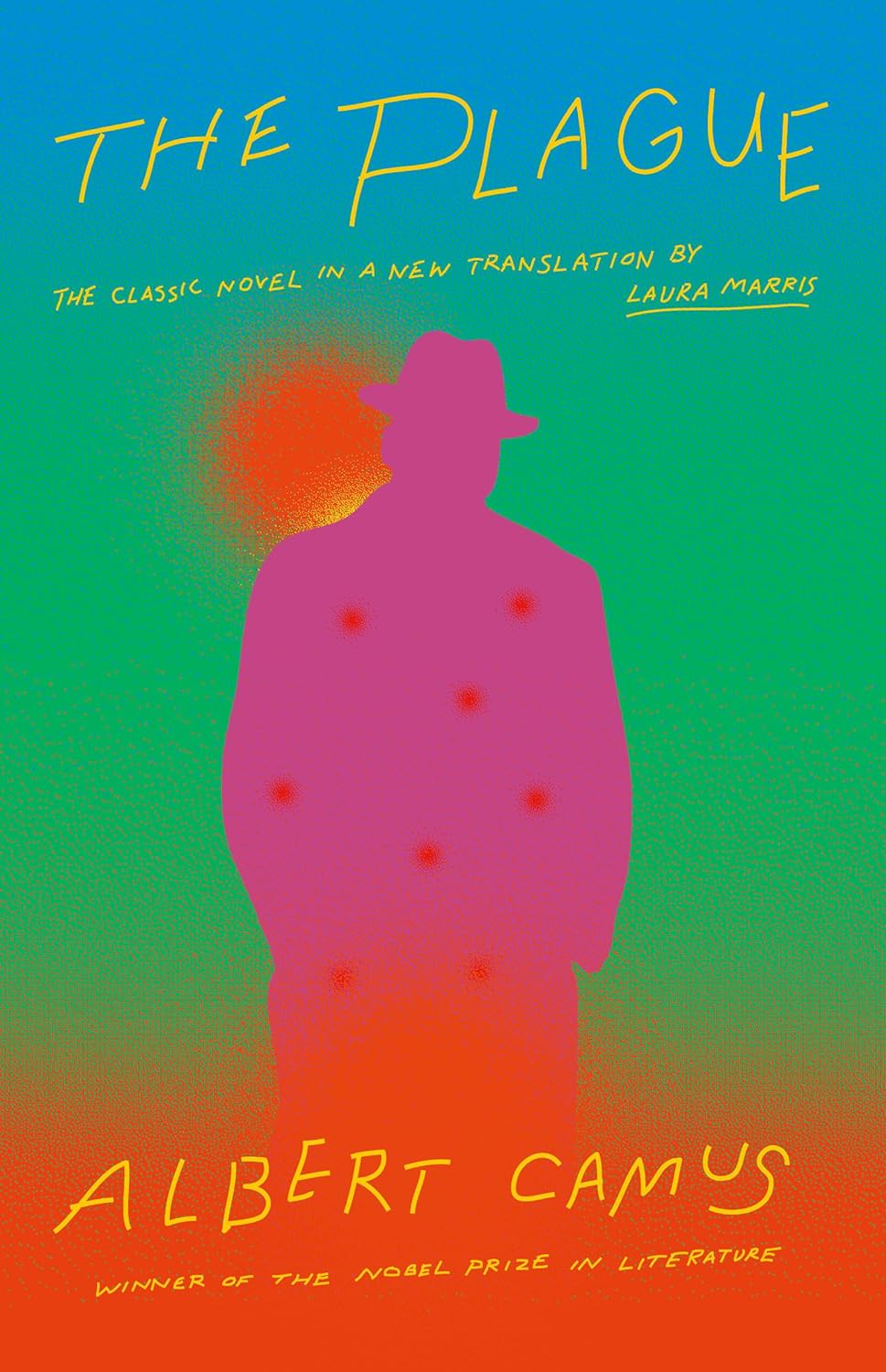
The Plague — trans. Laura Marris (2022)
Knopf — the first new major English translation in seventy-four years, written for the pandemic age
Laura Marris's 2022 translation, published by Knopf in the aftermath of the COVID pandemic, is the first major new English version of the novel since Gilbert's, and it is a radical rethinking of almost every sentence. Marris — a poet and translator who has also translated Camus's early essays — spent years working on the translation and had access to Camus scholarship that Gilbert could not have had: decades of biographical research, archival study of the manuscripts, and a vastly richer understanding of the political and philosophical context in which the novel was written. Her translation is markedly more spare and direct than Gilbert's. Where Gilbert reached for elevation, Marris tends toward plainness; where Gilbert expanded, Marris cuts. The effect is a Camus that feels more contemporary, more urgent, and more unsettling — a novel whose refusal of consolation comes through with greater force. Critics have praised the translation's handling of Camus's prose rhythms in particular: the way the narrator's carefully controlled reportorial tone enacts, at the level of the sentence, the discipline the novel advocates. The vivid, almost psychedelic cover design — a figure pocked with bubo-like spots against a gradient background — suits a translation that insists on the novel's continued relevance. For anyone reading The Plague for the first time in the twenty-first century, Marris's translation is now the one to choose.
Buy on Amazon → As an Amazon Associate, I earn from qualifying purchases.