Gabriel García Márquez's Cien años de soledad (1967) is one of the defining novels of the twentieth century — the book that gave the world "magical realism" as a living literary practice rather than a label, and the novel that opened Latin American literature to the global readership it deserved. The story of seven generations of the Buendía family in the mythical town of Macondo — where insomnia plagues carry off memory, where carpets fly, where a woman ascends bodily into heaven while folding sheets — is told in a tone of matter-of-fact calm that makes the miraculous and the tragic equally ordinary. The Netflix adaptation released in December 2024 introduced a new generation of readers to the story; the novel sold in numbers not seen since the 1982 Nobel Prize announcement.
Unlike most of the works covered on this site, One Hundred Years of Solitude has exactly one English translation — and the question of which translation to read is therefore the wrong question. The right question is why Gregory Rabassa's 1970 translation is, by near-universal consensus, a masterpiece in its own right, and why García Márquez's famous remark — that he preferred Rabassa's English to his own Spanish — turns out to be less surprising than it sounds.
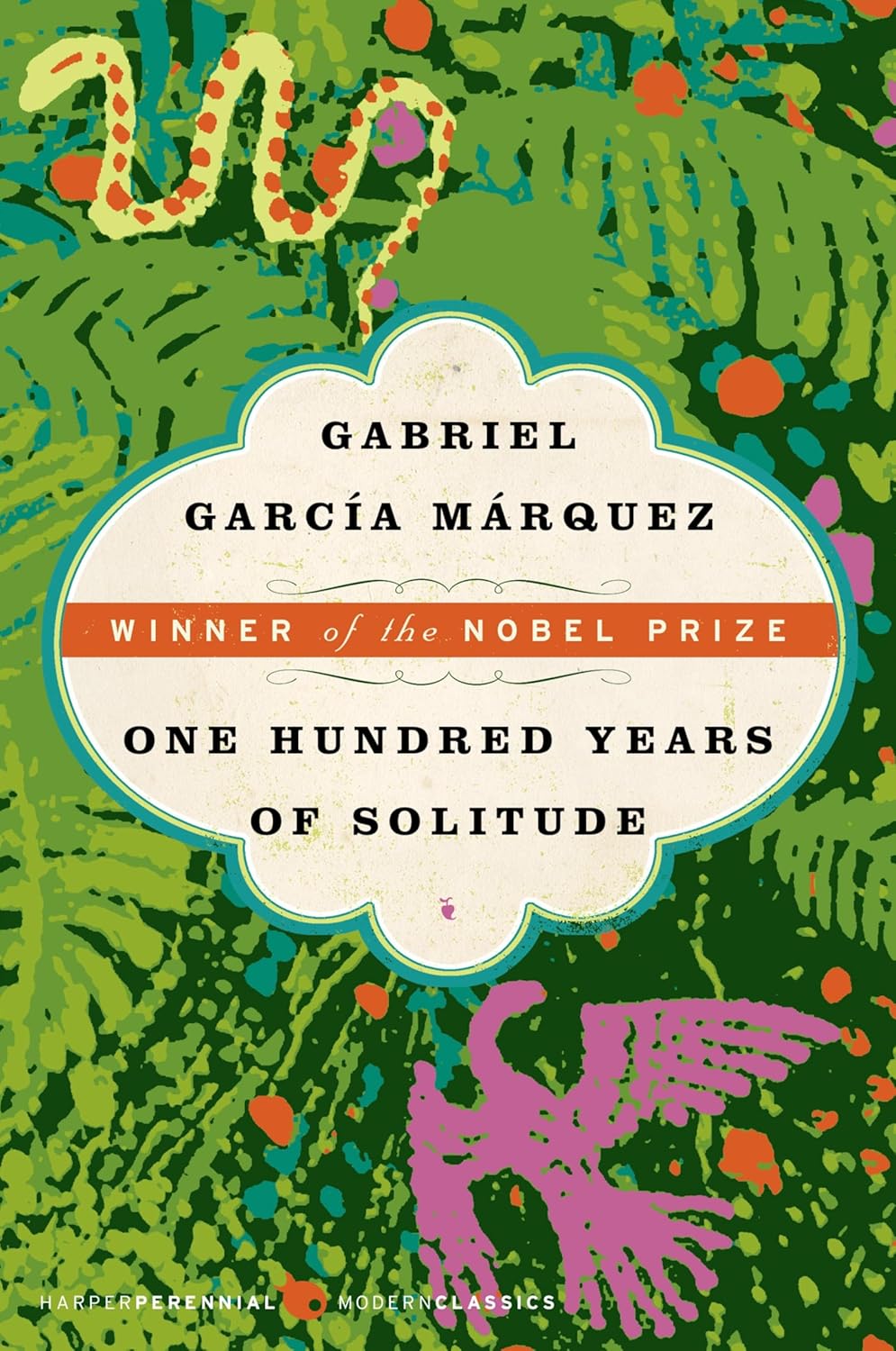
One Hundred Years of Solitude — trans. Gregory Rabassa (1970)
Harper Perennial Modern Classics — the only English translation, and one of the great translations of the twentieth century
Gregory Rabassa was already the leading translator of Latin American literature in the United States when García Márquez approached him about the novel — Rabassa had translated Julio Cortázar's Hopscotch to wide acclaim. He initially declined: he had reviewed the novel in Spanish and had too many commitments. García Márquez replied that the novel would wait. It did, and Rabassa's translation, published in 1970, became both a commercial sensation and a critical landmark. The feat Rabassa accomplished is difficult to articulate without reading the original alongside it. García Márquez wrote in a Spanish that was already translating something — the oral traditions of the Colombian Caribbean coast, the cadences of storytelling grandmothers, the mixture of portentous gravity and comic understatement that characterises the Colombian vallenato tradition. Rabassa found English equivalents for all of it: a prose that is simultaneously elevated and plain, archaic and immediate, precise and dreamy. When García Márquez said he preferred Rabassa's version to his own, he meant something specific: that Rabassa had found English words that did what his Spanish words were trying to do, rather than what they literally said. The Harper Perennial Modern Classics edition — with its gorgeous tropical cover of lush green foliage, exotic birds, and serpents framing the Nobel Prize banner — is the standard edition. There is no alternative translation; there is only this one, and it is magnificent. For anyone who has seen the Netflix series and wants to read the source, or for anyone who has heard about the novel for years and finally wants to experience it: this is the book.
Buy on Amazon → As an Amazon Associate, I earn from qualifying purchases.