How Apollo Flew to the Moon: Book Review
Summary & Key Themes
What Is "How Apollo Flew to the Moon" About?
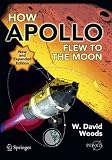
How Apollo Flew to the Moon by W. David Woods is a meticulously detailed technical account of the Apollo program’s engineering and operational challenges, focusing on the spacecraft’s design, navigation, and mission execution. Unlike narrative-driven histories, Woods breaks down each phase of the journey—from launch to lunar landing and return—with precise explanations of the hardware, software, and astronaut procedures. The book is particularly renowned for its clear yet in-depth coverage of topics like orbital mechanics, spacecraft systems, and the real-time problem-solving required during missions.
Key Themes in "How Apollo Flew to the Moon"
Woods’ book stands out for its engineering-centric perspective, emphasizing how NASA’s solutions to technical hurdles made the moon landings possible. It avoids biographical or political context, instead zeroing in on the "how" rather than the "why" or "who." A recurring theme is the ingenuity of mid-20th-century technology, showcasing how constraints like limited computing power were overcome with innovative workarounds.
Historical Accuracy & Critical Reception
How Accurate Is "How Apollo Flew to the Moon"?
Widely praised by space enthusiasts and engineers, the book is considered a gold standard for technical accuracy, drawing heavily on NASA documentation, mission transcripts, and interviews with flight controllers. While it hasn’t faced significant criticism for factual errors, some readers note that its focus on mechanics means it omits broader historical or cultural insights found in other Apollo books.
Is "How Apollo Flew to the Moon" Worth Reading?
Absolutely—for the right audience. Its strength lies in its granular detail, making it invaluable for those curious about Apollo’s engineering marvels. However, its density may overwhelm casual readers; it’s best suited for those with prior interest in aerospace or a willingness to engage with technical content. The 2008 publication date means it lacks recent discoveries but remains authoritative on core mission mechanics.
"How Apollo Flew to the Moon" vs. Other Books on Apollo 11 Moon Landing
Compared to A Man on the Moon (Chaikin), which weaves astronaut stories into a sweeping narrative, Woods’ book is a deep dive into spacecraft operations. Apollo: The Race to the Moon (Murray/Cox) shares some technical focus but emphasizes program management over in-flight procedures, while Moonshot (Floca) is a visually driven, simplified account for younger audiences. Woods’ work fills a niche: the definitive technical companion to more human-centered histories.
Who Should Read "How Apollo Flew to the Moon"?
Beginners & Accessibility
Not ideal for beginners—it assumes familiarity with terms like "SPS engine" or "translunar injection." Newcomers might prefer Chaikin’s or Floca’s books first.
Length & Difficulty
At 400+ pages with diagrams and equations, it’s academically rigorous but written in accessible prose. Readers comfortable with The Right Stuff or NASA white papers will fare best.
Books Like "How Apollo Flew to the Moon"
For similarly technical reads, try Apollo by the Numbers (Orloff) or Carrying the Fire (Collins), which blends memoir with engineering insights. Failure Is Not an Option (Kranz) offers a Mission Control perspective but with less technical depth.
As an Amazon Associate, we earn from qualifying purchases.