Germinal: What It's About & Best Translation
Zola's great novel of the mining underclass — fury, solidarity, and the birth of the labour movement
As an Amazon Associate, we earn from qualifying purchases.
Germinal is about the harsh lives of coal miners in 19th-century France. It follows Étienne Lantier, who becomes a leader in a miners' strike, highlighting themes of class struggle and social injustice.
Translation Comparison at a Glance
| Translation | Readability | Accuracy | Tone | Best For |
|---|---|---|---|---|
| Collier (2008) | Moderate | Excellent | Precise, documentary | Scholarly first reading |
| Pearson (2004) | High | Very good | Fluid, immediate | Narrative momentum |
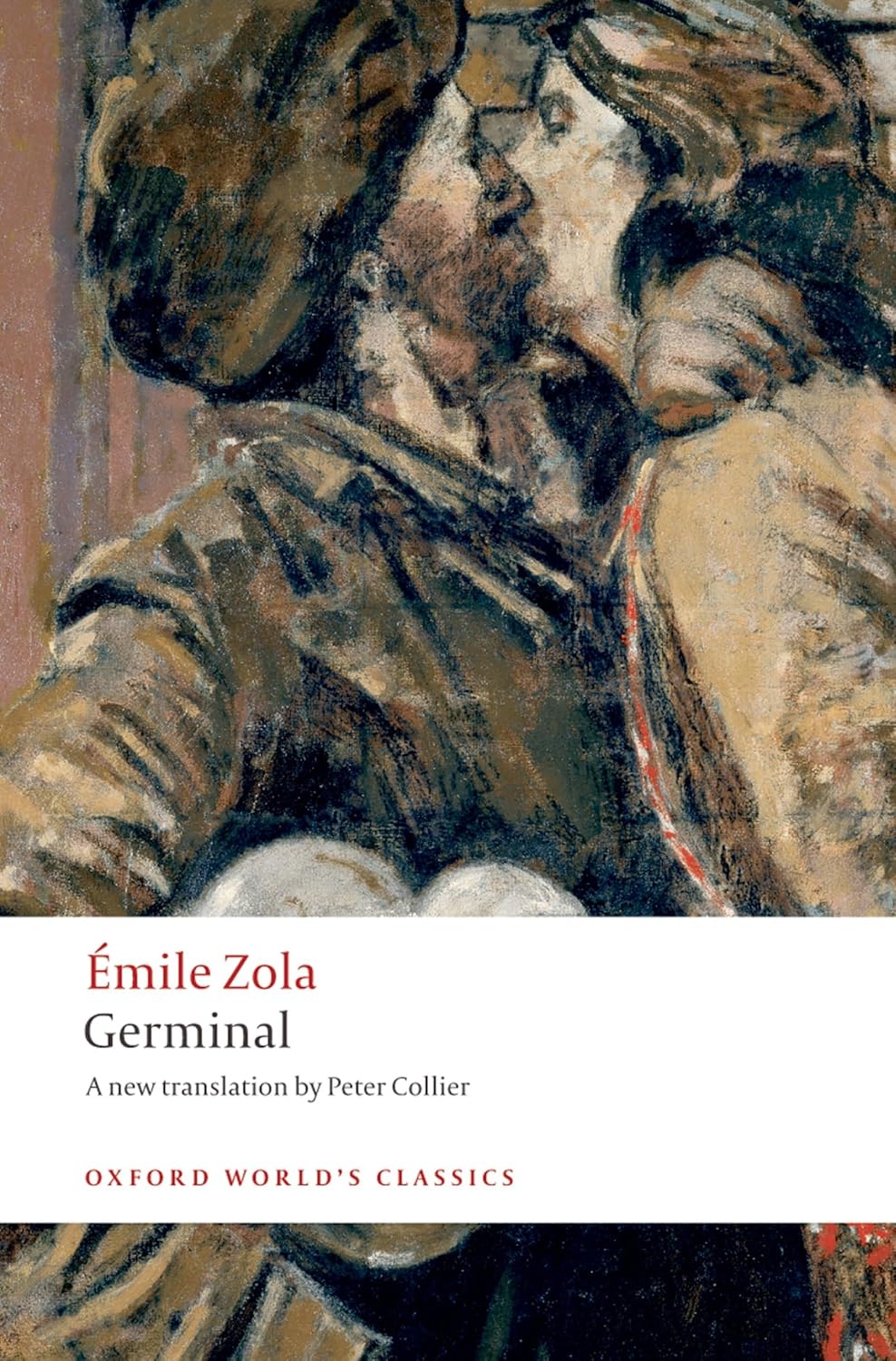
#1 — Germinal — trans. Peter Collier
- Readability: Moderate — precise and careful with documentary detail.
- Accuracy: Excellent — captures Zola's naturalistic prose and mining vocabulary.
- Tone: Precise, documentary, scholarly.
- Accessibility: Strong for readers wanting context and notes.

Davidson's commanding and gritty narration perfectly captures the raw intensity of Zola's industrial epic, while Collier's translation preserves the novel's vivid social realism.
Listen on Audible →Which translation is right for you?
- Choose Collier if you want the full scholarly apparatus, precise documentary detail, and historical context.
- Choose Pearson if you want Zola's narrative momentum and a more fluid, immediate reading experience.
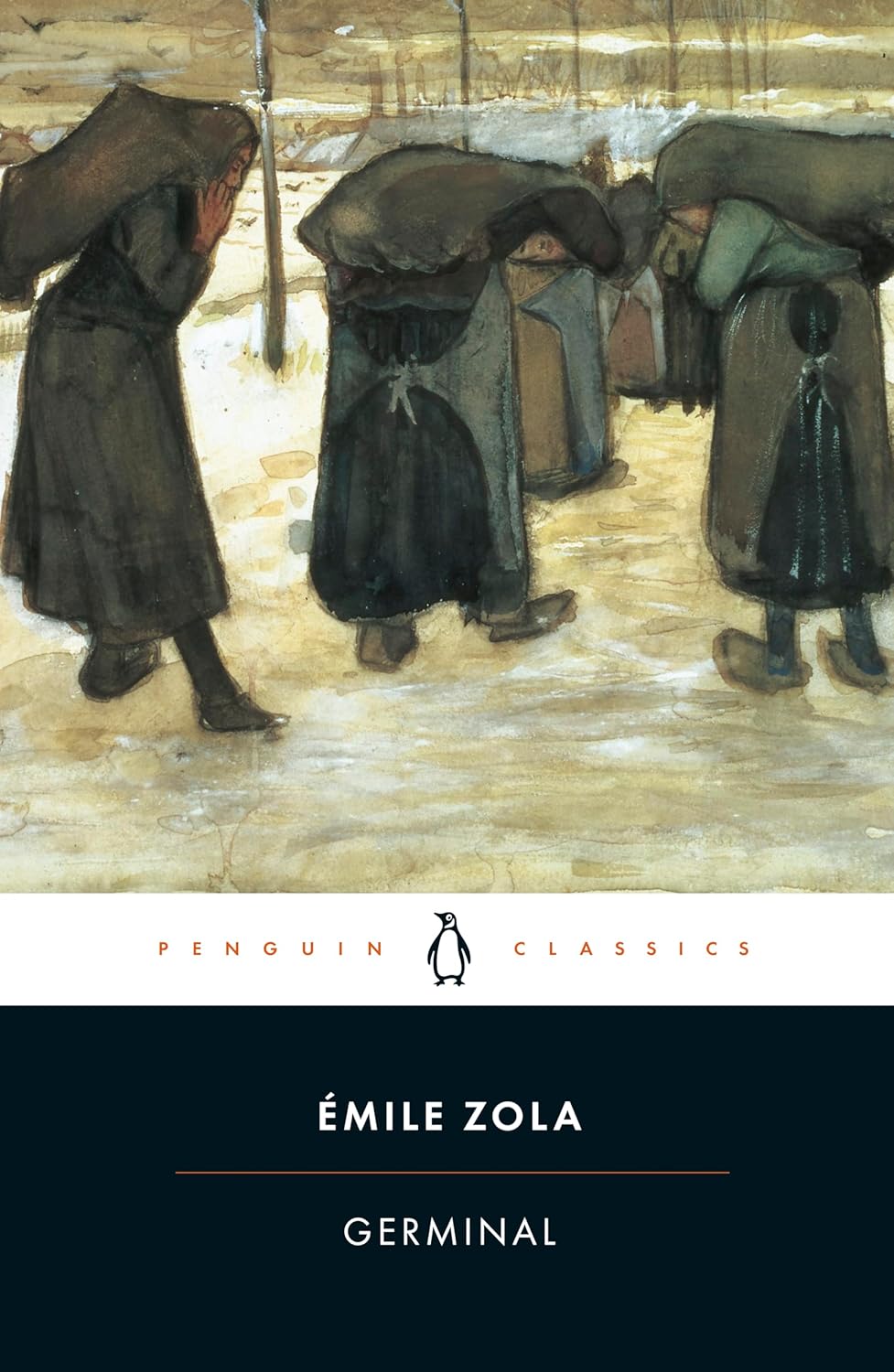
#2 — Germinal — trans. Roger Pearson
- Readability: High — prioritizes pace and narrative drive.
- Accuracy: Very good — transparent and faithful to momentum.
- Tone: Fluid, immediate, story-focused.
- Accessibility: Excellent for readers seeking pure reading experience.
About the Translators
Peter Collier (Oxford World's Classics): Scholar of French literature; his other translations include Proust and Maupassant for Oxford. His Germinal brings documentary precision to Zola's naturalistic method, attending carefully to the specific vocabulary of mining and the regional speech patterns of the Borinage.
Roger Pearson (Penguin Classics): Professor of French at Oxford; also edited Penguin Classics editions of Stendhal and Voltaire. His translation prioritizes Zola's narrative drive and pace — the relentless accumulation of detail that pulls the reader down into the mine and deeper into the strike.
Leonard Tancock (1954, Penguin Classics): The older Penguin translation, now largely superseded but historically significant as the version through which British readers first encountered Germinal in the postwar period.
Themes
The mine as organism. Zola's naturalism pushed toward myth in Germinal: the Voreux mine is not just a setting but a character — it breathes, groans, consumes, kills. His extended personifications of the mine, and his descriptions of the underground world as a living creature with its own rhythms and hungers, transform what could have been documentary realism into something closer to ancient tragedy.
The strike as tidal force. Germinal's central event is a strike that fails. The miners are broken, the company prevails, Étienne is driven into exile. But the novel's title is the name for spring germination — seeds planted underground, waiting to burst upward. The final pages, in which Étienne walks away and hears in the earth the stirring of future rebellion, resist despair without denying the defeat.
Naturalist determinism. Étienne Lantier carries the family heredity that runs through all twenty volumes of Zola's Rougon-Macquart cycle: a tendency toward violence that erupts under alcoholic influence. This biological determinism is part of Zola's experimental method, and it complicates the novel's politics — the revolutionary hero is also a product of forces he did not choose.
Key Characters
Étienne Lantier — the outsider mechanic who arrives at the Voreux mine, falls in with the Maheu family, and gradually becomes the strike's intellectual leader. He is a reader of socialist tracts who tries to apply theory to lived conditions; the gap between the two is one of the novel's recurring ironies.
La Maheude — Toussaint Maheu's wife and the novel's true moral center. She feeds her many children with iron resourcefulness, supports the strike with fierce conviction, loses her husband and daughter to the violence that follows, and ends the novel back underground. She endures more than anyone and retains more dignity than anyone.
Catherine Maheu — the Maheu's eldest daughter, in love with Étienne but bound to the brutal Chaval. Her death in the flooded mine, beside Étienne after Chaval has been killed, is the novel's most devastating passage — two people who loved each other dying in the dark because of forces neither of them chose.
Souvarine — the Russian anarchist who works at the mine as a mechanic and believes in destruction as the only honest political act. His sabotage of the Voreux — methodical, deliberate, without illusion — is the novel's darkest ideological statement: a purity that requires the death of everything, including the people it ostensibly serves.
Recommended Sources
For further academic reading on Zola and Germinal:
- Nineteenth-Century French Studies (University of Nebraska Press) — the primary English-language journal for Zola scholarship and French Naturalism.
- French Studies (Oxford University Press) — the leading British French studies journal; essential historical and social context for Germinal's treatment of French industrial life.
- PMLA (Modern Language Association) — key venue for comparative and theoretical readings of Zola's Naturalist method in relation to European literary history.
Which translation is right for you?
Choose Collier (Oxford World's Classics) for a first reading with the full scholarly apparatus — his translation is precise and documentary, and the Oxford introduction provides the historical context that makes Zola's research visible. Choose Pearson (Penguin Classics) if you want Zola's narrative momentum above all else — his translation delivers the novel's relentless drive more immediately. Both are complete and reliable; the choice is between scholarly depth and reading pace.
Frequently Asked Questions
What is Germinal about?
Germinal is about the harsh lives of coal miners in 19th-century France. It follows Étienne Lantier, who becomes a leader in a miners' strike, highlighting themes of class struggle and social injustice.
Is Germinal hard to read?
Germinal can be challenging due to its detailed descriptions and historical context. Collier's translation offers scholarly depth, while Pearson's is more readable, focusing on narrative flow.
Which Germinal translation is best?
Peter Collier's Oxford World's Classics version is the recommended starting point for readers who want a translation with the full critical apparatus.
Collier vs Pearson — which should I choose?
Choose Collier for scholarly depth and full critical apparatus. Choose Pearson if you want Zola's narrative momentum above all else.
Which translation is easiest to read?
Roger Pearson's Penguin Classics translation prioritizes pace and readability, delivering Zola's narrative drive intact.
Which translation is most accurate?
Peter Collier's translation captures Zola's naturalistic prose with careful attention to its documentary qualities and specific vocabulary of mining.
Is the older Tancock translation still worth reading?
Leonard Tancock's 1954 Penguin version is historically significant but largely superseded by the two current scholarly translations.
This guide is based on reading the two translations and reviewing scholarly commentary. Last reviewed: June 2026.
As an Amazon Associate, I earn from qualifying purchases.
Looking for another classic? Browse all our translation guides →
For another landmark of French realism, see our Madame Bovary translation guide.
Balzac's panoramic novel is covered in our Lost Illusions translation guide.
Readers of 19th-century French epics should also consult our Les Misérables translation guide.
Stendhal's masterpiece is compared in our Red and the Black translation guide.