Madame Bovary: What It's About & Best Translation
The novel that put style itself on trial — and every translator on notice
As an Amazon Associate, we earn from qualifying purchases.
Madame Bovary follows the life of Emma Bovary, a doctor's wife who seeks escape from her mundane provincial life through romantic fantasies and adulterous affairs. Her pursuit of passion and luxury leads to financial ruin and tragedy.
Translation Comparison at a Glance
| Translation | Readability | Accuracy | Tone | Best For |
|---|---|---|---|---|
| Davis (2010) | Moderate | Excellent | Precise, strange, faithful | Understanding Flaubert's prose |
| Wall (1992) | High | Very good | Fluid, confident, accessible | First encounter with Emma |
| Steegmuller (1957) | High | Good | Elegant, well-mannered | Historical and literary interest |
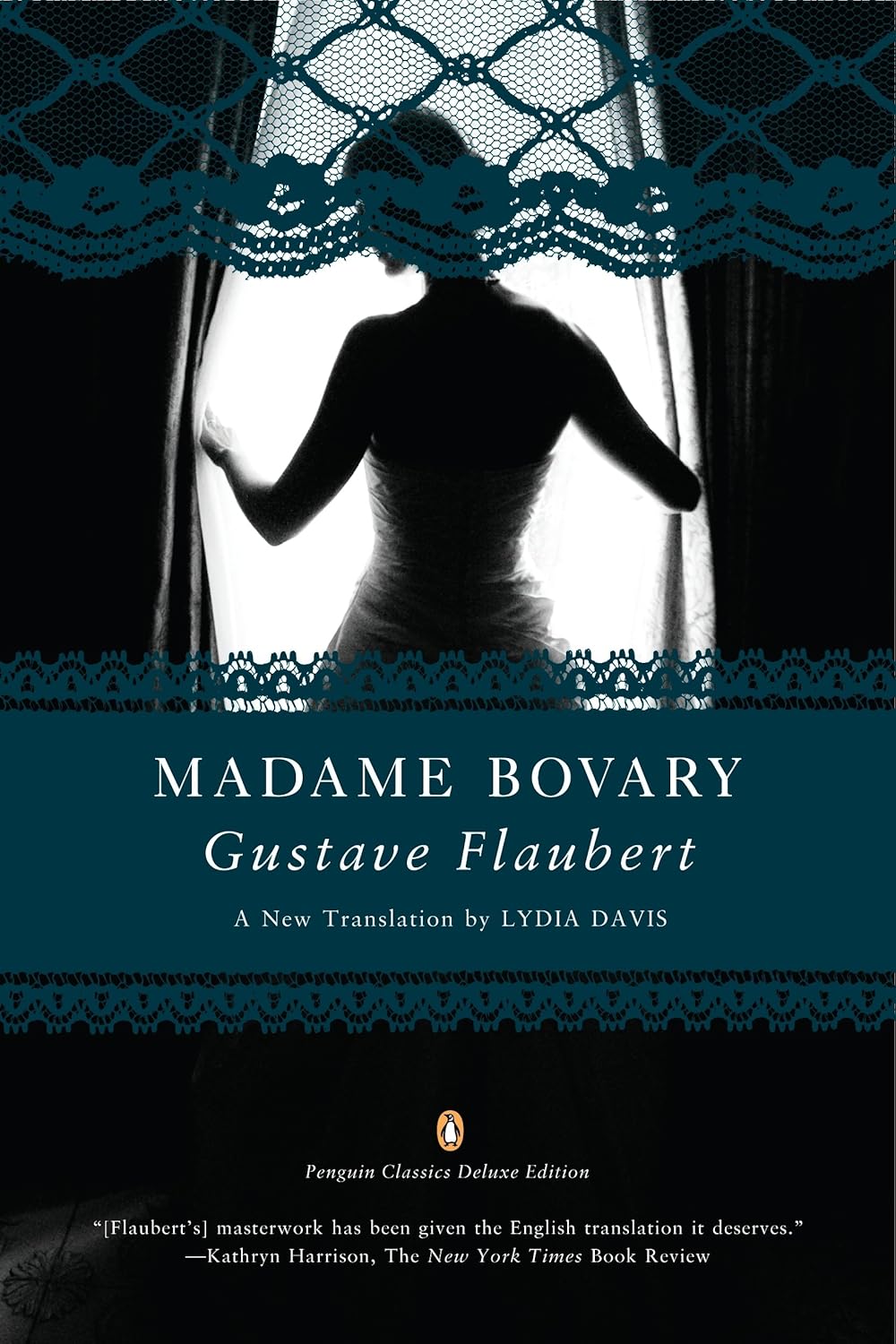
#1 — Madame Bovary — trans. Lydia Davis (2010)
- Readability: Moderate — asks more of the reader than predecessors.
- Accuracy: Excellent — most scrupulous and faithful modern rendering.
- Tone: Precise, strange, preserves awkward rhythms and flatness.
- Accessibility: Best for readers seeking Flaubert's formal art.

Donada Peters' nuanced narration captures Emma Bovary's emotional turbulence, while Steegmuller's translation preserves Flaubert's precise prose and ironic tone.
Listen on Audible →Which translation is right for you?
- Choose Davis if you want to understand Flaubert's style, method, and commitment to prose as a formal art.
- Choose Wall if you are reading Bovary primarily to meet Emma Bovary for the first time without resistance.
- Choose Steegmuller if you value elegant mid-century literary translation and historical importance as a third encounter.
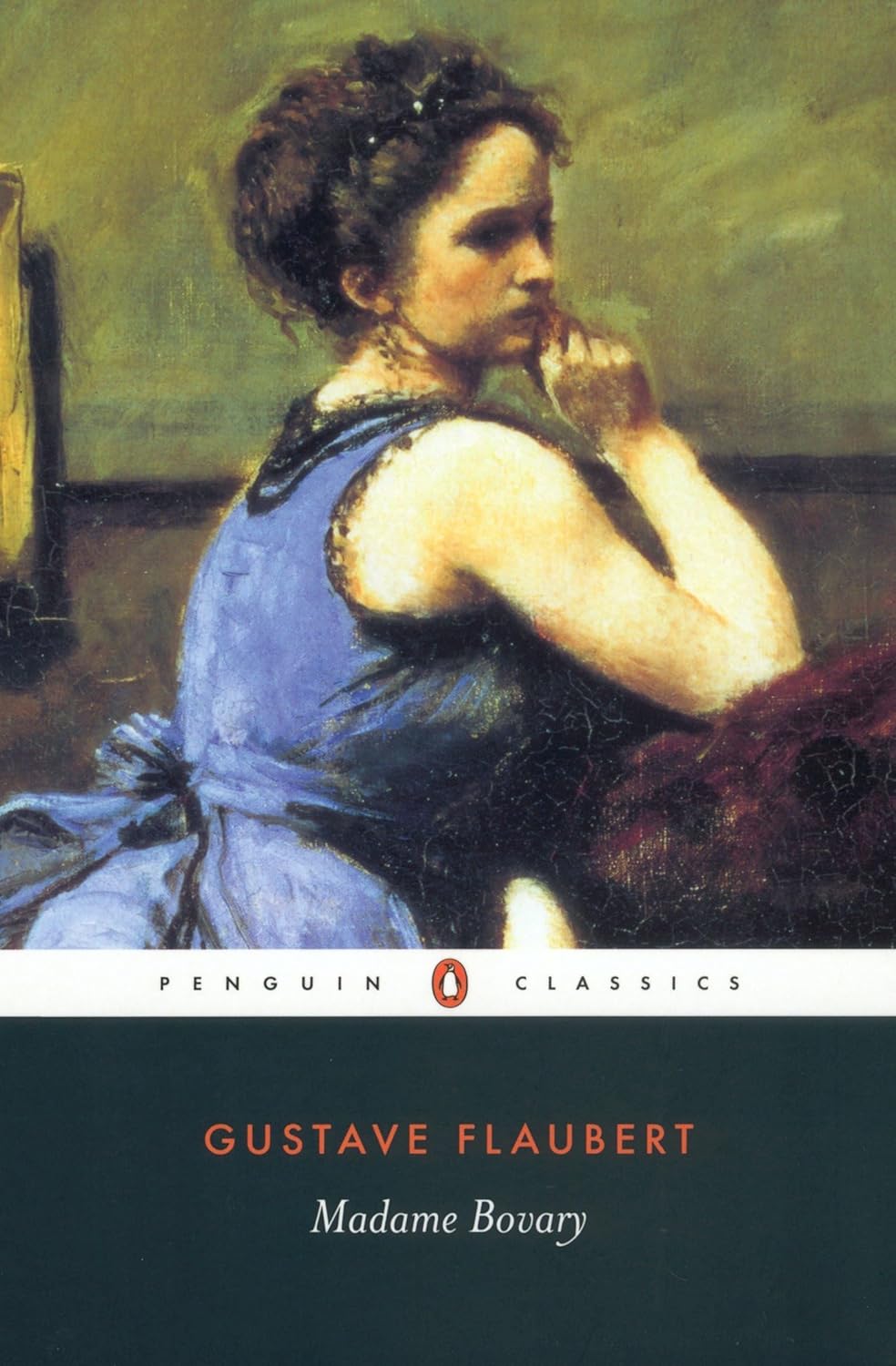
#2 — Madame Bovary — trans. Geoffrey Wall (1992)
- Readability: High — prose flows smoothly with confident narrative voice.
- Accuracy: Very good — widely purchased and reliable.
- Tone: Fluid, accessible, full of irony and social comedy.
- Accessibility: Ideal first encounter with minimal resistance.
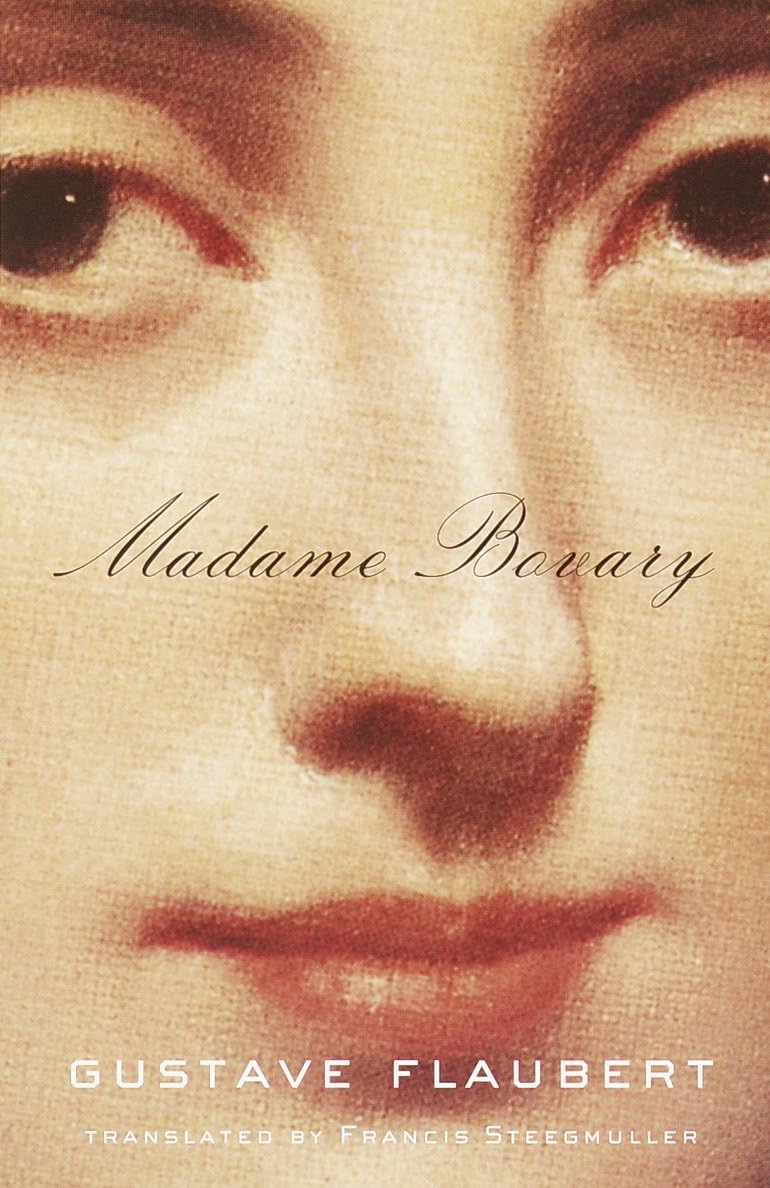
#3 — Madame Bovary — trans. Francis Steegmuller (1957)
- Readability: High — well-mannered and assured mid-century prose.
- Accuracy: Good — reflects deep intimacy with Flaubert's world.
- Tone: Elegant, confident, historically shaped.
- Accessibility: Best as a third encounter for historical perspective.
About the Translators
Lydia Davis (b. 1947, 2010, Penguin Classics): American writer and translator; one of the most celebrated prose stylists in contemporary American literature (Man Booker International Prize); her other translations include Proust's Swann's Way and works by Michel Leiris. Her 2010 Bovary is the culmination of years of deep engagement with Flaubert's French and the most scrupulous English rendering of his prose currently available.
Geoffrey Wall (1992, Penguin Classics): British academic and biographer; also wrote Flaubert: A Life (2001, the standard English biography) and translated Flaubert's correspondence. His 1992 Penguin translation was the default English Bovary for a generation of readers.
Francis Steegmuller (1906–1994, 1957, Vintage): American biographer and translator; his biography Flaubert and Madame Bovary (1939) won the Pulitzer Prize; he also translated Flaubert's correspondence. His 1957 Vintage translation shaped the Anglo-American reception of the novel for nearly forty years.
Themes
Free indirect discourse as the novel's central technique. Flaubert perfected the mode in which narrative voice and a character's consciousness blend without announcement. "What a delightful afternoon it had been!" — is this the narrator observing or Emma's thought being reported? The novel refuses to say. This makes Emma's self-deception structurally part of the reading experience: the reader inhabits her romantic illusions in the moment of living them and only sees their emptiness in retrospect. A translation that marks the switches (she thought..., in her mind...) destroys this effect. Davis preserves it most faithfully; Wall is more conventional in this regard.
Bovarysme as a general condition. The French coined the word bovarysme for Emma's condition — the habit of conceiving of oneself in terms of the romantic narrative one expects to be living rather than the life one actually has. Flaubert's novel argues that this is not a woman's pathology but a consequence of consuming a certain kind of fiction. His implication — that the novel you are currently holding might be doing this to you — is one of the reasons Madame Bovary remains unsettling to read rather than merely instructive.
Provincial life as the true prison. Flaubert catalogs the pharmacist Homais, the priest Bournisien, the notary Léon, the merchant Lheureux — the complete social furniture of a Norman market town — with a detachment that is itself a form of condemnation. Emma's problem is not that she is weak or foolish: it is that the world she is actually in cannot accommodate the intensity of what she feels. The novel is merciless about the world as much as it is about Emma, and a translation that smooths Flaubert's prose smooths this argument too.
Key Characters
Emma Bovary — the doctor's wife who expected her life to be a romantic novel. She is not a villain and not a fool — she is a person whose capacity for feeling exceeds what her circumstances can hold, and whose choices are shaped by books that did not tell her the truth. Flaubert's simultaneous sympathy and mercilessness toward her is part of what makes the novel inexhaustible.
Charles Bovary — Emma's husband, the country doctor. Good-natured, limited, entirely devoted to her; his contentment infuriates her. The novel's final pages — Charles after Emma's death — are among the most quietly devastating passages in French literature.
Rodolphe Boulanger — Emma's first lover, who seduces her and abandons her with a letter full of self-justifying romantic clichés. The letter scene is Flaubert's sharpest satire on the language of feeling: Rodolphe reaches for high-flown phrases, knows they are empty, and Emma will not know.
Léon Dupuis — the notary's clerk who becomes a lawyer in Rouen; Emma's second and more prolonged affair. Their relationship is more degrading than her affair with Rodolphe, and Léon ends up afraid of her — which is part of the point.
Homais — the pharmacist, the novel's great satirical creation: the provincial Enlightenment at its most self-satisfied. He wins the Légion d'honneur at the novel's end. Flaubert despised everything Homais represented, and the award is the novel's most savage joke.
Recommended Sources
For further academic reading on Flaubert and Madame Bovary:
- Nineteenth-Century French Studies (University of Nebraska Press) — the primary English-language journal for Flaubert scholarship and 19th century French fiction.
- French Studies (Oxford University Press) — the leading British French studies journal; central venue for Flaubert criticism.
- PMLA (Modern Language Association) — broader comparative coverage; essential for placing Bovary in comparative and theoretical frameworks.
Which translation is right for you?
Choose Davis if you are reading Bovary because you want to understand Flaubert — his style, his method, his commitment to prose as a formal art. Her translation asks more of the reader and gives more back. Choose Wall if you are reading Bovary primarily to meet Emma Bovary — his version flows with less resistance and makes fewer demands on your patience. Steegmuller is worth reading for its prose quality and historical importance, but as a third encounter with the novel rather than a first.
Frequently Asked Questions
What is Madame Bovary about?
Madame Bovary follows the life of Emma Bovary, a doctor's wife who seeks escape from her mundane provincial life through romantic fantasies and adulterous affairs. Her pursuit of passion and luxury leads to financial ruin and tragedy.
Is Madame Bovary hard to read?
Madame Bovary can be challenging due to its complex themes and Flaubert's style. The Davis translation is the most faithful but demands more from the reader, while Wall's version is more accessible.
Which Madame Bovary translation is best?
The Lydia Davis translation is this guide's primary recommendation. It is the most scrupulous and the most faithful English Bovary of the modern era, and it restores a clarity and strangeness to the prose that earlier versions had smoothed away.
Davis vs Wall — which should I choose?
Choose Davis if you are reading Bovary because you want to understand Flaubert — his style, his method, his commitment to prose as a formal art. Choose Wall if you are reading Bovary primarily to meet Emma Bovary — his version flows with less resistance.
Which translation is easiest to read?
Geoffrey Wall's 1992 Penguin Classics translation is the most immediately accessible: the prose flows smoothly and the narrative voice is confident.
Which translation is most accurate?
Lydia Davis's 2010 translation is the most scrupulous and faithful, preserving the awkward rhythms and deliberate flatness of Flaubert's prose.
How does Steegmuller's classic 1957 translation compare to modern versions?
Steegmuller's version is elegant and historically important but does not attempt Flaubert's deliberate roughness; read it alongside Davis and Wall to understand how a translation's historical moment shapes its choices.
This guide is based on reading all 3 translations and reviewing scholarly commentary. Last reviewed: June 2026.
As an Amazon Associate, I earn from qualifying purchases.
Looking for another classic? Browse all our translation guides →
For another landmark of French realism, see our guide to the best Lost Illusions translation.
Stendhal's masterpiece is covered in our Red and the Black translation guide.
Compare the major English versions of Les Misérables translations by Hugo.
Voltaire's satire is examined in our Candide translation guide.
Another essential French novel appears in our Swann's Way translation guide.