Candide: What It's About & Best Translation
Voltaire's philosophical tale — the scholarly Oxford versus the annotated Hackett
As an Amazon Associate, we earn from qualifying purchases.
Candide is a satirical novel that follows the naive protagonist, Candide, as he experiences a series of misfortunes and adventures across the world, challenging his optimistic outlook.
Translation Comparison at a Glance
| Translation | Readability | Accuracy | Tone | Best For |
|---|---|---|---|---|
| Pearson (1990/2006) | Very high | Excellent | Classical, ironic, swift | Literary reading and context |
| Wootton (2000) | High | Very good | Clean, reliable, philosophical | Classroom and primary sources |
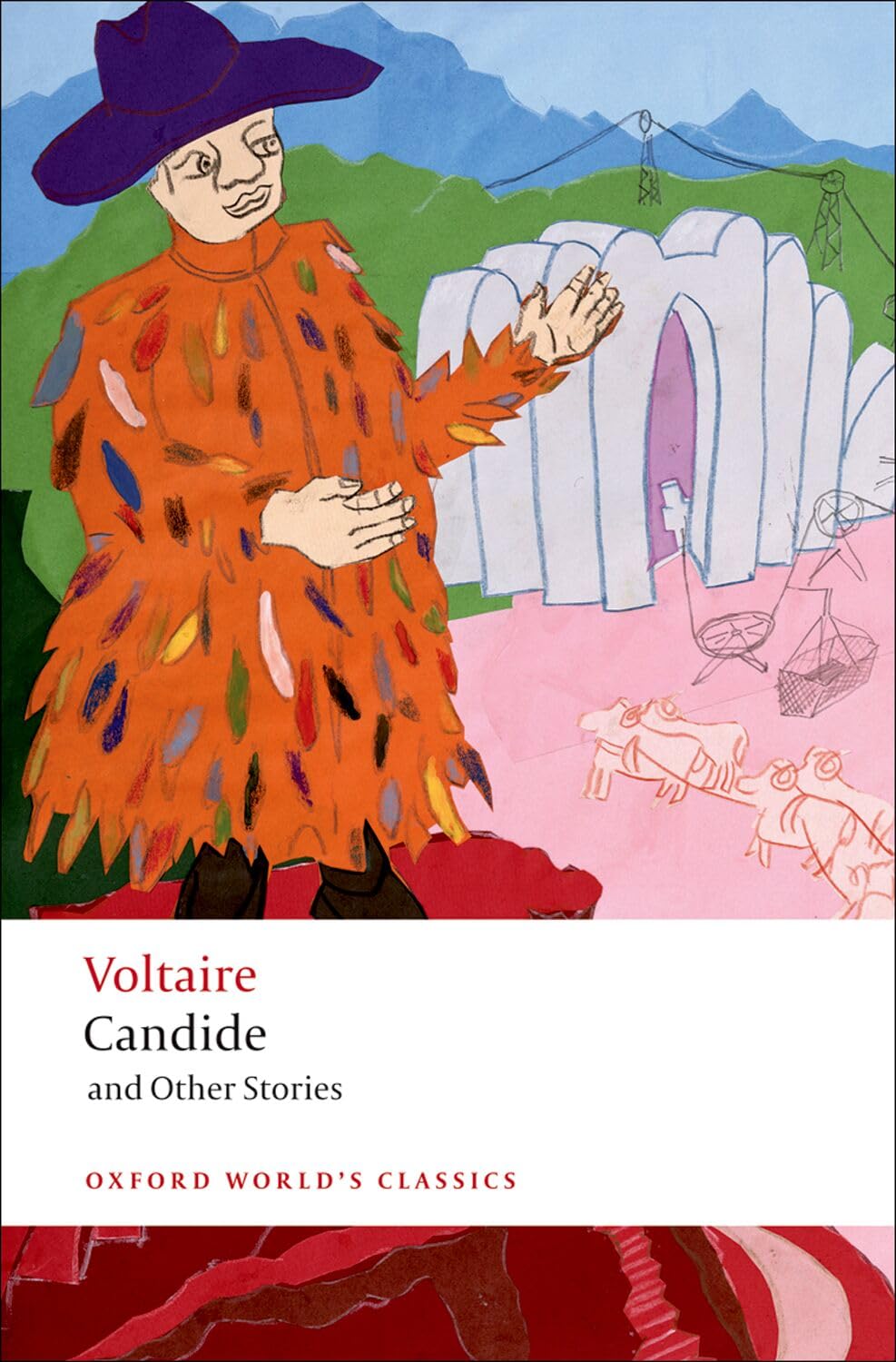
#1 — Candide and Other Stories — trans. Roger Pearson (1990, rev. 2006)
- Readability: Reads as fast as the original with deadpan efficiency.
- Accuracy: Exceptional fidelity to classical precision and ironic velocity.
- Tone: Precise, swift, ironic, and elegant.
- Accessibility: Includes other contes philosophiques for broader context.
Which translation is right for you?
- Choose Pearson if you want the most precise and literarily accomplished English Candide with other philosophical tales included.
- Choose Wootton if you want primary source context on optimism and the problem of evil for classroom or philosophical reading.
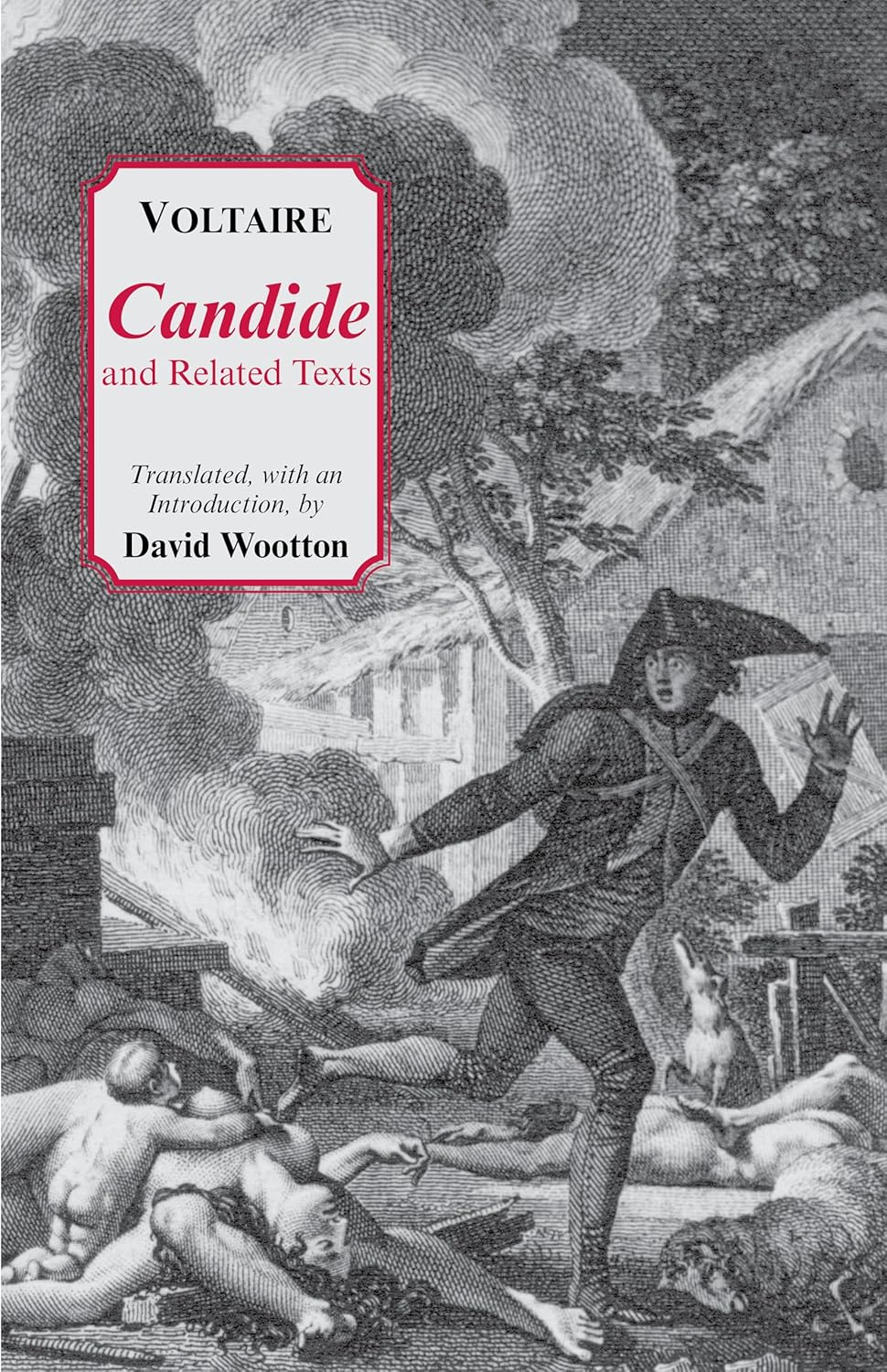
#2 — Candide and Related Texts — trans. David Wootton (2000)
- Readability: Accurate and readable for philosophical purposes.
- Accuracy: Reliable and clean without literary distinction.
- Tone: Straightforward and functional.
- Accessibility: Includes primary sources for intellectual context.
About the Translators
Roger Pearson (Oxford World's Classics): Professor of French at Oxford; also the author of Voltaire Almighty: A Life in Pursuit of Freedom (2005), the best English-language biography of Voltaire. His Oxford World's Classics translation is the current scholarly standard for Candide in English.
David Wootton (2000, Hackett): Professor of History at the University of York; author of The Invention of Science (2015) and Power, Pleasure and Profit (2018). His Hackett edition is designed as a philosophical text with supporting primary sources — Leibniz, Pope, Rousseau's letter to Voltaire — giving students the intellectual context Voltaire's first readers had simply by living in 1759.
Themes
The refutation of Leibnizian optimism. Candide was written as a direct response to the philosophical optimism of Leibniz, systematized by Christian Wolff and popularized by Alexander Pope's Essay on Man, which argued that God necessarily created the best of all possible worlds. Voltaire found this argument obscene — an insult to human suffering — and Candide is his sustained rebuttal: the world the novel depicts is relentlessly terrible, the suffering arbitrary and incessant, and Pangloss's cheerful optimism in the face of it darkens from comedy to something more troubling as the disasters accumulate.
The Lisbon earthquake as philosophical crisis. On November 1, 1755, an earthquake destroyed Lisbon and killed between thirty and forty thousand people — striking on All Saints' Day when the churches were full. Voltaire's response was to write his "Poem on the Lisbon Disaster" and then to incorporate the earthquake into Candide. The destruction of Lisbon in Chapters 5–6 is the novel's pivot point: the absurdity is no longer theoretical.
"We must cultivate our garden." The novel's conclusion — Candide, Pangloss, Cunégonde, the Old Woman, and various survivors working together on a small farm — is one of the most debated endings in literary history. Does "cultivate our garden" mean retreat from the world, acceptance of limited aims, engagement with practical work, or something else entirely? Voltaire never explained it, and the novel's irony extends even to its resolution: Pangloss is still talking, and Candide has stopped listening.
Key Characters
Candide — the illegitimate nephew of a Westphalian baron, raised in a castle with everything he needs except knowledge of how the world actually works. He is expelled from the castle, beaten, enslaved, shipwrecked, and subjected to virtually every catastrophe Voltaire can devise, and he survives with a weakening attachment to optimism and an increasing preference for action over philosophy.
Pangloss — Candide's tutor; the archetype of Leibnizian optimism; consistently wrong about everything and consistently rationalizing the atrocities he survives. He endures syphilis, an auto-da-fé, hanging, and dissection, emerging each time with his philosophy intact — which is not a virtue but a portrait of how ideology survives evidence.
Cunégonde — the baron's daughter whom Candide loves. She is raped and enslaved and traded between powerful men; each time Candide finds her she is further degraded. The novel ends with her ugly, bad-tempered, and Candide marrying her not out of love but out of obligation — a devastating satirical portrait of how war and power use women.
The Old Woman — Cunégonde's companion; the daughter of a Pope, who has lost one buttock to a siege, been enslaved in Morocco and Russia, and survived every possible disaster. Her account of her own life is the novel's most concentrated satirical recital — more terrible than anything Candide encounters, and narrated with the same cheerful matter-of-factness.
Recommended Sources
For further academic reading on Voltaire and Candide:
- French Studies (Oxford University Press) — the leading British journal for French literature; essential for Voltaire scholarship and Candide's place in the Enlightenment tradition.
- Studies on Voltaire and the Eighteenth Century (Voltaire Foundation, Oxford) — the primary specialist publication for Voltaire research; indispensable for textual, historical, and philosophical work on Candide.
- Eighteenth-Century Studies (American Society for Eighteenth-Century Studies) — key venue for comparative and interdisciplinary readings of Candide in European Enlightenment context.
Which translation is right for you?
Choose Pearson (Oxford World's Classics) for the most precise and literarily accomplished English Candide — his version captures Voltaire's classical wit and ironic velocity, and the inclusion of other philosophical tales gives the volume context and demonstrates the range of Voltaire's satirical project. Choose Wootton (Hackett) for a philosophical or classroom reading where the primary source apparatus — Leibniz, Pope, Rousseau's letter to Voltaire — matters as much as the text itself.
Frequently Asked Questions
What is Candide about?
Candide is a satirical novel that follows the naive protagonist, Candide, as he experiences a series of misfortunes and adventures across the world, challenging his optimistic outlook.
Is Candide hard to read?
Candide can be challenging due to its satirical style and historical context, but Pearson's translation is noted for its readability, making it accessible for most readers.
Which Candide translation is best?
Roger Pearson's Oxford World's Classics translation is the best overall: it captures Voltaire's classical precision, ironic velocity, and deadpan wit with exceptional fidelity.
Pearson vs Wootton — which should I choose?
Choose Pearson for literary distinction and the inclusion of Voltaire's other philosophical tales. Choose Wootton for a classroom or philosophical reading that includes primary sources on optimism and the problem of evil.
Which translation is easiest to read?
Pearson's version reads fastest, reproducing the swift, comic accumulation of disasters with the same deadpan efficiency as Voltaire's French.
Which translation is most accurate?
Pearson is the most accurate to the literary qualities of the original; Wootton's rendering is reliable and clean for philosophical purposes.
Why does the translation question for Candide center on register?
Voltaire's French is precise, swift, ironic, and elegant; the challenge is reproducing its wit without flattening or inflating the classical prose style.
This guide is based on reading the two translations and reviewing scholarly commentary. Last reviewed: June 2026.
As an Amazon Associate, I earn from qualifying purchases.
Looking for another classic? Browse all our translation guides →
For more French Enlightenment satire, see our guide to the best Madame Bovary translation.
Another landmark French novel: our comparison of the best Les Misérables translations.
Stendhal's masterpiece is covered in our Red and the Black translation guide.
Balzac's great novel is examined in our Lost Illusions translation guide.