Lost Illusions: What It's About & Best Translation
Balzac's great novel of ambition and disenchantment — and the modern translation to read
As an Amazon Associate, we earn from qualifying purchases.
Lost Illusions follows Lucien Chardon, a young poet from the provinces, as he navigates the seductive yet treacherous world of Parisian society and journalism. The novel explores themes of ambition, betrayal, and the corrupting influence of commerce on art.
Translation Comparison at a Glance
| Translation | Readability | Accuracy | Tone | Best For |
|---|---|---|---|---|
| MacKenzie (2012) | High | Very good | Clear, contemporary, faithful to pace | Modern readers seeking accessibility |
| Hunt (1971) | Moderate | Excellent | Scholarly, annotated | Academic study and context |
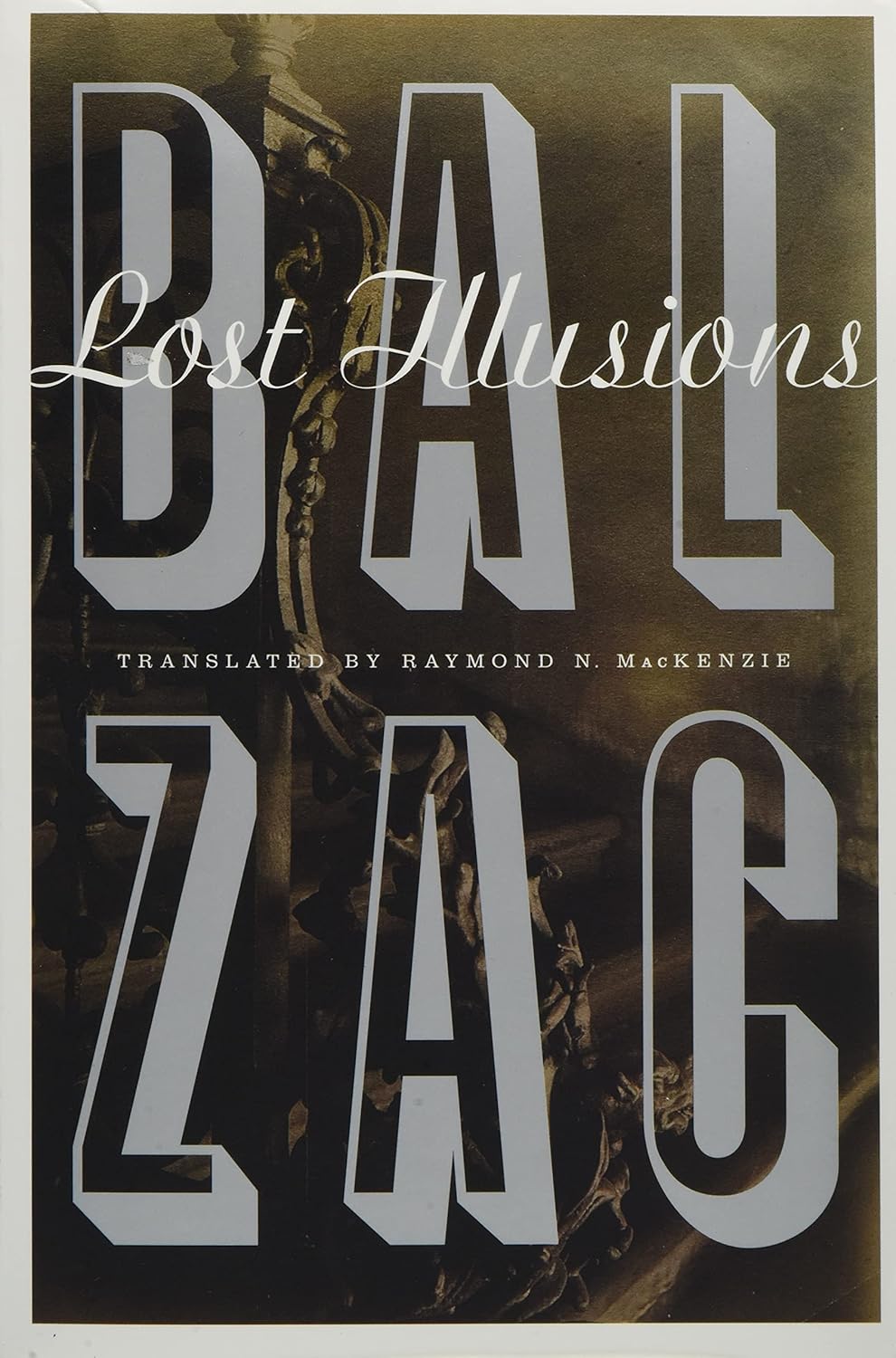
#1 — Lost Illusions — trans. Raymond N. MacKenzie (University of Minnesota Press, 2012)
- Readability: Clear contemporary prose that moves at Balzac's intended pace.
- Accuracy: Faithful to narrative drive and varied registers.
- Tone: Sharp social observation without flattening comedy.
- Accessibility: Best in-print modern edition for general readers.
Which translation is right for you?
- Choose MacKenzie if you want the clearest modern in-print translation that preserves Balzac's narrative drive and register shifts.
- Choose Hunt if you can find the out-of-print Penguin edition and value extensive scholarly apparatus for situating the novel in La Comédie humaine.
About the Translators
Raymond N. MacKenzie (2012, University of Minnesota Press): Professor of English at the University of Saint Thomas, Minnesota; his other translations include Stendhal's Armance and works of French Romantic prose for the Minnesota Press. His Lost Illusions is the recommended in-print modern English translation, praised for its fidelity to Balzac's narrative pace and its handling of the novel's shifts of register — from elevated society prose to the slang-heavy world of the Parisian press.
Herbert J. Hunt (1899–1973, 1971, Penguin Classics): Professor at Royal Holloway, University of London; the foremost anglophone Balzac scholar of the mid-twentieth century; author of the standard English study of La Comédie humaine. His Penguin Classics translation was the standard English version for decades before going out of print; it remains valuable for those who can find it, and his scholarly apparatus is still useful for situating the novel in the larger project of the Comédie humaine.
Themes
The corruption of literature by commerce. The novel's most distinctive achievement is its portrait of the Parisian literary marketplace of the 1820s and 1830s: a world in which reviews are paid for, reputations are manufactured or destroyed by competing factions, and literary talent is a commodity like any other. Balzac knew this world intimately — he had been a publisher and journalist himself, with considerable losses — and his account of it has never been superseded as a diagnosis of the structural conditions that determine literary success and failure. The novel's satire of the press remains startlingly current.
The provincial in Paris and the disenchantment of ambition. Lucien's arc — from provincial poet of genuine talent to Parisian celebrity to discredited hack to broken young man on the road home — is Balzac's most complete account of what the Restoration-era capital does to ambition. The city is not simply cruel; it is seductive, and Lucien's susceptibility to seduction is both his tragedy and his humanity. He is not destroyed by his enemies but by his own appetite for the pleasures the city offers.
Integrity and its cost. The counterplot of David Séchard — the printer who stays in Angoulême, invents a genuine technological improvement, and is systematically plundered by scheming creditors — provides the novel's moral counterweight. David is honest, industrious, and devoted to genuine creation; the commercial world destroys him for precisely these qualities. His trajectory, alongside Lucien's, makes the novel's analysis of what capitalism does to human creativity as complete as anything in nineteenth-century fiction.
Key Characters
Lucien Chardon (later de Rubempré) — the protagonist; a handsome, talented, and vain young poet from Angoulême whose beauty and charm open Paris's doors and whose weakness of character ensures he cannot hold what they offer. His adoption of the aristocratic name "de Rubempré" is both the novel's most comic touch and an emblem of the self-invention that will ultimately undo him.
David Séchard — Lucien's brother-in-law; a man of genuine scientific and intellectual gifts who invents a process for manufacturing cheap paper while the creditors close in on him. He is the novel's moral centre — patient, loyal, honest — and his destruction is proportional to his virtue.
Madame de Bargeton — the provincial grande dame who introduces Lucien to Paris and drops him the moment it becomes clear that he is not sufficiently polished for the circles she aspires to. Her social cruelty is presented without vindictiveness; she is simply operating according to the rules of the world she inhabits.
Daniel d'Arthez and the Cénacle — the group of young writers and thinkers of genuine integrity whom Lucien befriends in Paris and promptly abandons for the easier life of the Palais-Royal press world. D'Arthez, who will become a great writer, is what Lucien might have been; his continuing friendship with Lucien through all of Lucien's betrayals is one of the novel's most affecting elements.
Recommended Sources
For further academic reading on Balzac and Lost Illusions:
- Nineteenth-Century French Studies (University of Nebraska Press) — the primary English-language journal for Balzac scholarship and the broader nineteenth-century French literary tradition.
- French Studies (Oxford University Press) — key for Lost Illusions in its literary-historical context and its place in the larger architecture of La Comédie humaine.
- Romanic Review (Columbia University) — the oldest American journal for Romance languages and literatures; essential for comparative readings of Balzac in the European realist tradition.
The MacKenzie translation (University of Minnesota Press, 2012) is the in-print English version to seek out — it is the most readable modern rendering and the one that best serves readers who want to understand why Kundera called this the greatest novel in the history of the novel. The Hunt (Penguin Classics, 1971) is the historic scholarly standard; it is largely out of print but available secondhand and worth seeking if you want the most thoroughly annotated English text.
Frequently Asked Questions
What is Lost Illusions about?
Lost Illusions follows Lucien Chardon, a young poet from the provinces, as he navigates the seductive yet treacherous world of Parisian society and journalism. The novel explores themes of ambition, betrayal, and the corrupting influence of commerce on art.
Is Lost Illusions hard to read?
Lost Illusions can be challenging due to its complex themes and varied language. MacKenzie's translation is noted for its clarity and accessibility, making it easier for modern readers, while Hunt's version offers detailed scholarly context.
Which Lost Illusions translation is best?
Raymond MacKenzie's 2012 University of Minnesota Press edition is the best overall — it is the recommended modern English version that gives contemporary readers the fullest access to Balzac's achievement.
MacKenzie vs Hunt — which should I choose?
Choose MacKenzie for a clear, modern, in-print translation that preserves Balzac's narrative drive and shifts of register. Hunt's 1971 Penguin version remains valuable for its scholarly apparatus but is out of print.
Which translation is easiest to read?
MacKenzie's translation is the most readable modern rendering, moving at the pace Balzac intended while navigating elevated diction, slang, and lyrical passages with skill.
Which translation is most accurate?
MacKenzie offers fidelity to Balzac's narrative and register shifts; Hunt was the scholarly standard for decades with extensive apparatus for situating the novel in La Comédie humaine.
Is the older Hunt translation still worth seeking out?
Hunt's Penguin Classics edition is largely out of print but available secondhand and remains useful for its scholarly notes and context within Balzac's larger project.
This guide is based on reading the translation(s) and reviewing scholarly commentary. Last reviewed: June 2026.
As an Amazon Associate, I earn from qualifying purchases.
Looking for another classic? Browse all our translation guides →
Balzac's contemporary Stendhal receives the same treatment in our Red and the Black translation guide.
For another landmark of French realism, see our Madame Bovary translation guide comparing Lydia Davis and others.
Explore the broader French nineteenth-century tradition with our Les Misérables translation guide.
Zola's industrial epic is covered in our Germinal translation guide.