Circe in the Odyssey
The goddess of Aeaea: Books 10 and 12, her year with Odysseus, and the novel that gave her a voice
As an Amazon Associate, we earn from qualifying purchases.
- Who
- A goddess and enchantress, daughter of the Sun and the sea-nymph Perse
- Home
- The island of Aeaea (“the Ææan island” in Butler)
- Known for
- Turning Odysseus’s men into pigs; a year as his host; directions to the Underworld and past the Sirens
- Appears in
- Book 10Book 12
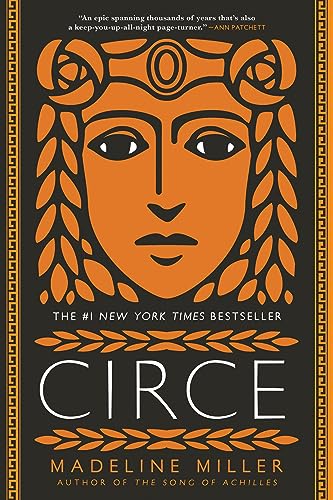
Circe appears in Books 10 and 12 of the Odyssey. She is a goddess, daughter of the Sun and sister of the sorcerer Aeetes, living alone on the island of Aeaea. She turns half of Odysseus's crew into pigs, is beaten by him with a herb the god Hermes gives him, and then becomes his host and lover for a year before sending him on to the Underworld. In Samuel Butler's translation she lives on "the Ææan island", and Odysseus has his Latin name, Ulysses.
Circe in Book 10: the pigs and the herb moly
Odysseus tells this story himself, at the Phaeacian court. After the Laestrygonians destroy eleven of his twelve ships, the last crew lands on Aeaea. Lots are cast, and Eurylochus leads twenty-two men inland to a house in the woods, where tame wolves and lions fawn on them, "poor bewitched creatures whom she had tamed by her enchantments". Circe welcomes them with cheese, honey, barley and wine, drugged "to make them forget their homes", and strikes them with her wand:
"They were like pigs—head, hair, and all, and they grunted just as pigs do; but their senses were the same as before, and they remembered everything."
Only Eurylochus, who stayed outside, escapes to tell Odysseus. On the way to rescue them, Odysseus meets Hermes (Mercury in Butler), who gives him a protective herb: "The root was black, while the flower was as white as milk; the gods call it Moly." The drug fails, Odysseus draws his sword as Hermes told him, and Circe, recognising him from a prophecy, swears not to harm him. She restores the men, younger and handsomer than before.
Circe and Odysseus: the year on Aeaea
Odysseus stays a full year. It is his crew, not Circe, who end it: "when the year had passed in the waning of moons and the long days had come round, my men called me apart" and asked to go home. Circe lets him go without a struggle, which sets her apart from Calypso, who keeps him seven years. But she tells him he must first sail to the House of Hades to consult the ghost of the prophet Teiresias (Book 11).
When he returns in Book 12 to bury his companion Elpenor, Circe gives him the most practical advice in the poem: how to pass the Sirens (wax in the crew's ears, Odysseus tied to the mast), the choice between Scylla and Charybdis, and the warning not to touch the cattle of the Sun. Every disaster that follows comes from ignoring her.
Did Circe and Odysseus have a son? Telegonus and the Telegony
Homer says nothing of a child. A later epic, the Telegony, now lost and known from an ancient summary, gives them a son, Telegonus. Grown up, he sails to Ithaca to find his father and kills him without knowing who he is. Afterwards he takes Penelope and Telemachus back to Aeaea: Telegonus marries Penelope, and Telemachus marries Circe. That strange ending is why readers search for "Telemachus and Circe", and it is the ending Madeline Miller builds on.
Circe by Madeline Miller: what the novel changes
Miller's Circe (2018) tells the whole life of the goddess in her own voice, long before and long after Odysseus. Some spoilers follow.
- The point of view. Homer's Circe is seen only through Odysseus's eyes, for about two books. Miller's narrator is lonely, mocked in her father's halls, and exiled to Aiaia (Miller's spelling) for discovering her witchcraft.
- The pigs, explained. In the novel the transformations are self-defence: Circe turns sailors into pigs after she is attacked.
- Odysseus as a storyteller, charming and untrustworthy, seen from the outside.
- Telegonus and Trygon. To protect her son from Athena, Circe wins the poisoned tail of Trygon, a stingray god, the weapon that later kills Odysseus, as in the Telegony.
- Telemachus. The novel ends with Penelope and Telemachus on Aiaia, and with Circe and Telemachus.
Reading the novel first makes Book 10 more interesting, not less: you notice how little Homer lets Circe say. If you have read Miller and want the original, see which Odyssey translation to read; for more novels in the same vein, see our Odyssey retellings.
Circe and the Odyssey are both on Audible. New members can try Audible with a free trial; the length, the price afterwards and how to cancel are in Audible's terms.
See the Audible free trial →Circe elsewhere
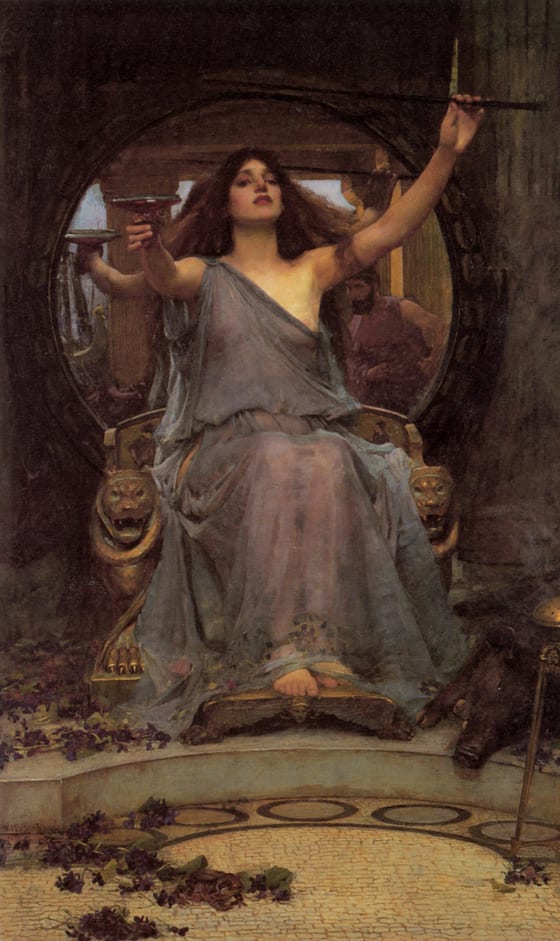
Circe is one of the most painted women in Greek myth, usually with her cup and wand; Waterhouse's version, above, is the best known. James Joyce named the fifteenth episode of Ulysses, the hallucinatory night in Dublin's brothel district, "Circe". For the rest of Odysseus's household and the gods who help and hinder him, see the character reference, Penelope and Agamemnon; for where Aeaea falls in the voyage, the journey map.
As an Amazon Associate, I earn from qualifying purchases.
Ready for the poem itself? See which Odyssey translation is best for you, or browse our translation guides.