Odysseus in the Odyssey
The king of Ithaca, the hero of the Trojan horse, and the most complicated man in Homer
As an Amazon Associate, we earn from qualifying purchases.
- Who
- King of Ithaca; a Greek hero of the Trojan War
- Family
- Son of Laertes and Anticlea; husband of Penelope; father of Telemachus
- Known for
- Cunning: the Trojan horse, disguises, and stories that are not always true
- Also called
- Ulysses (the Latin name, used in Butler’s translation)
- Appears in
- Books 5–24
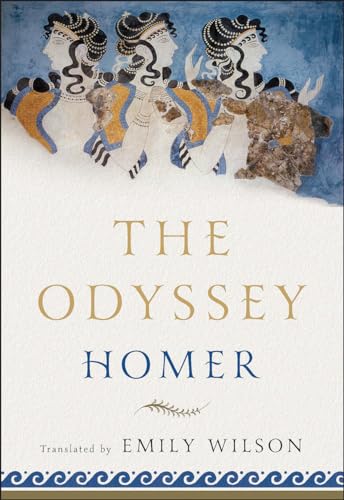
Odysseus is the hero of the Odyssey: the king of Ithaca, trying to get home from the Trojan War. He has been away twenty years, ten fighting at Troy and ten lost at sea, while his wife Penelope and son Telemachus hold out against the suitors who have taken over his house. The Romans called him Ulysses, the name Samuel Butler uses in his translation. Surprisingly, he does not appear in person until Book 5.
"That ingenious hero"
The poem's first line names him by his defining quality rather than his name:
"Tell me, oh Muse, of that ingenious hero who travelled far and wide after he had sacked the famous town of Troy."
The Greek word, polytropos, means something like "of many turns", and translators have argued over it for centuries: "ingenious" for Butler, "the man of twists and turns" for Robert Fagles, "a complicated man" for Emily Wilson. It was Odysseus's idea, the poem says, to build the wooden horse that ended the war (Books 4 and 8).
How the poem introduces him
Books 1 to 4 follow his son Telemachus. When we finally meet Odysseus in Book 5, he is sitting on the shore of Calypso's island, weeping for home. From Book 6 he is shipwrecked among the Phaeacians, and in Books 9 to 12 he tells them the story of his voyage himself: the Cyclops, Circe, the Underworld, the Sirens, Scylla and Charybdis. That makes him the narrator of his own most famous adventures, and a narrator with every reason to make himself look good. The second half of the poem, Books 13 to 24, is his return to Ithaca in disguise.
Master of disguise and lies
Odysseus survives by deception. He tells the Cyclops his name is "Noman" (Book 9); on Ithaca he invents one false life story after another, even to the goddess who has protected him all along. Athena, disguised, catches him at it in Book 13 and is delighted:
"We can both of us deceive upon occasion—you are the most accomplished councillor and orator among all mankind, while I for diplomacy and subtlety have no equal among the gods."
Is Odysseus a hero?
Readers have argued about him since antiquity. He is brave, loyal to his family, and refuses immortality with Calypso to go home. But he also loses every one of the men who sailed with him, and the poem's first lines admit it: "do what he might he could not save his men". His pride nearly kills them all when he shouts his real name at the blinded Cyclops. For the long history of that argument, see the two protagonists and modern scholars.
The Odyssey was made to be heard. New members can try Audible with a free trial; the length, the price afterwards and how to cancel are in Audible's terms.
See the Audible free trial →Follow his route on the journey map, and see which Odyssey translation to read: each one gives you a slightly different Odysseus.
As an Amazon Associate, I earn from qualifying purchases.
Ready for the poem itself? See which Odyssey translation is best for you, or browse our translation guides.