Penelope in the Odyssey
Odysseus's wife: twenty years of waiting, a web undone each night, and the test that ends the poem
As an Amazon Associate, we earn from qualifying purchases.
- Who
- Queen of Ithaca, Odysseus’s wife
- Family
- Daughter of Icarius; mother of Telemachus
- Known for
- Twenty years of waiting, and the web she undid each night
- The suitors
- 108, led by Antinous and Eurymachus
- Appears in
- Book 1Book 4Books 16–21Book 23
Penelope is Odysseus's wife and the queen of Ithaca. The daughter of Icarius and the mother of Telemachus, she waits twenty years for her husband: ten for the Trojan War and ten for his voyage home. By the time the Odyssey begins, more than a hundred suitors have moved into her house, eating Odysseus's wealth and pressing her to marry one of them. She holds them off with patience and cunning until he returns. (In Samuel Butler's translation, and in Latin, Odysseus is Ulysses.)
The suitors
Telemachus counts them for his disguised father in Book 16: "fifty-two chosen youths from Dulichium", twenty-four from Same, twenty from Zacynthus and twelve from Ithaca itself, 108 in all. Their leaders are Antinous, the cruelest, and Eurymachus, the smoothest talker. Penelope cannot throw them out, and she cannot be sure Odysseus is alive; marrying one of them would end the wait, and hand Ithaca to a usurper.
Penelope's web: the trick of the shroud
Her most famous trick is told three times in the poem (Books 2, 19 and 24). Antinous complains of it to the assembly in Book 2:
"She set up a great tambour frame in her room, and began to work on an enormous piece of fine needlework."
She promised to choose a husband once she had finished a burial shroud for Odysseus's father, Laertes. She wove by day and unpicked the work by torchlight at night. "She fooled us in this way for three years and we never found her out," Antinous says, until one of her maids betrayed her in the fourth.
Penelope and Odysseus: the return
Odysseus reaches Ithaca in Book 13 disguised as an old beggar. The couple's slow reunion fills the second half of the poem:
- Book 19. Penelope talks with the beggar by the fire, not knowing (or not admitting) who he is. She tells him a dream of an eagle killing her geese, and announces a contest for her hand. Readers have long argued whether she already suspects the truth.
- Book 21. She brings out Odysseus's great bow: whoever strings it and shoots through twelve axe-heads will marry her. None of the suitors can string it. The beggar does.
- Book 22. Odysseus and Telemachus kill the suitors while Penelope sleeps upstairs. Twelve of her maids, who slept with the suitors, are hanged.
- Book 23. The test of the bed (below).
The test of the bed (Book 23)
Even after the slaughter, Penelope does not throw herself at the stranger. She tells the old nurse to move Odysseus's bed out of the bedroom for him. Odysseus erupts: the bed cannot be moved, because he built it himself around a living tree.
"There was a young olive growing within the precincts of the house, in full vigour, and about as thick as a bearing-post."
Only the two of them knew the secret, so his anger proves who he is. She runs to him, and Athena holds back the dawn to give them a longer night. The trickster has been out-tricked by his wife: the test is the clearest sign in the poem that she is his equal in cunning.
Penelope against Clytemnestra
The Odyssey keeps setting Penelope beside another queen: Clytemnestra, who took a lover and murdered her husband Agamemnon on his return. In Book 24 Agamemnon's ghost draws the comparison himself:
"Happy Ulysses, son of Laertes, you are indeed blessed in the possession of a wife endowed with such rare excellence of understanding, and so faithful to her wedded lord as Penelope the daughter of Icarius."
The full story of that other homecoming is on the Agamemnon page.
Penelope retold: The Penelopiad and after
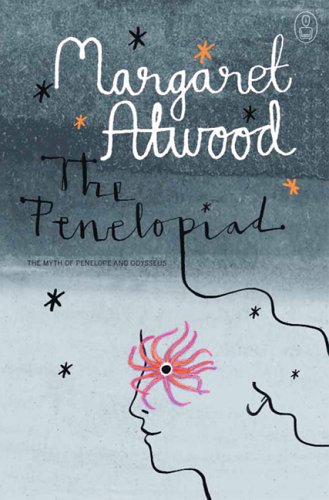
Margaret Atwood's The Penelopiad (2005) lets Penelope tell her own story from the Underworld, with the twelve hanged maids as a mocking chorus; it asks what Homer leaves out about them, and about her. Natalie Haynes's A Thousand Ships gives Penelope a series of letters to her absent husband, and Claire North's Ithaca begins a trilogy about the queen holding the island together. More are on our Odyssey retellings page; for the poem itself, see which Odyssey translation to read.
The Odyssey and The Penelopiad are both on Audible. New members can try Audible with a free trial; the length, the price afterwards and how to cancel are in Audible's terms.
See the Audible free trial →As an Amazon Associate, I earn from qualifying purchases.
Ready for the poem itself? See which Odyssey translation is best for you, or browse our translation guides.