Apollo: The Race to the Moon: Book Review
Summary & Key Themes
What Is "Apollo: The Race to the Moon" About?
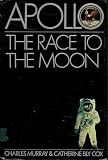
"Apollo: The Race to the Moon" by Charles Murray and Catherine Bly Cox is a meticulously researched narrative that chronicles the Apollo program from its inception to the triumphant Apollo 11 moon landing. Unlike many accounts focused solely on the astronauts, this book delves into the unsung heroes—engineers, managers, and technicians—whose collective ingenuity made the mission possible. It’s a ground-level view of the problem-solving and teamwork that defined NASA’s golden age.
Key Themes in "Apollo: The Race to the Moon"
The book’s standout theme is its emphasis on organizational triumph over individual heroics, highlighting how bureaucratic creativity and institutional collaboration overcame technical and political hurdles. Murray and Cox also underscore the human cost of the space race, from the Apollo 1 tragedy to the relentless pressures faced by teams working under impossible deadlines. This angle sets it apart from more astronaut-centric accounts.
Historical Accuracy & Critical Reception
How Accurate Is "Apollo: The Race to the Moon"?
Widely praised for its rigor, the book draws on extensive interviews with key players and archival research, earning respect from historians and space enthusiasts alike. Some critics note its focus on management might gloss over deeper geopolitical context, but its technical and operational details are considered authoritative.
Is "Apollo: The Race to the Moon" Worth Reading?
Absolutely—for those fascinated by how Apollo succeeded rather than just what happened. Its dense detail may overwhelm casual readers, and its 1989 publication means it lacks perspectives from recent declassified materials. Still, its storytelling and depth make it a cornerstone of space history literature.
"Apollo: The Race to the Moon" vs. Other Books on Apollo 11 Moon Landing
Compared to Andrew Chaikin’s A Man on the Moon (which excels in astronaut narratives) or W. David Woods’ How Apollo Flew to the Moon (a technical deep dive), Murray and Cox’s work bridges both worlds with its focus on institutional dynamics. Brian Floca’s Moonshot sits at the other end of the spectrum entirely — a picture book for young readers rather than a peer for adult audiences — so the real choice for serious readers is between this book, Chaikin’s narrative approach, and Woods’ technical one, depending on whether you want institutional history, human drama, or engineering detail.
Who Should Read "Apollo: The Race to the Moon"?
Beginners & Accessibility
While engaging, the book assumes basic familiarity with the Apollo program; newcomers might prefer Chaikin’s more narrative-driven approach first.
Length & Difficulty
At 500+ pages, it’s a commitment, but the prose is clear—ideal for space history buffs or readers comfortable with detailed nonfiction.
Books Like "Apollo: The Race to the Moon"
For similar institutional histories, try The Right Stuff by Tom Wolfe or Failure Is Not an Option by Gene Kranz. Readers who appreciate Murray’s analytical approach may enjoy his later work Human Accomplishment, though it covers broader cultural history rather than space exploration. For Cold War context, Two Sides of the Moon by Leonov and Scott offers a fascinating Soviet-American parallel.
As an Amazon Associate, we earn from qualifying purchases.