Death in Venice: What It's About & Best Translation
Mann's novella of obsession and dissolution — three translations from classic to contemporary
As an Amazon Associate, we earn from qualifying purchases.
Death in Venice is about Gustav von Aschenbach, a renowned writer who travels to Venice and becomes obsessed with a young boy named Tadzio. The novella explores themes of beauty, desire, and the conflict between Apollonian and Dionysian forces.
Translation Comparison at a Glance
| Translation | Readability | Accuracy | Tone | Best For |
|---|---|---|---|---|
| Lowe-Porter (1930) | Moderate | Good | Stately, formal | Classic Mann reception |
| Heim (2004) | High | Very good | Controlled, honest | First reading |
| Robertson (2022) | High | Excellent | Scholarly, precise | Academic study |
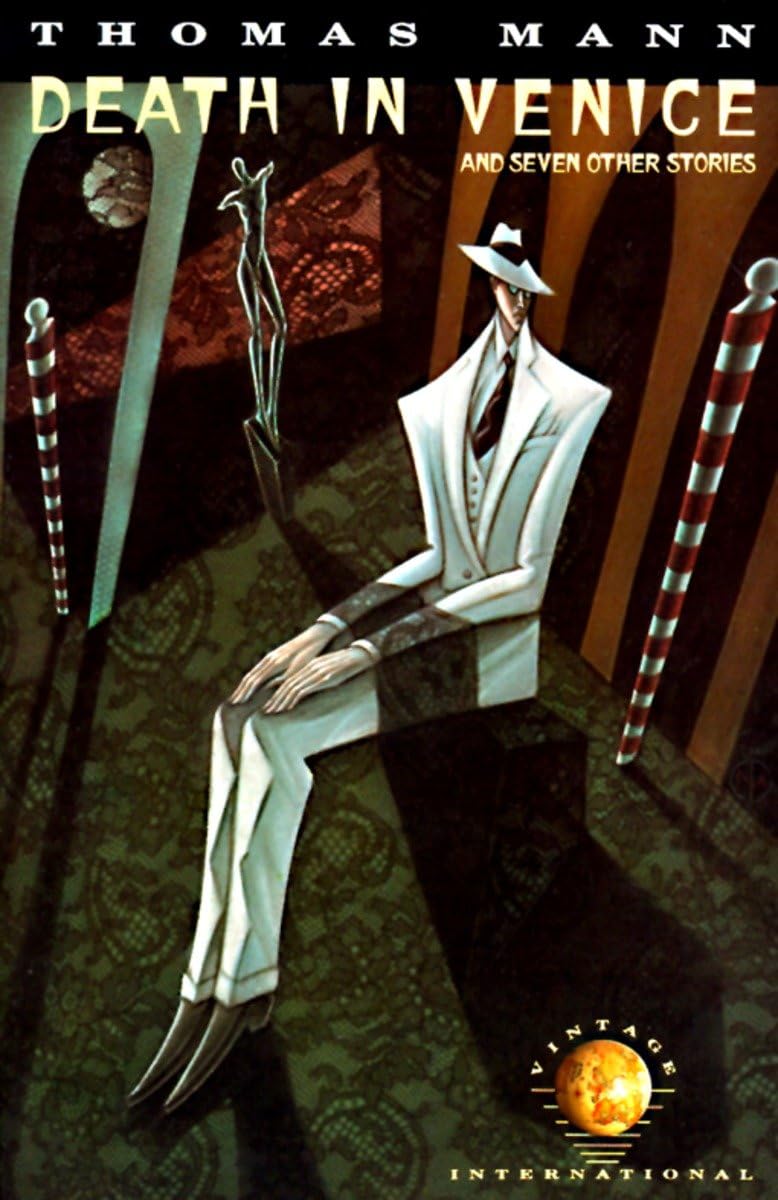
#1 — Death in Venice and Seven Other Stories — trans. H.T. Lowe-Porter (1930)
- Readability: Stately and formal, capturing Mann's high literary register.
- Accuracy: Good overall but softens some homoerotic passages.
- Tone: Classic, authoritative, slightly reserved.
- Accessibility: Widely available with additional stories for context.
Which translation is right for you?
- Choose Heim if you want the most readable modern translation for a first reading, with strong psychological insight and an excellent pairing with Tonio Kröger.
- Choose Lowe-Porter if you want the classic translation that introduced Mann to English readers for decades, with its own literary personality.
- Choose Robertson if you want the most scholarly edition with full annotations on classical allusions and mythological references.
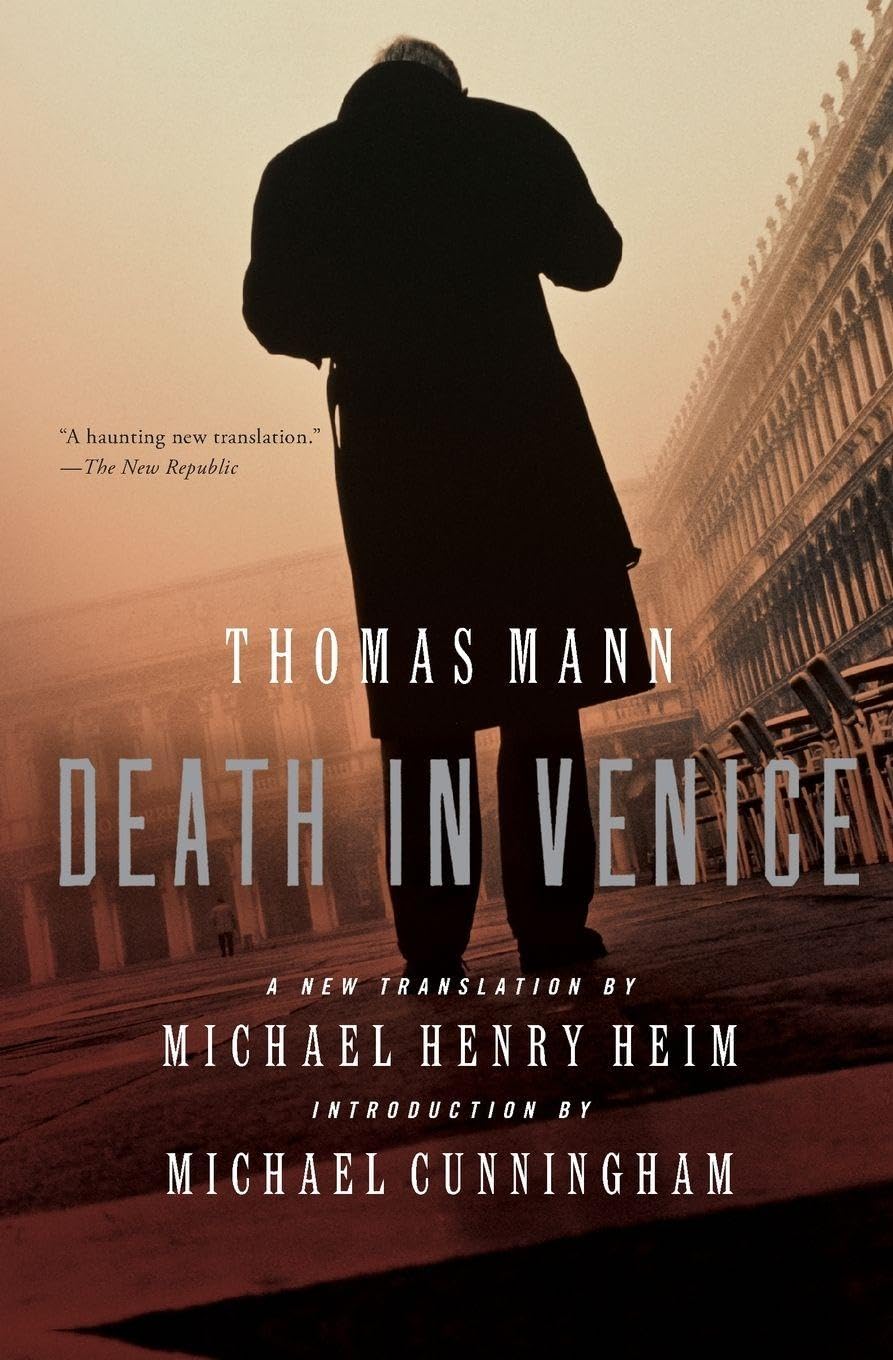
#2 — Death in Venice — trans. Michael Henry Heim (2004)
- Readability: The most readable and fluid of the three.
- Accuracy: Honest about psychological and erotic content.
- Tone: Controlled yet psychologically direct.
- Accessibility: Excellent for first-time readers, with valuable pairing.
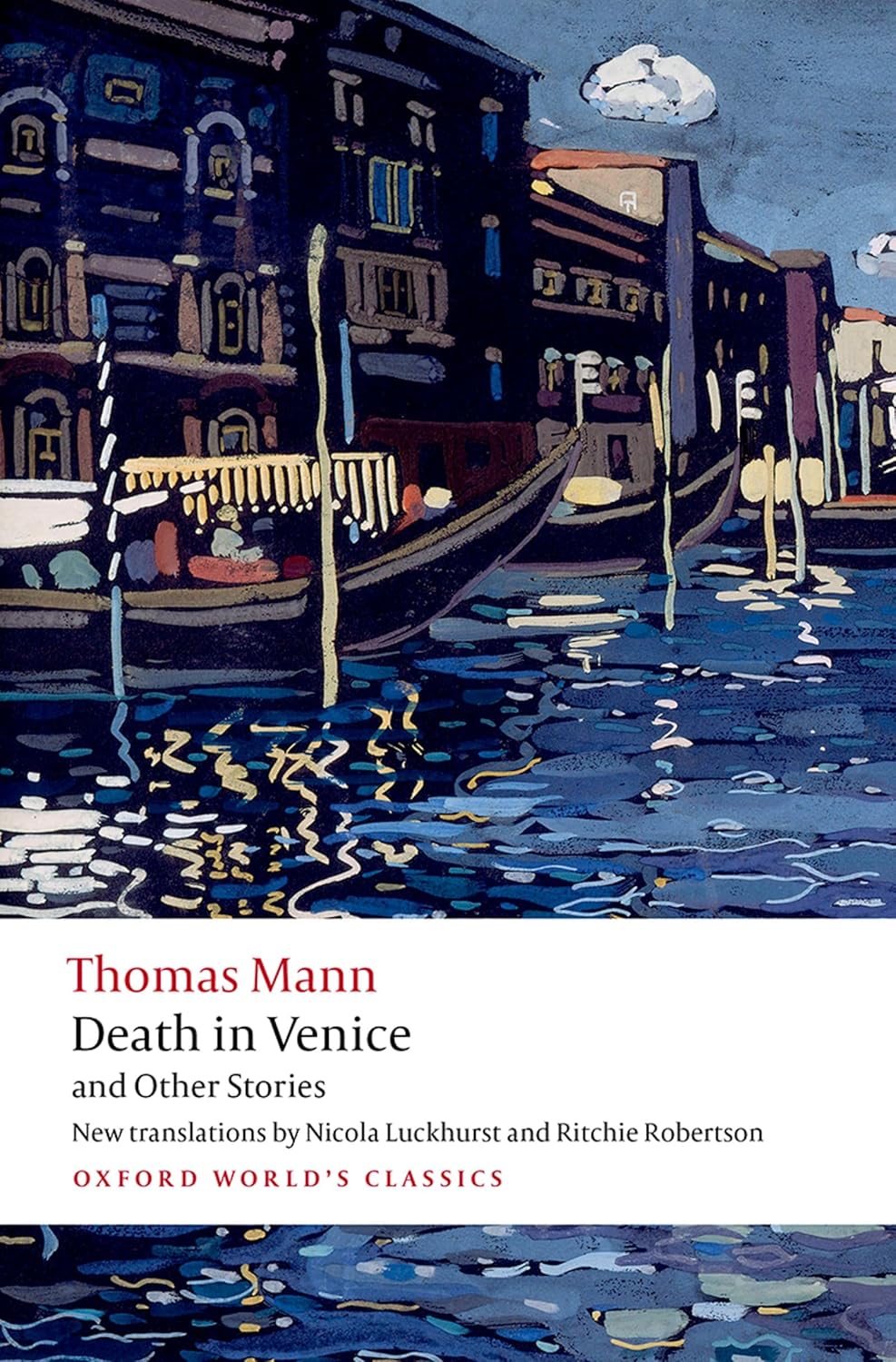
#3 — Death in Venice and Other Stories — trans. Ritchie Robertson (2022)
- Readability: Highly readable with scholarly precision.
- Accuracy: Excellent, especially on classical and mythological references.
- Tone: Precise, annotated, and contextual.
- Accessibility: Ideal for deeper or academic engagement.
About the Translators
H. T. Lowe-Porter (Helen Tracy Lowe-Porter, 1877–1963, 1930, Vintage): American; Thomas Mann's principal English translator for four decades; her versions of Buddenbrooks, The Magic Mountain, the Joseph tetralogy, and Death in Venice were the primary means by which anglophone readers encountered Mann's work from the 1920s through the 1990s. Scholars have since documented instances where Lowe-Porter softened the homoerotic content of Death in Venice and introduced other interpretive adjustments, but her literary quality is high and her authority in the Mann tradition is unquestioned.
Michael Henry Heim (1943–2012, 2004, Harper Perennial): UCLA Professor of Slavic and East European Languages; one of the most important literary translators of the twentieth century; his translations include Kundera's The Unbearable Lightness of Being, Hrabal's I Served the King of England, and Chekhov's letters. His 2004 Death in Venice, paired with Tonio Kröger and introduced by Michael Cunningham, is the recommended first-reading translation.
Ritchie Robertson (2022, Oxford World's Classics): Professor of German at Oxford; author of major critical studies of Kafka and of the German-Jewish literary tradition; the most recent English translator of the novella and the most fully annotated, with notes identifying the classical allusions — the Homeric similes, the Platonic references, the appearances of Hermes — that are essential to understanding Mann's ironies.
Themes
The Apollonian and the Dionysian. Mann drew directly on Nietzsche's Birth of Tragedy, which argues that Greek culture was the product of a tension between the Apollonian principle (order, form, clarity, restraint) and the Dionysian (intoxication, dissolution, excess, death). Aschenbach is a supreme Apollonian artist who encounters Tadzio — an embodiment of Dionysian beauty — and is destroyed. The novella's formal precision is itself Apollonian; its subject is the dissolution of everything formal and controlled by the irruption of desire.
Homosexual desire and its concealment. Mann wrote the novella in 1912, while his own homosexual desires were rigorously suppressed and formally denied. Aschenbach's obsession with Tadzio is never explicitly named as what it is; the text approaches and retreats from the acknowledgement, and this evasion is itself part of the subject. The translation history of the novella is partly a history of how much of this acknowledgement each translator was willing to make: Lowe-Porter's 1930 version softened the most explicit passages; Heim's and Robertson's restore them.
Venice as figure for beauty in dissolution. The city itself is the novella's great symbol: a place of exceptional beauty built on a sinking foundation, famous for its atmosphere of decadent antiquity and slow decay. The cholera epidemic that provides the plot's mechanism reinforces this: the city's authorities conceal the epidemic to protect the tourist season, precisely as Aschenbach conceals his knowledge of the danger from Tadzio's family. Venice is beautiful and it is killing him, and he will not leave.
Key Characters
Gustav von Aschenbach — the protagonist; a celebrated and honoured German writer of ascetic, formally rigorous prose who has achieved distinction through an almost violent suppression of desire and feeling. His encounter with Tadzio does not simply awaken desire; it dismantles the entire psychic architecture on which his art and life have rested.
Tadzio — the fourteen-year-old Polish boy at the Hotel des Bains; described by Aschenbach in terms drawn from Greek sculpture and Platonic dialogue. He is aware of Aschenbach's attention and, in the novella's most disturbing moments, appears to acknowledge and even invite it. He is never named within the narrative; Aschenbach overhears his family call him "Tadziu."
The Stranger Figures — a series of characters — the elderly dandy on the boat, the gondolier, the street singer — who are described with the same sinister features and who together suggest the figure of Hermes Psychopomp, the god who leads souls to the underworld. Mann embeds a mythological subtext in what appears to be a realistic narrative.
Recommended Sources
For further academic reading on Thomas Mann and Death in Venice:
- Monatshefte (University of Wisconsin) — the leading American journal for German literary studies; primary venue for English-language Mann scholarship.
- German Life and Letters (Wiley-Blackwell) — the leading British journal for German literature; essential for Death in Venice in its Wilhelmine cultural and biographical context.
- Oxford German Studies (Taylor & Francis) — key for Mann's relationship to Nietzsche, Wagner, and the intellectual currents of early twentieth-century German culture.
Which translation is right for you?
Choose Heim (Harper Perennial) for a first reading — his is the most readable and psychologically honest modern version; pairing the novella with Tonio Kröger and Michael Cunningham's introduction gives the volume genuine editorial value. Choose Lowe-Porter (Vintage) for the classic translation experience — her version has its own literary personality and carries the weight of a century of anglophone Mann reception. Choose Robertson (Oxford World's Classics) for academic or deep reading — his notes, identifying every classical allusion and Platonic reference, are indispensable for readers who want to understand what Mann was doing with his mythological apparatus.
Frequently Asked Questions
What is Death in Venice about?
Death in Venice is about Gustav von Aschenbach, a renowned writer who travels to Venice and becomes obsessed with a young boy named Tadzio. The novella explores themes of beauty, desire, and the conflict between Apollonian and Dionysian forces.
Is Death in Venice hard to read?
Death in Venice can be challenging due to its complex themes and dense prose. Heim's translation is the most readable, while Robertson offers scholarly depth for those interested in annotations.
Which Death in Venice translation is best?
Michael Henry Heim's 2004 translation is the most readable and psychologically honest modern version, recommended for a first reading.
Heim vs Robertson — which should I choose?
Choose Heim for readability and psychological insight on a first reading; choose Robertson for scholarly depth, annotations, and classical references.
Which translation is easiest to read?
Michael Henry Heim's translation is the most readable of the three and the most attuned to the novella's psychological undercurrent.
Which translation is most accurate?
Ritchie Robertson's 2022 Oxford translation is the most fully annotated and accurate regarding classical allusions and the novella's homoerotic content.
How has the translation history of Death in Venice addressed its homosexual themes?
Lowe-Porter's 1930 version softened explicit passages; Heim and Robertson restore the original language and psychological honesty regarding Aschenbach's desire.
This guide is based on reading all 3 translations and reviewing scholarly commentary. Last reviewed: June 2026.
As an Amazon Associate, I earn from qualifying purchases.
Looking for another classic? Browse all our translation guides →
Thomas Mann's masterpiece receives the same treatment in our Magic Mountain translation guide.
Explore Mann's earlier family saga with our Buddenbrooks translation comparison.
For more German literature, see our guide to the best Faust translations.
Readers of Mann often enjoy our Demian translation guide for Hermann Hesse.