Buddenbrooks: What It's About & Best Translation
Thomas Mann's great dynastic novel — and why it matters which translation you read
As an Amazon Associate, we earn from qualifying purchases.
Buddenbrooks chronicles the decline of a wealthy German merchant family over four generations, exploring themes of societal change, personal ambition, and the conflict between tradition and modernity.
Translation Comparison at a Glance
| Translation | Readability | Accuracy | Tone | Best For |
|---|---|---|---|---|
| Mitchell (2024) | High | Excellent | Clear and paced | First-time readers, scholars |
| Lowe-Porter (1924) | Moderate | Good | Period grandeur | Affordable sampling, history |
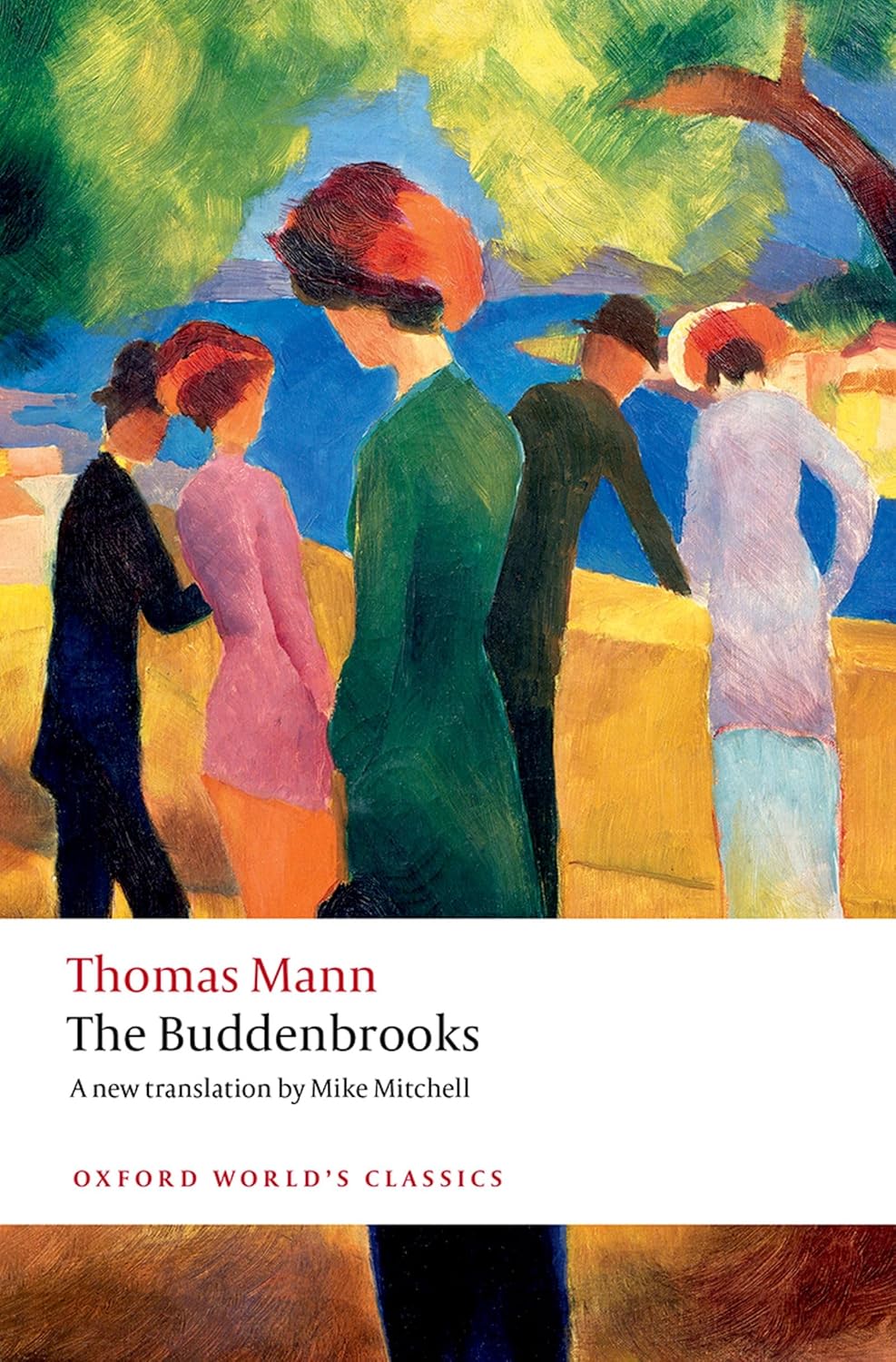
#1 — Buddenbrooks — trans. Mike Mitchell (2024)
- Readability: Brings clarity and pace to Mann's prose.
- Accuracy: Most current, benefiting from decades of scholarship.
- Tone: Clear and accessible with modern sensibility.
- Accessibility: Full annotations and expert introduction for new readers.

Rintoul's measured, dignified delivery perfectly captures the decline of the Buddenbrook family, and Lowe-Porter's classic translation remains the most widely respected English version.
Listen on Audible →Which translation is right for you?
- Choose Mitchell if you want the most current scholarly edition with annotations and expert introduction for a first reading.
- Choose Lowe-Porter if you want the most affordable version and are comfortable with a historically significant translation that has period grandeur.
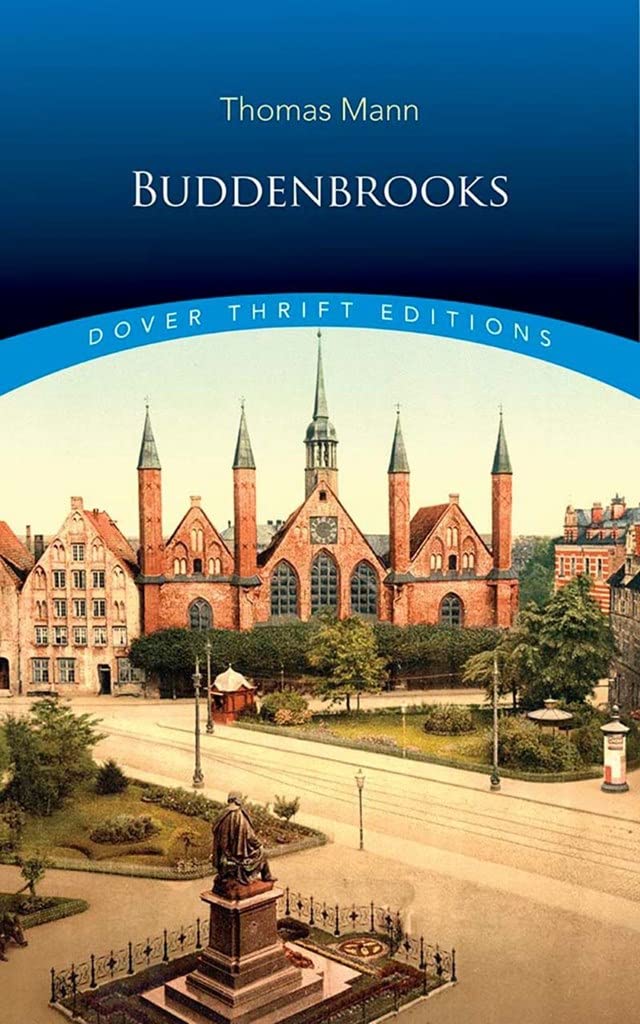
#2 — Buddenbrooks — trans. H.T. Lowe-Porter (1924)
- Readability: Period style with long, complex sentences.
- Accuracy: Some known inaccuracies corrected by later translators.
- Tone: Period grandeur reflecting the novel's historical self-consciousness.
- Accessibility: Most affordable option for sampling the novel.
About the Translators
Mike Mitchell (2024, Oxford World's Classics): British translator of German literature whose work includes Schnitzler, Kafka, and other major modernists. His 2024 Oxford World's Classics Buddenbrooks includes an introduction by Ritchie Robertson, one of the leading Mann scholars in the English-speaking world.
John E. Woods (1938–2018, 1993, Vintage): American translator of German literature, also responsible for acclaimed translations of Arno Schmidt and Patrick Süskind's Perfume. His 1993 Vintage translation held the standard between Lowe-Porter and Mitchell for thirty years and remains an excellent alternative.
H.T. Lowe-Porter (1877–1963, 1924, Knopf / Dover): Helen Tracy Lowe-Porter was Mann's authorized English translator for his entire career — she translated The Magic Mountain, Doctor Faustus, the Joseph tetralogy, and much of his shorter work alongside Buddenbrooks. Her translations shaped the English reception of Mann throughout the twentieth century. Scholars have identified inaccuracies in her work, but the prose has a period grandeur that reflects the novel's own historical self-consciousness.
Themes
The decline as both specific and universal. The Buddenbrook family's collapse maps onto specific historical forces — the rise of industrial capital, the shift from merchant to finance economy, the emergence of the professional bourgeoisie — but Mann also presents it as an example of something more general: a family's sensitivity tends to increase as its worldly capacity decreases. Tony has all vitality and no depth; Thomas has all cultivation and no health; Hanno has all sensitivity and no will to live. Each generation trades practical competence for inner complexity, and the trade is Schopenhauerian: the more clearly you perceive the world, the less you can endure it.
The leitmotif as structure. Mann learned from Wagner how to use repeated motifs — phrases, gestures, physical details — to signal character and fate without explicit commentary. Tony's habitual phrase "that is certainly not a step forward for the firm," the marzipan smell of the family house, the Buddenbrooks' distinctive nose — these accumulate meaning across nine hundred pages in a way that makes the novel feel, on second reading, like a scored piece of music. A translator who varies these motifs for stylistic novelty destroys part of how the book works.
The comic register and its darkening. Buddenbrooks is funnier than its reputation suggests. Tony's three marriages, her dogged resilience, her constant reassertion of family honor in the face of every setback, are played for sustained comedy as well as pathos. Mann's irony is relentless and good-natured in the early sections; it darkens as the novel progresses, until Hanno's chapter — the school day written as a symphony — and the final deaths, where there is no comedy left.
Key Characters
Tony Buddenbrook — the novel's most vital character, three times married and three times disappointed, perpetually insisting on family honor in the face of its obvious decline. Her trajectory is comic and heartbreaking simultaneously, and she never stops believing in the firm even as she is partly responsible for its troubles.
Thomas Buddenbrook — Tony's brother, the fourth generation's head of the firm. A man of exquisite taste and professional competence who discovers, reading Schopenhauer one night, that he is spiritually dead and has been for years. His death — from a botched tooth extraction in the street, undignified and sudden — is one of the novel's most deliberately anti-heroic passages.
Hanno Buddenbrook — Thomas's son, the fifth and final generation. He has inherited all the family's accumulated sensitivity and none of its will to participate in the world. His chapter — the long school day rendered as a piece of music that ends in a cadence Buddenbrook cannot continue — signals the line's end before his death is described.
Gerda Buddenbrook — Thomas's Dutch wife, a violinist who arrives in Lübeck like a creature from another world. Her relationship with the orchestra conductor Lissauer unsettles Thomas; Mann leaves its nature deliberately unclear, but its effect on Thomas is not.
Bendix Grünlich — Tony's first husband, a Hamburg merchant and consummate fraud who courts Tony for her dowry and is eventually exposed as bankrupt. His grotesque flattery — all curly golden whiskers and excessive compliments — is some of Mann's funniest early writing.
Recommended Sources
For further academic reading on Thomas Mann and Buddenbrooks:
- Monatshefte (University of Wisconsin) — the leading American journal for German literary studies; extensive Mann scholarship across several decades.
- German Life and Letters (Wiley-Blackwell) — the leading British journal for German literature; key venue for Mann criticism in English.
- The German Quarterly (American Association of Teachers of German) — comprehensive coverage of German literary history; essential for placing Mann in the tradition he both inherited and transformed.
Which translation is right for you?
Choose Mitchell for a first reading — his 2024 Oxford World's Classics is the most current and fully equipped edition, with Robertson's introduction providing the best available short account of the novel's sources and structures. Choose Woods (Vintage, 1993) as a strong alternative that held the standard for thirty years and remains excellent. Choose Lowe-Porter if you want the most affordable version (Dover Thrift) and are comfortable with a translation that has period grandeur alongside occasional inaccuracies — it is part of the book's literary history.
Frequently Asked Questions
What is Buddenbrooks about?
Buddenbrooks chronicles the decline of a wealthy German merchant family over four generations, exploring themes of societal change, personal ambition, and the conflict between tradition and modernity.
Is Buddenbrooks hard to read?
Buddenbrooks can be challenging due to its detailed historical context and complex characters. Mitchell's translation is recommended for its clarity and modern annotations, while Lowe-Porter's version retains a period style.
Which Buddenbrooks translation is best?
Mike Mitchell's 2024 Oxford World's Classics edition is the recommended starting point for new readers, offering clarity, pace, full annotations, and an expert introduction by Ritchie Robertson.
Mitchell vs Lowe-Porter — which should I choose?
Choose Mitchell for a first reading with modern scholarship and annotations. Choose Lowe-Porter if you want the most affordable version and are comfortable with a translation that has period grandeur alongside occasional inaccuracies.
Which translation is easiest to read?
Mitchell's translation brings a clarity and pace to Mann's prose that previous translations sometimes sacrificed to literalism.
Which translation is most accurate?
Mitchell's 2024 Oxford edition is the most current and benefits from decades of Mann scholarship, with explanatory notes glossing historical, cultural, and philosophical references.
What makes the Lowe-Porter translation historically significant?
H.T. Lowe-Porter's 1924 rendering introduced the novel to English-language readers and shaped its Anglo-American reception for half a century, despite known inaccuracies.
This guide is based on reading the translations and reviewing scholarly commentary. Last reviewed: June 2026.
As an Amazon Associate, I earn from qualifying purchases.
Looking for another classic? Browse all our translation guides →
Thomas Mann readers should also see our Magic Mountain translation guide, which compares the latest Bernofsky edition against Woods.
For more Mann, our Death in Venice translation guide weighs Robertson, Heim, and Lowe-Porter.
If you're exploring German classics, check our Faust translation guide comparing Greenberg, Luke, and Arndt.
Another strong German modernist option is our Demian translation guide featuring Damion Searls's recent edition.