The Magic Mountain: What It's About & Best Translation
Thomas Mann's great novel of European civilization on the eve of its destruction — seven hundred pages in an Alpine sanatorium, 1907–1914
As an Amazon Associate, we earn from qualifying purchases.
The Magic Mountain follows Hans Castorp, a young engineer, who visits a Swiss sanatorium and becomes immersed in its intellectual debates and philosophical themes, reflecting on time, illness, and European society before World War I.
Translation Comparison at a Glance
| Translation | Readability | Accuracy | Tone | Best For |
|---|---|---|---|---|
| Bernofsky (2024) | Very high | Excellent | Idiomatic, fluid, modern | First-time readers |
| Woods (1995) | High | Very good | Formal, grand | Academic study |

#1 — The Magic Mountain — trans. Susan Bernofsky (2024)
- Readability: Highly idiomatic and fluid with strong forward momentum.
- Accuracy: Precise while remaining natural and modern.
- Tone: Balanced across irony, philosophy, and warmth.
- Accessibility: Excellent for first-time readers.
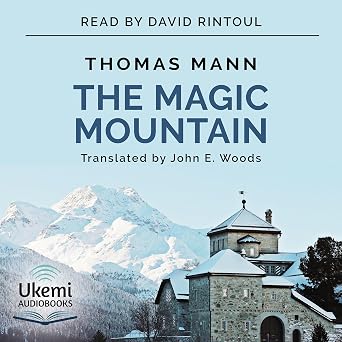
David Rintoul's nuanced narration captures the philosophical depth and irony of Mann's prose, while Woods' translation is widely regarded as the most faithful and elegant English version.
Listen on Audible →Which translation is right for you?
- Choose Bernofsky if you want the most readable modern translation for a first reading or contemporary English style.
- Choose Woods if you prefer the version most discussed in academic contexts and strong in philosophical dialogue.
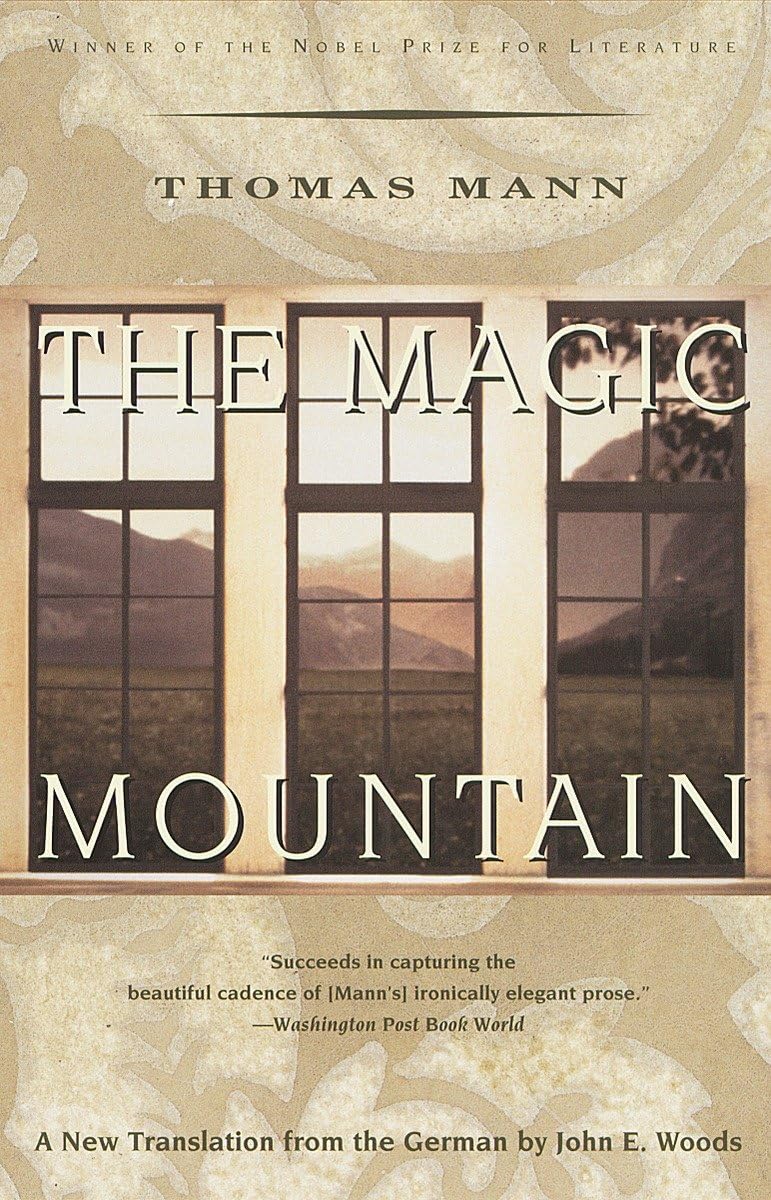
#2 — The Magic Mountain — trans. John E. Woods (1995)
- Readability: Strong but more formal than Bernofsky.
- Accuracy: Excellent, especially in syntax and dialogue.
- Tone: Formal grandeur suited to philosophical debate.
- Accessibility: Best for readers already familiar with Mann.
About the Translators
Susan Bernofsky (2024, W. W. Norton): Professor of Writing at Columbia University; the most celebrated living translator of German literature into English; her translations include Kafka's The Metamorphosis and The Trial, Robert Walser's novels, Jenny Erpenbeck's Go, Went, Gone, and Hermann Hesse's Siddhartha. She has spoken at length about the challenge The Magic Mountain presents — its long sentences, philosophical density, tonal variability, and famous irony — and her 2024 Norton translation, published in the novel's centennial year, is the most significant event in the English reception of Mann since Woods's 1995 version.
John E. Woods (1937–2020, 1995, Vintage International): American translator and the foremost English-language translator of Thomas Mann; his other translations include Buddenbrooks, Death in Venice, Doctor Faustus, The Holy Sinner, and Confessions of Felix Krull. He also translated the works of Arno Schmidt, Johann Wolfgang von Goethe, and Patrick Süskind (Perfume). His 1995 Magic Mountain replaced the 1927 Lowe-Porter version that had been the only English text for nearly seventy years and became the standard for a generation of readers and scholars.
Themes
Time and its enchantment. The sanatorium operates outside ordinary time: a week on the Berghof feels different from a week in Hamburg; months pass in what feel like days; Hans Castorp loses track of the years. Mann's sustained meditation on the subjective experience of time — drawn in part from his own visit to a sanatorium in Davos to see his wife — is one of the novel's most distinctive achievements, and it mirrors the reader's own experience: the book takes longer to read than its length suggests, and its sense of elapsed time is unlike any other novel.
Europe's intellectual traditions in crisis. The long philosophical debates between Settembrini and Naphta — the Italian humanist and liberal versus the Jesuit mystic and reactionary — are the novel's most demanding sequences and its most ambitious: Mann is dramatising the conflict between Enlightenment rationalism and anti-rationalist reaction that he saw as the defining intellectual tension of early twentieth-century Europe. Naphta, the more persuasive debater, represents a position Mann found genuinely dangerous. Hans Castorp sits between them, listening, never entirely convinced by either.
Illness as a form of knowledge. The Berghof is a world of the sick and dying in which illness — tuberculosis, specifically — is presented not simply as misfortune but as a condition that enables a particular clarity of perception. The healthy characters who pass through the sanatorium world are blind to what its residents understand. Mann inherited this idea partly from Nietzsche and partly from Romantic tradition, but he develops it with full critical awareness of its dangers: the novel's ending, which sends Hans Castorp from the enchanted mountain into the mud of the First World War, is an implicit judgment on the seductions of the sanatorium life.
Key Characters
Hans Castorp — the protagonist; a young Hamburg engineer who comes to visit his cousin for three weeks and stays for seven years. He is ordinary in most respects — curious, good-natured, conventionally educated — and it is precisely his ordinariness that makes the novel's transformations so interesting to trace. Mann described him as a "simple young man" placed in a world where everything significant happens.
Lodovico Settembrini — Italian humanist, liberal, Freemason, and man of letters; one of the two principal debaters; he represents the tradition of Enlightenment reason, progress, and democracy. He is warm and rhetorically gifted and entirely unable to defeat Naphta in argument, which is part of the novel's point.
Leo Naphta — Settembrini's adversary; a Jewish convert to Jesuit mysticism who combines medieval scholasticism with anti-liberal politics and a theory of redemptive violence; he represents the anti-rationalist reaction that Mann saw threatening European civilisation. He is the novel's most formidable intellectual presence and its darkest figure.
Claudia Chauchat — the Russianised beauty whose door-slamming and casual disregard for Berghof convention captivates Hans Castorp and whom he loves, without apparent hope, across most of the novel's duration.
Joachim Ziemssen — Hans Castorp's cousin; the man he came to visit; a soldier who wants only to leave the sanatorium and return to his regiment, and whose repeated attempts to do so, and their consequences, give the novel some of its most affecting passages.
Recommended Sources
For further academic reading on Thomas Mann and The Magic Mountain:
- Thomas Mann Jahrbuch (Klostermann) — the primary annual publication for Mann scholarship; essential for textual history, source studies, and reception.
- German Life and Letters (Wiley-Blackwell) — the leading British journal for German literature; key for The Magic Mountain in its Weimar cultural context.
- Monatshefte (University of Wisconsin) — the leading American journal for German literary studies; primary venue for English-language Mann scholarship.
Which translation is right for you?
Choose Bernofsky (Norton, 2024) for a first reading or for anyone approaching the novel now — her translation is the most idiomatic and readable modern English version, maintaining the philosophical density and irony while bringing a lightness and forward momentum that serves readers new to Mann. Choose Woods (Vintage, 1995) if you want the version most extensively discussed in academic and critical contexts — his translation is particularly strong in the extended philosophical dialogues between Naphta and Settembrini, where the argument's formal grandeur is most fully rendered, and thirty years of scholarship refers to his text.
Frequently Asked Questions
What is The Magic Mountain about?
The Magic Mountain follows Hans Castorp, a young engineer, who visits a Swiss sanatorium and becomes immersed in its intellectual debates and philosophical themes, reflecting on time, illness, and European society before World War I.
Is The Magic Mountain hard to read?
The Magic Mountain can be challenging due to its philosophical depth and length. Bernofsky's translation offers greater readability, while Woods provides a more formal style, both capturing Mann's complex narrative.
Which The Magic Mountain translation is best?
Susan Bernofsky's 2024 Norton translation is the best choice for most readers, offering superior readability while preserving Mann's philosophical density and irony.
Bernofsky vs Woods — which should I choose?
Choose Bernofsky for a first reading or modern idiomatic English. Choose Woods if you want the version most discussed in academic contexts, especially for its rendering of the philosophical dialogues.
Which translation is easiest to read?
Bernofsky's translation is the most readable, with greater idiomatic flow and forward momentum while retaining the novel's intellectual weight.
Which translation is most accurate?
Both are highly accurate; Woods excels at formal grandeur in philosophical passages, while Bernofsky balances precision with natural modern English.
Should I read the older Lowe-Porter translation of The Magic Mountain?
No — Lowe-Porter's 1927 version is long out of print and has been superseded by both Woods and Bernofsky for accuracy and readability.
This guide is based on reading the 2 translations and reviewing scholarly commentary. Last reviewed: June 2026.
As an Amazon Associate, I earn from qualifying purchases.
Looking for another classic? Browse all our translation guides →
Thomas Mann's earlier masterpiece is covered in our Buddenbrooks translation guide.
For more Mann in English, see our comparison of the best Death in Venice translations.
Another landmark of German modernism: our guide to the best Tin Drum translation.
If you're exploring great German novels, don't miss our Faust translation guide.