The Girl with the Dragon Tattoo: What It's About & Best Translation
Stieg Larsson's Nordic noir — a murdered heiress, a disgraced journalist, and a hacker unlike any other
As an Amazon Associate, we earn from qualifying purchases.
The Girl with the Dragon Tattoo follows journalist Mikael Blomkvist and hacker Lisbeth Salander as they investigate the decades-old disappearance of Harriet Vanger, uncovering dark family secrets and corruption.
Translation Comparison at a Glance
| Translation | Readability | Accuracy | Tone | Best For |
|---|---|---|---|---|
| Keeland (2008) | High | Excellent | Functional, journalistic | All readers; the standard edition |
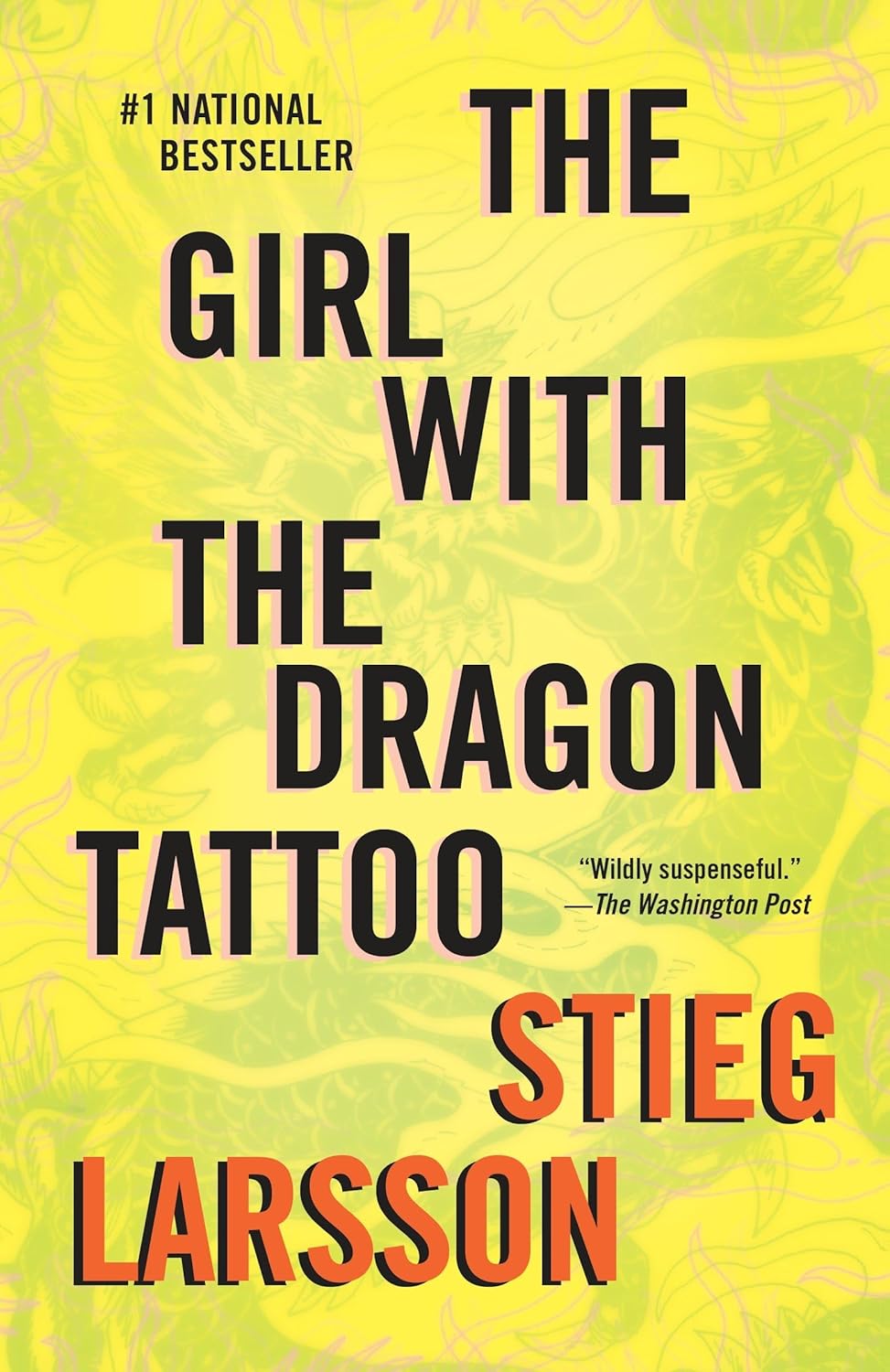
#1 — The Girl with the Dragon Tattoo — trans. Reg Keeland (2008)
- Readability: Workmanlike and functional, preserving forward momentum through procedural passages.
- Accuracy: Faithful to Larsson's direct, journalistic Swedish original.
- Tone: Neutral and reportorial rather than literary.
- Accessibility: Suitable for all readers; the standard English edition.

Simon Vance's nuanced narration captures the dark, suspenseful tone of the novel, while Keeland's translation preserves the original Swedish essence.
Listen on Audible →Which translation is right for you?
- Choose Keeland if you want the definitive English edition of the Millennium trilogy.
About the Translator
Reg Keeland (pen name of Steven T. Murray, 2008, Vintage Books): Murray is an American translator of Scandinavian languages and former editor-in-chief of Fjord Press, a Seattle publisher specialising in Nordic fiction, where he worked with authors including Kerstin Ekman, Per Wahloo, and Maj Sjöwall. His decision to use the Reg Keeland pseudonym for the Millennium trilogy was reportedly made at the request of the publisher, who wanted a more neutral, European-sounding translator credit for international markets. The result is one of literary translation's quieter ironies: the most commercially successful Scandinavian translation project in history is credited to a name that doesn't exist. Murray's translation of all three Millennium novels — The Girl with the Dragon Tattoo, The Girl Who Played with Fire, and The Girl Who Kicked the Hornets' Nest — is consistent in quality across the trilogy.
Themes
Men who hate women. The novel's Swedish title — which is also its actual subject — is more honest than the English retitling. Larsson, who spent his career at an anti-fascist magazine investigating extremist violence, was writing out of genuine anger at the systematic nature of violence against women in Swedish society. The Vanger family's secrets, when revealed, are a catalogue of that violence across generations.
Investigative journalism as moral action. Blomkvist's function in the novel is not primarily as detective but as journalist — someone who compiles evidence, follows paper trails, and publishes. The novel is in many ways a tribute to the power of investigative reporting, written by a man whose career was built on it.
Trauma, survival, and autonomy. Lisbeth Salander is the novel's moral and psychological centre. Her history of state violence, institutional incompetence, and personal betrayal shapes everything she does, and the novel takes her responses — including revenge — seriously rather than pathologising them. She is not a victim who needs to be saved but a person who has learned to be devastatingly effective in conditions that would have destroyed most people.
Key Characters
Lisbeth Salander — state ward, computer genius, and the novel's most powerful figure; legally declared incompetent, practically impossible to stop; her silence, her intelligence, and her capacity for violence are all earned rather than given.
Mikael Blomkvist — financial journalist for the magazine Millennium; facing a prison sentence for libel when the novel opens; whose investigation of the Vanger family mystery is the nominal plot, though Salander is its actual driver.
Harriet Vanger — the young woman who disappeared from a family gathering on Hedeby island in 1966; the mystery that has consumed her great-uncle for forty years; her fate, when revealed, recontextualises the entire novel.
Henrik Vanger — the elderly industrial patriarch who hires Blomkvist; one of the few admirable members of a family that is otherwise a catalogue of corruption and cruelty; his devotion to finding the truth about Harriet is the novel's moral engine.
Recommended Sources
For further reading on Larsson and the Millennium trilogy:
- Barry Forshaw, The Man Who Left Too Soon: The Biography of Stieg Larsson (2010) — the most accessible English-language account of Larsson's life, journalism career, and the posthumous fate of the trilogy.
- Scandinavian Studies (University of Wisconsin) — the primary English-language journal for Scandinavian literature and culture; the relevant venue for serious academic treatment of Nordic crime fiction.
- Andrew Nestingen's Crime and Fantasy in Scandinavia (2008) — scholarly context for the Millennium trilogy within the Nordic crime fiction tradition.
The Keeland/Murray translation is the only English version of the Millennium trilogy and will remain so. It is workmanlike in the best sense — it handles the novel's procedural density without losing its momentum, and Salander loses nothing in the crossing. The Vintage trade paperback is the standard English edition.
Frequently Asked Questions
What is The Girl with the Dragon Tattoo about?
The Girl with the Dragon Tattoo follows journalist Mikael Blomkvist and hacker Lisbeth Salander as they investigate the decades-old disappearance of Harriet Vanger, uncovering dark family secrets and corruption.
Is The Girl with the Dragon Tattoo hard to read?
The novel's complexity lies in its intricate plot and detailed exposition. Reg Keeland's translation maintains the original's direct prose, making it accessible despite the procedural density.
Which Girl with the Dragon Tattoo translation is best?
Reg Keeland's translation is the only English edition and the definitive choice for all readers.
Reg Keeland vs other translators — which should I choose?
There are no other English translations; Keeland's version is the sole option and handles the novel's procedural density and character work effectively.
Which translation is easiest to read?
Keeland's translation is workmanlike and functional, preserving Larsson's direct, journalistic prose without unnecessary ornament.
Which translation is most accurate?
As the only English translation, Keeland's rendering is the standard and faithfully conveys the original's momentum and character integrity.
Will there ever be another English translation of the Millennium trilogy?
The Keeland/Murray translation is the only English version and will remain so.
This guide is based on reading the translation and reviewing scholarly commentary. Last reviewed: June 2026.
As an Amazon Associate, I earn from qualifying purchases.
Looking for another classic? Browse all our translation guides →
For another major Nordic novel in English, see our guide to the best Kristin Lavransdatter translation.
Readers who enjoy modern European fiction may also like our My Brilliant Friend translation guide.
Another single English translation worth exploring is our guide to Love in the Time of Cholera.
If you're interested in other contemporary literary hits, check out our Norwegian Wood translation guide.