Kristin Lavransdatter: What It's About & Best Translation
Undset's medieval Norwegian trilogy — Nunnally's modern Penguin versus the classic Archer/Scott
As an Amazon Associate, we earn from qualifying purchases.
Kristin Lavransdatter is a historical trilogy set in medieval Norway, following the life of Kristin, a strong-willed woman, as she navigates love, marriage, and faith. The novels explore her personal struggles and the societal norms of the time.
Translation Comparison at a Glance
| Translation | Readability | Accuracy | Tone | Best For |
|---|---|---|---|---|
| Nunnally (1997–2000) | High | Excellent | Natural, intimate, faithful to Undset | First reading, complete edition |
| Archer/Scott (1923) | Moderate | Good | Elevated, slightly archaic, Victorian | Historic interest, existing fans |
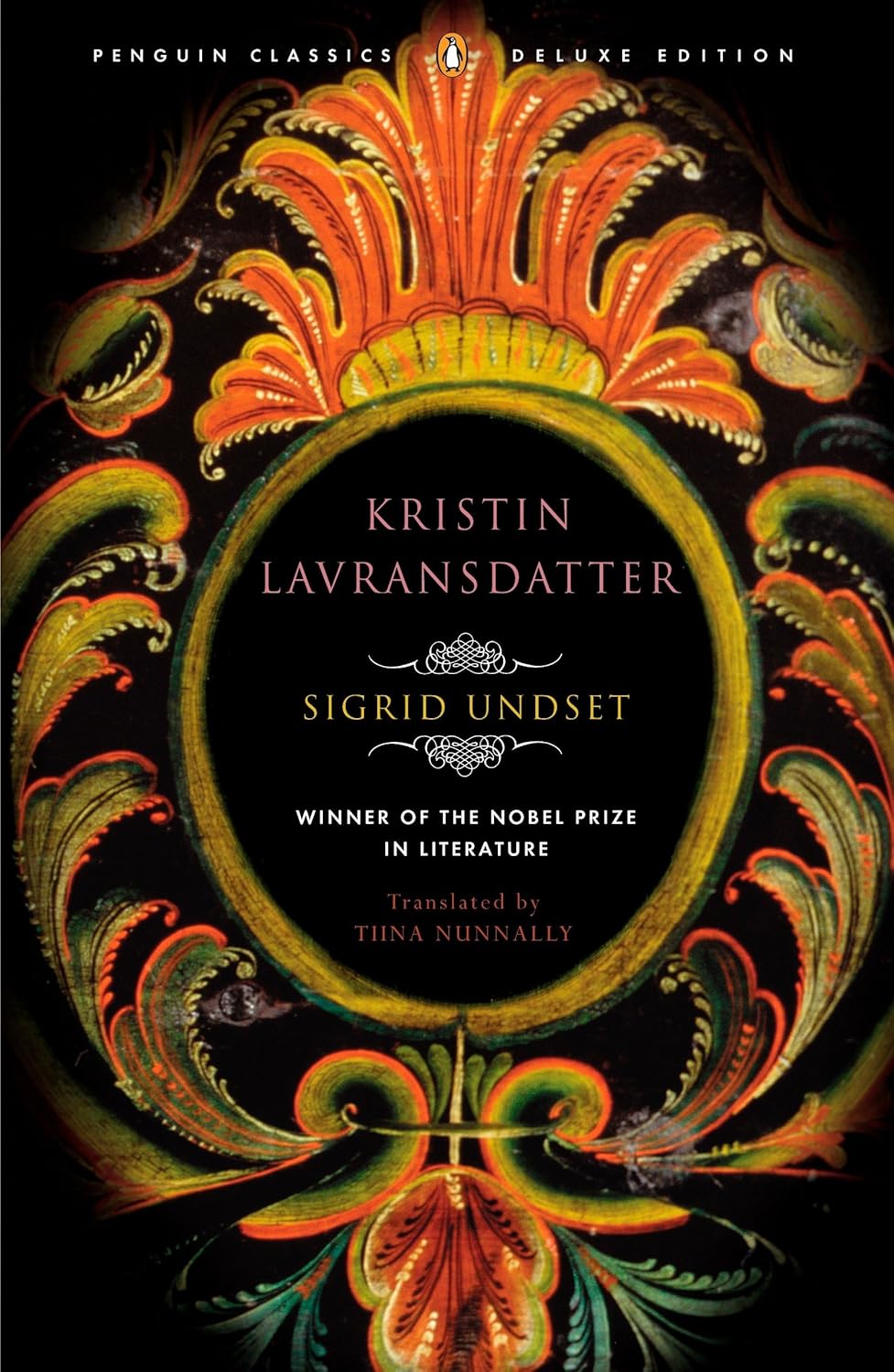
#1 — Kristin Lavransdatter — trans. Tiina Nunnally (1997–2000)
- Readability: Natural modern prose with intimate rhythms that feel alive and immediate.
- Accuracy: Translated directly from Norwegian; restores original texture, vocabulary, and psychological precision.
- Tone: Formal yet intimate, faithful to Undset's register without Victorian smoothing.
- Accessibility: Single-volume complete edition ideal for first-time readers.
Which translation is right for you?
- Choose Nunnally if you want the most accurate, natural, and complete modern reading experience in a single practical volume.
- Choose Archer/Scott if you are interested in the historic 1920s version that first introduced the novel to English readers and prefer its elevated, slightly archaic tone.
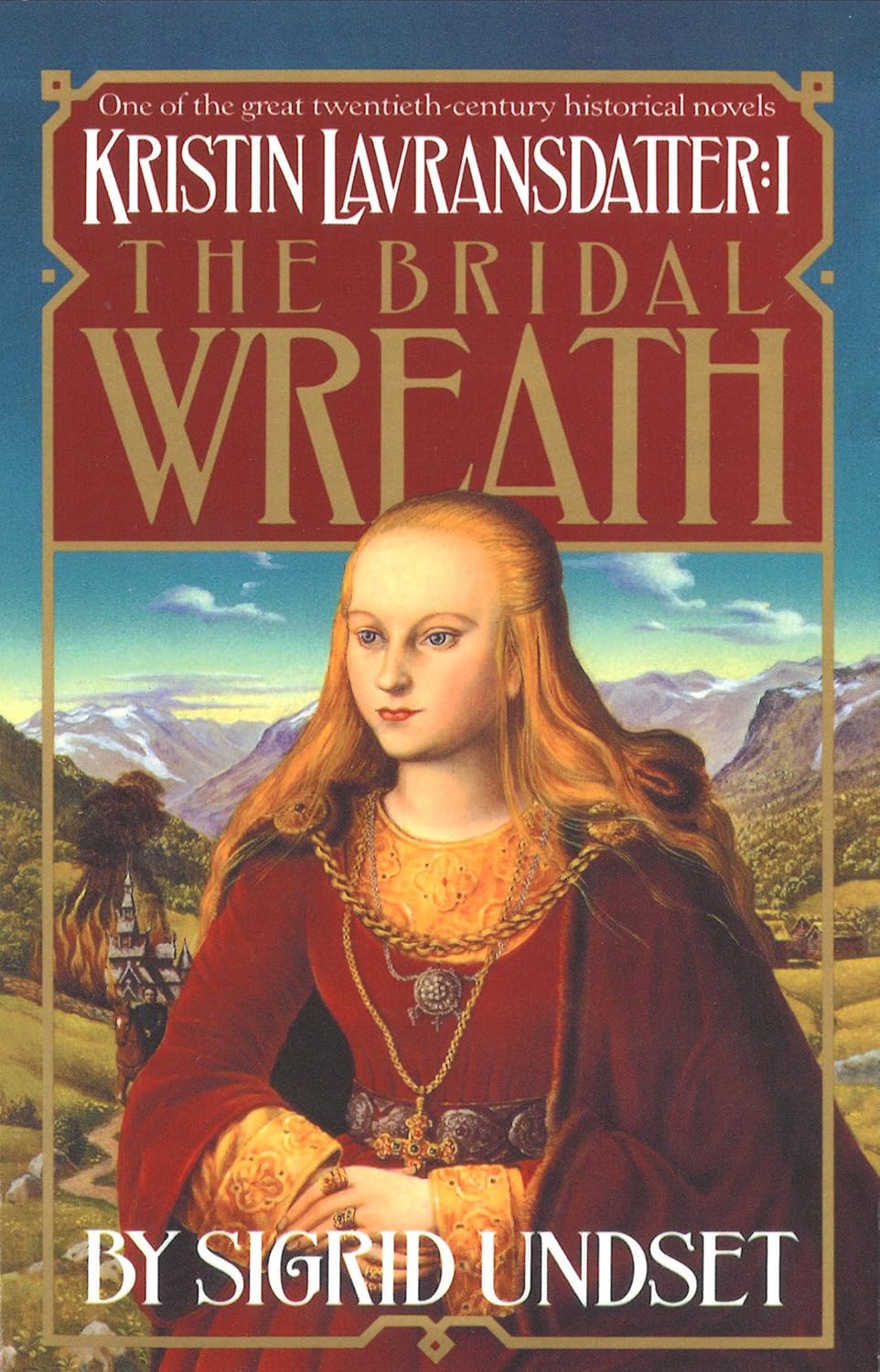
#2 — The Bridal Wreath (Vol. 1) — trans. Charles Archer and J.S. Scott (1923)
- Readability: Elevated literary style that can feel slightly archaic to modern readers.
- Accuracy: Generally good but alters meaning in places and softens explicit content.
- Tone: Generic literary elevation with Victorian rhythms rather than Undset's direct voice.
- Accessibility: Historic version best for readers already familiar with it.
About the Translators
Tiina Nunnally (1997–2000, Penguin Classics): American translator; winner of the PEN Translation Prize for her Kristin Lavransdatter; her other translations include Hans Christian Andersen's fairy tales, Sigrid Undset's earlier novels, and Scandinavian crime fiction. She translated all three volumes directly from Undset's Norwegian with the aim of restoring rhythms and registers that the earlier Archer/Scott version had altered — particularly in its handling of the sexuality, the medieval social conditions, and the specifically Norwegian texture of the original.
Charles Archer (1863–1930) and J. S. Scott (1923, Knopf/Vintage): Archer was a Scottish author and translator principally known for his translation of Ibsen's prose works into English; J. S. Scott assisted with volumes two and three. Their translation, published as each Norwegian volume appeared in the early 1920s, introduced the novel to anglophone readers and created its initial reputation, but has since been shown to soften Undset's explicitness and impose a rhetorical elevation that owes more to Victorian prose than to Undset's actual style.
Themes
Faith and self-will in lifelong conflict. The novel's central tension — between Kristin's passionate self-will and the Christian framework that structures her entire consciousness — runs through all three volumes without resolution until her death. Kristin sins, repents, sins again, and repents again; the repentance is always genuine and the self-will always reasserts itself. Undset does not present this as weakness or hypocrisy but as the fundamental condition of a particular kind of person: someone for whom both the passion and the faith are real, and whose life is the sustained conflict between them.
Medieval Norway and the reality of the Church. The Christianity in this novel is not a cultural backdrop; it is a living, demanding, terrifying framework that structures every major decision and every significant relationship in the novel. The Church's role in medieval Norwegian society — its authority over marriage, death, property, and social honour — is rendered with anthropological precision. Undset, who converted to Catholicism in 1924 while finishing the trilogy, wrote the religious dimensions of the novel from inside a theological perspective that makes Kristin's struggle with sin and grace feel intellectually serious in a way that most historical fiction cannot manage.
Motherhood as the novel's sustained subject. The three volumes move from Kristin's girlhood and love affair (The Wreath) through her marriage and the raising of her seven sons (The Wife) to old age and the plague (The Cross). The middle volume, in particular, is one of the most sustained accounts of the experience of motherhood in all of prose fiction: the physical and emotional labour, the anxiety, the love, the terror of loss. Undset writes about children and their mothers with a precision that is unusual in the literary tradition.
Key Characters
Kristin Lavransdatter — the protagonist; a Norwegian woman of the fourteenth century whose life spans the three volumes; strong-willed, passionate, proud, and genuinely devout — qualities that are in her case inseparable and mutually destructive. She is one of the great female protagonists in world literature.
Erlend Nikulaussøn — the man Kristin loves and marries; an impetuous, reckless, charming Norwegian knight whose defiance of social convention initially attracts Kristin and whose inability to manage his affairs eventually destroys what they have built. His death in the third volume is the novel's emotional climax.
Lavrans Bjørgulfsøn — Kristin's father; the novel's moral standard; a man of exceptional integrity, Christian piety, and genuine love for his daughter — whose love he expresses partly by refusing to accept Erlend until he has to. His death at the end of the second volume is the loss from which Kristin never entirely recovers.
Brother Edvin — the Franciscan friar who befriends Kristin in her youth and whose charitable, humane Christianity represents the best of the medieval Church as Undset conceived it — contrasted throughout with the more institutional and political dimensions of clerical authority.
Recommended Sources
For further academic reading on Undset and Kristin Lavransdatter:
- Scandinavian Studies (Society for the Advancement of Scandinavian Study) — the primary English-language journal for Scandinavian literature; essential for Undset scholarship and the novel's place in Norwegian literary history.
- Scandinavica (University of East Anglia) — the leading British journal for Scandinavian literature and culture; key for comparative readings of Undset alongside other Scandinavian modernists.
- Religion and Literature (Notre Dame) — the primary venue for academic work on literature and Christian faith; Undset's Catholic theological vision is a major subject here.
Which translation is right for you?
Choose Nunnally (Penguin Classics Deluxe) for any reading — her translation is both more accurate and more alive as English prose than the Archer/Scott, and the single-volume complete edition is the most practical way to read the novel. The Archer/Scott (Vintage) is the historic version through which the novel built its initial anglophone reputation; it has its advocates among readers who grew up with it, but for new readers Nunnally is the clear choice.
Frequently Asked Questions
What is Kristin Lavransdatter about?
Kristin Lavransdatter is a historical trilogy set in medieval Norway, following the life of Kristin, a strong-willed woman, as she navigates love, marriage, and faith. The novels explore her personal struggles and the societal norms of the time.
Is Kristin Lavransdatter hard to read?
The Nunnally translation is more accessible for modern readers, with natural prose and restored medieval elements, while the Archer/Scott version may feel archaic and is less faithful to the original text.
Which Kristin Lavransdatter translation is best?
Tiina Nunnally's complete Penguin Classics translation is the clear choice for any first reading: it is both more accurate and more alive as English prose than the earlier Archer/Scott version.
Nunnally vs Archer/Scott — which should I choose?
Choose Nunnally for accuracy, natural modern prose, and restored medieval texture. The Archer/Scott version remains readable for those who prefer its historic elevated style, but it smooths over Undset's explicitness and imposes Victorian rhythms.
Which translation is easiest to read?
Nunnally's version is the most readable for contemporary audiences, with natural rhythms and direct language that better captures Undset's original register.
Which translation is most accurate?
Nunnally's translation is the most accurate; scholars and reviewers consistently note that Archer/Scott altered meaning, toned down sexuality, and softened medieval harshness.
Is the Archer/Scott translation still worth reading?
It can still be enjoyed by readers who already know it, but for new readers Nunnally is the clear recommendation because it restores the specific texture and psychological precision of Undset's Norwegian.
This guide is based on reading both translations and reviewing scholarly commentary. Last reviewed: June 2026.
As an Amazon Associate, I earn from qualifying purchases.
Looking for another classic? Browse all our translation guides →
Readers drawn to medieval epics should see our guide to the best Beowulf translation.
For another sweeping historical novel, compare the options in our War and Peace translation guide.
If you're interested in medieval storytelling, our Decameron translation guide is worth exploring.
Those who enjoy the Divine Comedy's medieval vision may also like our Divine Comedy translation guide.