The Decameron: What It's About & Best Translation
Ten survivors of the plague, ten days, one hundred stories — Boccaccio invents the novella and practically everything that follows from it
As an Amazon Associate, we earn from qualifying purchases.
The Decameron is a collection of 100 tales told by ten young people who have fled to the countryside to escape the Black Death in Florence. The stories range from the tragic to the comedic, exploring themes of love, intelligence, and fortune.
Translation Comparison at a Glance
| Translation | Readability | Accuracy | Tone | Best For |
|---|---|---|---|---|
| Rebhorn (2013) | High | Very good | Fluent and modern | First-time readers |
| McWilliam (1972/1995) | Moderate | Excellent | Formal, scholarly | Academic study |
| Waldman (1993) | High | Good | Clear, restrained | Balanced single volume |
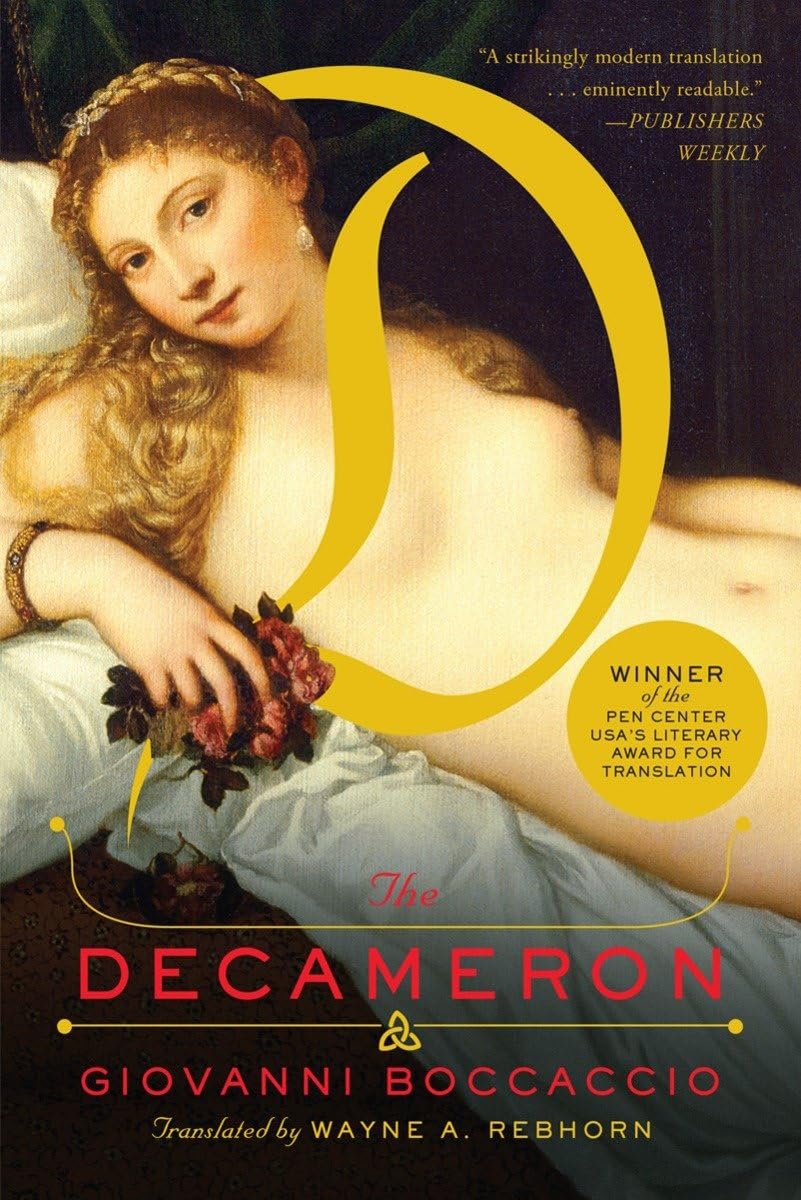
#1 — The Decameron — trans. Wayne A. Rebhorn (2013)
- Readability: Fluent and modern without sacrificing formal quality.
- Accuracy: Strong fidelity with excellent comic timing.
- Tone: Balanced across comic, tragic, and elevated registers.
- Accessibility: Ideal starting point for first-time readers.

Simon Vance's masterful narration captures the wit and vibrancy of Boccaccio's tales, while Rebhorn's modern translation preserves the original's richness and humor.
Listen on Audible →Which translation is right for you?
- Choose Rebhorn if you want the most fluent modern prose with excellent comic timing and the best overall balance for a first reading.
- Choose McWilliam if you want the most scholarly apparatus and a closer adherence to Boccaccio's formal Latinate style.
- Choose Waldman if you want a clear, readable middle ground that is particularly strong on the tragic tales.
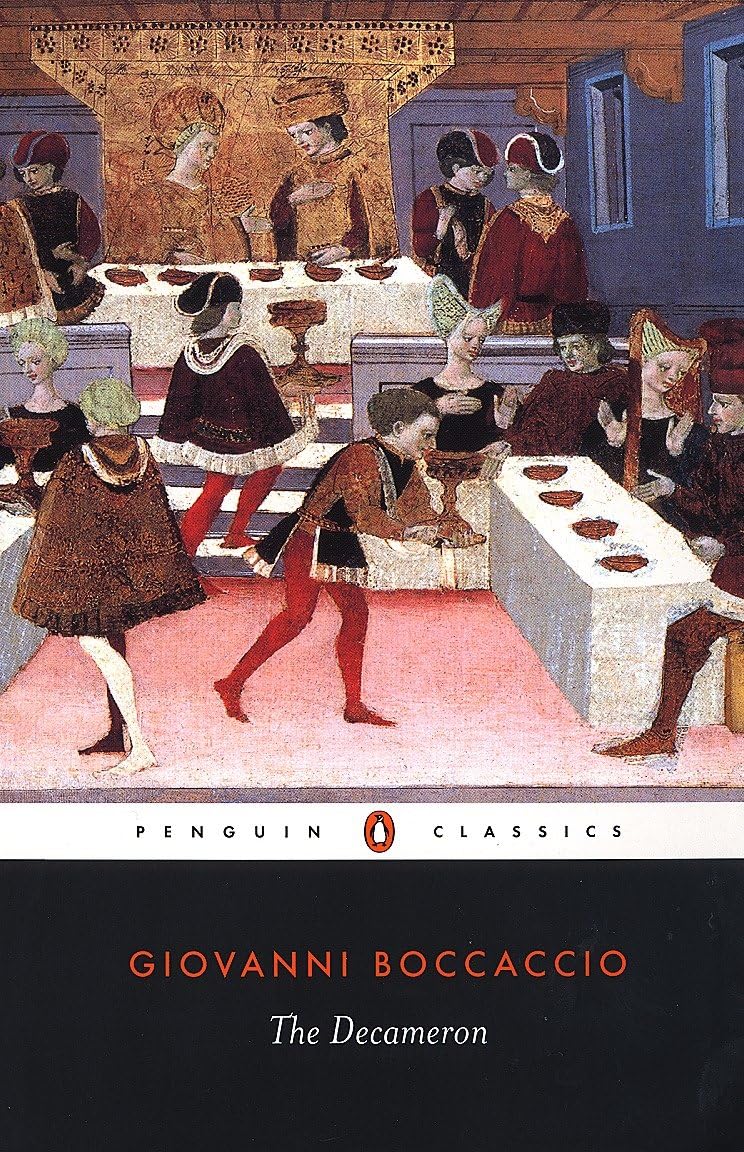
#2 — The Decameron — trans. G. H. McWilliam (1972; rev. 1995)
- Readability: More formal and somewhat stiffer than Rebhorn.
- Accuracy: Closest to the Latinate architecture of the original.
- Tone: Deliberate and scholarly.
- Accessibility: Best when paired with its extensive notes.
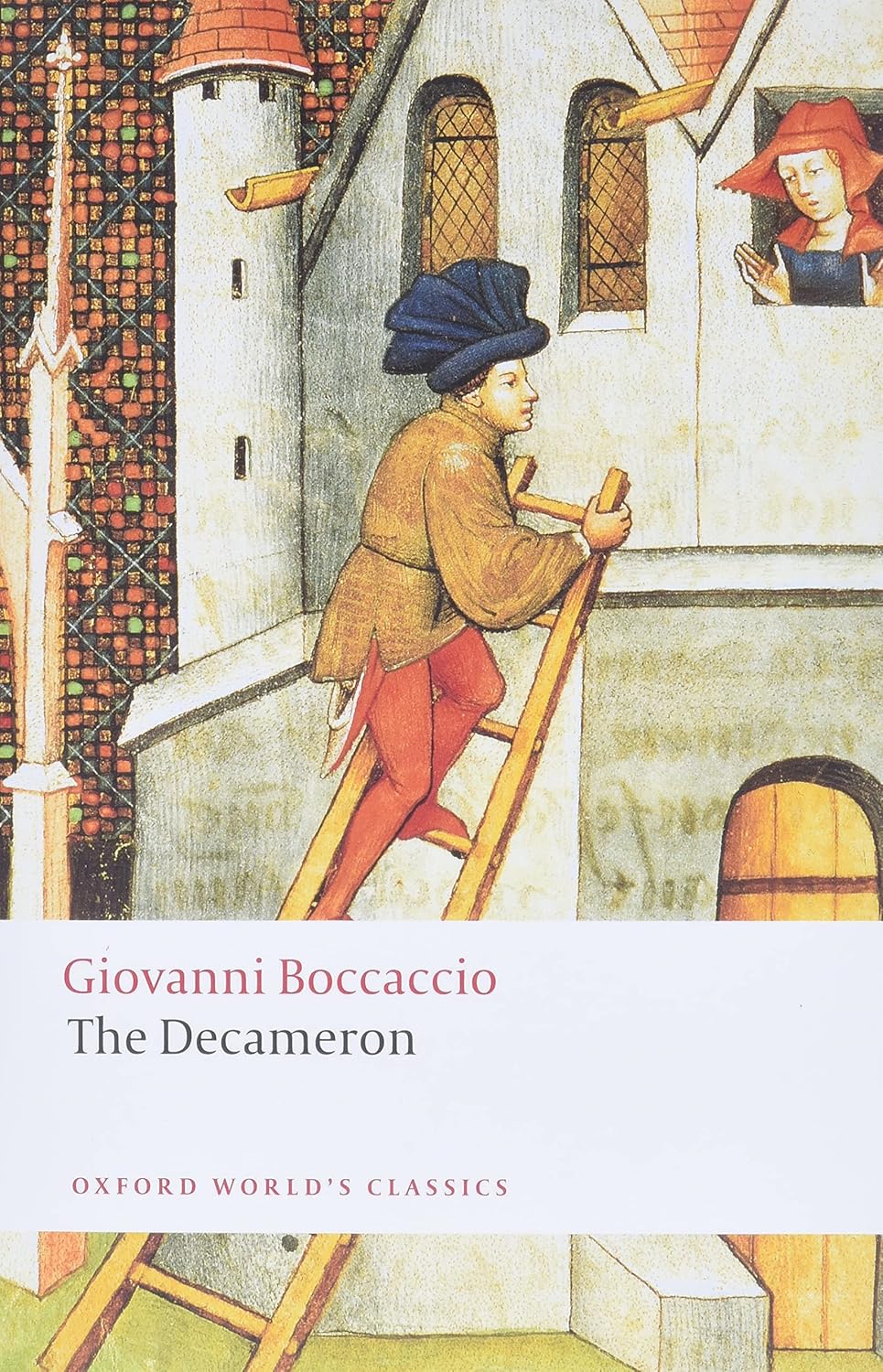
#3 — The Decameron — trans. Guido Waldman (1993)
- Readability: Clear and idiomatic, pitched between the other two.
- Accuracy: Reliable with good handling of tragic material.
- Tone: Restrained comic register, strong on tragedy.
- Accessibility: Compact single volume with solid scholarly framing.
About the Translators
Wayne A. Rebhorn (2013, W. W. Norton): Mildred Hajek Vacek Professor of English at the University of Texas; author of major studies of Renaissance rhetoric and Italian literature; his other translations include Castiglione's Book of the Courtier and works of Machiavelli. His Norton Decameron won the PEN Center USA Literary Award for Translation and is now the standard scholarly rendering in English.
G. H. McWilliam (1972, rev. 1995, Penguin Classics): British Italianist whose 1972 Penguin Classics translation was the default English Decameron for three decades, revised for accuracy in 1995. The Penguin edition — with its extensive notes and learned introduction — remains the most thoroughly annotated single-volume version available.
Guido Waldman (1993, Oxford World's Classics): translator of Italian and other European literature; his Oxford World's Classics edition includes an introduction by the Italian scholar Jonathan Usher, whose expertise in the textual tradition and literary sources of individual tales gives the volume a distinctive scholarly character. Waldman's rendering of the tragic tales is considered particularly strong.
Themes
The plague as frame and liberation. The Black Death that devastated Florence in 1348 is both the historical occasion for the Decameron and its structural premise: the brigata of seven women and three young men flee the city to escape the plague, and their storytelling is a form of resistance to mortality and social collapse. The plague frees Boccaccio's characters from the normal constraints of Florentine life — from the Church, from patriarchal authority, from economic hierarchy — and the stories they tell explore what human beings do when those constraints are suspended.
Fortune and human ingenuity. Many of the Decameron's tales turn on the relationship between Fortune (the arbitrary power of circumstance) and Ingenuity (the human capacity to improvise, deceive, and adapt). Some characters submit to Fortune and are ruined; others use their wits to turn adversity to advantage. Boccaccio's comic tales are in large part celebrations of the latter: the clever servant who outsmarts the master, the lover who eludes the jealous husband, the priest tricked by the woman he tried to seduce.
Sexuality, the Church, and moral hypocrisy. Boccaccio is one of the great anti-clerical writers of the medieval period — not hostile to religion but contemptuous of the gap between clerical profession and practice. The most biting comic tales involve monks, friars, abbesses, and priests who preach chastity while pursuing the opposite. The Decameron's sexual frankness, unusual for its period, is inseparable from this satirical project: desire is natural, and its suppression in the name of religion is presented as both hypocritical and comic.
Key Characters
The Brigata — the seven women and three young men who narrate the tales: Pampinea (the eldest, who proposes the retreat), Fiammetta, Filomena, Emilia, Lauretta, Neifile, and Elissa; Panfilo, Filostrato, and Dioneo. Each has a distinct personality that inflects the stories they choose to tell. Dioneo, permitted by the group to ignore the daily theme, consistently tells the most scandalous tale of each day.
Ser Ciappelletto — the first tale's protagonist; a notary of spectacularly wicked life who makes a false deathbed confession of such apparent holiness that he is venerated as a saint after death. The opening story establishes the Decameron's central comic logic: Fortune and clever deception working against justice, with the Church as both victim and unwitting accomplice.
Calandrino — a recurring comic character, a simple painter repeatedly gulled by his companions Bruno and Buffalmacco; his four tales (Days 8 and 9) represent Boccaccio's most sustained comic creation, a prototype of the enduring fool figure in Italian literary comedy.
Griselda — the protagonist of the tenth day's tenth and final tale; a peasant woman tested to extreme limits of patience by her noble husband. The tale's combination of psychological cruelty and formal beauty generated more scholarly debate than any other in the collection; Petrarch translated it into Latin and Chaucer adapted it as the Clerk's Tale.
Recommended Sources
For further academic reading on Boccaccio and the Decameron:
- Italica (American Association of Teachers of Italian) — the primary English-language journal for Italian literary studies; essential for Boccaccio scholarship and the novella tradition.
- The Decameron Web (Brown University) — the most comprehensive online resource for Decameron study, with texts, translations, sources, and scholarly apparatus; maintained by Brown's Italian Studies program.
- Studi sul Boccaccio (Società Editrice Fiorentina) — the specialist journal for Boccaccio scholarship, published in Florence; indispensable for textual and philological work on the Decameron.
Which translation is right for you?
Choose Rebhorn (Norton) for a first reading — his is the most recent, the most literarily accomplished, and the version that best sustains Boccaccio's range across comic, tragic, and elevated registers; his PEN-award-winning prose has the timing the comic tales require and the gravity the tragic ones deserve. Choose McWilliam (Penguin) for the most thorough scholarly apparatus — his Penguin Classics edition, despite its age, remains the most fully annotated single-volume English Decameron. Choose Waldman (Oxford) for a readable alternative with strong scholarly framing and particular strengths in the tragic tales.
Frequently Asked Questions
What is The Decameron about?
The Decameron is a collection of 100 tales told by ten young people who have fled to the countryside to escape the Black Death in Florence. The stories range from the tragic to the comedic, exploring themes of love, intelligence, and fortune.
Is The Decameron hard to read?
The Decameron can be challenging due to its historical context and language, but Rebhorn's translation offers a modern and accessible version, while McWilliam's provides a more scholarly approach.
Which Decameron translation is best?
Wayne Rebhorn's 2013 Norton translation is the best overall choice for most readers.
Rebhorn vs McWilliam — which should I choose?
Choose Rebhorn for fluent modern prose with excellent comic timing; choose McWilliam for the most scholarly apparatus and closer adherence to Boccaccio's Latinate style.
Which translation is easiest to read?
Rebhorn's version is the most consistently readable and modern while preserving the work's formal qualities.
Which translation is most accurate?
McWilliam stays closest to the Latinate architecture of Boccaccio's original sentences.
How does Waldman's Oxford translation compare to the others?
Waldman offers a clear middle ground that is particularly strong on the tragic tales and comes with excellent scholarly framing from Jonathan Usher.
This guide is based on reading all 3 translations and reviewing scholarly commentary. Last reviewed: June 2026.
As an Amazon Associate, I earn from qualifying purchases.
Looking for another classic? Browse all our translation guides →
Italian literature offers more treasures — see our guide to the best Divine Comedy translations.
For another landmark Italian novel, explore our Leopard translation guide comparing Colquhoun and Nisbet.
Readers of Boccaccio may also enjoy our comparison of the best Invisible Cities translations.
Another major Italian work in English is covered in our Name of the Rose translation guide.
If Renaissance fiction appeals, don't miss our Don Quixote translation guide on Grossman, Rutherford, and Raffel.