The Divine Comedy: What It's About & Best Translation
Inferno, Purgatory, and Paradise — the translation you choose shapes the poem you read
As an Amazon Associate, we earn from qualifying purchases.
The Divine Comedy is an epic poem by Dante Alighieri, describing the journey of the protagonist, Dante, through the realms of Hell, Purgatory, and Paradise. Guided by the Roman poet Virgil and later by Beatrice, Dante's journey is an allegory for the soul's path towards God.
Translation Comparison at a Glance
| Translation | Readability | Accuracy | Tone | Best For |
|---|---|---|---|---|
| Kirkpatrick (2006–2007) | High | Very good | Consistent, measured blank verse | First complete reading |
| Mandelbaum (1980–1984) | Moderate | Excellent | Dignified, precise fidelity | Study and second reading |
| Sayers & Reynolds (1949–1962) | High | Good | Energetic, dramatic terza rima | Inferno and enthusiasm |
| Singleton (1970–1975) | Low | Excellent | Literal prose gloss | Scholarly reference |
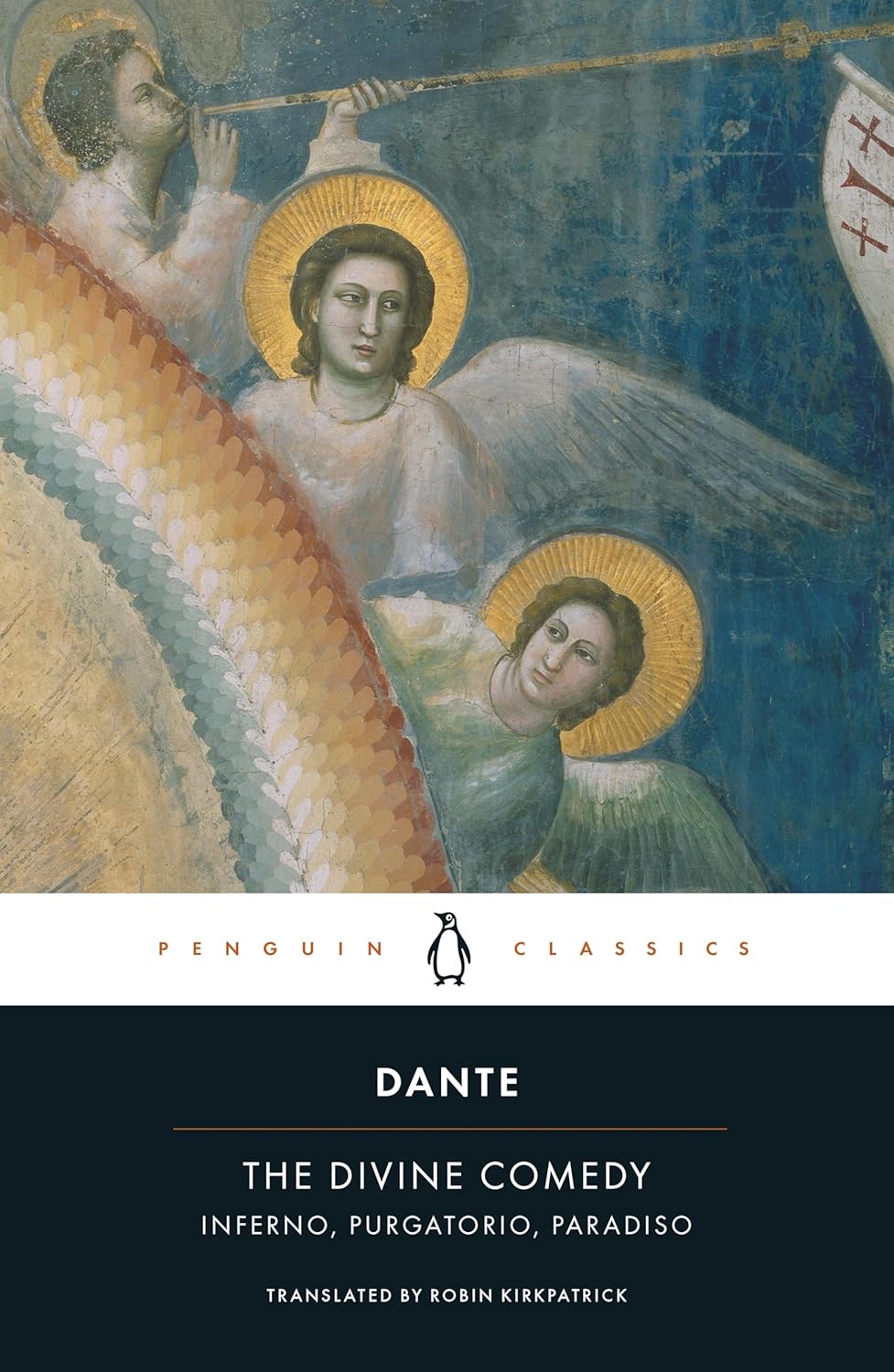
#1 — The Divine Comedy — trans. Robin Kirkpatrick (2006–2007)
- Readability: High — blank verse flows consistently across all canticles.
- Accuracy: Very good — faithful while remaining readable.
- Tone: Measured, scholarly yet poetic.
- Accessibility: Excellent for first-time readers of the full poem.

Williams' dynamic narration captures the epic scope and poetic intensity of Dante's journey, while Kirkpatrick's translation balances scholarly precision with vivid readability.
Listen on Audible →Which translation is right for you?
- Choose Kirkpatrick if you want the best modern complete-Comedy translation for a first reading.
- Choose Mandelbaum if you want the most faithful and enduring version for study or a second reading.
- Choose Sayers if you want energetic verse and exceptional introductions that convert readers into devotees.
- Choose Singleton if you need the definitive scholarly instrument with exhaustive commentary.
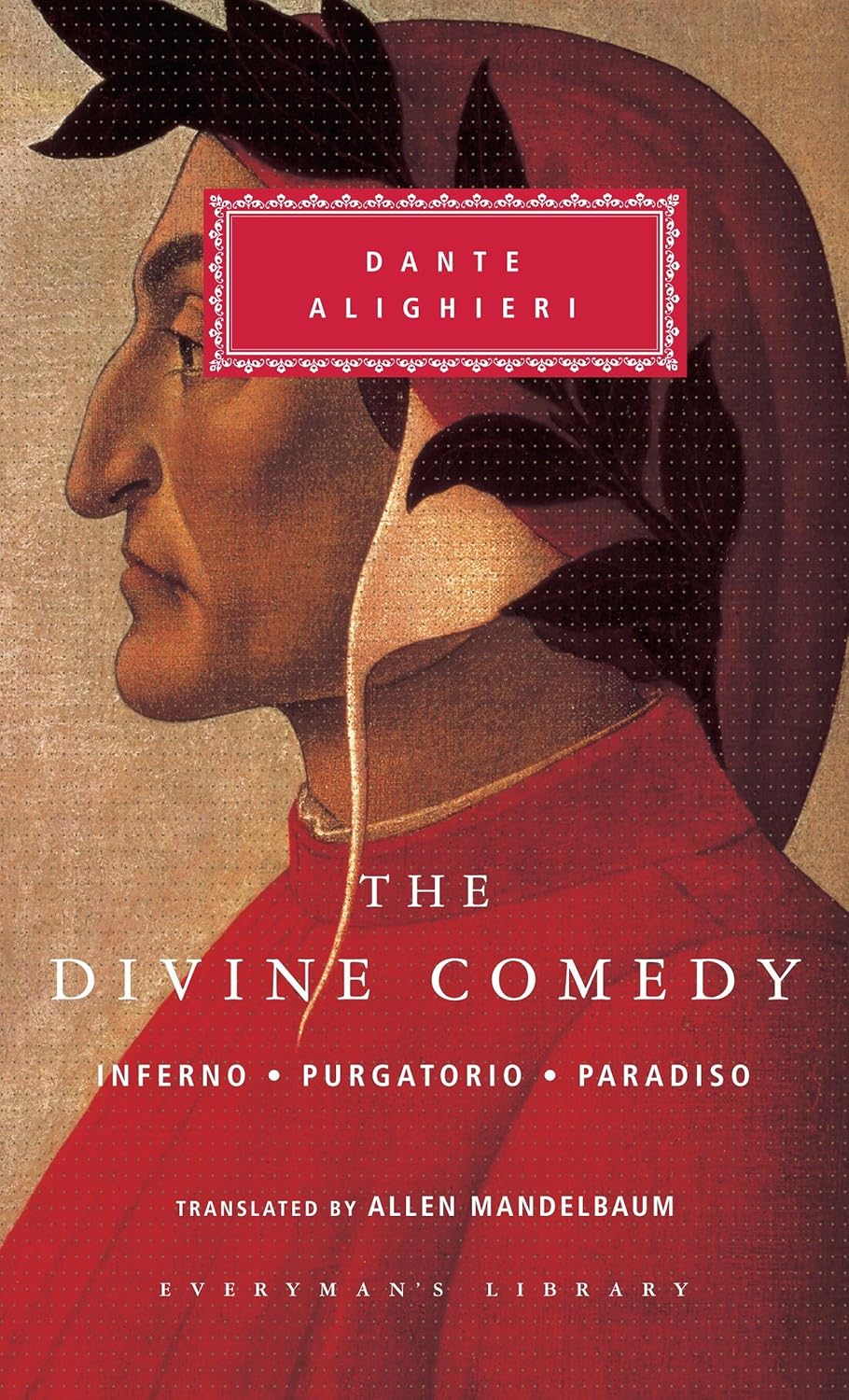
#2 — The Divine Comedy — trans. Allen Mandelbaum (1980–1984)
- Readability: Moderate — precise but demands close attention.
- Accuracy: Excellent — preserves tercet structure without rhyme.
- Tone: Dignified and measured.
- Accessibility: Best for serious study or second reading.
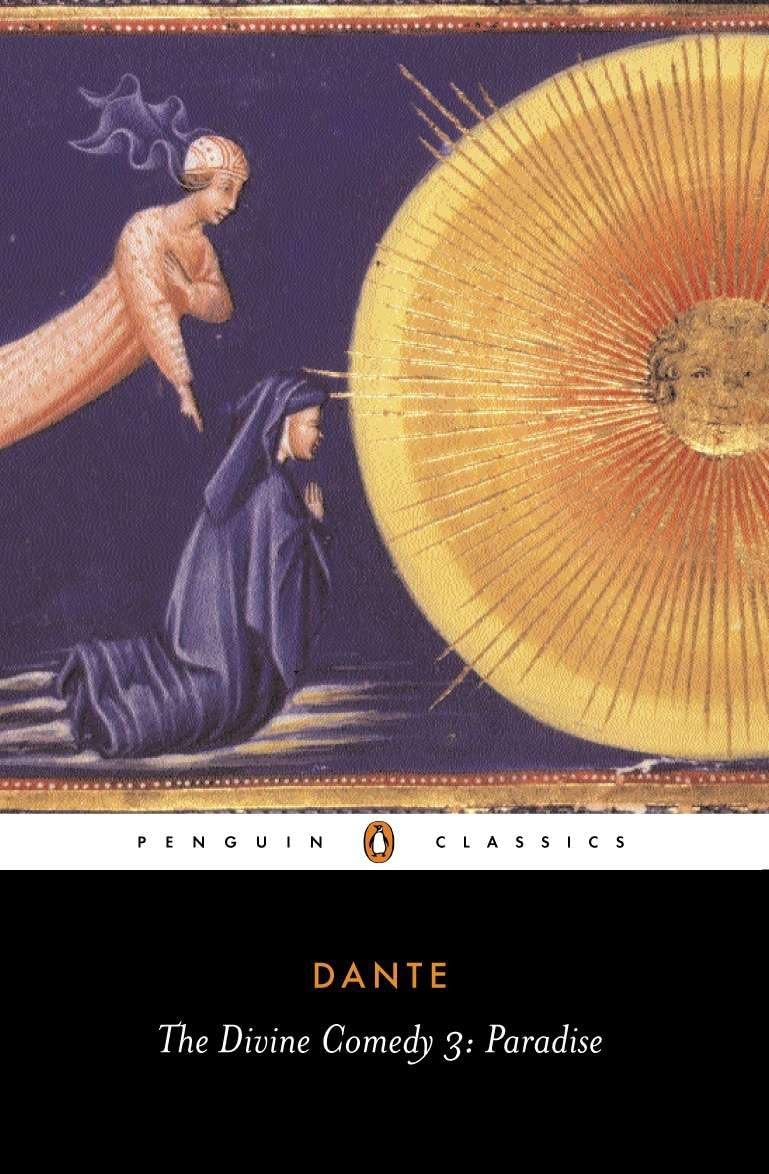
#3 — The Divine Comedy — trans. Dorothy L. Sayers & Barbara Reynolds (1949–1962)
- Readability: High — energetic and dramatic.
- Accuracy: Good — terza rima occasionally strained.
- Tone: Enthusiastic and infectious.
- Accessibility: Excellent introductions convert new readers.
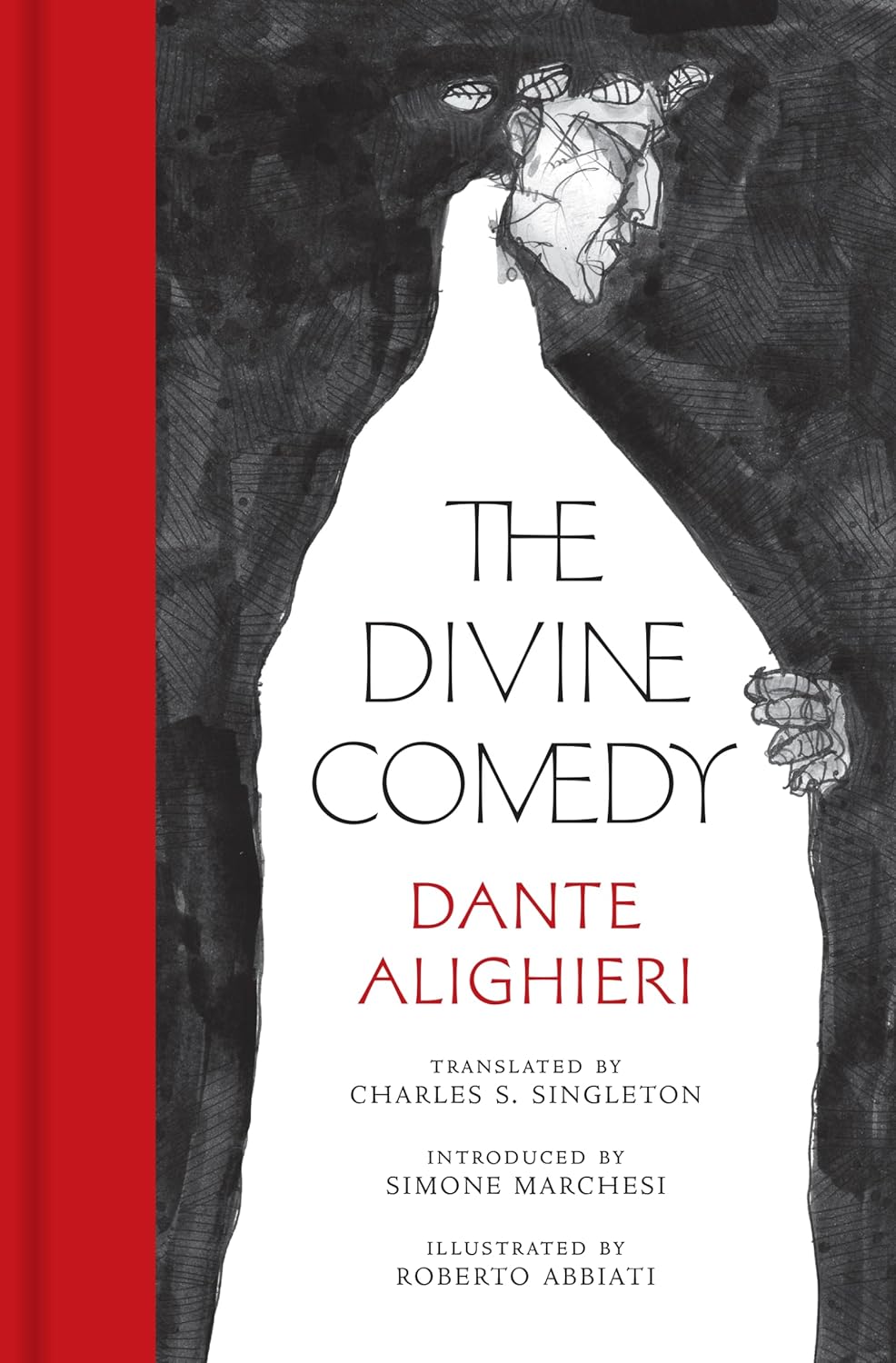
#4 — The Divine Comedy — trans. Charles S. Singleton (1970–1975)
- Readability: Low — literal prose, not for pleasure.
- Accuracy: Excellent — transparent to the Italian.
- Tone: Careful interlinear gloss.
- Accessibility: Best used alongside a literary translation.
About the Translators
Robin Kirkpatrick (b. 1943, 2006–2007, Penguin Classics): Professor of Italian and English at Cambridge; his three-volume Comedy — Inferno (2006), Purgatorio (2007), Paradiso (2007) — is the current gold standard for complete-Comedy translation. The bilingual Italian-English layout and extensive notes are especially valuable in Paradiso, where readers most need guidance through Dante's astronomical and theological machinery.
Allen Mandelbaum (1926–2011, 1980–1984, Everyman's Library): American poet and translator who also produced acclaimed translations of Virgil's Aeneid and Ovid's Metamorphoses. His three-volume Comedy, now collected in a single Everyman's Library volume illustrated with Botticelli drawings, was the American university standard for four decades.
Dorothy L. Sayers (1893–1957) & Barbara Reynolds (1914–2015, Penguin Classics): Sayers — better known as the creator of Lord Peter Wimsey — turned to Dante in the 1940s and completed Inferno (1949) and Purgatorio (1955) before her death in 1957. Reynolds, a Cambridge Italian scholar and Sayers's biographer, completed Paradiso (1962). Both volumes remain in print as Penguin Classics.
Charles S. Singleton (1909–1985, 1970–1975, Princeton University Press): Dante scholar at Johns Hopkins and Princeton; his six-volume Princeton edition pairs literal prose translations with three matching volumes of line-by-line commentary — the most comprehensive scholarly apparatus for the Comedy in any language.
Themes
The contrapasso as moral argument. Dante's Inferno is organized by the principle of the contrapasso — counter-suffering — in which each sinner's punishment mirrors and completes the logic of their sin. The lustful are swept by winds they once allowed to carry them; the fraudulent are buried in ice because they froze the bonds of trust; the simonists are plunged head-first into stone, feet afire, because they inverted the relationship between sacred and commercial. This is not cruelty but philosophy: Dante argues that the nature of a sin is already the nature of its punishment, that what people become by choosing evil is itself a kind of suffering. The poem's theology is also its aesthetic principle.
The journey as political argument. Dante was exiled from Florence in 1302, condemned by the government he had served, and the Comedy is partly a response to that exile. The souls in Hell include popes (Boniface VIII is reserved a place there while still alive), emperors, and political figures from Dante's own Florence. Purgatorio is full of his contemporaries. The poem is not only theological but political — an argument about justice, corruption, and the failure of both Church and Empire to govern the world as they should. This dimension disappears in translations that treat the poem purely as allegory.
Paradiso as the poem's true destination. Most readers stop at the Inferno, which means they miss the Comedy's real argument. Hell shows what love misdirected produces; Purgatorio shows love being purified; Paradise shows love fulfilled. Dante's challenge in Paradiso is representing an experience that by definition exceeds representation — the beatific vision, in which individual perception dissolves into universal understanding. His solution — describing his inability to describe it, in verse of increasing formal brilliance — is the most ambitious sustained achievement in the poem.
Key Characters
Dante the Pilgrim — not simply Dante Alighieri but a figure for all human beings who have lost the straight path. His emotional responses throughout the journey — terror, pity, wonder, indignation — guide the moral argument. When he weeps for the damned, the poem asks whether his pity is appropriate, and the answer is not always what the reader expects.
Virgil — the Roman poet who guides Dante through Hell and Purgatory. He represents human reason at its highest — the greatest wisdom available without divine revelation. He cannot enter Paradise because he was born before Christ and lived virtuously without baptism. His departure at the summit of Purgatorio is the poem's most moving single passage.
Beatrice — Dante's idealized love from his youth, who descends from Paradise to organize the journey and guides him through the heavenly spheres. She represents divine grace and theological wisdom — the higher knowledge that reason alone cannot reach. Her appearance at the summit of Purgatorio, veiled and majestic, is staged as a deliberate counter to Dante's memory of her as a young woman in Florence.
Francesca da Rimini (Inferno V) — one of the most famous encounters in the poem. Francesca tells Dante how she and Paolo fell in love reading the story of Lancelot and Guinevere, and the book they were reading was the go-between. Dante faints with pity. The poem is partly asking whether this pity is the right response.
Ugolino (Inferno XXXIII) — the count frozen in ice gnawing on his enemy's skull, who tells Dante how he and his children were locked in a tower and starved to death. One of the Inferno's great horror passages, and one of its most disputed moral puzzles — Ugolino's own culpability is never settled.
Recommended Sources
For further academic reading on Dante and the Divine Comedy:
- Dante Studies (Dante Society of America) — the dedicated English-language journal for Dante scholarship; published annually since 1882; the primary venue for translation criticism and close reading of the Comedy in English.
- Italian Studies (Cambridge University Press) — the leading British journal for Italian literary and cultural studies; essential for placing Dante in the full context of medieval Italian literature.
- PMLA (Modern Language Association) — the flagship journal of the MLA; broader comparative coverage; essential for Dante in the Western literary tradition.
Which translation is right for you?
Choose Kirkpatrick for a first reading of the full Comedy — his blank verse holds its nerve through all three canticles and his notes are especially valuable in Paradiso. Choose Mandelbaum for a second reading or serious study — his Everyman's Library single volume is the most beautiful way to own the poem, and his Paradiso is the clearest available in English. Choose Sayers if you want to start with the Inferno and be converted — her introductions and enthusiasm have made more Dante readers than any other translation. Choose Singleton only as a scholarly instrument, best used alongside a more literary version as a second voice.
If your interest is the Inferno alone, two further translations are worth knowing. Clive James's version (2013) uses fluently linked quatrains rather than terza rima and reads with a momentum and wit no other version matches — the one to give someone who isn't sure they'll enjoy Dante. Mary Jo Bang's translation (2012) renders Dante into a vivid, sometimes shocking contemporary American idiom; audacious and divisive, it makes the Inferno feel immediate in a way more conservative translations don't always manage. Read Kirkpatrick first, then Bang — the contrast is one of the most illuminating exercises in understanding what translation actually does.
Frequently Asked Questions
What is The Divine Comedy about?
The Divine Comedy is an epic poem by Dante Alighieri, describing the journey of the protagonist, Dante, through the realms of Hell, Purgatory, and Paradise. Guided by the Roman poet Virgil and later by Beatrice, Dante's journey is an allegory for the soul's path towards God.
Is The Divine Comedy hard to read?
The Divine Comedy can be challenging due to its complex themes and archaic language. However, translations like those by Kirkpatrick and Sayers offer more accessible versions, while Mandelbaum and Singleton provide detailed scholarly insights.
Which Divine Comedy translation is best?
Robin Kirkpatrick's three-volume Penguin edition is the primary recommendation for most readers because it sustains a consistent voice across all three canticles.
Kirkpatrick vs Mandelbaum — which should I choose?
Choose Kirkpatrick for a first complete reading; choose Mandelbaum for serious study or a second reading because his version offers precise fidelity and a beautiful single-volume edition.
Which translation is easiest to read?
Dorothy Sayers's version is the most energetic and dramatic for many readers, especially in the Inferno, thanks to her attempt at terza rima.
Which translation is most accurate?
Allen Mandelbaum and Charles Singleton are the most accurate; Mandelbaum preserves tercet structure while Singleton provides a literal scholarly instrument.
Why is reading all three canticles important?
The Divine Comedy is a single poem whose architecture only becomes visible when you follow Dante through Hell, Purgatory, and Paradise; many translations falter in Paradiso.
This guide is based on reading all 4 translations and reviewing scholarly commentary. Last reviewed: June 2026.
As an Amazon Associate, I earn from qualifying purchases.
Looking for another classic? Browse all our translation guides →
Dante's journey was guided by Virgil — see our guide to the best Aeneid translations.
For more Italian literature of the same era, explore our Decameron translation guide.
The epic tradition that shaped the Comedy begins with Homer — compare the best Iliad translations.
Ovid's influence runs throughout Dante; read our recommendations for the best Metamorphoses translations.
Another towering verse epic: our guide to the best Faust translations.