Iliad: What It's About & Best Translation
The translation you choose shapes the war you read
As an Amazon Associate, we earn from qualifying purchases.
The Iliad is an epic poem that recounts the events of the Trojan War, focusing on the Greek hero Achilles. It explores themes of glory, wrath, and the human cost of conflict, culminating in the poignant encounter between Achilles and Priam.
Translation Comparison at a Glance
| Translation | Readability | Accuracy | Tone | Best For |
|---|---|---|---|---|
| Fagles (1990) | Very high | Very good | Dramatic, energetic | First-time readers |
| Wilson (2023) | High | Very good | Direct, unornate | Intellectual reassessment |
| Lattimore (1951) | Moderate | Excellent | Faithful, rolling | Scholarly study |
| Alexander (2015) | High | Excellent | Precise, rigorous | Balanced accuracy |
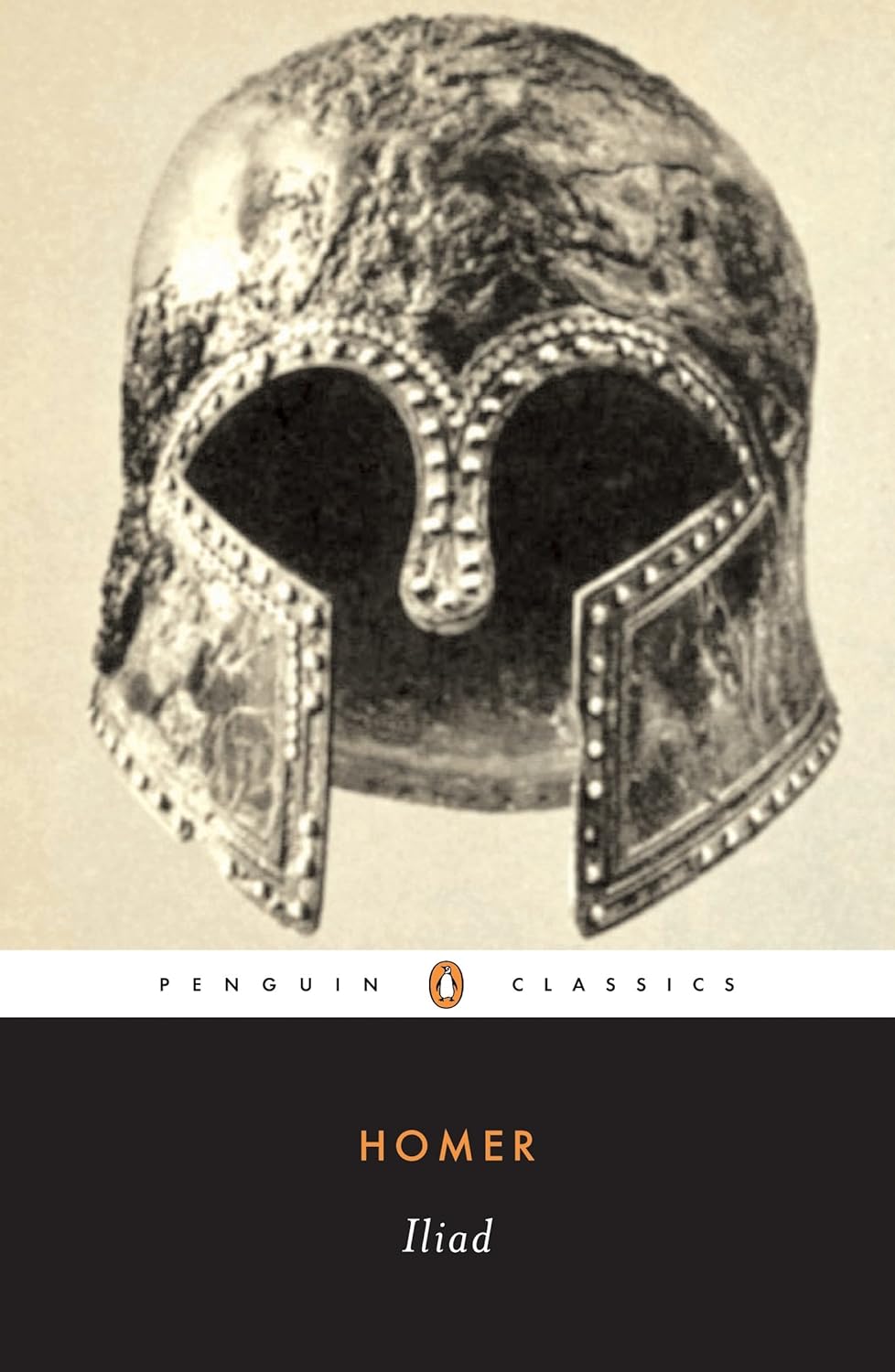
#1 — The Iliad — trans. Robert Fagles (1990)
- Readability: Dramatic energy unusual in epic translation; battle scenes move and speeches have force.
- Accuracy: Takes liberties with the Greek where a more literal translation would produce stiff English.
- Tone: Living poem rather than a monument to scholarship; genuinely moving in emotional moments.
- Accessibility: Most accessible entry point for first-time readers.

Jacobi's commanding and expressive narration brings Homer's epic to life, perfectly complementing Fagles' modern yet poetic translation.
Listen on Audible →Which translation is right for you?
- Choose Fagles if you want dramatic energy and the most accessible entry point for first-time readers.
- Choose Wilson if you want the most current scholarly perspective or have already read her Odyssey and want to continue with the same voice.
- Choose Lattimore if you are studying the poem seriously and want the closest rendering of Homer's Greek hexameter.
- Choose Alexander if you want a precise, intellectually rigorous middle path between drama and fidelity.
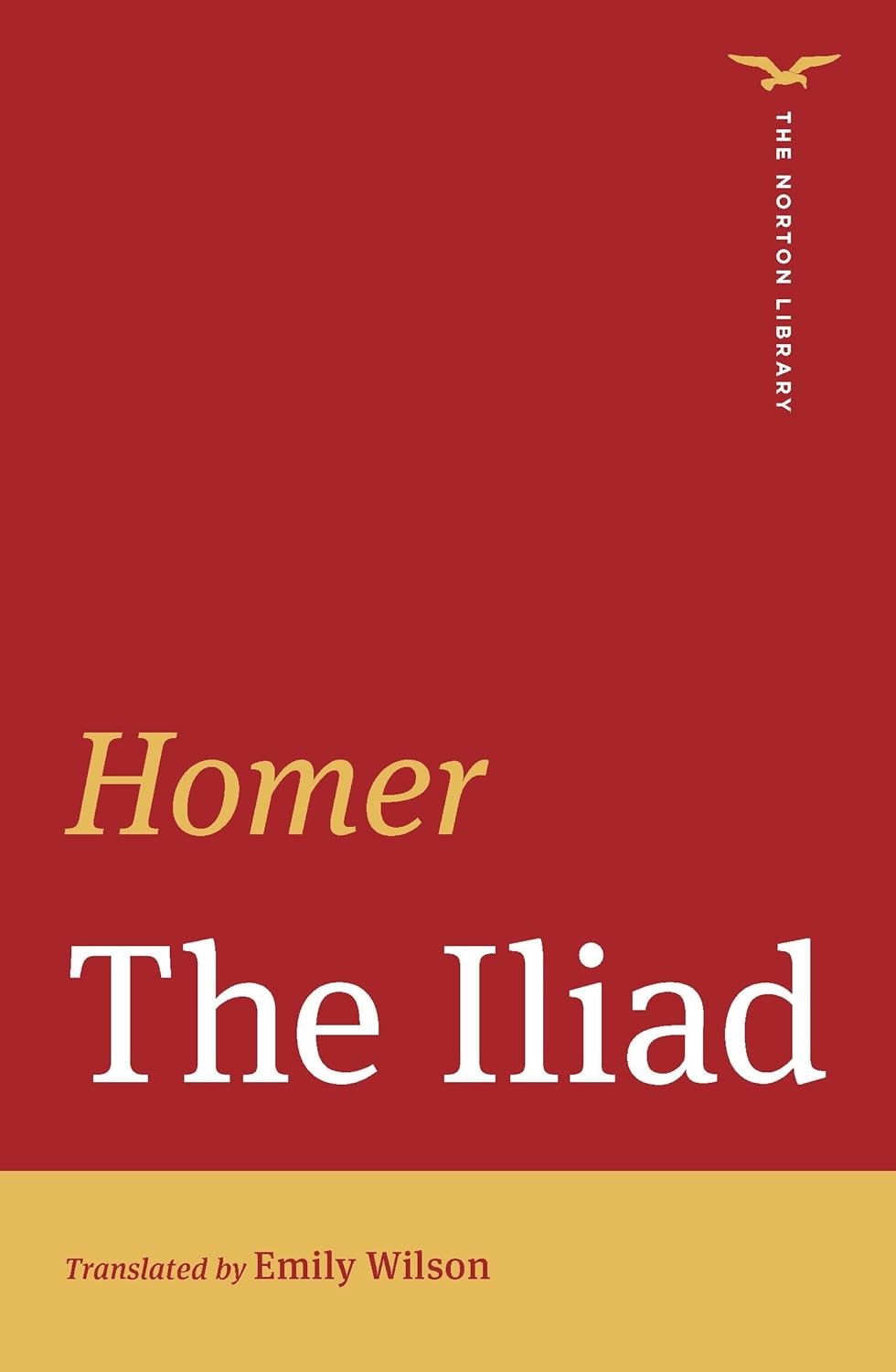
#2 — The Iliad — trans. Emily Wilson (2023)
- Readability: Direct and unornate, deliberately stripped of grandeur.
- Accuracy: Challenges received ideas about heroism, glory, and the glamour of war.
- Tone: Intellectually demanding reassessment of kleos and the cost of war.
- Accessibility: Best if you have already read her Odyssey.
#3 — The Iliad — trans. Richmond Lattimore (1951)
- Readability: Moderate; long rolling lines approximate Homer's hexameter.
- Accuracy: Preserves epithets, repetition, and formulaic style exactly.
- Tone: Closest to the texture of Homer's original Greek.
- Accessibility: Best for serious study or following a course.
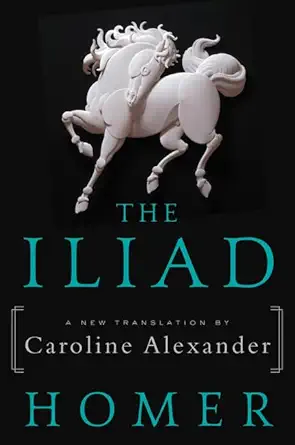
#4 — The Iliad — trans. Caroline Alexander (2015)
- Readability: More readable than Lattimore while remaining close to the Greek.
- Accuracy: Closer to the Greek than Fagles; draws on deep scholarship.
- Tone: Precise and intellectually rigorous middle ground.
- Accessibility: Excellent introduction and notes for any reader.
About the Translators
Robert Fagles (1933–2008, 1990, Penguin Classics): Professor of Comparative Literature at Princeton; his Iliad (1990) and Odyssey (1996) are the most widely read modern Homer translations in English. Bernard Knox, the classicist, wrote the introductions for both; Knox's Iliad introduction is one of the finest short essays on Homer in any language.
Emily Wilson (b. 1971, 2023, W.W. Norton): Professor of Classical Studies at Penn; the first woman to publish major translations of both the Odyssey (2017) and the Iliad (2023). Her translations are known for directness, formal precision, and a deliberate reassessment of what the poems assume about heroism, glory, and the cost of war.
Richmond Lattimore (1906–1984, 1951, University of Chicago Press): Professor of Greek at Bryn Mawr; his Iliad remains the scholarly gold standard more than seventy years after publication, and the most faithful rendering of Homer's Greek hexameter into English. Also translated the Odyssey, Aeschylus, Pindar, and Hesiod.
Caroline Alexander (b. 1956, 2015, Ecco/HarperCollins): Classicist and author; wrote The War That Killed Achilles (2009) — a study of the Iliad — before producing her translation. The first major Iliad by a woman; her introduction and notes draw on a decade of immersion in the poem's scholarship.
Themes
Kleos and its cost. Achilles has been told by his mother Thetis that he faces a choice: a long, obscure life, or a short, glorious one. He chooses kleos — the fame that outlasts the man — and the Iliad is the record of what that choice costs. But Homer does not vindicate it. Every moment of Achilles's glory is purchased at a price he cannot recover: Patroclus, his future, his own humanity as he mutilates Hector's body. The poem asks whether kleos is worth it without settling the question. Different translations tilt this ambiguity differently — some make Achilles more heroic, some more destructive.
Book 24 as the poem's true ending. The Iliad's final book — Priam's night journey to Achilles's tent to ransom Hector's body — is the scene the entire poem has been building toward. Two men with no reason to extend each other humanity do so anyway. Achilles weeps with Priam for losses neither can repair; Priam receives his son's body. The poem ends twelve days later, with Hector's burial, before the war's further catastrophes (Troy's fall, Achilles's own death) — which the reader knows are coming. This is not an ending but a temporary cessation, which is the most honest thing Homer can offer.
The gods as structural irony. The Olympians observe, argue about, and intervene in the war with the detachment of spectators at an entertainment. From their perspective the whole thing is merely interesting. Homer uses this divine distance to create the poem's characteristic double vision: every death is both a cosmic incident too small for the gods to register and an absolute, irreversible catastrophe for the human beings it touches. The poem holds both simultaneously, and this double vision is where its power lives.
Key Characters
Achilles — the greatest Greek warrior, who withdraws from battle after Agamemnon takes his war-prize Briseis, and whose return — after Patroclus's death — brings the poem's central destruction. He is not admirable in any simple sense; his rage is catastrophic, his treatment of Hector's body appalling. But his grief for Patroclus and his recognition of his own mortality in Book 24 make him one of literature's most complex figures.
Hector — the greatest Trojan warrior and arguably the poem's moral center. He fights to protect his city and family rather than for glory. His farewell to his wife Andromache and his infant son Astyanax in Book 6 — the baby who screams at his father's war-helmet — is the poem's most intimate and devastating passage. He knows Troy will fall. He fights anyway.
Patroclus — Achilles's companion whose relationship with Achilles has been debated since antiquity, but about whose importance to Achilles the poem is unambiguous. His death in Book 16, wearing Achilles's armor and fighting in his name, is the event that drives everything that follows.
Priam — the old king of Troy whose night journey to Achilles's tent in Book 24 — guided by Hermes, unarmed, alone — is the poem's most courageous act. His appeal to Achilles as a father speaking to another father's son is the Iliad at its greatest.
Agamemnon — the Greek commander whose quarrel with Achilles over Briseis sets the poem in motion. He is not a villain but consistently wrong — vain, imperious, unable to back down when backing down would save lives.
Recommended Sources
For further academic reading on Homer and the Iliad:
- Classical Quarterly (Cambridge University Press) — the leading British classics journal; central venue for Homeric scholarship on language, composition, and tradition.
- American Journal of Philology (Johns Hopkins University Press) — the major American classical journal; extensive coverage of Homeric language and oral composition theory.
- Arion: A Journal of Humanities and the Classics (Boston University) — more literary in focus; excellent for translation criticism and the Iliad's place in world literary history.
Which translation is right for you?
Choose Fagles for a first reading — his dramatic energy is unmatched and Bernard Knox's introduction is one of the best essays on Homer in any language. Choose Wilson if you want the most current scholarly perspective or have already read her Odyssey and want to continue with the same voice; her Iliad is the most intellectually demanding of the four. Choose Lattimore if you are studying the poem seriously — no English version is closer to Homer's Greek, his epithets, or the texture of oral composition. Choose Alexander for a precise, intellectually rigorous middle path between Fagles's drama and Lattimore's fidelity.
Frequently Asked Questions
What is Iliad about?
The Iliad is an epic poem that recounts the events of the Trojan War, focusing on the Greek hero Achilles. It explores themes of glory, wrath, and the human cost of conflict, culminating in the poignant encounter between Achilles and Priam.
Is Iliad hard to read?
The Iliad can be challenging due to its ancient context and poetic style. Fagles' translation is recommended for its accessibility, while Lattimore's offers a more literal approach. Wilson's version is intellectually demanding.
Which Iliad translation is best?
The Fagles translation is this guide's primary recommendation. It is the most widely read modern English Iliad, and its dramatic energy and forward momentum make it the most accessible entry point for first-time readers. If you want to understand why the Iliad has commanded readers for three thousand years, start here.
Fagles vs Wilson — which should I choose?
Choose Fagles for a first reading — his dramatic energy is unmatched and Bernard Knox's introduction is one of the best essays on Homer in any language. Choose Wilson if you want the most current scholarly perspective or have already read her Odyssey and want to continue with the same voice; her Iliad is the most intellectually demanding of the four.
Which translation is easiest to read?
Fagles writes with a dramatic energy that is unusual in epic translation — his battle scenes move, his speeches have force, and the result is a version that reads as a living poem rather than a monument to scholarship.
Which translation is most accurate?
Lattimore's 1951 translation remains the scholarly gold standard. Reading Lattimore is the closest most English readers will ever get to the texture of Homer's original, preserving epithets, repetition, and the long rolling lines that approximate Homer's Greek hexameter.
How does Emily Wilson's Iliad differ from her Odyssey in approach?
Where her Odyssey challenged received ideas about Odysseus's character, her Iliad challenges received ideas about heroism, glory, and the glamour of war. Her translation is direct, unornate, and deliberately stripped of the grandeur that earlier translators used to make Achilles's choices feel inevitable rather than chosen.
This guide is based on reading all 4 translations and reviewing scholarly commentary. Last reviewed: June 2026.
As an Amazon Associate, I earn from qualifying purchases.
Looking for another classic? Browse all our translation guides →
Readers exploring Homer should also see our Aeneid translation guide, which compares how Virgil reworks the Iliad's themes.
For more Greek epic and tragedy, our Oresteia translation guide examines Aeschylus in Fagles, Lattimore, and Carson.
The same classical tradition appears in our Theban Plays translation guide covering Sophocles in Fagles and the Chicago edition.
Another foundational epic worth comparing is our Metamorphoses translation guide, which weighs Raeburn against Mandelbaum.