Aeneid: What It's About & Best Translation
The translation you choose shapes the poem you read
As an Amazon Associate, we earn from qualifying purchases.
The Aeneid is an epic poem that tells the story of Aeneas, a Trojan hero, who travels to Italy after the fall of Troy to fulfill his destiny of founding Rome. It explores themes of duty, fate, and the cost of empire.
Translation Comparison at a Glance
| Translation | Readability | Accuracy | Tone | Best For |
|---|---|---|---|---|
| Ruden (2008) | High | Very good | Spare and forceful | First reading, immediacy |
| Ferry (2017) | Very high | Good | Warm and flowing | Poetic experience |
| Ahl (2007) | Moderate | Excellent | Literal and careful | Academic study, Latin fidelity |
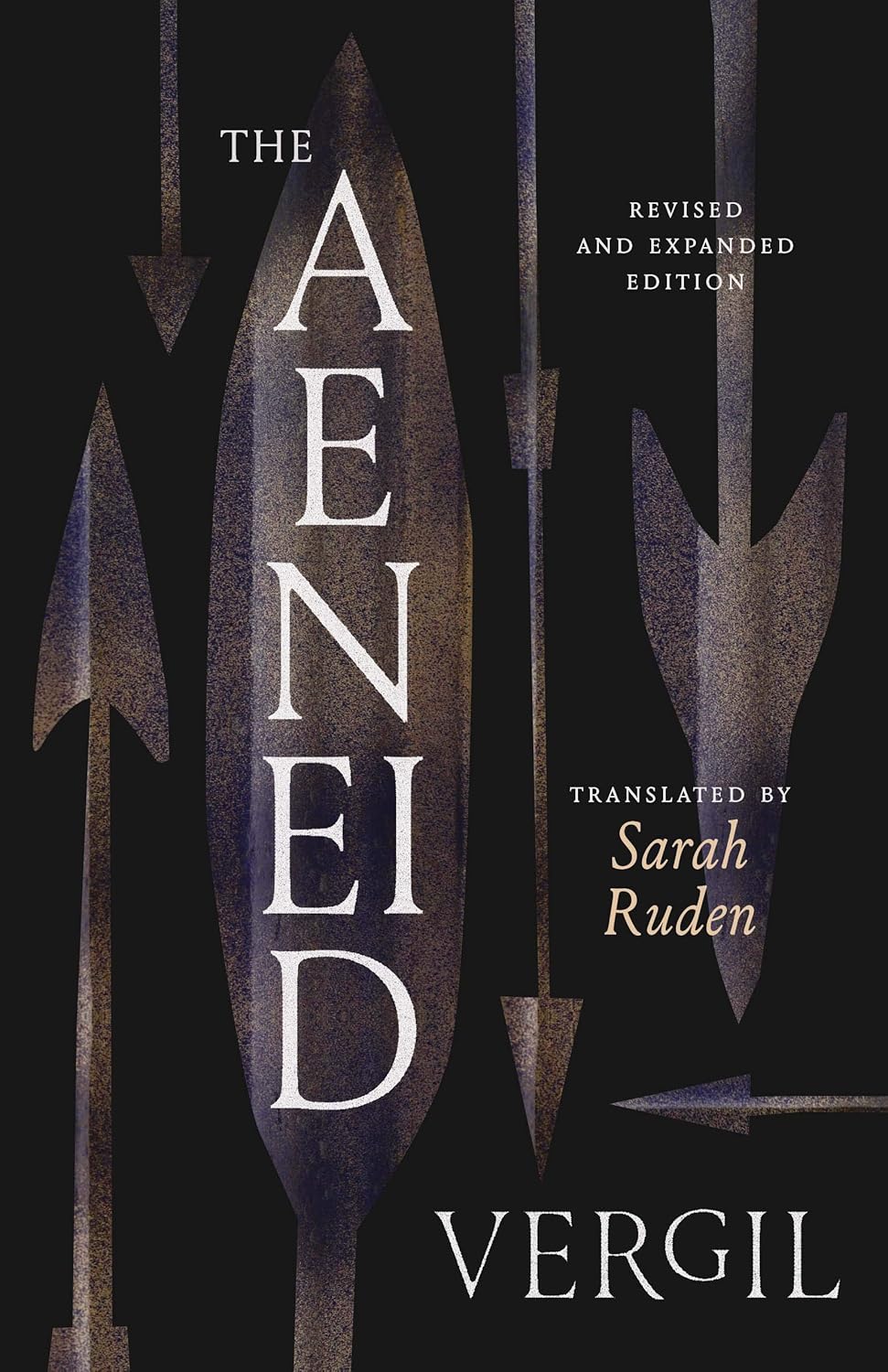
#1 — The Aeneid — trans. Sarah Ruden (2008)
- Readability: Spare and forceful, energetic and immediate.
- Accuracy: Deep Latin scholarship with a poet's ear.
- Tone: Recovers strangeness and violence of Virgil's imagery.
- Accessibility: Ideal for first-time readers.

Simon Callow's commanding and expressive narration brings Virgil's epic to life, perfectly complementing Fagles' modern and accessible translation.
Listen on Audible →Which translation is right for you?
- Choose Ruden if you are reading the Aeneid for the first time and want the most energetic and immediate modern version.
- Choose Ferry if you already know the story and want to read the Aeneid as a great English poem with warmth and forward flow.
- Choose Ahl if you want maximum fidelity to the Latin or are approaching the Aeneid as a student of the Latin tradition.
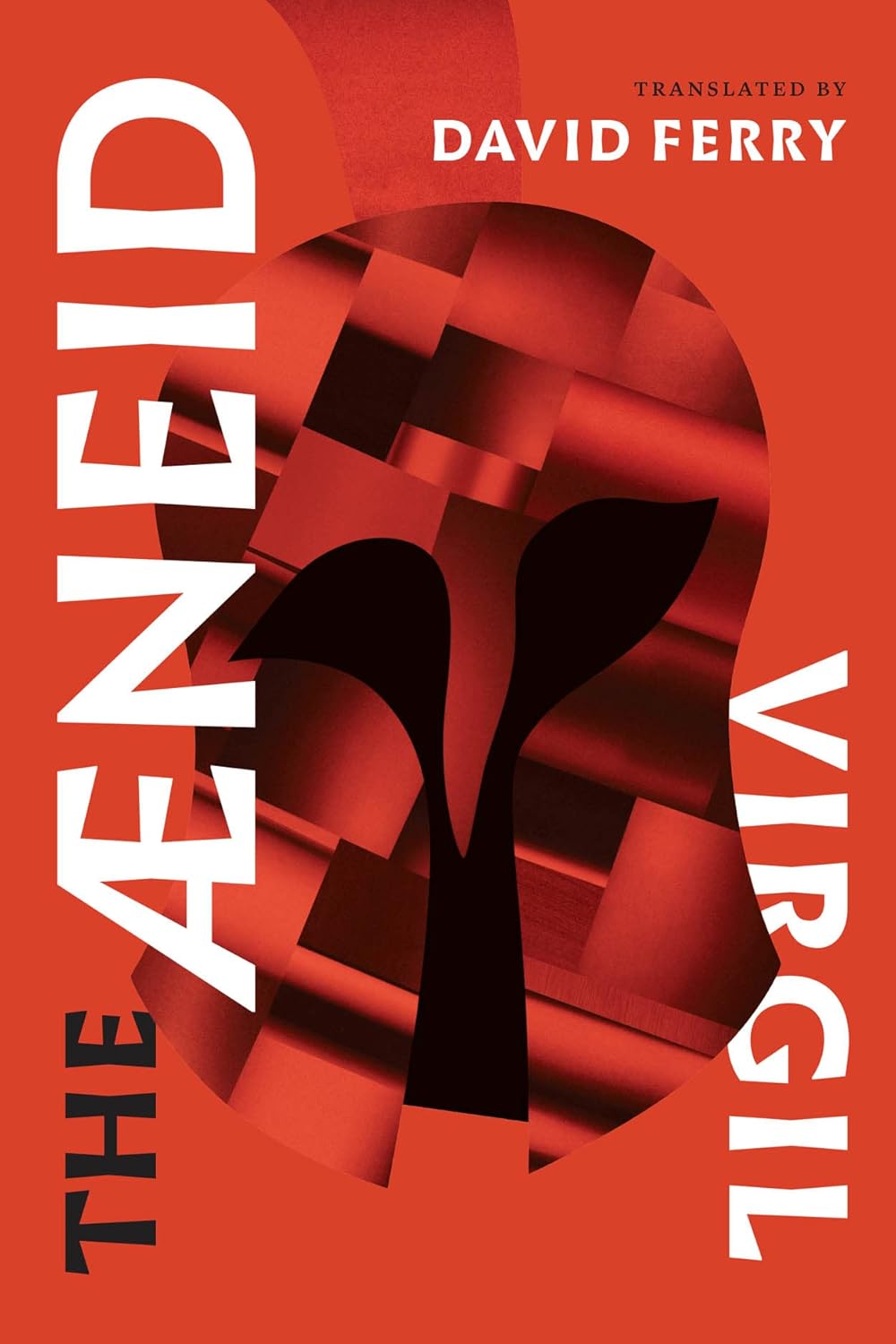
#2 — The Aeneid — trans. David Ferry (2017)
- Readability: Natural blank verse with forward momentum.
- Accuracy: Strong sense of Virgil's world and voice.
- Tone: Warm and flowing, reaches for beauty.
- Accessibility: Excellent for readers seeking poetic pleasure.
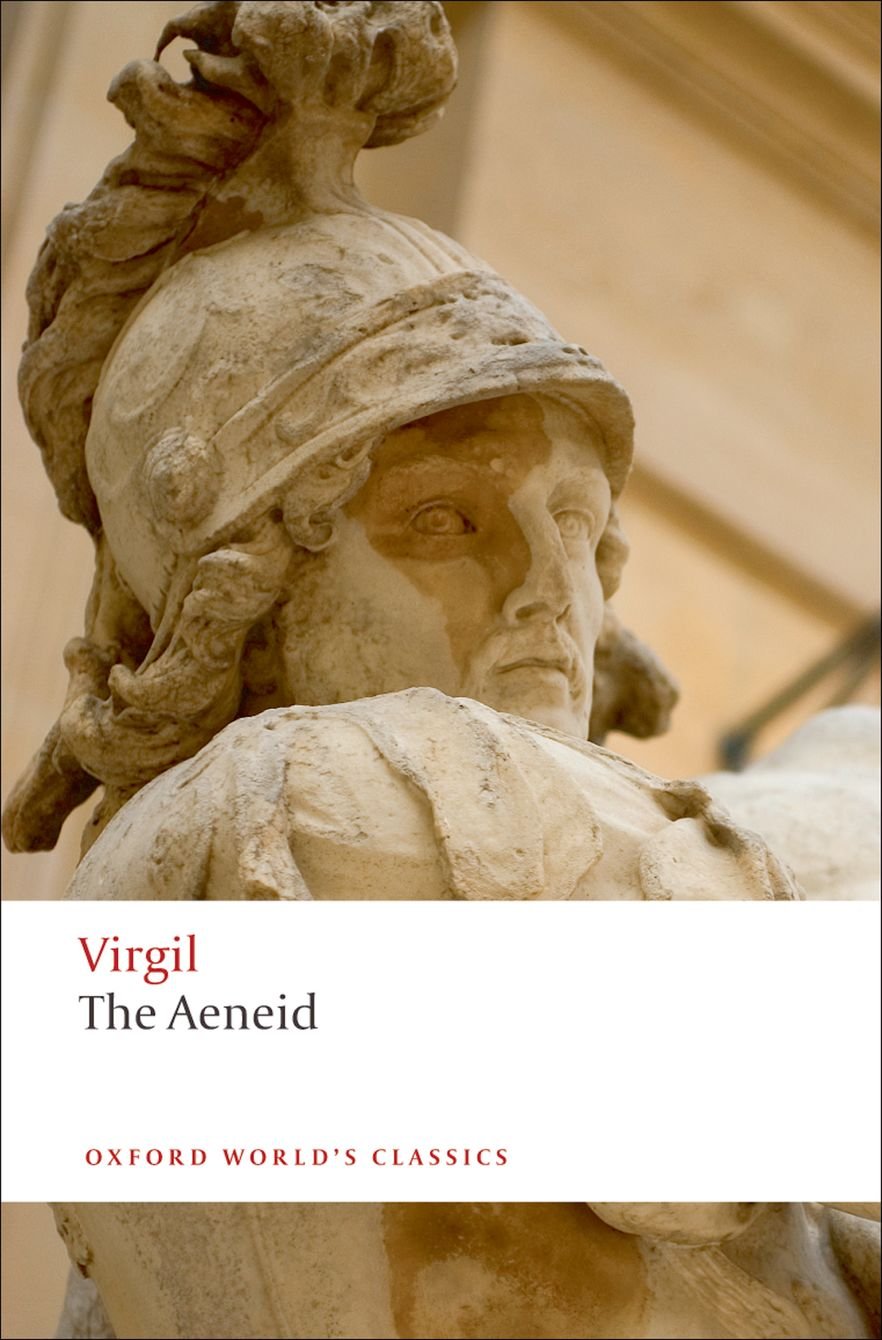
#3 — The Aeneid — trans. Frederick Ahl (2007)
- Readability: Less immediately pleasurable as English poetry.
- Accuracy: Most faithful to the Latin, unmatched on wordplay.
- Tone: Literal and philologically careful.
- Accessibility: Best for academic study alongside the Latin.
About the Translators
Sarah Ruden (b. 1956, 2008, Yale University Press): American classicist and translator; her other translations include Apuleius's Golden Ass, the Homeric Hymns, and the four Gospels. She is one of the few contemporary translators equally at home as scholar and working poet, and her Aeneid is the most energetic modern English version of the poem.
David Ferry (b. 1924, 2017, University of Chicago Press): American poet; his other translations include Virgil's Eclogues and Georgics, Horace's Odes and Epistles, Gilgamesh, and Beowulf. His Aeneid is the culmination of a lifetime spent translating Latin and ancient literature, and reads with the warmth and forward flow of a master of English blank verse.
Frederick Ahl (2007, Oxford World's Classics): Professor of Classics at Cornell; a leading authority on Virgil and Lucan; his major scholarly works include Metaformations: Soundplay and Wordplay in Ovid and Other Classical Poets (1985). His Oxford translation is the most philologically careful modern English version of the poem.
Themes
Pietas and its cost. The Aeneid is structured around Aeneas's quality of pietas — devotion to the gods, to his mission, to his family, and to Rome's future. But the poem makes pietas costly throughout: Aeneas sacrifices his relationship with Dido on the altar of his mission; he sacrifices personal happiness at every turn. The famous tears of Aeneas — he is the most weeping hero in ancient epic — are the poem's confession that a man defined entirely by duty cannot be fully happy, or perhaps fully human.
The sadness of empire. Virgil wrote the Aeneid under Augustus's patronage and in some sense as a founding myth for Rome, but the poem refuses simple triumphalism. The underworld scene in Book VI, in which Anchises shows Aeneas the future of Rome, is shadowed by the early death of Marcellus; the death of Pallas and Turnus's final plea for mercy give the poem's closing pages a moral weight that resists the celebration of violence. Critics have debated for centuries whether Virgil was a loyal Augustan propagandist or a covert critic — the poem sustains both readings.
Dido and the tragedy of the individual. The Dido episodes in Books I–IV are the most widely read portion of the Aeneid, and for good reason: they are the most fully developed tragic portrait of an individual in all of ancient epic. Dido is not a villain; she is a capable ruler destroyed by a divinely engineered love used to advance Aeneas's mission. Her death, and Aeneas's cold reception of her shade in the underworld — she turns away in silence — are the poem's most morally uncomfortable moments.
Key Characters
Aeneas — the Trojan hero, son of Venus and Anchises, carrier of the Trojan household gods and the destined founder of the Roman race. He weeps, he hesitates, he follows orders from the gods. He is the most ambiguous protagonist in ancient epic — purposeful and yet passive, pious and yet capable of terrible violence at the poem's end.
Dido — Queen of Carthage; a widow who rebuilt her life after her husband's murder and is destroyed a second time by Aeneas's divinely compelled abandonment. Her suicide and her curse on Aeneas and his descendants — she prophesies the Punic Wars — are among the most powerful passages in ancient literature.
Turnus — the Italian king who is Aeneas's final opponent. He is the more traditionally heroic figure — brave, passionate, loyal — and his death at the poem's final lines, at Aeneas's hand in rage rather than in cold duty, is one of the most debated endings in world literature. The poem ends in that moment of violence, without resolution or consolation.
Anchises — Aeneas's dead father, who guides him through the underworld in Book VI and reveals Rome's future glory. His prophecy is the poem's ideological center; the appearance of the shade of Marcellus, who will die young, is its emotional counterweight — the grief built into every empire.
Recommended Sources
For further academic reading on Virgil and the Aeneid:
- Vergilius: Journal of the Vergilian Society of America — the primary English-language journal for Aeneid scholarship; essential for textual and interpretive research.
- Classical Quarterly (Oxford University Press) — the leading British journal for Latin literary studies; decades of Aeneid criticism.
- American Journal of Philology (Johns Hopkins) — key venue for comparative and theoretical readings of Virgil in relation to Homer and the epic tradition.
Which translation is right for you?
Choose Ruden (Yale) for a first reading — her version is the most alive and immediate modern Aeneid; she is a classicist who is also a working poet, and her spare, forceful prose recovers the violence and strangeness of Virgil's imagery. Choose Ferry (Chicago) if you want the Aeneid as a great English poem — his blank verse has warmth and forward flow, and his sense of Virgil's grief is acute. Choose Ahl (Oxford) for academic study — his is the most philologically faithful English version, tracking wordplay and ambiguity closest to the Latin.
Frequently Asked Questions
What is Aeneid about?
The Aeneid is an epic poem that tells the story of Aeneas, a Trojan hero, who travels to Italy after the fall of Troy to fulfill his destiny of founding Rome. It explores themes of duty, fate, and the cost of empire.
Is Aeneid hard to read?
The Aeneid can be challenging due to its epic style and complex themes. Ruden's translation is the most accessible for first-time readers, while Ahl's is more literal and suited for academic study.
Which Aeneid translation is best?
The Sarah Ruden translation is the primary recommendation. Written by a classicist who is also a working poet, it is the most energetic and immediate modern version available — and more than any other English Aeneid, it lets you feel why Virgil was considered the supreme poet of antiquity.
Ruden vs Ferry — which should I choose?
Choose Ruden for a first reading — her version is the most alive and immediate. Choose Ferry if you want the Aeneid as a great English poem with warmth and forward flow in blank verse; his sense of Virgil's grief is acute.
Which translation is easiest to read?
Ruden's translation is the most energetic and immediate modern version, spare and forceful where older translations are ornate, recovering the strangeness and violence of Virgil's imagery.
Which translation is most accurate?
Ahl's translation is the most faithful to the Latin of the three options, oriented toward readers who want to stay as close to the original as possible, with unmatched attention to wordplay and ambiguity.
Why does the Aeneid have a translation problem?
Virgil's Latin is almost impossibly musical. Every line is a carefully constructed hexameter, dense with alliteration, assonance, and sound effects that do real narrative work. English has no equivalent meter, so translators must choose between emotional directness, poetic beauty, or fidelity to the Latin text.
This guide is based on reading all 3 translations and reviewing scholarly commentary. Last reviewed: June 2026.
As an Amazon Associate, I earn from qualifying purchases.
Looking for another classic? Browse all our translation guides →
Virgil also wrote the Georgics — see our guide to the best Georgics translations.
For the Greek epic tradition that shaped the Aeneid, compare the best Iliad translations including Fagles and Wilson.
Another major Latin epic: our Metamorphoses translation guide covers Raeburn and Mandelbaum.
Dante's masterpiece was deeply influenced by Virgil — read our Divine Comedy translation guide.
Explore more classical drama with our Oresteia translation guide comparing Fagles and Carson.