Georgics: What It's About & Best Translation
Four books about farming, beekeeping, and the soul of a civilisation — Virgil's most personal poem
As an Amazon Associate, we earn from qualifying purchases.
The Georgics is a didactic poem by Virgil, focusing on agriculture and rural life. It explores themes of labor, the relationship between humans and nature, and the impact of civil war on Roman society.
Translation Comparison at a Glance
| Translation | Readability | Accuracy | Tone | Best For |
|---|---|---|---|---|
| Ferry (2005) | High | Excellent | Flexible blank verse, close to Latin | Most readers, classroom use |
| Fallon (2006) | High | Very good | Idiomatic, Irish inflections | Readers seeking agricultural authenticity |
| Johnson (2009) | Moderate | Very good | Formal iambic pentameter | Close literary analysis |
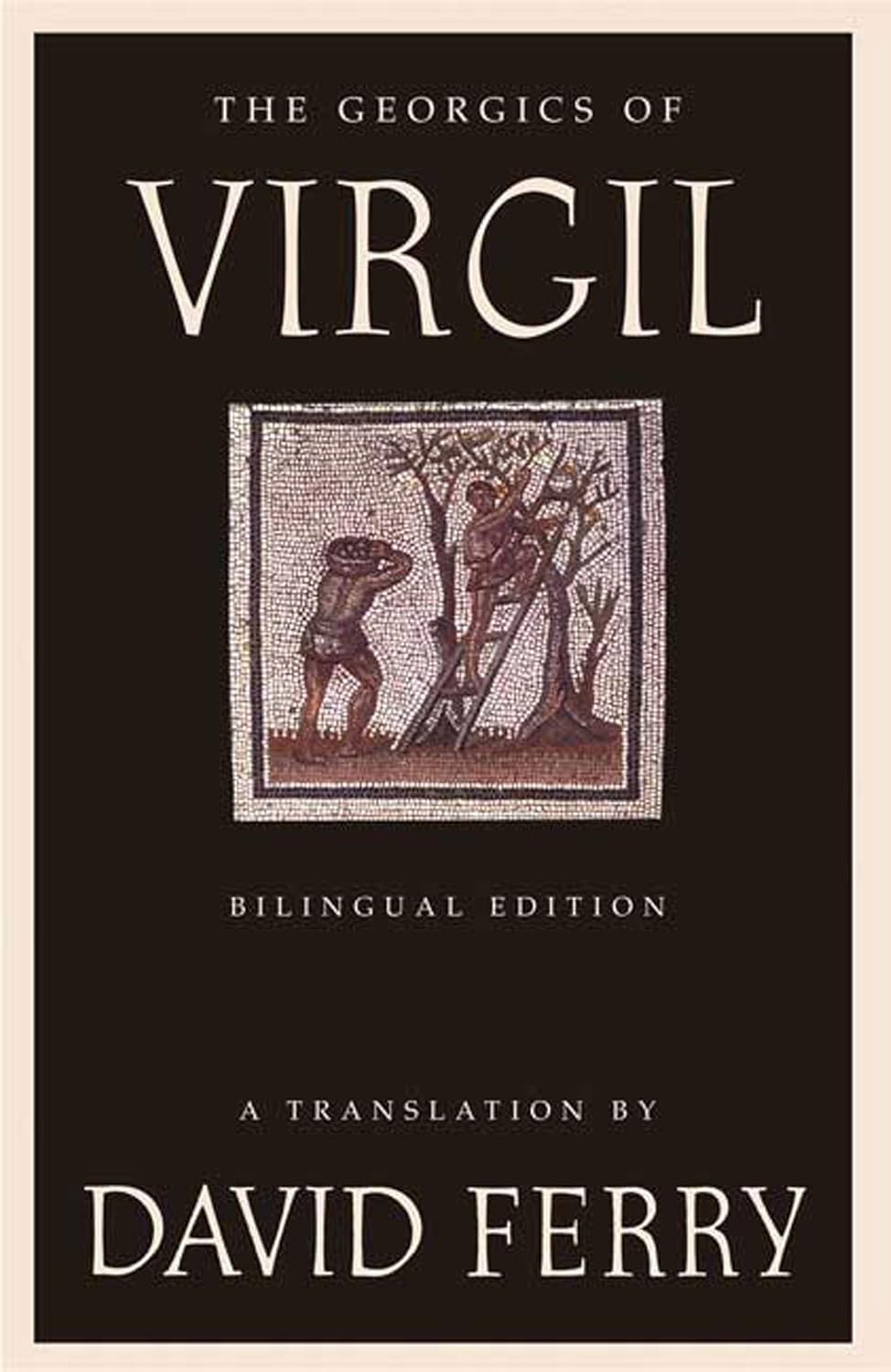
#1 — The Georgics of Virgil (Bilingual Edition) — trans. David Ferry (2005)
- Readability: Flexible blank verse that stays close to Virgil's syntactic structures without feeling stilted.
- Accuracy: Widely praised by classicists for respecting both technical precision and poetic substance.
- Tone: Celebrated modern American verse with strong handling of large-scale movements and tragic weight.
- Accessibility: Ideal bilingual edition for readers with any Latin; stands fully on its own.

Griffin's commanding and rhythmic delivery perfectly complements Fallon's vivid, accessible translation, capturing the Georgics' blend of agricultural instruction and poetic grandeur.
Listen on Audible →Which translation is right for you?
- Choose Ferry if you want the most celebrated modern American verse translation with facing Latin text and the version most recommended by classicists.
- Choose Fallon if you want the poem read from a position of genuine agricultural experience by an Irish farmer-poet.
- Choose Johnson if you want the most formally ambitious English version that foregrounds the poem's literary self-consciousness.
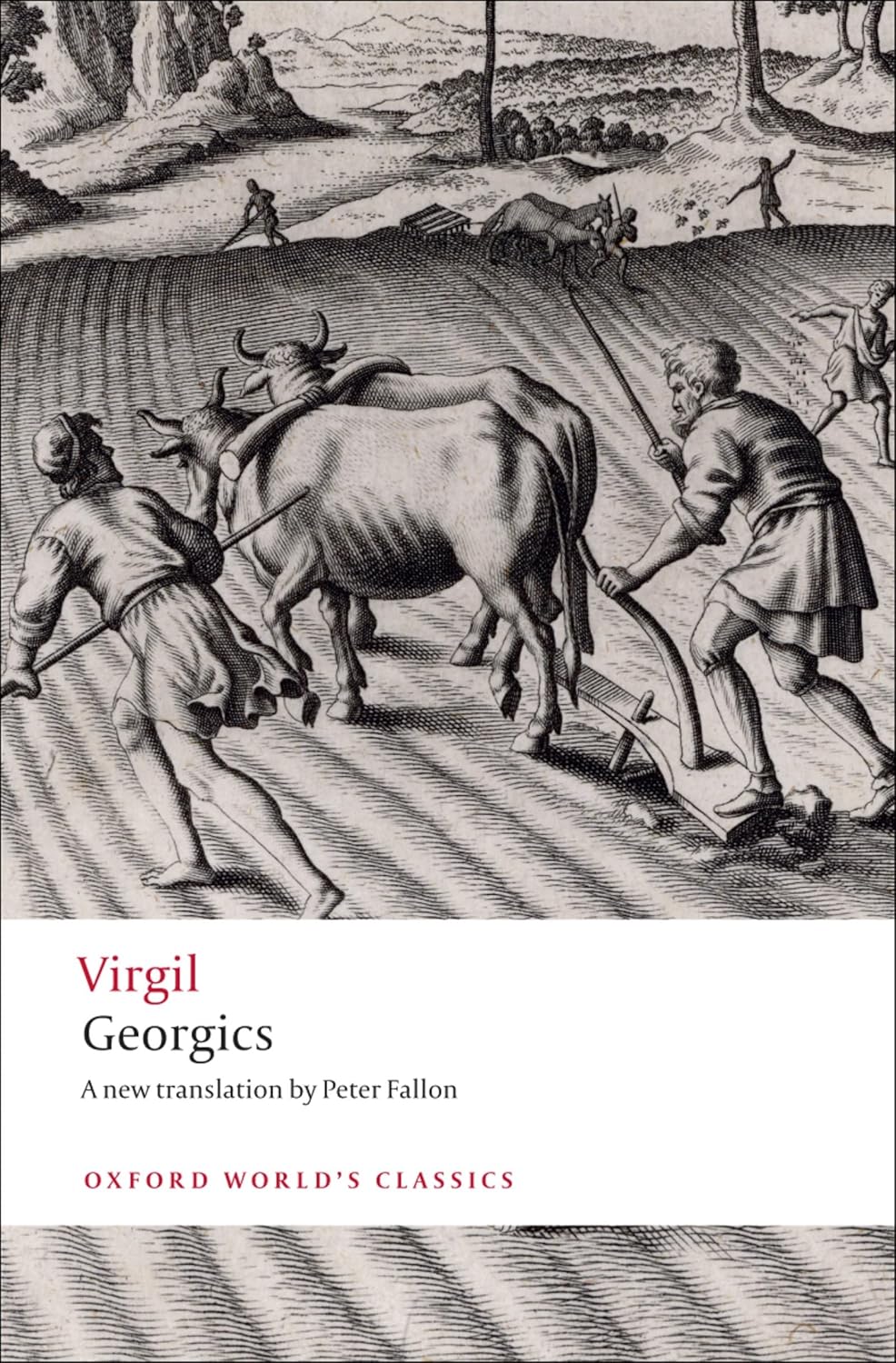
#2 — Georgics — trans. Peter Fallon (2006)
- Readability: Flexible and idiomatic verse with occasional Irish inflections that feel natural.
- Accuracy: Carries physical knowledge of agricultural work that most translators cannot supply.
- Tone: Informed by lived experience of tending livestock, reading weather, and working soil.
- Accessibility: Excellent introduction and notes by Elaine Fantham.
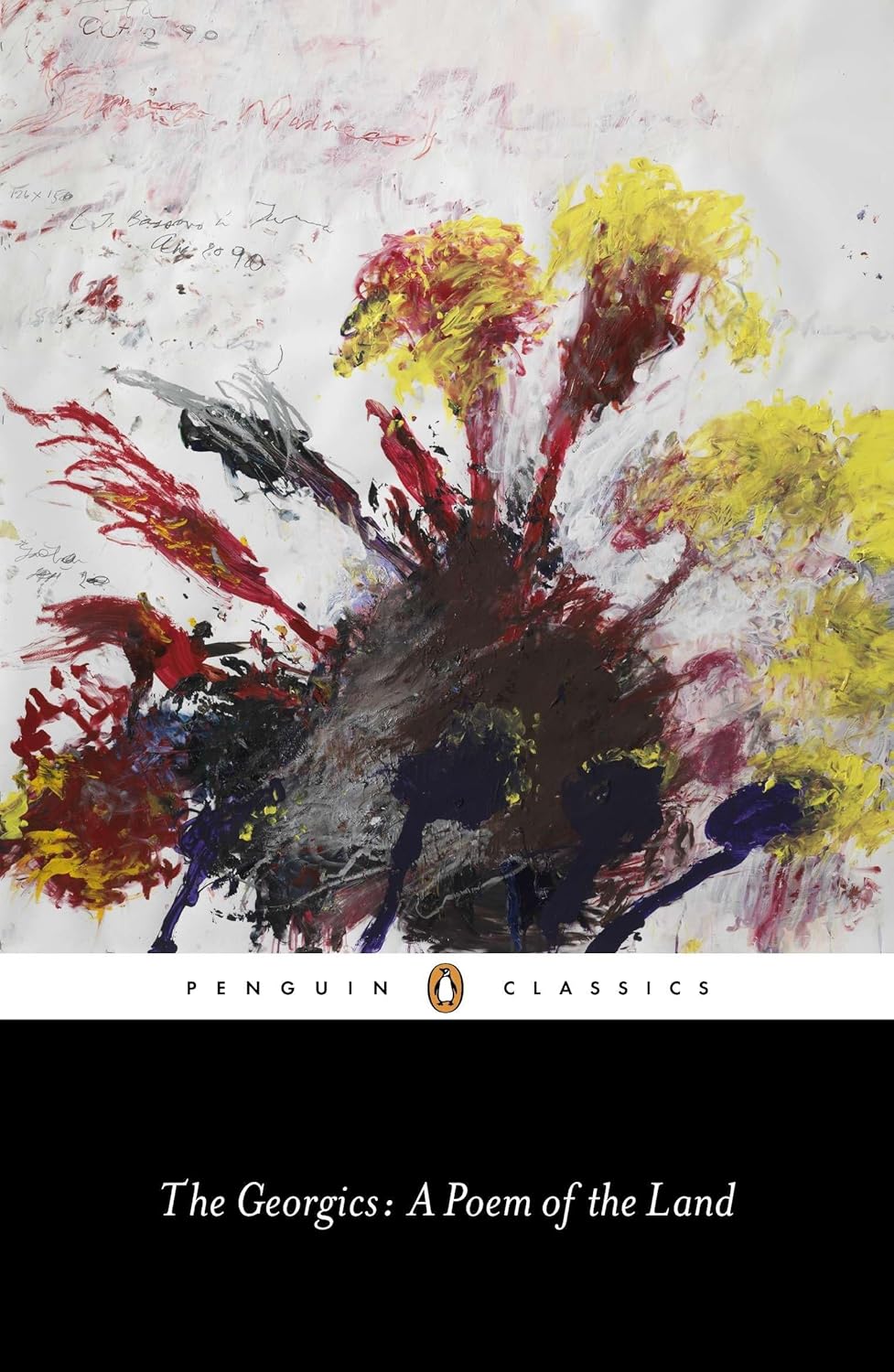
#3 — The Georgics: A Poem of the Land — trans. Kimberly Johnson (2009)
- Readability: More challenging and formally demanding than Ferry or Fallon.
- Accuracy: Sensitive to the Georgics' debt to earlier literary traditions and internal self-referentiality.
- Tone: Works in iambic pentameter, foregrounding the poem as self-consciously literary.
- Accessibility: Outstanding introduction on poetic labour and its relationship to the labour of the land.
About the Translators
David Ferry (Farrar, Straus and Giroux, 2005): One of the most distinguished American poet-translators of the twentieth and twenty-first centuries. Ferry's other major classical translations include the Aeneid, the Eclogues, and Horace's Odes and Epistles — essentially the full Virgilian corpus and most of Horace. His verse consistently works in a flexible blank verse that stays close to the Latin syntactic structures while remaining alive as English poetry. The FSG bilingual edition, with Latin on facing pages, has become the standard classroom text and the version most recommended by classicists who want an English Georgics that respects both technical precision and poetic substance.
Peter Fallon (Oxford World's Classics, 2006): An Irish poet and farmer who works land in County Meath — a combination of qualifications unique in the history of Georgics translation. Fallon is founder of Gallery Press and a significant figure in contemporary Irish poetry. The physical knowledge of agricultural work that informs his translation is not anecdotal but lived; he knows what it means to tend livestock across seasons, to read weather, to work soil. His verse is flexible and idiomatic, with occasional Irish inflections that feel natural rather than exotic. Elaine Fantham's introduction and notes in the Oxford edition are among the finest scholarly apparatus available for the poem.
Kimberly Johnson (Penguin Classics, 2009): A poet and Renaissance scholar whose translation works throughout in iambic pentameter, foregrounding the Georgics as a self-consciously literary poem — one about farming that is also about poetry and the nature of art made from difficult material. Johnson's introduction, which reads the Georgics as a meditation on poetic labour and its relationship to the labour of the land, is among the finest short essays on the poem in English.
Themes
Labor omnia vincit — and what it costs. The Georgics' most famous phrase asserts that work conquers all; but the poem also mourns the cost of this, and the civilisation built on Roman agricultural virtue is shadowed throughout by the civil wars that nearly destroyed it. Virgil celebrates the farmer and grieves the farmer simultaneously.
The pastoral ideal and its impossibility. Unlike the Eclogues, where the pastoral world is a fantasy of ease and beauty, the Georgics know that farming is hard, dangerous, and contingent. The poem is in tension with its own idealization: the country life it celebrates is also the country life it accurately describes as exhausting and precarious.
The price of civilisation after civil war. The Georgics was written in the years after Octavian's victory — after two generations of Roman civil war had depopulated the Italian countryside, disrupted agriculture, and unsettled every institution. The poem's insistence on farming as the foundation of Roman identity is also a response to its near-destruction.
Orpheus and Eurydice. The great mythological digression at the end of Book IV — framed within the Aristaeus episode, told by the sea-god Proteus — is among the most beautiful passages in Latin poetry. It is also the poem's implicit argument about the limits of art: Aristaeus, who persists and recovers, survives; Orpheus, who looks back, does not. The poem's final image, of Orpheus's severed head still singing on the Hebrus, is unforgettable.
Key Characters
The Farmer — the poem's emblematic central figure, never individualised, who represents Roman virtue through his engagement with the land. He is not a person but a type, and the poem's power derives partly from the weight it gives to this typological existence.
Orpheus — the central figure of the Aristaeus episode; the great singer who descends to Hades to recover Eurydice and fails at the last moment. He represents the power and the limitation of art in relation to loss — he can charm the dead but cannot suppress his own desire to confirm what he has been given.
Aristaeus — the beekeeper whose story frames the Orpheus myth; his bees have died and he seeks to recover them through the advice of the sea-god Proteus. He succeeds, unlike Orpheus, through persistence and submission to instruction rather than through lyric power. The contrast is implicit and devastating.
Caesar/Augustus — addressed in the poem's opening and hovering over the entire work; the political framework without which the poem's agricultural programme would be merely sentimental. Virgil is writing for and about the world Augustus is building.
Recommended Sources
For further reading on Virgil and the Georgics:
- Classical Philology (University of Chicago Press) — the primary American journal for classical scholarship; essential for current Virgilian studies.
- The Cambridge Companion to Virgil, ed. Charles Martindale (1997) — the standard scholarly overview, with essays on each of the major works by leading Virgilian scholars.
- W.R. Johnson, Virgil's Georgics: A New Verse Translation companion criticism — Johnson's commentary on the poem is among the most illuminating short treatments available in English.
Ferry's FSG bilingual edition is the primary recommendation for most readers — the most celebrated modern American verse translation, the most widely used in teaching, and the version that best captures both the argument and the poetry of the Georgics in English. Fallon's Oxford edition is the essential alternative for readers who want the poem read from a position of genuine agricultural experience. Johnson's Penguin is the right choice for readers who want the most formally ambitious English version.
Frequently Asked Questions
What is Georgics about?
The Georgics is a didactic poem by Virgil, focusing on agriculture and rural life. It explores themes of labor, the relationship between humans and nature, and the impact of civil war on Roman society.
Is Georgics hard to read?
Georgics can be challenging due to its poetic form and historical context. Ferry's translation is the most accessible, while Fallon's offers genuine agricultural insight, and Johnson's is more formally demanding.
Which Georgics translation is best?
David Ferry's bilingual edition is the primary recommendation for most readers. It is the most celebrated modern American verse translation and is widely used in teaching.
Ferry vs Fallon — which should I choose?
Choose Ferry for the most celebrated modern American verse translation with facing Latin text. Choose Fallon if you want the poem read from a position of genuine agricultural experience by an Irish farmer-poet.
Which translation is easiest to read?
Ferry's flexible blank verse is the most accessible for most readers while staying close to Virgil's structures.
Which translation is most accurate?
Ferry's version is widely praised by classicists for respecting both Virgil's technical precision and his poetry.
Why does the Georgics have so many different verse translations?
The poem's meaning is inseparable from its form, so translators balance readability, fidelity to the Latin, and the literary self-consciousness of Virgil's didactic mode.
This guide is based on reading all 3 translations and reviewing scholarly commentary. Last reviewed: June 2026.
As an Amazon Associate, I earn from qualifying purchases.
Looking for another classic? Browse all our translation guides →
Virgil's masterpiece is the Aeneid translation guide, comparing Ruden, Ferry, and Ahl.
For the Homeric tradition that shaped the Georgics, see our Iliad translation guide covering Fagles, Wilson, and Lattimore.
Another great Latin epic in verse: our Metamorphoses translation guide recommends Raeburn and Mandelbaum.
Readers of classical poetry may also enjoy the Theban Plays translation guide for Sophocles in Fagles and the Chicago edition.