Metamorphoses: What It's About & Best Translation
Two hundred and fifty myths linked by a single theme — everything changes, nothing is lost
As an Amazon Associate, we earn from qualifying purchases.
Metamorphoses is a narrative poem by Ovid that explores themes of transformation through a series of mythological tales. It begins with the creation of the world and ends with the deification of Julius Caesar, illustrating the idea that everything changes, but nothing truly perishes.
Translation Comparison at a Glance
| Translation | Readability | Accuracy | Tone | Best For |
|---|---|---|---|---|
| Raeburn (2004) | High | Excellent | Flexible hexameters, ironic and flowing | First complete reading |
| Mandelbaum (1993) | High | Very good | Legato blank verse, lyric register | Love episodes, second reading |
| Humphries (1955/2014) | Very high | Good | Loose hexameters, witty and light | Academic study with notes |
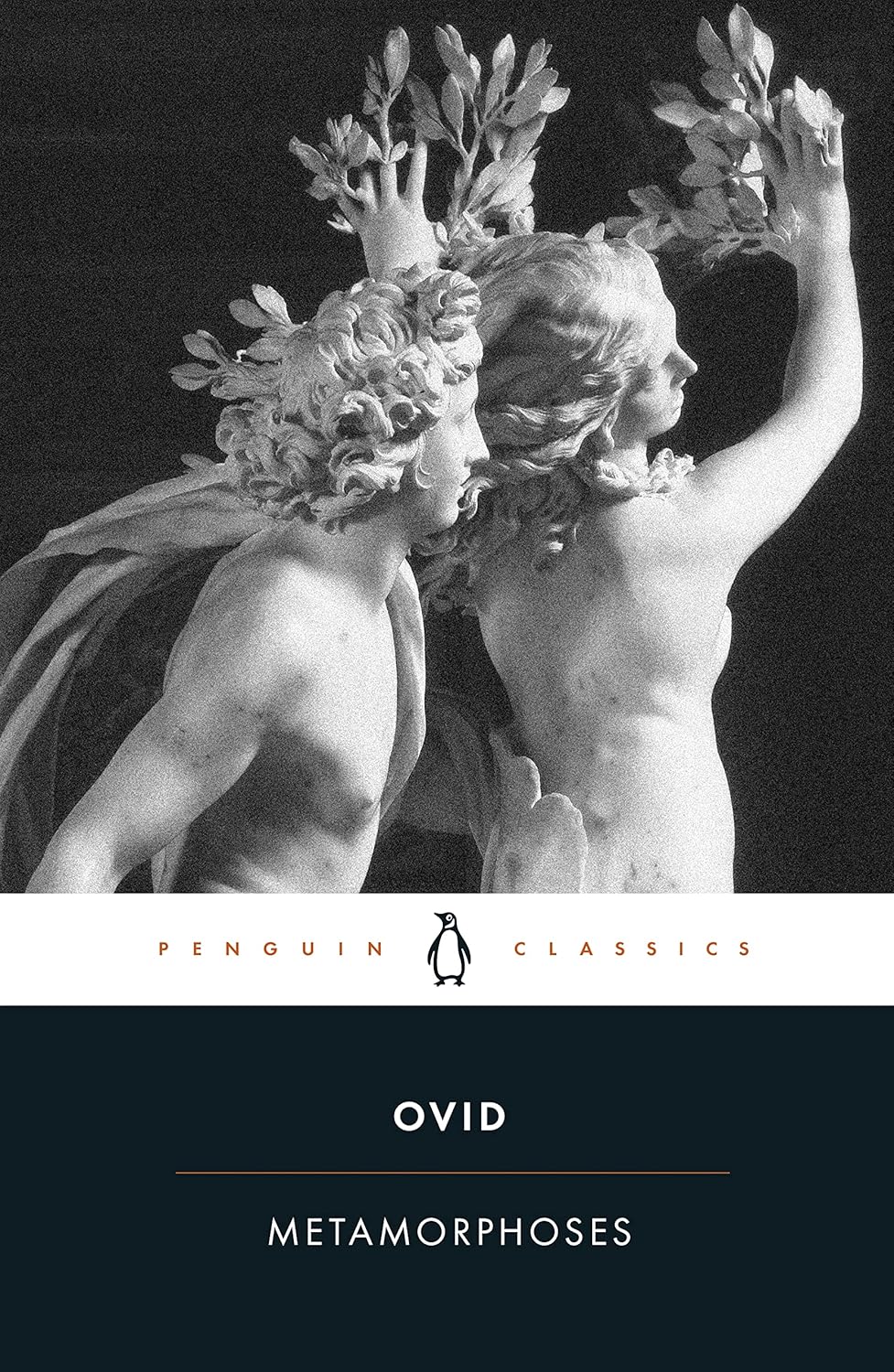
#1 — Metamorphoses — trans. David Raeburn (2004)
- Readability: Flows naturally in English hexameters without feeling forced.
- Accuracy: Captures tonal shifts, irony and tragic weight with literary seriousness.
- Tone: Flexible metre that creates forward momentum and handles erotic-to-tragic range.
- Accessibility: Includes excellent introduction by Denis Feeney; ideal first complete reading.

Martin Jarvis's commanding yet nuanced narration brings Ovid's vivid storytelling to life, perfectly complementing Raeburn's accessible and poetic translation.
Listen on Audible →Which translation is right for you?
- Choose Raeburn if you want a single complete, readable, and literarily serious first translation in English hexameters.
- Choose Mandelbaum if you know and love his Dante or Aeneid and prefer blank verse with lyric intensity on the love stories.
- Choose Humphries if you want the classic readable version now with full scholarly annotation for academic study.
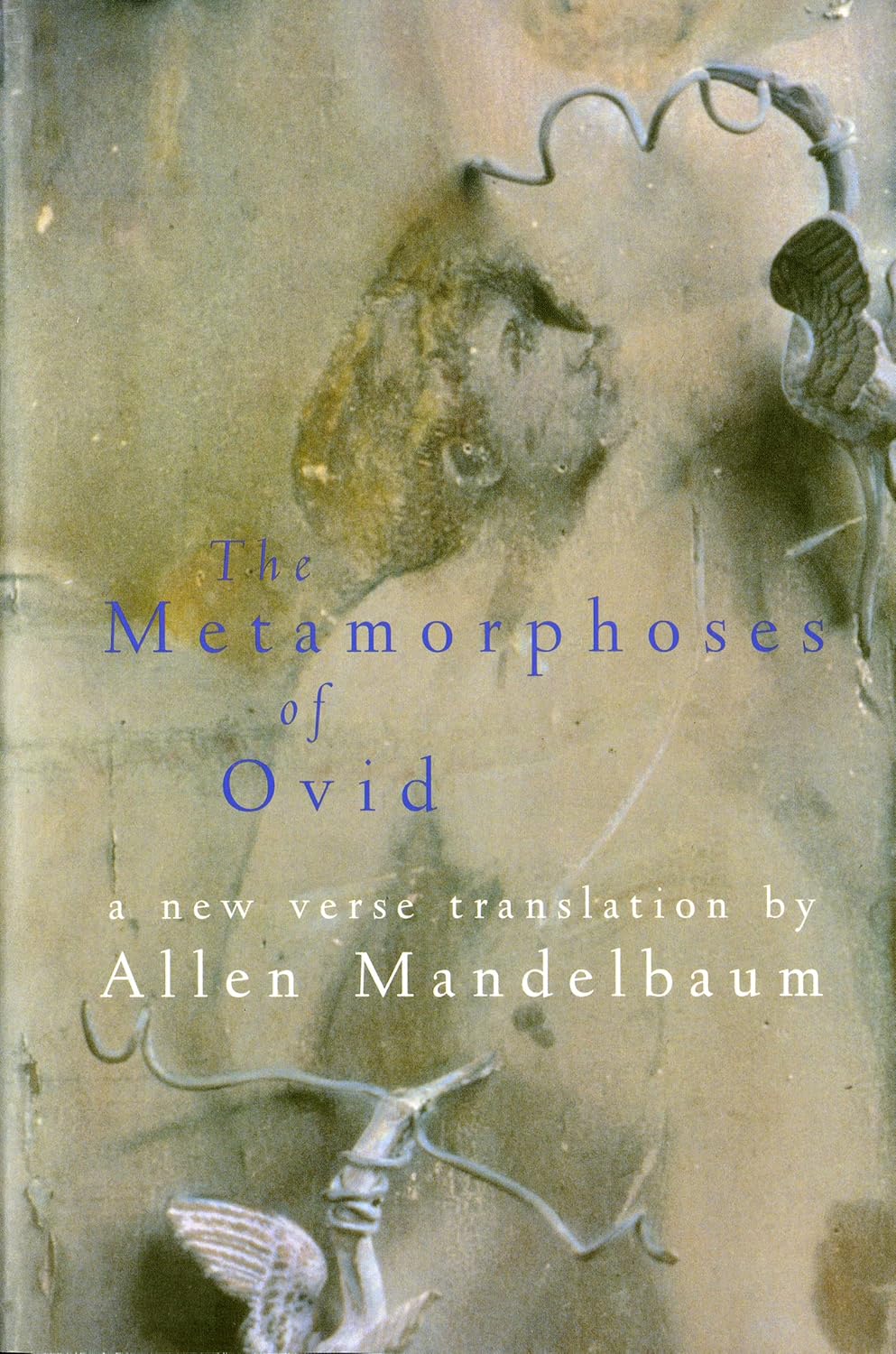
#2 — The Metamorphoses of Ovid — trans. Allen Mandelbaum (1993)
- Readability: Flexible blank verse that produces a legato, meditative music.
- Accuracy: Excellent on set-piece love stories with economy and precision.
- Tone: Higher lyric register that pauses and dilates rather than always driving forward.
- Accessibility: Rewarding second reading for fans of his Dante or Aeneid.
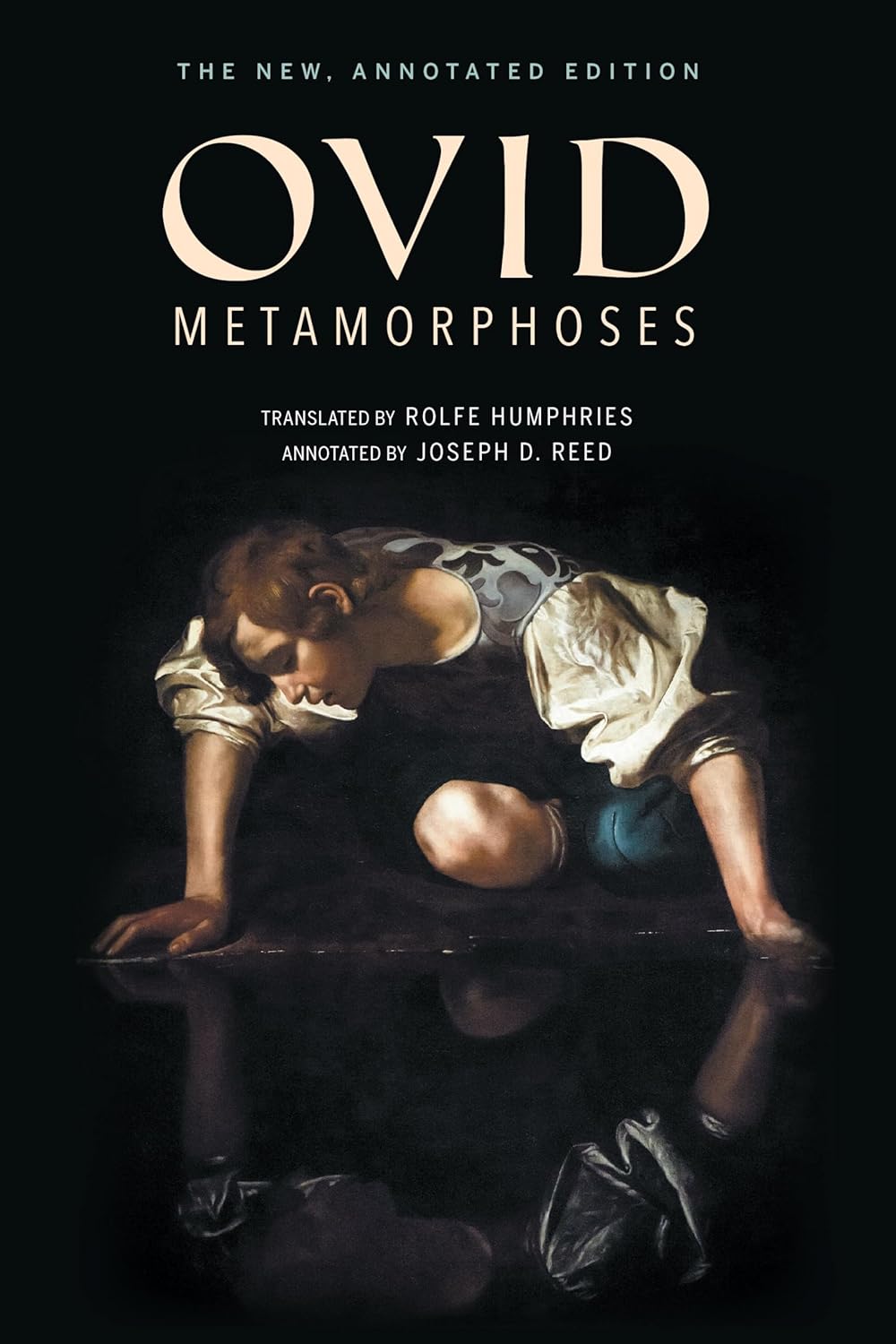
#3 — Metamorphoses: The New, Annotated Edition — trans. Rolfe Humphries, annot. Joseph D. Reed (1955 / 2014)
- Readability: Loose hexameters that flow naturally with lightness and wit.
- Accuracy: Durable classic that remains one of the most readable versions available.
- Tone: Poet's ear for Ovid's comedy; lighter episodes feel light rather than flattened.
- Accessibility: Reed's annotation makes it the best classroom edition for scholarly depth.
About the Translators
David Raeburn (b. 1927): Scholar of Greek and Latin who lectured at Oxford; his other translations for Penguin include Sophocles' Electra and Antigone. His Metamorphoses is his most ambitious project and renders the poem in English hexameters — a demanding formal choice that pays off throughout.
Allen Mandelbaum (1926–2011): American poet and translator; his complete translation of Dante's Divine Comedy (3 vols., University of California) is the most widely read English Dante; his Aeneid and Odyssey are similarly standard. His Metamorphoses completes his sequence of the major classical epics.
Rolfe Humphries (1894–1969): American poet and classical translator; his other translations include Ovid's Art of Love and Virgil's Aeneid. His 1955 Indiana Metamorphoses was the standard English version for nearly fifty years. The annotated Indiana edition, with notes by Joseph D. Reed, transforms it into the best scholarly classroom text.
Themes
Transformation as the poem's governing logic. The Metamorphoses is organized not by character or narrative but by the single theme of change — everything in the universe is transformed into something else. The poem opens with chaos becoming cosmos; it ends with Julius Caesar's soul becoming a star. In between, every form is provisional: the bodies of gods, men, and women are susceptible to transformation by desire, grief, rage, and divine caprice. The Pythagorean speech near the end makes this explicit — Ovid argues, through Pythagoras, that the universe is a continuous flux in which nothing truly dies, only changes form.
Desire and its violence. Most of the transformations in the Metamorphoses are consequences of desire — usually male divine desire for mortal women, who are transformed either to escape or as punishment for being desired. Daphne becomes a laurel tree to escape Apollo; Io becomes a cow because Jupiter desires her and Juno is jealous; Callisto is transformed by Juno out of revenge. The poem's sexuality is never innocent, and its transformation-as-escape motif has a dark logic: the only way for a mortal woman to be safe from divine desire is to become something that is no longer a woman.
Ovid's performance of excess. The Metamorphoses is also a poem about the exuberance of mythological storytelling — the way myths breed other myths, the way a single story can expand to swallow all the others, the way the narrator keeps interrupting himself with "but first, let me tell you about…" Ovid is performing an abundance that is part of the poem's meaning. His self-consciousness about his own procedures makes the poem feel astonishingly modern despite its age.
Key Characters
Ovid (as narrator) — the poem has no single protagonist; the closest thing to a central consciousness is Ovid himself as narrator, constantly present in the poem's voice and tone. His irony, his wit, his sympathy and its sudden withdrawal, are what make the poem feel like a single work rather than a collection.
Apollo and Daphne — the poem's first love myth and its template: Apollo, struck by Cupid's golden arrow, pursues Daphne; Daphne, struck by the lead arrow that prevents love, flees. She is transformed into a laurel tree. Apollo declares the laurel his sacred tree. The pattern — desire, flight, transformation, appropriation — recurs throughout the poem.
Orpheus and Eurydice — the most famous single episode: Orpheus descends to the underworld to recover his dead wife, moves Pluto and Persephone with his music, retrieves Eurydice on the condition that he not look back, looks back, and loses her again. The episodes of Orpheus's singing to the beasts that follow are among the most beautiful passages in Latin literature.
Pygmalion — the sculptor who falls in love with his own statue and is granted his wish when Venus brings her to life. The episode is brief and oddly moving; it has generated far more commentary than its length would suggest, largely because of what it implies about the relationship between artistic creation and desire.
Recommended Sources
For further academic reading on Ovid and the Metamorphoses:
- Transactions of the American Philological Association — the major American classics journal; central venue for Ovidian scholarship across every period.
- Classical Quarterly (Oxford University Press) — the leading British journal for Latin literary studies; essential for Metamorphoses textual and literary criticism.
- Arethusa (Johns Hopkins) — feminist and theoretical classics journal; key for readings of transformation and gender in the Metamorphoses.
Which translation is right for you?
Choose Raeburn (Penguin) for a first complete reading — his hexameters create a sense of forward flow appropriate to Ovid's accumulating universe, and Denis Feeney's introduction is excellent on the poem's Augustan context. Choose Mandelbaum (Harcourt) if you know and love his Dante or Aeneid — his blank verse has a lyric quality that suits the great love episodes particularly well. Choose Humphries (Indiana, annotated by Reed) for academic study — the Reed annotation provides the mythological and allusion apparatus that no other edition matches.
Frequently Asked Questions
What is Metamorphoses about?
Metamorphoses is a narrative poem by Ovid that explores themes of transformation through a series of mythological tales. It begins with the creation of the world and ends with the deification of Julius Caesar, illustrating the idea that everything changes, but nothing truly perishes.
Is Metamorphoses hard to read?
The difficulty of reading Metamorphoses depends on the translation. Raeburn's translation is known for its readability and modern tone, while Humphries offers a lighter, more accessible version. Mandelbaum's translation may be more challenging due to its lyrical blank verse.
Which Metamorphoses translation is best?
David Raeburn's Penguin Classics translation is the most accomplished modern English Metamorphoses and the natural starting point for any reader coming to the poem for the first time.
Raeburn vs Mandelbaum — which should I choose?
Raeburn uses English hexameters for forward momentum and tonal flexibility; Mandelbaum's blank verse offers a higher lyric register that suits the great love episodes particularly well.
Which translation is easiest to read?
Rolfe Humphries' loose hexameters flow naturally without feeling forced and bring a poet's ear to Ovid's comedy.
Which translation is most accurate?
Raeburn's hexameters best capture Ovid's speed, expansion, compression and tonal range while remaining literarily serious.
Why choose a verse translation of the Metamorphoses?
Ovid's hexameters are not merely a vehicle for the myths — the metre is part of how the poem creates its effects of speed, expansion, and compression.
This guide is based on reading all three translations and reviewing scholarly commentary. Last reviewed: June 2026.
As an Amazon Associate, I earn from qualifying purchases.
Looking for another classic? Browse all our translation guides →
Readers of Ovid often turn next to Virgil — see our guide to the best Aeneid translations.
For the Greek epics that shaped the Roman tradition, compare our Iliad translation guide.
Allen Mandelbaum also translated Dante; explore our Divine Comedy translation recommendations.
Another major Latin epic worth reading alongside the Metamorphoses is our Georgics translation guide.